
Introduction
In this chapter we will take a look at a series of different factions, all related in one way or another to the primary religion of the Imperium of Man. This religion goes by the name of the Imperial faith, and shares some similarities to the European Catholic Christian faith. These similarities will quickly become apparent as we move forwards. The different factions we will be looking at are in this chapter are the Ecclesiarchy, the Adeptus Sororitas and the Inquisition. We will also examine the visual and theological similarities between the Imperial faith and the Catholic Christian faith.
The Imperial faith
The Imperial faith is the official, but far from the only, religious belief within the IoM. The tenements of the Imperial faith is straight forward, the will of the Emperor is law, and the Emperor wishes humanity to rule the stars, so rule then, humanity will.
The only problem is that, the Emperor (for reasons we will explore later) has not been able to speak for over ten millennium, and this has resulted in interpretations of interpenetrates of his original words, ranging over decades of dogma and scholarly debates. The original ideology preached by the Emperor himself was in fact known as “The Imperial Truth”, and while equally as dogmatic, was it focused on knowledge, truth, and the rejection of the supernatural in all its forms. It based on learning and initiative, tough it still thought humanities superiority over every other form of life, sentient or not.
This rejection of all thing supernatural, will as will learn, later become the Emperor’s downfall. The Emperor indeed forbade al sort of worship of gods and spirits, especially the worship of him. In the Emperor’s absence has this belief in initiative and exploration transformed in to a faith of dogma and submission. To question the Imperial faith is to question the Emperor himself!
The Ecclesiarchy
This is the main governing body of the Imperial faith, and has risen to power after the events of the Horus heresy, and has become the dominant spiritual organisation in the Imperium, and their faith is strictly enforced by the various governors and interplanetary organisations of the Adminstrarium.
The Ecclesiarchy follows the belief that the Emperor is the force of ultimate good in the universe, and that the humans are his messengers and servants. Humanity, as a result, can do no wrong, as long as they work in the Emperor’s will.
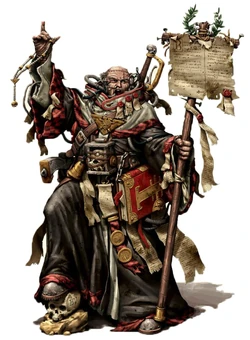
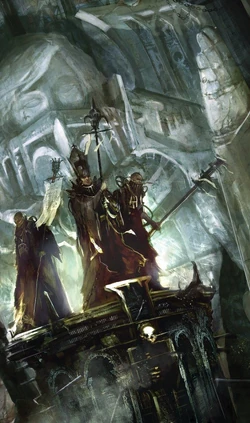
The Ecclesiarchy, just like many other aspects of the IoM are visually heavily inspired by the catholic church. Noticeable similarities being the robes, seals and rosaries, al commonly attributed to the Catholic church.
The Adepta Sororitas
Known as the standing army of the Ecclesiarchy. This organisation of warrior-nuns and diplomats follows a similar naming scheme as many other organisations in the IoM. The adeptus being a Latin amalgamation of “belonging to” or “serving”, and Sororitas, as you might have figured out, translates to, “sisterhood”. In other words “in the service of the sisterhood”.
Using a loophole that excludes the Ecclesiarchy from employing “Men at arms”, does the Sororitas, only consist of women. This, as well as the Sisters of silence, is the only “female only”, organization within the IoM.
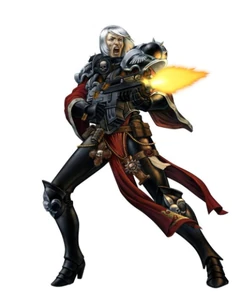
As we have seen in earlier examples, does the incents and and the regalia give them a clear connection to the catholic church. (Games Workshop 2011) The fleur de leis also invokes the other major inspiration for the Adepta Sororitas, that of the historical figure of Jeanne d’Arc, famous general, warrior and pious believer.
The The Adepta Sororitas are organized in chapters, not unlike their Space Marine brethren, tough unlike the decentralized and isolationist organization of the Astartis, does the Sororitas follow strict hierarchies and works closely with other chapters. The Sororitas also have several chapters that are not dedicated to fighting, but instead serve functions as diplomats, administrators, teachers or healers, al of them, in some way, helping in spreading and preserving of the Imperial faith. This shares a fair number of simulates to how real life Catholic convents have different voes and serves God and the church in different ways. (Russell 2007)
Much of the Sororitas work are concerned with of matters of fate in al its forms. The sisters often fight enemies that goes against the Emperor’s will in one way or another, be it aliens, humans of different faith or any other criminal that would be branded heretical in the eyes of the ecclesiarhy. This sacred mission, combined with the fact that the sisterhoods preferred weapon is fire, makes connection between them and the medieval witch-hunts pretty easy to make. (Games Workshop 2011)
The Inquisition
This faction is the easiest to relate to their real life counterpart, or at least, the myths of it. The most well known real life instances of an Inquisition, would most likely either be, the Spanish Inquisition, or one of the many separate Inquisitions involved in hunting witches al across Europe during the medieval witch craze.
The Inquisition in Warhammer 40k is in many ways the ultimate authority in all things concerning the safety of the Imperium, and they are seen as the ultimate arbiters of the Empires will. The inquisitors are mysterious, all-powerful people, with the utmost authority, only answerable to one of their own rank. The in universe Inquisition faces a large variety of threats, but the once we are interested in today, relates to perpetrators of “heresy”, this branch is, helpfully enough, named “Ordo Hereticus”, or the “witch hunters”. (Games Workshop 2013)
The real life European inquisition was a lot less organized, but did hold some authority in the matters of a heretical nature, thanks to Pope Jon XX II who give the Inquisition the authority to any sorcerer they encountered on trail, as well as to doll out punishment to those found guilty. (Russell 2007)
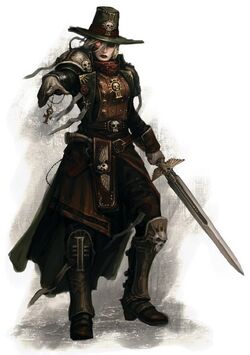
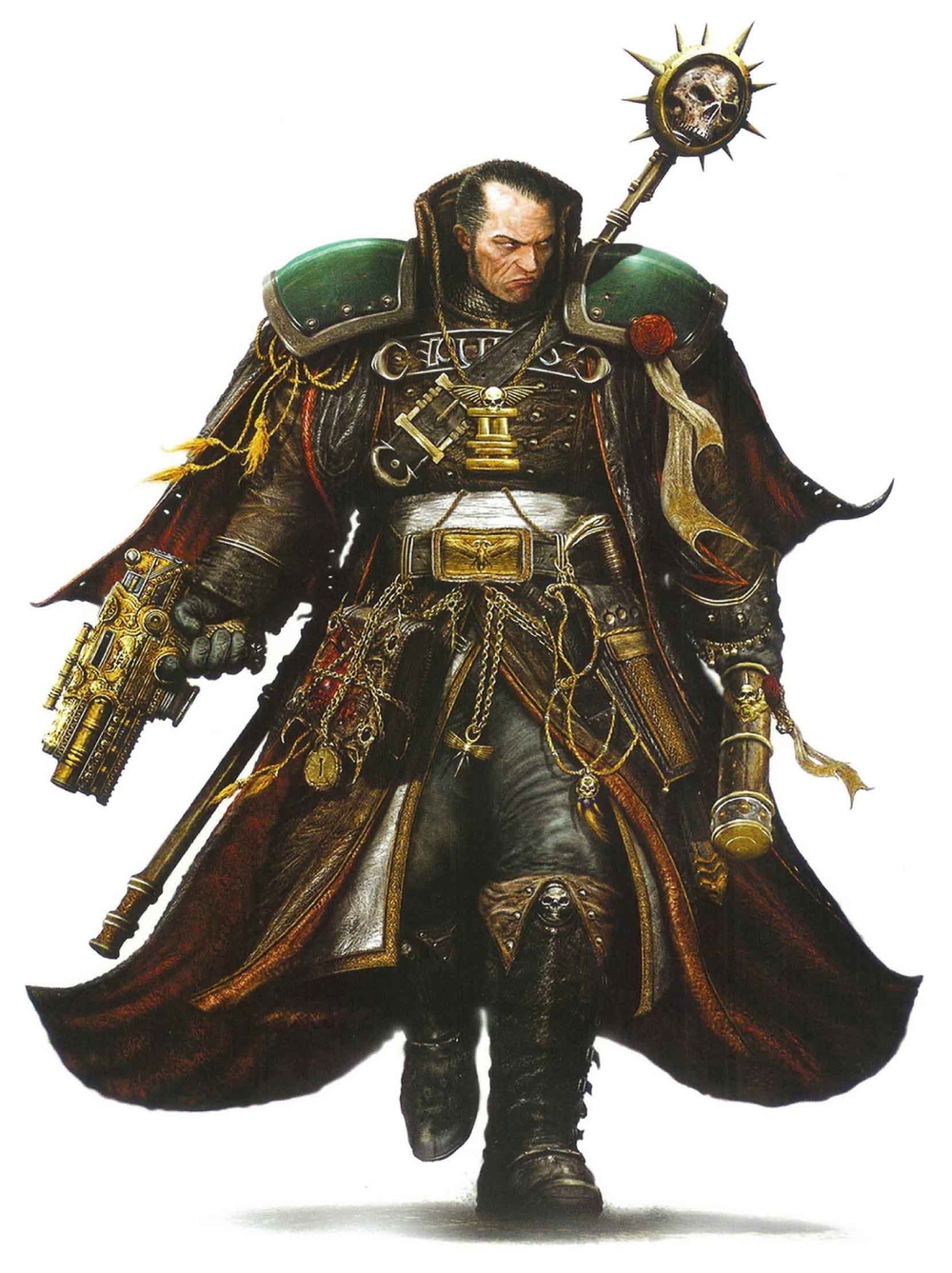
The same visual cues, can be seen in the inquisition, as we have seen in the other factions that we have looked at today. The seals of purity, the skulls and the various religious regalia. It is not as obvious as with the other two, but the visual themes are still there. the Ordo Hereticus, are in charge of, as it sounds, heretics, but what is a heretic according to the Imperium? (Games Workshop 2013)
Heresy
Heresy takes many shapes and forms within the Imperium of Mankind. Most of them are related to helping, or concerting with the “enemies of mankind” or researching “forbidden lore”. (Games Workshop 2013)
These enemies are the Chaos gods, aliens and mutants. Forbidden lore concerns knowledge of magic, the chaos gods, alien technology as well as technology from the “dark age of technology” something we looked at in the Adeptus Mechanicus chapter. (Games Workshop 2013)
This might seem incredibly harsh and draconian, that the IoM punishing its own citizen for not strictly following the creed of its rulers. But, as we saw in the Adeptus Mechanicus chapter, are many of these rules set in place for a reason. Dark age technology was highly powerful and destructive, and the reliance on it inevitably led to humanity’s downfall. Magic, and its use draws from the incredibly dangerous dimension of the warp, where the chaos gods reside, and many of the alien species humanity has encountered has indeed been hostile. (Games Workshop 2013)
Conclusion
We can here see further ties to real life institutions and events, and slowly does a picture form of how we can critically analyse the IoM as a mirror and exaggeration of certain western traditions and institutions.
Here we once again how dramatic irony is used to further the sense of dread and fear within the narrative. At face values, the actions of the Imperium of Man are deplorable, and completely unjustifiable, but at a further inspection we learn what would happen if one of these measures of control fails.
Once again, this has been an incredibly short introduction to these concepts and factions, and I highly suggest you looking up further materials for further information, the reference giving you a good starting point. Next time we will look at the final piece of the puzzle, the Emperor of Mankind himself.
References
Doorn-Harder, P.V. (1995). Contemporary Coptic nuns. Columbia, S.C.: University of South Carolina Press.
Russell, J.B. & Alexander, B. (2007). A history of witchcraft: sorcerers, heretics and pagans. (2nd ed.) New York: Thames & Hudson.
Games Workshop (2013). Codex: Inquisition. Games Workshop. Lenton, Nottingham.
Games Workshop (2011). Codex: Sisters of Battle. Games Workshop. Lenton, Nottingham.
Copyright Disclaimer
Under section 107 of the Copyright Act 1976, allowance is made for “fair use” for purposes such as criticism, comment, news reporting, teaching, scholarship, education and research. I do not claim to own an of the pictures in this post. Al copyrighted materials belongs to their respective owners.
This blog post was spell checked and edited for readability at 2021-06-14

 An Unused Frequency
2 thoughts on “Warhammer 40k an in depth analysis: Part 1, IoM, part 7, In the service of the Emperor”