
Introduction
The powers of the warp has many names, and take numerous forms. In this chapter will we discuss a few of them. This discussion will mostly have a focus on the Imperial side of the narrative, because it is the side that I have introduced so far, and as a result are the easiest to use as a bases for this discussion.
The mutant
To understand the view that humanity holds on Psychic powers, one must first understand their views on mutations. Mutants, heretics and aliens are the three things that the Imperium of man fears the most. The mutant is anyone that exhibits any large physical divination from the “normal” human citizen. These effects can be due to genetics, external natural sources, or exposure to warp energies. (Hill 2016)
By far the most feared of al these mutations are that of the Psyker. These individuals have a direct and inherent link with the Warp (the Imaterium). These anchor points works as a way for the individual to pull energies of the warp in the Materium and form it to their will. This connection do work both ways, and a psyker is also a entry point for creatures of the Warp to enter the Materium. (Hill 2016)
The psyker
Many races and civilisations has psykers in one form or another, some are revered and worshipped, while others are feared and hated. With the psyker I will refer to individuals that are able to use the powers of the warp, but lack any of the esoteric or occult imagery that comes with the Mages.
The Imperial psyker
The psykers of the Imperium are often hunted and terrorised for their abilities. Most psykers of the Imperium are captured and fed in to the Golden Throne in order to keep the dying Emperor alive. These individuals are rightfully feared, as an unprotected and untrained psyker can become an unwilling host to a host of dangerous and powerful entities from the warp. (Hill 2016)
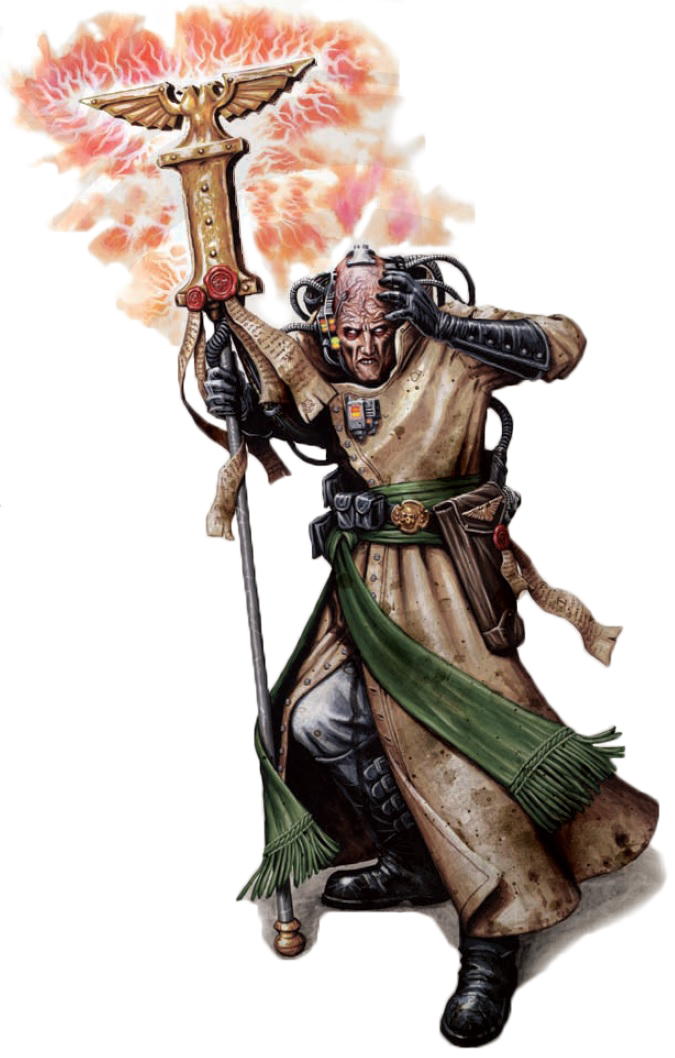
This is the average vestige of the Imperial psyker, most commonly known as the Sanctioned psyker. The large coat and cybernetics is the most striking features of this individuals, along with his staff. (Hill 2016)
Most of these psykers are operating small groups known as Wyrdvane Psykers. These groups are made up of psykers that has not yet learned to individual control their psycic abilities and become primaris psykers, tough others will never leave this stage of their training. These psykers are linked in both mind and soul, and their lacking control and powers can be funnelled in to a much grander whole. (Hill 2016)
Some Psykers manages to control their abilities and allowed to operate with some form of independence away from constant supervision. These individuals are known as primaris psykers. These individuals are rather skilled at controlling their individual powers, each person seemingly manifesting the powers of the Warp in distinctly unique ways. Despite this increased mastery and control are they just as feared and hated as the rest of the psykers of the imperium, often going by the label of Witch. (Hill 2016)
Like much of the Imperium, are the psychic affairs and organisations handled by one large organisation, in this case the Scholastica Psykana. This organization prowls the stars to collect and evaluate any possible psyker. As we discussed in previous chapters are psykers a two way connection between the Materium and the Imaterium and are as a result, a huge danger to anyone around them. (Hill 2016)
The Scholastica Psykana uses fleets of so called Black ships, dreaded vessels made only to carry those inflicted with the psycic mutation. Al of these unfortunates are carried to Terra, where they are tested and evaluated, most are either feed to the “infernal mechanisms of the Golden Throne” or to the “blazing beacon of the Astronomican”. The individuals that are considered to be stable enough, are instead ferried of to secret training facilities to hone and control their abilities. It is noteworthy that Imperium do not see any value in these psykers beyond their pure battlefield applications. (Hill 2016)
The librarian
An Astarties that has been gifted or cursed with psycic powers. The Imperium, as mentioned earlier are extramarital wary of mutants, and the Space marines are no exception to this rule. The librarian are subjected to growling tests of fate, as well as mental and physical fortitude, in order to make sure that they will not hear the lure of forbidden knowlage and power. The Librarians are described to use the power of their psychic abilities to their fullest in combat, hurling lightning bolts, or even warping time and space around them to help their battle brothers get an advantage in combat. (Games Workshop 2015, 3)
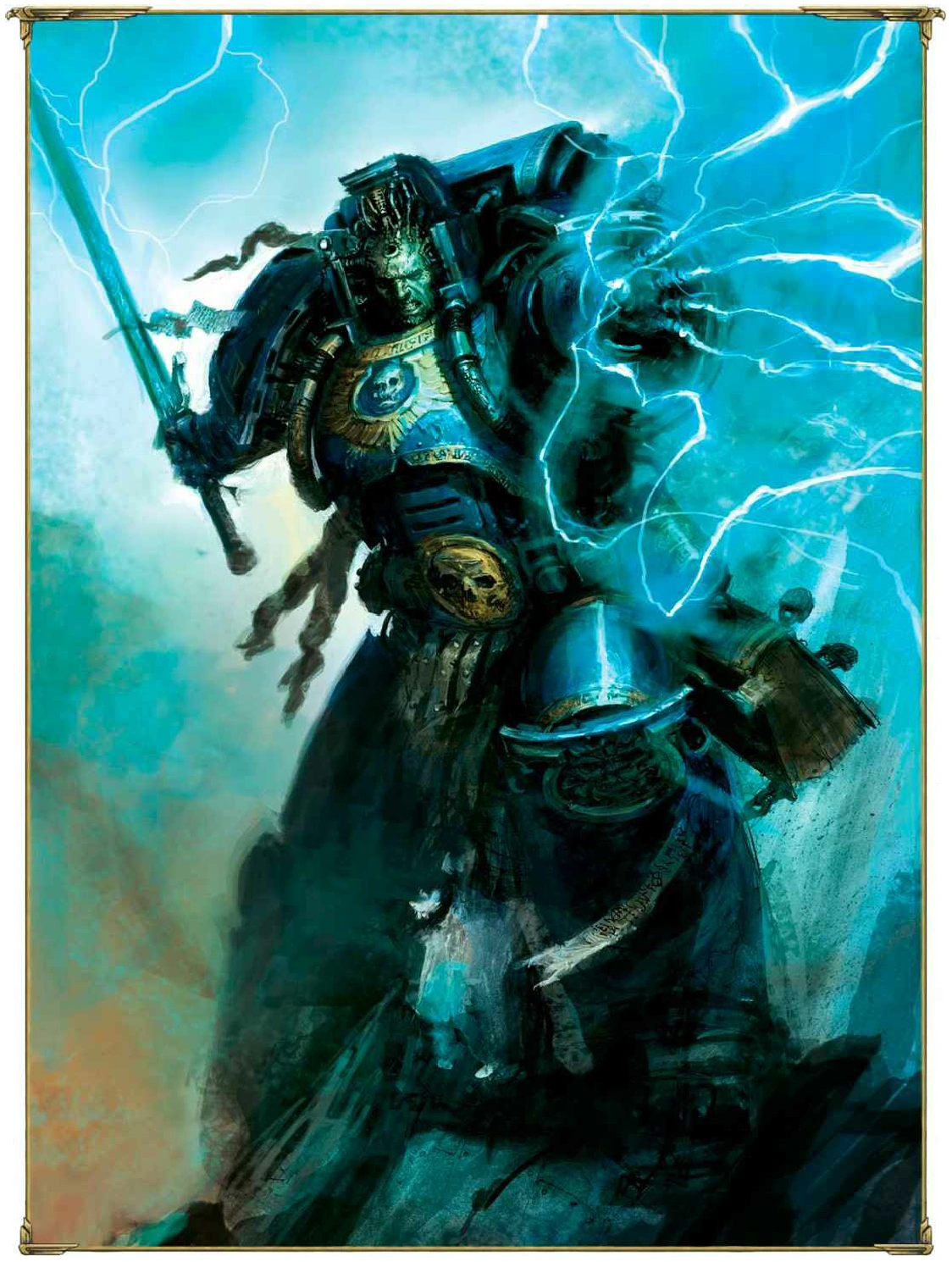
Befitting of the name, are the librarians also in charge of collection, analysing and distributing the knowlage base of the chapter that they serve. Each librarian have a set roll and office within their chapter, but each are focused on the conservation and betterment of the chapters knowledge base. (Games Workshop 2015, 3)
The Ork weird boy
The Orks use of psycic powers are as pragmatic, straightforward and mindbogglingly strange as everything else they do. To understand how the weird boy work, one must first understand how the Orks and the power of the Waaaaaagh! works. Orks generates psycic energies all by themselves, seemingly independently of any connection to the warp. These energies are the basis for many of the Orks strange abilities, but for this chapter is it enough to know that this is where the Ork psykers (or weird boys) gets their powers from.
The Ork psyker works as sponge to these energies, and will collect and build up a charge of energy over time. If the Psyker do not find a safe way to release this energy will they combust in a awe inspiring display of energy. To avoid such a gory fate, has the more successful Weird Boyz managed to find several and deadly ways to get rid of this build-up of energy, usually at the cost of any fellow Orks nearby. Weird Boyz are as result forced to live outside of the Ork settlement proper, and kept under surveillance at al time.
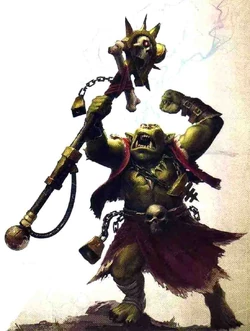
Visually can we see a lot of similarities between the Ork psykers and that of the Imperium, as well as the Eldar. The staff he uses to focus his energy, the robes, as well as the various preferential items. The Orks also mistrusts their psykers just as much, if not more then the Imperium, a trend that will become more and more common as we continue this series. (Games Workshop 2015, 2)
The mage
The mage is a psyker that uses their powers in more ritual and more overtly magical forms. Note that these two distinctions are not clear cut, and the lines between them are blurry at best.
The navigator
The role of the navigator is a vital one, for they alone has the power to safely lead the Imperium`s ships trough the ebb and flow of the Imaterium. They achive this feat by the use of a rare human gene, known as the navigator gene. This mutation allows the individual to open a third eye, and peer in to the otherwise invisible realm of the Warp (see The Warp) The families of navigators are secretive and powerful, feared and hated, but still vital to the Imperiums continued existance. (Hill 2016)
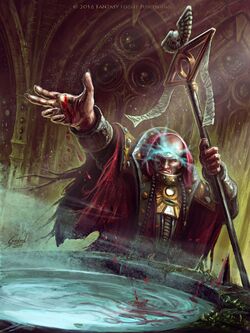
The most obvious connection between the navigator and the occult is their third eye. The third eye is a common sigh for otherworldly sight and or abilities. (Hill 2016)
Emperors tarot
The Emperors tarot is a mysterious and poorly defined system of which imperial psykers tries to explore possible future events, many decisions are made based on the omens of the Emperors Tarot (Hill 2016). The ties between this system and the real life system of Tarot are very clear and obvious. Much like the Imperial officials did many rules in medieval Europe rely on seers, astronomers and readers of the tarot to make inportant decisions, Lévi names i the “noblest of magical arts” (Lévi 2017).
The Sorcerer
The Chaos sorcerer is the most clear example of the category of the mage. The sorcerer denotes many thing within the Warhammer 40k narrative, but for the process of this text will we use it to denote the Astarties Chaos Sorcerer. In other words, a space marine librarian that has gone in league with one or several of the chaos gods. (Games Workshop 2012)
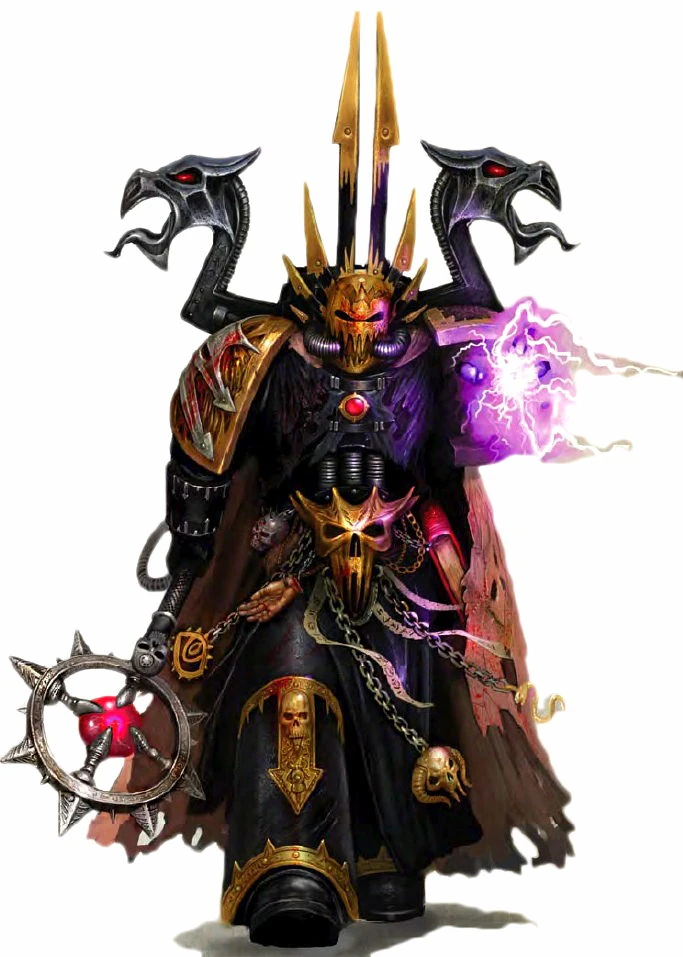
The term sorcerer in many magical texts from medieval Europe, and in to the Relicense denotes low or untrained magic. In a Christian context does the term Sorcerer often mean magic user in league with daemons or devils. In both cases does it refer to lesser or unofficial magic (Games Workshop 2012). Lévi describes sorcerers as users of demonic powers to curse, harm or even raise the dead. Sorcerers and sorceress are evil foes that any true mage must fight at any cost (Lévi 2017) .
This line between good and evil psycic powers can be found again and again within the 40k narrative. The difference between the sanctioned psyic powers and mental abilities of the Librarian, and the hexes, spells and rituals of the Sorcerer is one of the more striking once. One is based in self control and rigid training, the other in research and forbidden knowlage. The wordings of the different groups are interesting as well and can tell us a lot about each faction, and how they function. It is inportant to keep in mind, as the Codex of the Chaos Space marines describes, that the differences between the two are tenuous at best. (Games Workshop 2012)
The Eldar Farseer and warlocks
The psykers of the Eldar race are often denoted as mystics. One of the Farseers chief concerns is to scry the possible futures of their races by consoling runes of arcane magic. They guide their race trough the mists of possible futures, trying to reach one that will one say safe their civilisation from destruction. (Games Workshop 2015, 1)
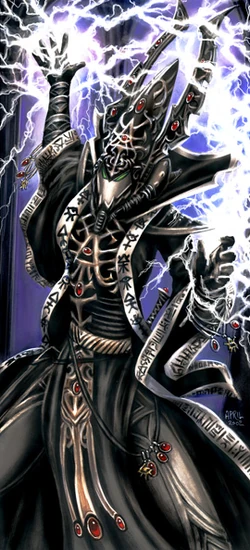
The warlocks on the other hands uses their powers in purely a combat roll. They cast searing flames of energy, cast up barrier of blinding energy, and crush battle tanks with a single hand gesture. (Games Workshop 2015, 1)
The enigmatic race of the Eldar are steeped in occult and esoteric symbolism, most notably by their use of runes in their work. This can be partly explained by their ties to the Warhammer Fantasy equivalents, the Elves. These creatures are often seen as innately magical creatures in pop culture as well as folklore.

This sign, or versions of it is often worn by Farseers, or followers of “the path of the witch”. these symbols are easily recognizable to anyone with a passing knowlage and interest in the occult or esoteric, or pop culture in general for that matter. (Games Workshop 2015, 2)
Conclusions
As mentioned earlier are there a fine, often blurred line between the more scientificality denoted psykers and the magically denoted mages and warlocks. With that said is it an inportant distinction to try to make, as it will help us understand the build up of much of the narratives later.
The staff of office, and other symbols
I have in this chapter pointed to a series of artefacts and symbols, some more overt then other, that points towards real world philosophies and faiths. I have done this to point out that this text, as any other exists within a wide cultural context. Analysing and reflection on this context, can both deepen the enjoyment and understanding of this and future texts a reader experiences. The most recognizable symbols we have discussed today is the al seeing eye, the robes of the mage as well as the magic staff.
The use of psychic powers
As we can see in this chapter is psycic powers widely varied in both paratactic and theoretical use, from the rigid and pragmatic use of the Imperium, to the mystical and grand uses of the Eldar, to the accidental and random methods of the Orks. Psycic powers, and the attitudes towards them are another tool the writers use to expand and deepen their narratives universe. We will go further in to these distinct practices and cultures as we examine each faction in turn.
Science and magic
Lastly is it inportant to keep in mind the distinction between the psyker and the mage, magic and science. It is a theme that we are going to return to time and time again. Next chapter will make this concept even more convoluted, as we look in to the definitions and themes of warp travel.
References
Hill, DisclaimerJ.D. (2016). Astra militarum. Games Workshop. Lenton, Nothingham.
Games Workshop (2015, 1). Codex: Craft-world Eldar. Games Workshop. Lenton, Nottingham.
Games Workshop (2012). Codex: Chaos Space Marines. Games Workshop. Lenton, Nottingham.
Games Workshop (2016). Codex: Chaos Space Marines. Games Workshop. Lenton, Nottingham.
Games Workshop (2015, 2). Codex: Orks. Games Workshop. Lenton, Nottingham.
Games Workshop (2015, 3). Codex: Space Marines. Games Workshop. Lenton, Nottingham.
Lévi, Eliphas (2017) The Doctrine and Ritual of High Magic : A New Translation
Wilson, D.K. (2018). A magical world: superstition and science from the Renaissance to the Enlightenment. (First Pegasus books hard-cover edition.) New York, NY: Pegasus Books, Ltd.

 An Unused Frequency