Warhammer 40k an in depth analysis: Part 2, The Warp: part 5, Chaos: Khorn, The father of murder and war

For every murder, for every sentient being struck down in fear, anger or vengeance, there is a corresponding ripple in the warp, Khorn is the culmination of al those sensations. Every time a life is taken in anger, is the power of Khorne increased.
Bildresultat för khorne symbol
Source: https://warhammer40k.fandom.com/wiki/Khorne

Skulls for the skull throne

No other of the chaos gods are as direct and apparent in his iconography as the god of skulls. The saying of his followers “blood for the blood god, skulls for the skull throne” is beyond a doubt the more iconic and well known of the franchise.

His realm very much reflects his straight forward nature and philosophy, might is right, and but one single rule “blood must flow”. Khorns realm is a land of red deserts and large volcanic mountain ranges, it is rage and fury made manifest. (Games workshop, 2016)

Here Khorne sits upon his throne brooding over al of his domain. His throne is a huge brass monstrosity, that stands in a mountain of al the foes that has consciously or unctuously been slain in his name. Here the skulls of his champions lays next to their former victims. The land itself is made out of blood and bones of the fallen, and under large volcanos are those warriors who died in their sleep, and a as a result, is not even a peaceful death an escape for those who has once taken the life of another. Here they are forced to toil for al eternity forging weapons for the Blood gods armies. (Games workshop, 2016)

An uncaring god

The truth is that Khorne do not care from where the blood flows, and yours are as good as any other. The god of murder do in other words not care for winners or losers in wars, or why they are fought. Khorne only care that blood is being spilled.
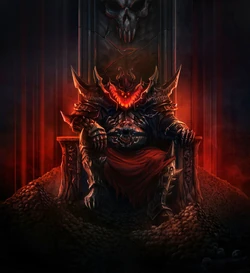
Khorne by baklaher
Source:

The single goal for Khorne is to one day see al life in the galaxy destroyed and turned in to corpses in front of him. In other words is there no saving, even for the followers of the blood good, for they to must perish for their masters ultimate wish to be fulfilled. To become a champion of Khorne, and his ideals is in other words, also becoming a future inevitable victim to the same deity you yourself serve. To die in the service of Khorne is simply speeding up the inevitable. As mentioned before will not even a peaceful save them from the servitude of the Blood good. (Games workshop, 2016)

Disciples of bloodshed

Every warrior and soldier, every murderous thug and mercenary, knowingly and unknowingly pays homage to Khorn,for his worship is done solely by the spilling of others blood. Every time war breaks out, or another sentient being is struck down in anger, be it from a murder of passion, to a genocide of an entire planet, does Khorns power grow. (Games workshop, 2016)

The blood gods servants perfectly mirrors the straightforward and dogmatic mentality of their patron god.
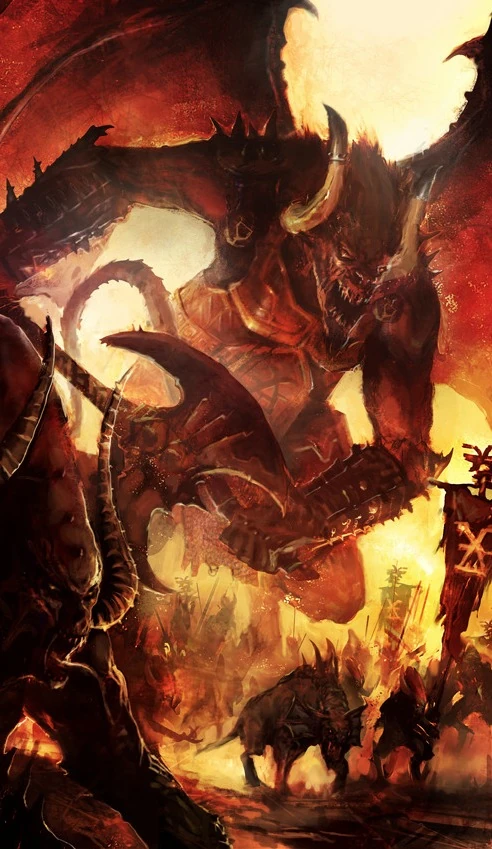
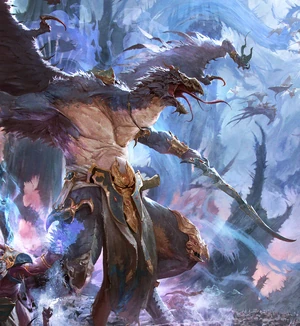
https://vignette.wikia.nocookie.net/warhammer40k/images/1/17/Bloodthirster_by_columbussage-d47j02l.jpg/revision/latest?cb=20120117042500
Source:https://warhammer40k.fandom.com/wiki/Bloodthirster

Most if not al of Khorns personal daemons takes the shape of muscular horned red skinned creatures or slavering monsters hunting dogs. These beasts and creatures, just like their creators lives for little other then battle, murder and bloodshed. They sally forth from the warp killing and maiming everything in their path at the behest of their ever vengeful master. (Games workshop, 2016)

Of al the daemons of the warp we have discussed so far are those of Khorne the closest in appearance to the traditional Christian daemons. Khorne also, much more then his rivals, represents a clear Christian vice, more specificity one of the seven deadly sins, that of wrath. This theme is strengthened by the fact that Khorne is also the patron god of murder and murderers. (Games workshop, 2016)

The concept of Khorne being the embodiment of the Christian sin of wrath also fits well in to our earlier comparison between the Imperial Creed and the catholic church (see The Ecclesiarchy).

War in fiction

As the name of the franchise (Warhammer 40.000) insinuates is war indeed a large part of the setting. This fact comes partly from the origin of the franchise, namely the tabletop wargame forms the basis of the franchise. With this fact in mind do Khorne almost seem inevitable, a representation of raw fighting and combat, a simple narrative justification for the endless war and strife that goes on in the universe, making sure that every players army always have a reason to fight any other players army. He is a obvious and easily understood metaphor for endless and inevitable war. This is indeed a fine read of Khorne, but I believe that we can dig deeper, and find more nuances in the narrative then a simple justification for war. (Games workshop, 2016)

The many faces of war

As we will see as we continue our exploration of the various factions will we find that Khorne is far from the only icon, or even god, of war. Many factions have their own ideas and deities dedicated to war, and each of them corresponds to their specific beliefs regarding war. From the Ork gods Gork and Mork, who revels in the thrill of close quarters combat, and the thunder of guns just as much as their subjects, to Khaine the vengeful avatar of war, destroyer of the unworthy. This leads us to the next question, to who do Khorne belong? (Games workshop, 2016)

The god of human warfare and death

Most readers will not find this answer surprising, but I will argue that Khorne, like the previous Chaos gods, are Khorne the representation of humanities fears of war and senseless murder. As we described in the Nurgle episode are most of humanities lives full of strife and death, from the endless front lines of the many war fronts of the Imperium, to the endless factories and mines that keeps the Imperium alive.

As we have described earlier is the Imperium of man, an empire of endless warfare, for their xenophobic and dogmatic faith and politics allows no coexistence and no peace. Its understandable that humans living under these conditions would start and see death and war as an inevitability, as a grinding and careless machine of blood and broken bone. (Hill 2016) I argue that Khorne, are the culminations of these fears and notions that are deep in humanities collective continuousness. (Games workshop, 2016)

Conclusions

Khorne might at the first glance seem like a very straightforward and simple god to analyse, but I would argue that he represents a lot of themes within the 40k narrative, that we will definitely return to in the future. The seemingly endless and needless warfare and strife is a constant theme in the narrative, and one of the driving motives when it comes to the narrative hopelessness and cosmic horror of the universe. Next time will we discuss the last chaos gods, and one that is not so directly tied to humanity, the deity of pleasure and pain, she who thirsts, the bane of Eldar, Slaanesh.

References

Codex: Chaos daemons (7th Edition), Games Workshop, 2016

Codex: Chaos Space marines (7th Edition), Games Workshop, 2012

Hill, J.D. (2016). Astra militarum. Games Workshop. Lenton, Nothingham.
Warhammer 40k an in depth analysis: Part 2, The Warp: part 4, Chaos: Tzeentch, Master of magic and schemes

Whenever a human lie to another, or schemes against them, Tzeentch hears, and uses them as a puppet on a string. The changer of ways sees and hears al, the ultimate master of manipulation and trick. He is the patron god of politicians, generals and scholars, for he promises his followers endless knowlage and power.

Source: https://warhammer40k.fandom.com/wiki/Tzeentch

The weaver of fate

The god of change sees and knows al, present and past, and he uses this to navigate the many possible futures towards one that is most beneficial to himself. It is inportant to note that Tzeentch do not see the future, only the present. What this is, can no mortal say, and it is possible that Tzeentch himself do not know.

The masters of change plans are complex, varied and seemingly endlessly contradictory, a yarn that seems to spin deeper and deeper as it gets more entwined with itself. It is hinted in the text that these schemes has no end, and that if the schemer would ever fulfil his scheme, there would be no need for him, and he would cease to be. (Games Workshop, 2016)

Warp and time

As I have hinted at before is time and space a strange concept in the 40k Narrative, especially when the warp is involved (which is usually is).

We have already discussed the fact that the Warp exists outside of time, space and classicality, which could explain the seeming randomness of the Changer of ways plans, as he is seeing the universe out of order, or arranged in different constellations then those in the material plain. To further complicate this concept, can certain races such as Necrons or Eldar travel in time, and change the course of certain events using magic and or technology. The concept of an al seeing and all knowing mastermind seem to falter here a bit, a point we will come back to later. (Games Workshop, 2016)

Master of magic and mutation

The changer of ways are also said to be the originator and creator of al magical powers, as well as a representation of the mutating power of the warp. The most powerful mages and sorcerers are unattainably found amongst the followers of Tzeentch.

We must here go back to an earlier chapter and discuss what exactly magic is within the 40k narrative. We have seen that the line between psycic powers and magic is strenuous at best, and that the concept of magic changes depending on which race describes and uses it.

Mutation is not something that is the clear preview of Tzeentch, but it non the less falls within his domain. It is very possible that, just like Nurgle is not the representation of death and decay, but rather the human fear of it, is Tzeentch the representation of human fear over the future, faith, power and knowlage. (Games Workshop, 2016)

Lands of change and chaos

Within ever changing labyrinths and glass mazes of the changers of ways lands, lays the grand library, where every single written word is collected and reviewed by the master of magic himself.

The surrounding lands are beyond the comprehension, as every single possible reality is shown simultaneously within the mirrored walls, as time and spaces looses al meeting within Tzeentch realm. Only Tzeentch himself can navigate the endless pathways to reach the secret library within.

In Tzeentch is every single written word ever created stored and archived by an army of daemons known as red and blue horrors.

Demons of magic

The daemons of Tzeentch are by far the most intelligent, and also the most magically gifted.

The servants of the changer of ways hate the predictable mundane and secure, and do their best to topple lives and change futures in to new and unpredictable paths. To chive this goal do they use al manner of manipulation and schemes, preferring diplomacy to open confrontations. (Games Workshop, 2016)

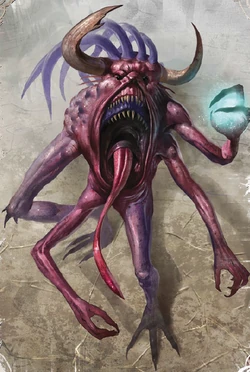
The lords of change are the greatest of Tzeentch demons is the changer of ways, creatures of great mind stunning intelligence, they use this power to change one stable planets and societies by breaking them down and building them anew, for there is little more that these daemons hate then mundanity and letting the galaxy taking the predictable path, for they crave renewal and change above al things. (Games Workshop, 2016)

https://vignette.wikia.nocookie.net/warhammerfb/images/9/97/Warhammer_Lord_of_Change.png/revision/latest/scale-to-width-down/300?cb=20170226092645
Source: https://warhammerfantasy.fandom.com/wiki/Lord_of_Change

The lesser creatures of Tzeentch is known as pink and blue horrors, they are manifestation of pure magical energies, and as a result a pure representation of Tzeentch power. Pink Horrors are happy and juvenile, telling jokes and doing cart wheels as they frolic in to battle, and peppering the enemy with magical energies. The daemons put on dazzling light shows for each other, often leading to the death of any nearby enemies, something the daemons find immensely amusing. (Games Workshop, 2016)

Blue horrors are created when a Pink Horror is split in twain, these daemons are the polar opposite of their cousins, being sombre, sad, and spending most of their time arguing on which fault it was that they one again lost their pink form.

Warhammer Daemons of Chaos Pink Horrors
Source: https://warhammerfantasy.fandom.com/wiki

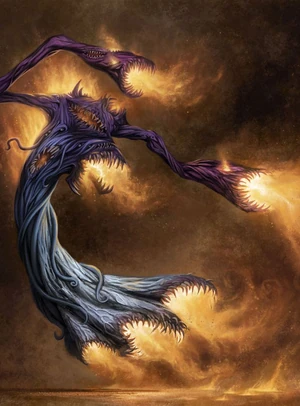
Flamers of Tzeentch represents in many way, the pure chaotic and mutating power of the Warp, and Tzeentch himself. Their bodies move and contort in ways beyond human comprehension, as they constantly shift and change. They bellow forth magical fire, the pure essence of the mutating power of the warp. These flames are known to do anything from heal their victim, to grow them new limbs, sometimes these flames keeps the body unharmed, but instead changes and shifts the very soul of the victim. Much to the shock of the victim, and unbridgeable joy of any nearby horrors. (Games Workshop, 2016)

Warhammer Daemons of Chaos Flamers
Source: https://warhammerfantasy.fandom.com/wiki

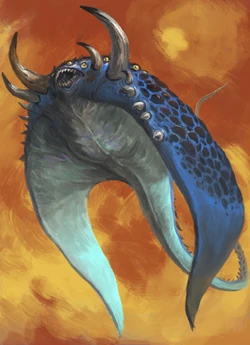
The last demons we will discuss today is the Screamers of Tzeentch, beasts that prowls the warp in search for things to consume, they seem to not be directly affiliated with the changer of ways, but serves as a good example of the other daemons and denizens that inhabits the endless void of the Warp. (Games Workshop, 2016)

ScreamerofTzeentch
Source: https://warhammer40k.fandom.com/wiki/Screamer

Followers of Tzeentch

Politicians, generals and researchers of al kinds are drawn to Tzeentch, as he is in turn, drawn to them. Great power and knowlage are promised those that follow Tzeentch, but just as with any of the Chaos gods, is the price both high and heavily ironic.

The followers of Tzeentch gains immense knowlage, as well as magical power, which they use to achieve their own goal. This power comes with a great price tough, for they are now forever bound to the magical power and will of their patron god, and he only helps those that serves his schemes, and have no qualm about sacrificing his own pawns, if it means getting an upper hand against his rivals. (Games Workshop, 2016)

Conclusions

Tzeentch is by design full of enigma and contradiction, for he is that which humanity can not, and should not know. I have here but given a small taste of the many things worth exploring related to the changer of ways as I wish for my reader to continue exploring on their own. I will at the end of this chapter provide a few examples on how to continue their reading in this much interesting and strange subgenre of horror, but first, a short conclusion of the things we have discussed today.

Cosmic horror

The term Cosmic horror (or Lovecraftian Horror), is usually reoffered to and related to the fear of the unknown, or the unknowable, of the vast spaces of time and space beyond human comprehension, about fate, life, death and our part in it.

Tzeentch is the representation of humanities fears of the future, past, and their ability to change their place and path within these things. It is not surprising then that Tzeentch design borrows so much from the grandfather of cosmic horror, H.P Lovecraft.

Fate and the future

Tzeentch represents humanities fear of the future, and their own ability to control it. Just as with Nurgle, is Tzeentch the actual source or controller of the things humanity fear, but as humanity spreads throughout the galaxy, so does their fears, and as a result the power of their manifestations in the warp.

Tzeentch do not in of itself control the future, or the individual humans part in it, but as Tzeentch power grows, so does his ability to do just that. To join Tzeentch is to give up once own goals and dreams, to become a pawn in the great schemers plans. (Games Workshop, 2016)

The unreliable narrator

This will be another point that we will take up time and again as we deep dive in to the other factions of the narrative. This will become more and more apparent as we start to look at the narrative from the other factions point of view. So far we have seen the narrative from only one point of view, but the statements made about the chaos gods (as well as any other faction), will very much be put in to question here. I take this up now, for it is worth to keep the supposed all knowing nature of Tzeentch (as well as the powers of the other gods) in mind as we move forward.

Uncertainty as well as the almost myth like structure of the storytelling in Warhammer 40k is partly what makes it both frustrating and interesting topic to read and study. (

References

Codex: Chaos daemons (7th Edition), Games Workshop, 2016

Codex: Chaos Space marines (7th Edition), Games Workshop, 2012