
What you are about to read is the first part of a longer essay that I have decided to split into smaller chapters for ease of reading in a blog setting. In this essay I will discuss several concepts regarding how the Swedish library system works, and the role of the Swedish public library. Later in the text I will introduce an alternative to this model, that I have dubbed the library of odd things. This chapter will contain the introduction to this model, as well as my primary arguments.
Introduction
I have for a long time noticed a trend in public library work I can only liken to a form of gentrification of the materials at the public libraries that I work at. The first and most obvious way that the libraries are limited are the kinds of books and movies that are available at the libraries that I have worked at. I have noticed that collections of short stories, comics and poetry have become fewer. While this is a vital discussion as well, is it not the topic that I wish to discuss in this essay. Today I wish to discuss the usefulness and novelty of discounted and obscure media formats. As I start to work, MP3 audiobooks and other older audio formats have already disappeared, along with the fate of VHS and CDs.

It can easily be argued that these forms of media have long served its purpose, and given the limited space of the libraries, it would make sense to remove the older, and seemingly useless forms of media. In this text I will argue that this does not always have to be the case. We do not always have to buy every åpopulauir feel good novel or detective series to every library. These series do take up lage part of many libraries’ budgets, as well as library space. As publishing of books only seems to increase as they are catching up with lowering costs of books, and companies like Amazon selling books on a loss, is this something that libraries need to look into sooner rather than later.
I would argue that it is impossible to keep up with this form of publishing and release pressure, and it will lead to more and more rare and old collections needing to be moved to give place for these new, and cheap books. Not to mention that the shelf life of these books will inevitably become shorter and shorter as well, as they too will be replaced with new best sellers of the month. With a shifting media landscape and the ability to get your hands on mainstream books becoming cheaper and easier, and in the face of dwindling library numbers, would I argue that it is time for the library to return to its roots, and provide the media that no others can, and most importantly, do it for free.
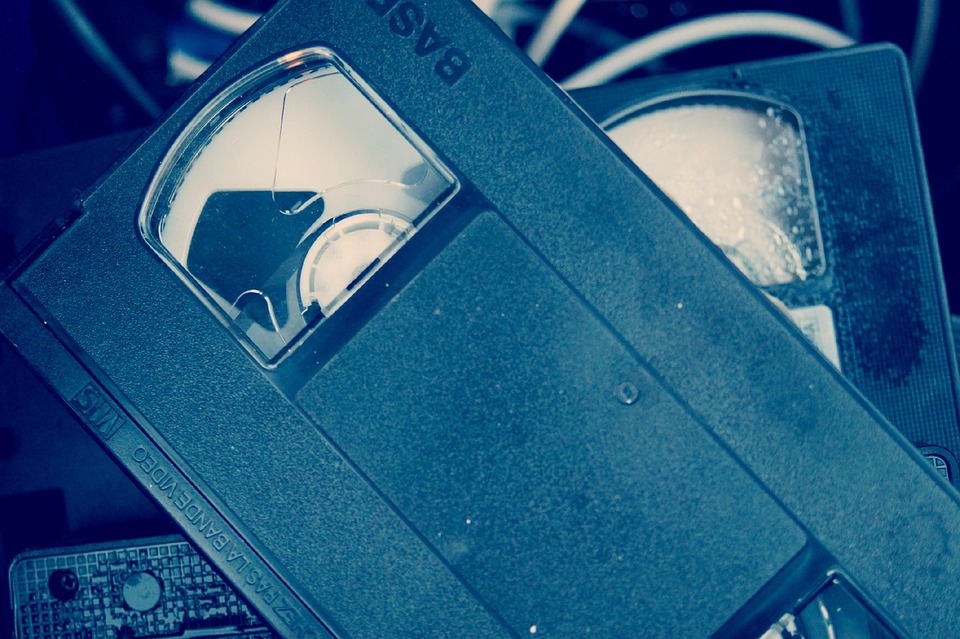
In light of this development I would like to argue another form of libraries, a somewhat controversial topic in modern librarianship. In this, an older form of the library would once again be put in the center, rather than the services that the library currently struggles to produce. In this kind of library the focus will be on discovery and the exploration of media old and new. Here old VHS and vinyl records would share shelf space with high end vr games and digital multimedia. A library like this would be able to, in theory, encompass all of human expression, and let it be available to the general public, free of charge.
This essay will be separated into several chapters, each which takes up its own aspect of the core question behind the essay, at the end I will present and discuss some of the more common counter arguments to this thesis, and finishing of with some concluding thoughts about how one can continue to work on this project if it seems interesting. The next chapter will discuss the controversial topic of quality and quantity when it relates to handeling media in public libraries.
All images taken, and used with promition from: https://pixabay.com

 An Unused Frequency
This is wonderful, and I agree entirely.
LikeLiked by 1 person
Thank you!
LikeLike
Very interesting. Can’t wait to read more of your thoughts on this!
LikeLiked by 1 person
Thank you 💜
LikeLike