
Introduction
The potion bottle is a staple of the fantasy game genre, and can be found in most every game of the genre, from Dark souls to legend of Zelda. In Skyrim the potions are easily labeled and color coded to the stat that they refill, green for stamina, blue for mana and red for health. What I wish to discuss in this text is their prominence in the game world.
Gameplay convenience
The health potion is an essential part of many games systems. Even more otherwise realistic games such as Kingdom Come use the seemingly magical health tonic in an otherwise realistic setting. The reason being simple, dying of an infected stab wound would be a very depressing way to end that game.
Similar concepts can be found in scifi and modern settings in the way of health packs, healing stations and bandages. The need for these tools are self-evident. Health is a great indicator of the player’s progress, but the ability to replenish this resource is vital. Health is very rarely outside of survival games or simulators treated as actual health.
Rather, they are used as an indicator of player progress, as well as a teaching tool of what the player did right, or did wrong. While these mechanics are incredibly important and should absolutely keep being a staple is it still a good idea to examine their implementation.
Narrative shorthand
Skyrim is on the whole rather coy about discussing the existence of any form of restorative potions, other than them existing. Much like the constant coins in chests, vases and urns, they are there out of a mechanical, not narrative design. This non acknowledgement makes the few instances when the game does acknowledge their existence stand out so much more.
Morrowind
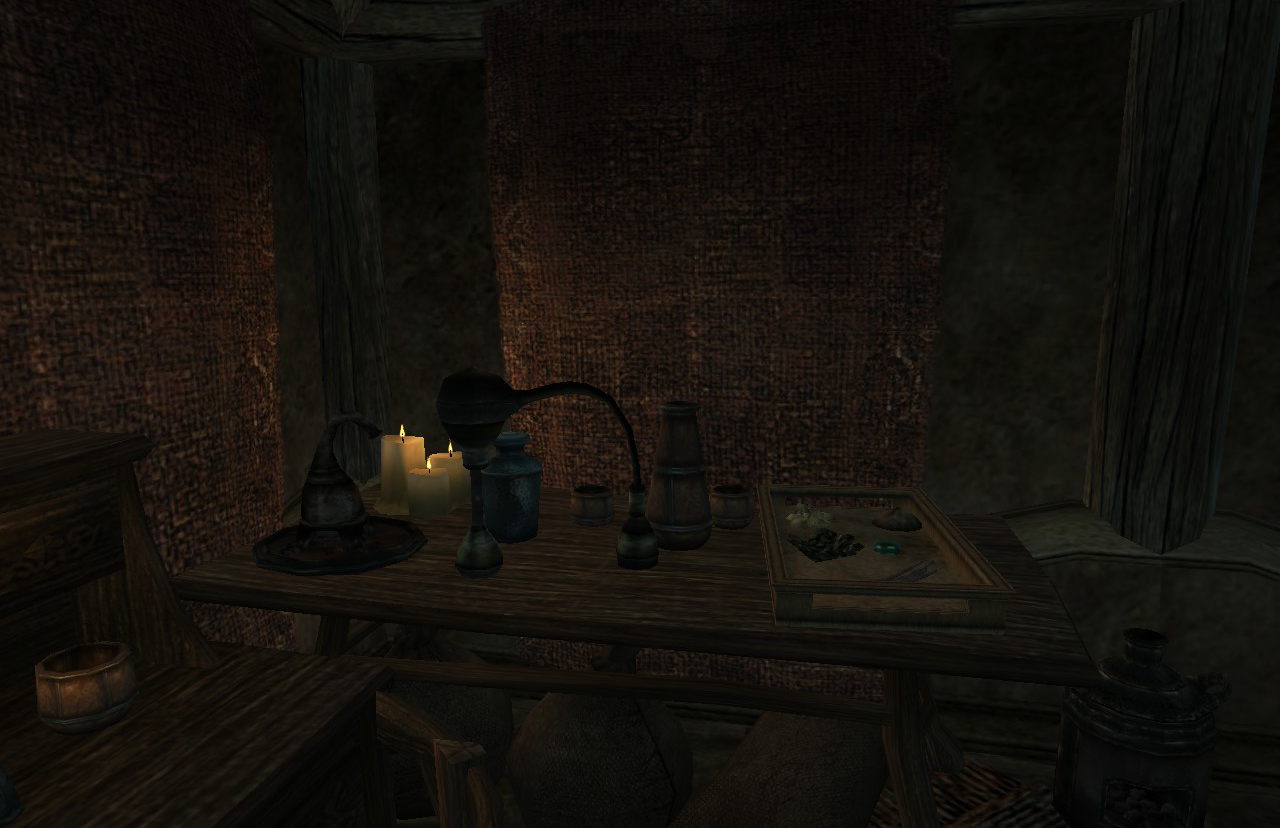
Morrowind often emphasizes narrative construction and worldbuilding, sometimes at the cost of gameplay readability. The potions of Morrowind are an interesting example. While there are clear markers of what quality a potion is, there is very little way of knowing what the potion does until you look at it.
The potions available range from healing, to stat boosting and stat lowering effects. There are many different kinds of effects that continue throughout the series, My focus in this chapter is on healing potions, and I want to specify that there is no simple way to see if the item you are about to pick up is a healing potion or not.
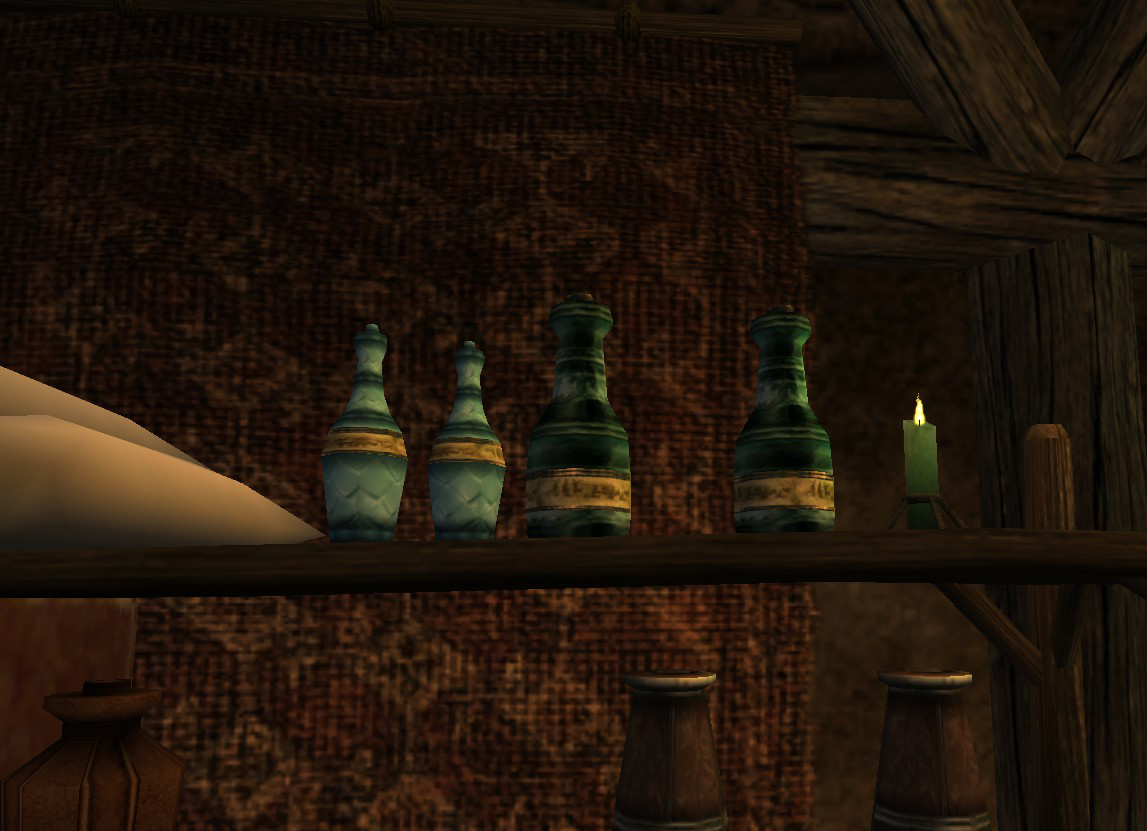
There are ways to know at a glance what quality the potion is, via the quality of the bottle itself. This is a great example of world building, of course you would put your best creations in your finest bottles. Morrowind further this notion of potions being real in world items by the existence of spoiled potions. If they were truly items made from plants, fungi and sometimes meat, it would make sense for them to eventually go bad.
The potions in the screenshots are paired with one of the many drinks present in the game. Many of these drinks have unique and interesting qualities, and can in one way be seen as potions. I have chosen for simplicity and clarity to discuss these drinks in the next chapter on food.
Alchemy in Morrowind can be carried out anywhere, as long as you have the required items to do so. The items used for alchemy, while clunky, could arguably be used in the field. There are plenty of alchemists in Morrowind where you can buy and sell ingredients and potions. Much time and energy has been made to ensure that these laboratories feel like a distinct part of the world, as a place where someone could work.
Oblivion

Potions in Oblivion takes on two appearances, pink one for beneficial potions, and green one for poisons. Potions can be consumed to get the positive effects, while poisons must be applied to a weapon. The potions come in lesser, standard and greater qualities. Their effects range from boosting abilities to healing.
As with Morrowind there is no easy way to ascertain from a distance what potions you are about to pick up. All beneficial potions have the same shape and the same color, the same is true for poisons. This uniformity can be seen as a way to give the potions a more cohesive in universe feel, they are practical everyday items above all else.
The unifying color makes potions easier to spot at a distance, as they do not as easily meld into the background together with drinks and empty bottles. While this design undoubtedly makes them easier to recognize from a distance, they also stand out from the world. They no longer seem to exist within media res in the same way that the potions of Morrowind does.
I would argue that Oblivion sadly has the weakest use of potions of the games that I am discussing today, it fails to make the potions feel like a true part of the game, but simultaneously does not go far enough to make them easy gameplay tools. Oblivion exists as an inbetween of the narrative focused Morrowind and the gameplay focused Skyrim, a theme I will return to again and again in this series.
Skyrim
While there are a few instances in which the health potion is mentioned by name in the game, it does primarily seem to exist as a utilitarian shorthand for healing or the medical arts. A few books mention their creation, and use, as well as how different ingredients may lead to different results.
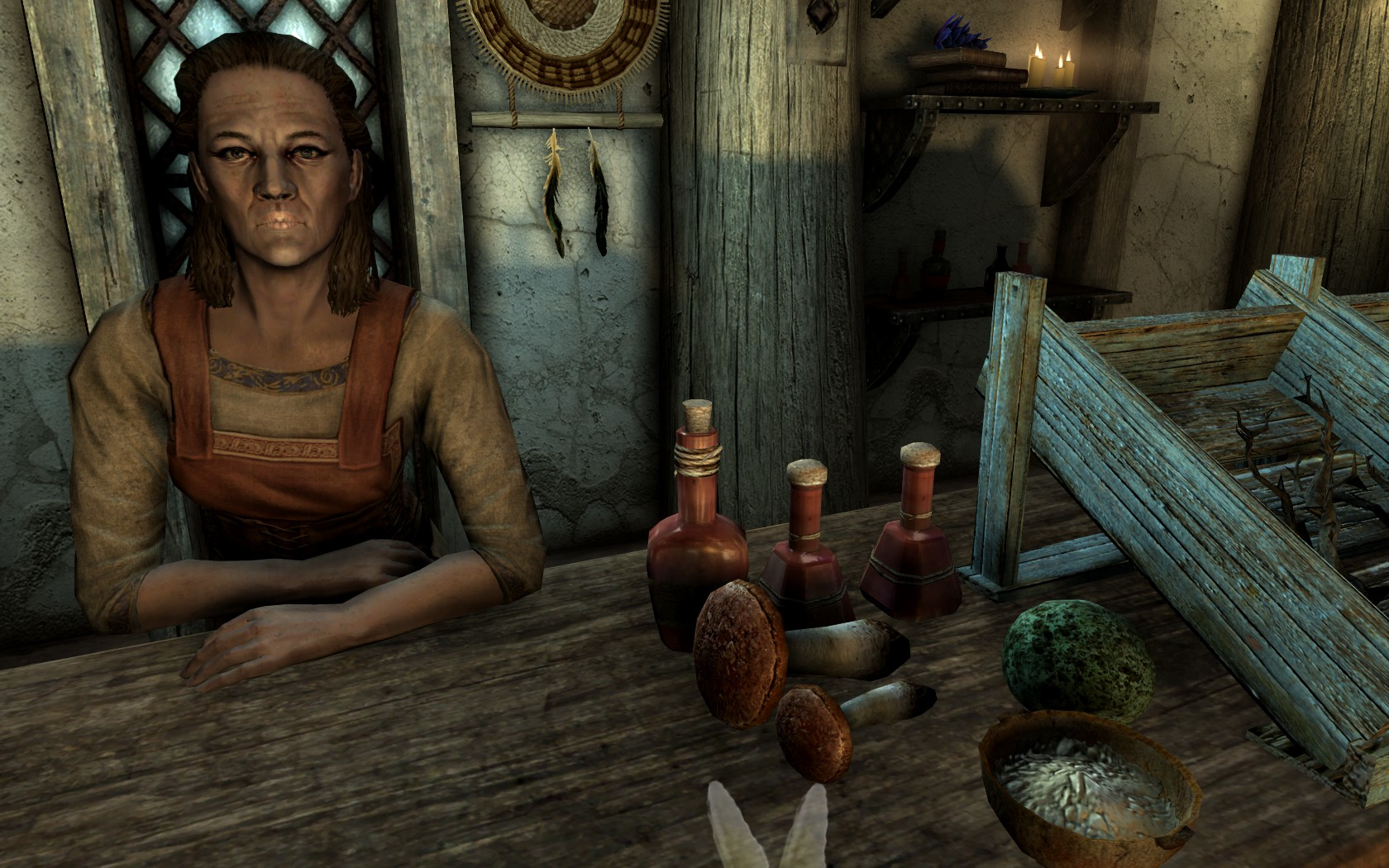
Health potions can be bought by vendors for sure, but can also be found in caverns, dungeons and most interestingly, inside people’s homes. While this makes sense from a gameplay sense, it does lead to some interesting narrative consequences. At some points are you able to hand these magical potions to an npc, that indeed does get better. Others you are forced to leave to their death. It is worth noting that Elder Scrolls Online is much more guilty of this crime than Skyrim.
This is another way that Skyrim streamlines some mechanics in order to make sure that the player can always be on the move. While these potions did exist in the prequel games, they are especially prominent in Skyrim, giving the player a steady supply of resources as they wade through even the lengthiest dungeons. This very much follows the same themes and design philosophies that I discussed in my text on books and shops in Skyrim. The ease of getting health potions very much encourages their use, as well as minimized downtime between dungeon delving.
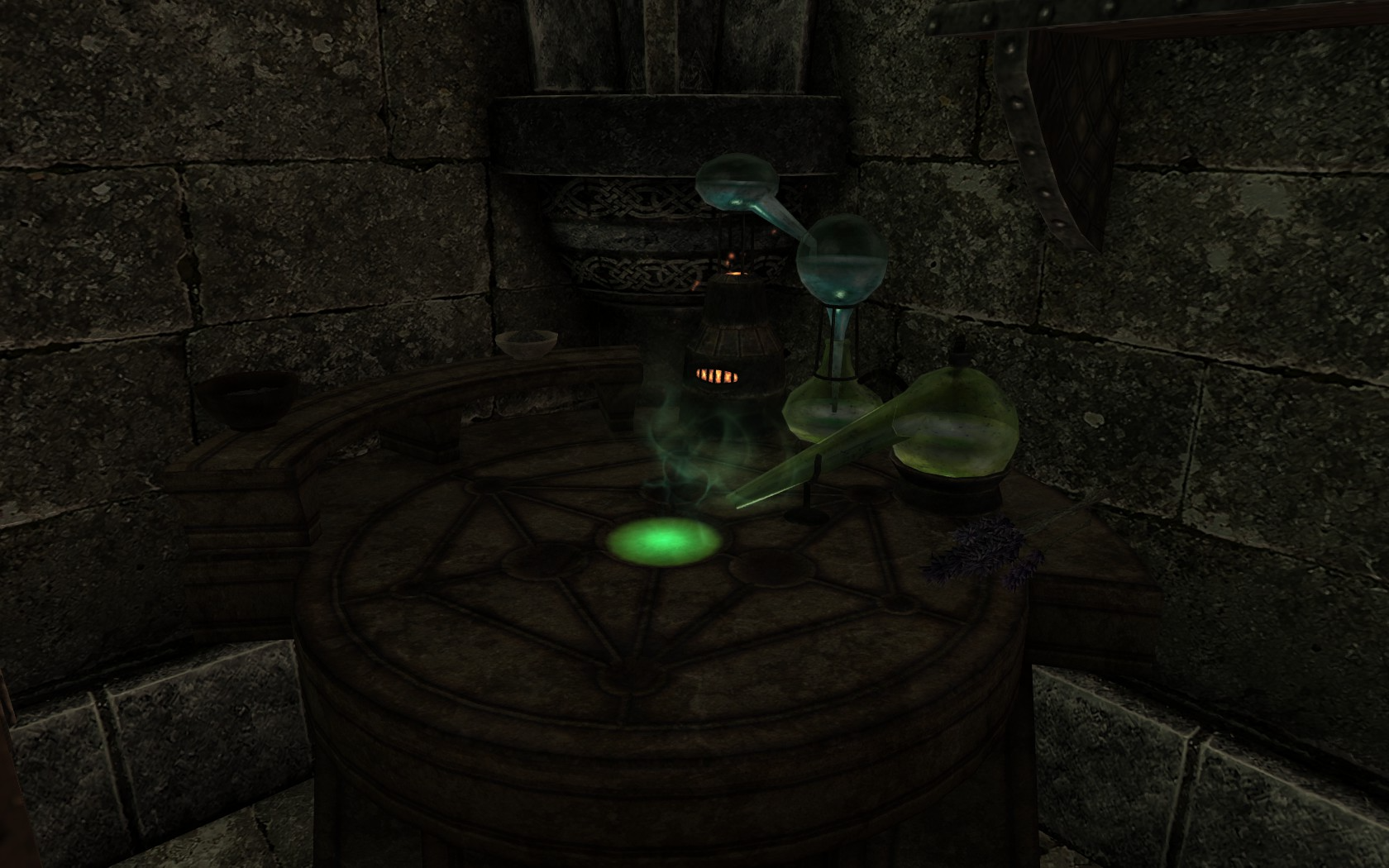
The size of the potions is a likewise easy way to discern what the potion will do, the bigger the bottle, the more it will restore the stated resource. Beyond these are potions that improve the player in one way or another, as well as poisons that damage or make the enemy weaker in one way or another. While a bit more abstractly colored they do still follow clear coloring patterns, as well as keeping to the same organizations when it comes to size.
Elder scrolls online
So many characters die tragic death when you, the player, can literally cast healing magic. This is to say that some suspension of disbelief must be taken in return for gameplay convenience. While the narrative convenience of the character the player is currently taking to dying works as a signifier to the player to move to the next area, is the frequency of its use rather offputting.
Potions are, like all other gameplay features, tweaked and corrected in such a way that they work in a continual gameplay experience without pausing. The potions are set on a timer, making sure that the player can only heal in certain predetermined intervals. The visuals of the portions follow the same logic of Skyrim, but with their own distinctive visual flair. Many new potions are added to facilitate online play like dungeons and PvP.
Alchemy is once again made using crafting stations, these can usually be found in large cities and other concentrations of players, making the crafting stations a natural gathering point for players. The player can later get access to crafting in their player homes, or at the homes of their guildmates. The position of the crafting stations, as well as the existence of the trading and barter system adds a social dimension to the crafting and use of potions.
The way that players interact with potions is colored by another fundamental difference between ESO and earlier games. In earlier games like Morrowinds were items, physical objects, props with their own physicality that could be interacted with. ESO being online made this approach impossible. Items are constrained, with a few exceptions to being in containers, be that the player inventory, a box in the world, or a dialogue tree.
There are certain props, such as the items in player housing that can be interacted with directly, but for items like food and potions can they never exist in the gameworld, and as a result not be manipulated directly like they can in earlier games.
Final thoughts
Potions have a long history of use in game design, as a simple way of helping the player manage one of their resources, their character’s health. I have in this essay explored how different iterations of the Elder Scrolls have used the health potion, both as a gameplay mechanic, but also as a narrative device. I have presented a few ways that these goals can sometimes clash, and what the design of such an unambiguous item as the health potion can say about the wider design philosophy of the game. I hope that this essay has helped you look at the humble healing item in your own game design, or playing of games, and start to look at these seemingly trivial item in a new light.
In my next chapter I will discuss food and drink, and the vital cutoff points between the three modern iterations of Elder scrolls, and how they used food and drink, both to tell stories, and make for interesting gameplay opportunities.
Do you like my writing and want to help me write more? Please take a look at my patreon, it has several essays, and would help me create a lot more: https://www.patreon.com/cw/SamRandom13

 An Unused Frequency