
Subscribe to continue reading
Become a paid subscriber to get access to the rest of this post and other exclusive content.
A roadmap to lands real and fictional.

Become a paid subscriber to get access to the rest of this post and other exclusive content.
This is one of the essays avalable on my Patreon, as well as my Kofi for subscribers. As a test will I also make this post avalable here for the same monthly fee. This will allow those that do not want to, or was not aware of my premium work to subscribe here.
Subscribe to get access to the rest of this post and other subscriber-only content.
The reason that I started writing and researching warhammer again has been the joy reading materials for the roleplaying game Warhammer Fantasy, specifically the supplement Altdorf: Crown of the Empire, the supplement that allows you to play adventures in the capital of the Empire. There are large collections of descriptions of quest hooks, characters and storylines, as well as a large amount of descriptions of the streets, districts and institutions that are present in the town. I wish to discuss the setting, the characters as well as the tone and writing style of the supplement as well as the rest of the series.
One thing that I have discussed earlier and that are very much part of this supplement is the tone of the writing. There is a reference to everything that is written in the supplement. The Altdorfer’s like to see themselves as master engineers, artists and aristocrats. but are in fact quite the opposite. The buildings of Altdorf are described both in drawings and in descriptions to be quickly built, hastily prepared and rickety. except for the buildings either built by Elves or by Dwarves.
The grand cultures enjoyed by all are theatre, in a deeply Shakesperian tone, that most pretends to enjoy for the visuals of it. On the streets are things like pig chasing and pie eating contests enjoyed by nobles, learned and peasants alike. The city itself is described as smelly and almost unbelievably so, with a reeking river going through the centre of the town. There are many strange districts of the city, from the warped magic district to the deep and dark slums.
There are many organizations, from the high and mighty royal houses that pretends to care about the poor while taxing them deeply. There are also the revolutionary factions of P.L.A.N.T that despite their egalitarian and positive goals are sadly engaged in infighting and any official critical power. Despite this is it clear that the narrative is always with the poor, revolutionary and the downtrodden.
By now will the setting remind you of another setting, namely Ankh Morpork of the Discworld series by Terry Pratchett. This is indeed an apt comparison, and I found a lot of comparisons to the british writer as well, to the point where the supplement has their own version of Captain Sam Vimes in the setting, a gruff captain of the guard, forced in to leading a progressive new guard while he would rather drink and patrol all night.
The Pratchian comedy can be found in many places, as well as the target of the comedy, as in there are always the cruel, powerful and hypocritical that are the target of this derivement. All of this leads to a very enjoyable read, and is a breath of fresh air compared to a lot of the other things that the company has released, especially in the Warhammer 40k setting, see my earlier series.
Fantasy has sadly never been the most inclusive of genres, and I am afraid that warhammer fantasy in general has not been an exception to this. Warhammer fantasy has often fallen into a trope of writing that plagues many Games Workshop franchises. This would be the concept of the girls club. Where the women of a faction are truly and definitely a part of the faction’s army, it just happens that all of them are in their own little corner of the faction, put in a unit, army or group made out of all women. Not to mention other minorities or anyone that falls outside of the genre of straight, cis, and white.
Warhammer RPG is a breath of fresh air in this regard. There are women, there are queer individuals, and most interestingly is there an open transman in the form of the ship’s architect Herr Arnold Spald. It is made clear in the text that his crew is fully on his side, and that anyone that has a problem is “politely made to remove themselves”. There are also openly gay and lesbian characters as well as individuals from outside of the empire described at the same level as the ones from inside the empire.
There is a clear political message in the Warhammer Fantasy setting regarding the Empire. The Empire itself is shown to be inefficient, somewhat corrupt and ruled by the inept elite and the zealous and cruel. There is one grand exception to this, the downtrodden and the poor, as well as those that fight for equal rights, while having jokes written about them are always seen in the right, and always having the sympathy and empathy of the narrative. It is always clear that the corrupt and lazy lords are always in the wrong.
The rich are seen as dumb, cruel and simpleminded, partly by the Altdorf students organizations of the Karl Franzers. A bullying fraternity that makes fun and territories the so called Inkies, or students that have joined higher learning for learning itself. There’s a clear divide between those that are studying by birth and those that are studying by skill. Fans of Pratchett’s work will recognize the same dynamic in the Assassin’s Guild.
This class struggle is one that can be seen on many modern campuses, even more so when the money your parents had directly decided if you had the right to learn to read or not. The rich and powerful are often depicted as just as uneducated, and often dumber than the general public.
These are themes that very much echoes their inspiration of Terry Pratchett’s Discworld. And there are in fact many comparissons that can be found both in defense of queerness, and in the defense of those that are oppressed and abused on the socioeconomic ladder. Like terry pratchett are these not a black and white picture, and there are indeed those in a privileged position that tries and do go good.
Magic is described in the Warhammer Fantasy world to be something truly amazingly dangerous, and mind bendingly evil. It has the power to turn you into a multiplied several mouthed monstrosity or break your mind beyond repair. What makes the text interesting is that it still keeps the comedic side to the much darker descriptions of magic that can be found elsewhere.
It is true that magic is still very dangerous, and magic users are shunned and many factions would like to see them killed. With that said is the area where the arcane college is described with an air of dark comedy, the area is described as often being transformed in strange and mysterious ways. Entire streets have been transformed in wonderful and majestic ways, except for the streets of the pyromancy department, they were simply burnt down.
The wizards themselves are described as strange and eccentric, and their personalities are to some degree exaggerated by the various forms of magic, so fire mages are easier to anger, and nature mages find towns and cities claustrophobic.
Peppered around the description of the pantheon of Sigmar are the mentions of the old gods, and their workshop. These are often given a lot more empathy than the very catholic coded Sigmarites. The aesthetics might be a bit condescending and tonification of the Celtic faith, but they are mostly treated with respect. At some parts they are seen as primitive and strange for wanting to bathe in sacred springs, but this is more seen as eccentricities than anything malicious.
Sigmarites, the followers of Sigmar are often seen as zealous, aggressive and brutal in their treatment of others. Witch hunters are a thing that exists within the universe and they do exactly what their name entails, as well as hunting vampires and demons. The Sigmarites are made up of several factions, one more jealous than the other, all looking at themselves as the true faith. I imagine I don’t need to point out the obvious allegories ast play here.
What makes the Sigmarites and Witch Hunters interesting in Warhammer Fantasy is that they are mostly right. That is to say, untrained and unsupervised magic users are objectively dangerous. If you cast a fireball spell wrong you might summon a horde of demons to your doorstep, or turn yourself inside out, or unleash a plague of blood boils on your neighborhood. This is a narrative point that Games Workshop loves using. The protagonist’s human factors often do incredibly heinous and repressible things, but they are often justified by the universe being so much worse.
In this essay have I gone through the one text that made me inspired to go back to the Warhammer series again. The pure joy I had reading through this text made me inspired to once again get back into text analysis and discussion. The text itself is in my opinion well worth picking up even if you are not interested in Warhammer, but are a fan of fantasy, and especially if you are a fan of Terry Pratchett’s work.
The text is a grand example of the fact that Warhammer is not always grim and dark and can often be rather humorous. It is a setting that keeps its inspiration on its sleeves, and for its good I would say. There is darkness and horror, yes, but there is also space for levity and humor, as well as the sensation that the person that the thing happens to kind of had it coming in one way or another. It is an interesting dichotomy to the often serious and depressingly dark fiction that one finds in Games Workshop’s writing.
This chapter will go trough and present some of the basics of the human factions in both Row and Aos. Being human ourselves it is easy to see how this faction, above even the other more humanoid fractions, had been the one that authors have found the easiest to relate to and write about. Fantasy, or at least in the way that is understood is highly focused on western experiences and western cultures. This is particularly true when it comes to what kind of people and factions that the audience is meant to relate to.
WHen other cultures are used in western fantasy they are often used to describe the other or the strange na virgin. Orientalism is very much alive and well in western fantasy. In this essay will I discuss how the ways that warhammer talks about humanity has changed, and what has stayed the same. I will begin to discuss the various kinds of humans that exist in the old world, before going over to discuss those that can be found in Age of Sigmar, as one is a continuation of the other.
This is a way for the readers not familiar with the tone and setting of Warhammer to ease into the analysis, as well as a way for me to catch up on the many changes of the first since I last played myself. Understandably have the setting changed a lot during the many years it has been in production. I will do my best to point out what version of the game, and what edition of that game I am talking about in my essays. When no edition is mentioned, assume it is a topic that is overarching for all or most of the editions.
The empire is highly based on germany and the holy roman empire, having german names, and being set roughly around the central northern part of europe. The architecture and the clothing style of the empire humans that we see are also clearly taken from this era and culture for inspiration and world building. It is interesting to note that a British company decided to place their fantasy world not in England, but in Germany, or rather the Holy Roman empire.
They are a parody of the late medieval and early renaissance confidence and sense of culture that was prevalent during that part of Europe’s history. The architecture, art and culture do not at all follow the high ideals of the empire which is where much of the humor comes from. The buildings of the empire for example are ramshackle and and shoddily built. Often they can easily be confused with goblin or orc settlements from other genres. To the north east lies Kislev, a clear example of the eastern European nations like Lithuania and Ukraine of the era, with stout and serious humans with cold magic and a warlike disposition.
The Border princes is another faction that is often tied to the empire and is a small collection of duchies and kingdoms that works as a bulwark between the Civilized empire and the rest of the world, to the east and south.
The empire is a land of many gods and folk traditions, with many faiths coexisting within the nation. The official faith is that of the godking Sigmar, who unified the land and drove off the hated greenskins. Mirroring many a germanic tale. The Sigmarian faith is clearly a parody of the catholic churches’ more warlike traditions under this era. With warrior priests and proclamations of doom and destruction being yelled from grand cathedrals and small churches alike.
To the east are the knightly bretton, the other major playable faction, they are knightley and popups to the extreme. they are a parody of the perceived early knightley medieval ages and the actual medieval age of feudalism and extreme class differences. The knights and church keep all but a tenth of all the income from each of the peasants under their protection, and the peasants are illiterate, weak and fearful, and under the total control of their knightley masters. They are highly devout to their lady of the lake, and are deeply built on the Arthurian legend.
The faith in the lady of the Lake is clearly an example of perhaps a more anglo saxon version of the christian faith, but a christian faith nonetheless. To the fact that there have been several crusades from Brittony to the Fantasy Middle East of Araby, One specific crusade drove the Arraby sultanates out of Estalia, the fantasy Sapin, clearly mimicking several specific historical events.
To he south are two non playable factions of Fantasy spain and italy, and while they are mentioned in the stores and lore are they not very present in the base WF game, but has had more of a presence in the smaller games, mostly as mercenaries or as a counterpoint of actual culture and art compared to the often face and uncivilised cultures of the Empire and Brettonia. It is here that the version of leonardo da vinci comes from, it is here that the renaissance inspirations spring from.
Araby, or fantasy middle east has sadly gotten much of the treatment you would expect from a 1980s british publication written by middle aged white men. Orientalism, turbans, curved swords and a lot of piracy and slavery. They have mostly exist as an antagonist for Brettonia, as well as to add more flavor to the area’s beautiful skeletons and mummies.
Likewise fantasy Japan and China are mentioned and many of the Empire’s more advanced inventions do come from Cathay or fantasy China, as a clear nod to the actual history of the period. Mostly is asia used as a way to allow asian stereotypes to be added to the game, often via the use of other factions such as the Ogres and the Skaven.
There is sadly little to say when it comes to the older versions of the franchise, other than tokenism and borderline racist depictions are as common as you would fear that they are. Ninjas, samurai, jade dragons and Kimonos are all part of the general repertoire. Later the franchise gave more respect to the cultures the area is so clearly based upon. I was for example glad to find that the warhammer roleplaying game very much treated chinese culture and traditions with a fair amount of respect.
In the tabletop game is their previously mentioned inspiration on the other races and nations. Gunpowder has for example originated in Chatay, as has the skill of rocketry. The Skaven and in some more comedic retellings, the Ogres have also learned the way of stealth from the “mysterious far east”. Clan Eshin of the Skavens has particularly adopted this stealthy way of warfare, using disguised positions and throwing stars.
More interesting to this narrative deconstruction is the lands of the far north as well as the south lands of what would be real life Egypt. THe norse lands, sweden, norway and finland are in the fantasyworld a frozen hellscape controlled by demons and other monstrosities, it’s a land of violent men that worship dark gods, a reputation not dissimilar to what the real world norse lands had for a very long time. The norse and their dark gods make up one of the many antagonists of the old world.
The norselands are cold and unforgiving, and tied directly to the corrupted north pole that, depending on edition, might have been corrupted by strong magical forces, or a malfunctioning teleportation device built by a long dead alien race. The norse are described as wild, cruel and uncultured. They are brutal and violent and spend most of their time raiding or feasting. The gods too are cruel and unforgiving, and it is these gods that present the setting with its biggest threat, for if they ever manage to break free from their frozen prision will destroy the entire world.
There have been some attempts to humanise the Norsemen, claiming that only the most extreme and violent of the Norsemen follow the Chaos gods or go on raids and plunderings. A description that many modern historians would most likely agree with. Only the rich and the influential were ever allowed to travel on the real life viking boats, and only they were allowed to share in the plunder.
To the south in the northern part of Africa lies the land of the undead, a land of mummies and skeletons, cursed by the evil warlock NAgash to forever exist in a parody of their former self. The connections to real life Egyptian aesthetics and to some form Egyptian mythology is easy to see. Though it is interesting to note that the motivation between the mummification of real life and magical Egypt are rather the opposite, while the real life pharaohs adored life, their warhammer counterparts instead fear death.
The undead are roughly separated into two distinct facets, the Tomb kings and the Vampire counts. Tie first was primarily seen as unwilling servants, and only the most powerful of their kind were ever able to gain any real sense of sentience and agency in death. This has changed somewhat in ToW. The tomb kings have also been given more goals than simply existing and protecting their tombs as was their goal in the older editions. The Tomb Kings of ToW have empires, kingdoms and their rules have plans and wishes of their own, even human and other mortal servants to do their bidding.
The second faction of undead, the Vampire counts are as the name suggests, humans that have turned into vampires. Now these vampires has their origins within the lands of the Tomb kings in the narrative. The vampires of warhammer fantasy follow a lot of the tropes that exist within other vampire lore and fiction, but still mostly manage to create their own niece within the genre.
The Von Cerstenis being the most clear example of iteration with their obvious inspiration in Dracula as well as other gothic literature and art. being pale, handsome and dark haired, and ruling from crumbling castles decorated with gargoyles. The undead is something that I will return to later in this series, as they are worth their own spot when comparing them to their AoS counterparts.
Who gets to be a human, and who gets to be a monster is an interesting conundrum in many fantasy settings, Warhammer fantasy included, as while the warhammer world is filled with humanoid creatures, and most, if not all are inspired by real life human cultures. There are only a few of them that get to be humans in the setting.
As I mentioned before are there a clear that there is a western bias to the ones that gets to get to be human, but interestingly enough is the same true for the human cultures that has had a direct relationship to medical europe, China boeing a big trade partners, and the islamic middle east being a trade partner and foe during this time. While technically humans are part of the middle east turned into undead, but still defined as humans. The other factors are distinctly humanoid and still culturally compared and related to other human cultures. Next time we will look at how the humans in Aos have changed and become involved.
Warhammer fantasy has existed for decades in one form or another. What started as a roleplaying game with models and rather simple and generic fantasy settings has transformed and morphed with time into something very unique indeed. In a series this old, and with so many creative voices is it inevitable that changes happen. It is these changes that I am interested in, what changed and what have stayed the same.
The Warhammer fantasy franchise has recently taken the stance of having it both ways. Keeping the old and making the new. This is a rather strong contrast to how the company looked at Warhammer Fantasy when Age of Sigmar was first released, where more of a scorched earth approach was implemented. This was true both in the product line, where many options disappeared, as well as in the universe where the old world was literally and metaphorically destroyed.
This has had several explanations, ranging from a need to unify the narrative and to make sure that Games Workshop owns the copyright to all their model lines. This has historically been a problem as the warhammer franchise has involved a lot of generic fantasy terms like Orcs and Elves.
Similar changes have been done by several other franchises, for example did DC comics wildly simplify their extended universe in their series Crisis on Infinite Earths. Disney after acquiring the rights to Star Wars also drastically changed what texts were considered to be in the official canon, and what texts were considered to be in the Legends canon. In the narrative are the legends texts supposedly tall tales. In a meta sense is this a clear delineation of what is considered to be part of the marketable and saleable part of the franchises, and what will continue to be supported.
In this series I will return to my roots and analyse a series of texts given out by games workshop. Rather than making another breakdown will I this time focus on themes and settings as well as to try and set the series in a wider concept of fantasy and mythology. There are two distinct iterations of warhammer fantasy, and I aim to explore both of them in my series going forward.
First is the Age of Sigmar series, the largest departure from the classic elves and dwarfs fantasy of the past, with a clear cut from the past and making something that is wholly unique to the franchise. The magic is more abstract and the factions more extreme, the world is sundered and reality is warped. The setting is now made explicitly with the idea of marketability and copyright in mind. Creatures like Orks are now called Oruks, and a lot more care and time has taken in making sure that the races, nations and species present in Age of Sigmar are nor solely copies of other fantasy tropes, or asd was often the case in WF, a blatant copy or simplification of a real life culture.
The world if AoS is made out of realms, all that have their own rules and are governed by special kinds of magic. In order to travel between the realms one must use special gateways or risk the perils of the warp. This is as a result of the catastrophic disaster that sundered the old world into pieces. It is interesting to note that there once was a grand scale campaign played through hundreds of official matches of warhammer fantasy to decide the fate of the word world. IN that game the good side won and the world stayed intact.
The setting has indeed done a lot to reinvent the setting, and a lot of genre bending writing has come from the setting. To understand the genre defining changes and their implications must the reader first understand where the genre comes from.
In order to give this context I will also analyse and discuss the Old World franchise. The Old World series is a return to the old and more traditional setting of the franchise. WHere humans lived in either an exaggerated version of France or an even more exaggerated version of the Holy Roman empire. The empire is a land of olympus humans and poor and desperate peasants. It is a land of innovation and superstition. A place where you are just as likely to meet a town witch or seer as you are to meet a powerful steampowered tank. Bretonnia is likewise a land of grand contrasts, being primarily a parody of the glorification of the noble times of swords and dragons described in myths like the war of the roses and the Arthurian myths. In fact despite the fact that Beroettonia is clearly set in France, or brettony is the setting itself heavily inspired by the arthurian myth, down to the lady of the lake and the grand templars of the round table.
Dwarves and Elves are both present in the OW and share a lot of appearance with their Tolkien counterparts. Two things are distinctly different, the first is that they both have a distinct satirical side to them. The Dwarves are petty, long sighted and rather boring, the ELves are apathetic, selfish and condescending to everyone else.
The OW is inhabited by many strange and magical creatures, primary of them are the Ogres, Orcs, goblins and lizardmen. The Orcs and goblins primarily keep their role as general antagonists and destroyers that can be found both in classic mythology and in contemporary fantasy, their big twist being that they are part fungi, and grow out of fungal patches.
The Ogres are located geographically in what would be real life Mongolia, and are described as dumb, greedy and gluttonous. A description that is not made with the fact that the earlier Ogres was often described as having thick eyebrows and distinct pointy mustache.
The Old World title is a reference both to the fact that the series is set in the old Warhammer setting that was destroyed in the Age of Sigman franchise, as well as the fact that Europe in the old Warhammer setting was called The Old world. This old world is a clear and apparent translation of Europe, and much of the warhammer world is set in an allegory to the real world, with mixed results.
I will discuss both these series in the light of what was once called Warhammer Fantasy. In order to make it easier to differentiate will I dub Age of Sigmar AoS the old world OW and the original warhammer fantasy WF. Warhammer fantasy has in and of itself gone through a large number of iterations, one of the more interesting changes being a distinction from its Tolkien inspired roots, as well as a larger focus on humor and satire.
There is a clear theme of political and social commentary and comedy in the many factions of WF, especially the humans are more often than not painted in a comedically pathetic and backwards way, strongly contrasting the actual often uncultured and simple ways of even the highest of nobles with the grand and culture image that the nations like to present themselves as. There are these differences and similarities that I aim to analyze in this series. I will begin with analyzing and discussing how humanity is described in ToW followed by AoS, finishing with a discussion on who gets to be human, and who gets to be a monster.
No one is immune to propaganda, and all artistic expression is inherently political. These are two statements to keep in mind, as we approach this year’s eurovision song contest, and examine what choices were made, and which were not. There is much we can learn, simply from the roster of this year’s competition, as well as what arguments have been used where.
Each message has a meaning, and a purpose, even if that purpose is to have no meaning. This is particularly true in the measured and planned messages that are art, public speaking and entertainment. Deliberate choices have led to this year’s European Song Contest looking the way it does. Many are aesthetic, or economical, or even made due to crass necessity, but all of them were made in a direct or indirect political context.
Russia has been excluded from the ESC due to their invasion of Ukraine, and been condemned for their war crimes against the people of Ukraine. The exclusion is an act that is hard to see as anything but political. Israel, another state that has invaded its neighbor, and committed well documented war crimes against its civilian population has been allowed to participate on the basis that The Eurovision contest. This decision has loudly been defended on the base that the ESC has is, and has always been an apolitical contest.
But, keep in mind what I mentioned before, with this statement in mind about messages and art. Is it possible to have an apolitical musical competition, especially one that has as many politically charged entries as the ESC. I want to argue in this text that there is a distinct difference between apoliticality and politics so agreed upon it becomes invisible. Expected truths, the statue que, and ofcourse, successful propaganda are often seen as apolitical, but are in fact, simply invisible.
In Sweden the ESC is exclusively played on SVT, Sweden’s state television, as is the national competition leading up to the ESC. The competition is touted and lauded as the people’s contest, by everyone and for everyone. Is it then possible to understand the directions that are made in the name of the ESC as anything other than political? To be of the people, and indirectly, of the nation, is to be explicitly political.
I would argue that it is easy to see things that we agree with as apolitical, especially if these things happen to fall within the purview of the statue que. Media becomes political in the mind of many viewers once it expresses opinions or emotions that goes against this status quo, or for that matter when the nature of the subject as political becomes unavoidable, or impossible to ignore.
Representation of minorities, such as POCs and queer individuals is a good example of this phenomenon. Their absence is part of the status quo and as a result, not political, and their inclusion, as a result is. This would be a great example of subtle biases, of expectations and what breaks with these expectations. For a long time have the explicit or implicit exclusion of the queer community been almost a given, at least until the monetary value of these groups became apparent. The same exclusion has been, until fairly recently, set on Russia and many of the former eastern bloc countries, on the not so subtle grounds on political affiliations with the former USSR.
The Russian revolution was clearly done on explicitly political grounds. More precisely as a punishment and statement of Russia’s invasion of their neighbor Ukraine. This is an invention that has recently been subtly reframed to be an Unlawful invasion, in contrast to Israel’s Lawful retaliations against Gaza.
This distinction makes Israel’s war seem, part of the common narrative in the west, as a simple fight against evil insurgents. The decision to include them seems to be apolitical as a result, while Russia’s actions so infidelity aberrant, and their exclusion as apolitical, or at least, understandably political.
Apoliticallity is always a choice, and it is a choice that very few of us have the privilege to make. Keep in mind that if a subject seems apolitical to you, it is more than often that you are blessed to not experience the negative part of said topic. Propaganda and bias is a lot easier to miss, if you have the option to be blind to the problem to begin with.
The question of who gets to decide what a library should and should not be is deeply ingrained to what I aim to discuss in this series. There are several forces that need to be taken into account for this discussion, specifically librarians, patrons and policy makers. Each group has their own biases, needs and wants as well as underlying information when it comes to their news on the libraries collection. This chapter will break down how each group’s interests collide as well as contradict the creation of the library of odd things.
The users and visitors of libraries are known as patrons when speaking in library terms. Patrons are individuals that use one or all of the services that are available in public libraries. Patrons have many needs and uses related to the library. Many patrons wish to borrow some form of media or read them at the library. Some patrons also come to the library to use printers, scanners and computers that are available at the library, as well as access to free internet access.
Many patrons already know what they want well before they enter the library, when they do not they often refer to the librarian on duty, regarding tips on fiction or nonfiction media. The answers they are given are once again limited to the librarian’s skill and interest in that specific area. Sadly, it has been my experience that the Swedish librarians do not get enough time or resources to be as good of a source for this sort of help that I and many patrons would have liked.
When the knowledge exists it is mostly the thanks of the specific librarian putting down their own time and energy to learn these things. This lack of knowledge infrastructure is one of many problems that needs to be solved if the Library of Odd things is to work as proposed.
With this said, many patrons already know what they want, and simply wish to be pointed in the right direction of where it is located. It is naturally in most patrons’ interest that the things that they are after are as close at hand as possible, something that might lead to less used or known texts getting pushed to the background.
This need for what they know they want is balanced by the patrons’ needs and wishes for novelty and new experiences, as well as the fact that the patron may not always know best what they need or want.
The patron also expects that the text that they want is also available to them as soon as possible. And here we find the first conflict of interest, both with other patrons and with the library staff. Due to the fact that the library has both limited budgets and space, is it impossible to make everyone happy, and often texts that are more often requested or are well known get preferential treatment to the texts that do not.
While it would be easy to fill a library with nothing but the latest top sellers, does this work against the library’s goals of education, democracy and the need for everyone to be able to find what they need in the library’s collection. This is a problem I have gone deeper into in earlier chapters.
The role of the library is at the core of what this series of essays wish to explore, likewise are the role of the librarian at the core of what I wish to discuss. What should a librarian be, guides, guardians, curators?
In the role of the guide we are meant to lead the patrons to new experiences, new texts and new forms of knowledge. This role would fit particularly well in the library of odd things, as it would mean that the patrons would be able to get the most out of the library’s eclectic collections.
This approach would need a much larger amount of time and resource to be allocated to the education and training of these librarians, as well as the possible need to hire more librarians in order to be able to amicably cover all areas of the library to a satisfactory level.
The biggest downside of this approach, or way of looking at library work is that it takes up a lot of time for the institution as well as being costly to maintain. Furthermore can this hands on approach seem off putting to a fair few patrons who just want to get their books and leave.
The primary role of the guardian is to safeguard the library and its collection, this has been a role that has been emphasized for much of the library’s existence, especially before the notion of a public library became widely implemented.
There will, as long as we live in a capitalist system of scarcity, always need to be some form of enforcers, guards and collectors of materials and protectors against damage. As the general social climate gets more and more brutal, and more and more social expectations and work is put on less and less resources, will the libraries find themselves exponentially more under stress by various aggressive and dangerous forces.
It would be an easy solution to lock down the libraries as much as possible, to add guards and remove as much freedom as possible from the patrons. This would undoubtedly go against all that the public library as well as the library of odd things wishes to accomplish.
While it is vital that the librarians and patrons feel safe at the library, and that the collection and building is kept in good shape, it is not in my opinion the primary responsibility for librarians to make sure that this happens.
Another large and important part of the library profession is the work of the curator. Curating collections are vital when they are limited by space and budgetary constraints. Decisions must be made about what should be kept, and what needs to be thrown away, as well as what new materials will proquired.
As I have mentioned before, more or less all space being used in most Swedish public libraries, and as a result is the only way that a new text will enter circulation, is if another one takes its place. These decisions, while made with oversight of rules, regulations and guidelines are ultimately at the hands of the librarians, it is up to them to make the final dissection of keeping or discarding a text. The direction making is made partly by their own knowledge and intuition as well as with the help of policy documents created by library leadership and management.
Furthermore does the ability to fulfill this part of the job come from the same skill set and interest that makes a librarian a good guide. The librarian needs interest and knowledge to be able to properly curate and take care of a collection, they also need time and resources to carry out this work properly. This will be extra important in my proposed Library of odd things, as these collections will inevitably contain both rare and often technologically obsolete texts that require extra time and attention to look after.
While I have chosen to split up the roles of a librarian into disparate parts, and to some degree pitted them against each other, it is the truth that every librarian is all of these roles, and more, often at the same time. How much time, energy and resources that a librarian can spend on each role is very much linked to the libraries organization and guidelines, as well as the policymakers that write them.
The ultimate power of the future and shape of the public libraries lay in the elected officials and governing bodies that control and oversee the libraries. In Sweden are libraries ruled by counties, and as a result are given widely different structures, budgets and assigned goals. There is for example no set rule for what department should take care of the county’s libraries. These can range from education and culture, to tourism and sports and recreation. The department that the library lands under often strongly dictates what form of starting position the library has when it comes to arguing for their budget.
Just as with the problem of adding new books to a collection, is there often a problem with adding new programs or increasing budgets for programs on a county level, often is the entire budget spoken for, and it is a question of taking from one department and adding to another. These arrangements are of course not set in stone, and can change as the local political landscapes shift and transform.
As a result it is often that there exists a somewhat antagonistic relationship between those that need the money, and those that make the budgets. As there is always a limited amount of resources to go around, does it mean that someone will have to work with less than they hoped.
The allotted budget for a library is the most clear and direct way that policymakers can be seen to make a difference for a public library. The budget directly dictates how much space the library has to its disposal, how many librarians can be employed and how many new texts can be bought in.
As mentioned before, can policy makers also make decisions on what can and should be in public libraries, though this is a much more controversial point of their power. Ideally are the actions of the policymakers, that are directly or indirectly elected by the general public through elections, following the wishes of said public. This public also involves the patrons of the library, this group might indeed take the library in account when voting for a local election.
To finish up this chapter I will quickly break down how the decision process of what will turn up in a library looks like. The patrons may choose to ask for a text to be added to the collection, as well as ask for a book to be removed in some rare cases. Patrons can also indirectly steer the role of the library by voting on officials that share their views on the library question.
Elected officials then decide the budget, policies and guidelines of the library, and in doing so create the framework that the library works within. The librarian and chief librarian then take both of these facets into account when making decisions regarding, staffing, curation, programming and other decisions within the library itself. This is ofcourse a simplification of a very complex system but one that I hope helps contextualize what I aim to discuss with this series as a whole.
This leads me on to the topic of the next chapter, why any of this matters, and why I chose to start this series in the first place.
If you like what you read, please consider supporting me via kofi or pateron, doing so will really help me to be able to create more of the content you like! As a bonus you also get access to an ever growing library of essays and short stories, only available to my supporters!
I have a somewhat morbid short story for you all as the first update of the year. A tale of a sailor visiting an unknown city, where death does not seem to follow the same rules as he is used to, and some have more options then others.
If you like what I write and want to see more, please consider joining my patreon, or kofi, or make a one time donation to my paypal.

New years is a time of liminality, of barriers and of new beginnings. In the western hemisphere it is also a time of transition between the darkness of winter, and the light of spring, between snow and flowers. Greyness is in and off itself a form of liminality, between black and white, and often seen as an allegory for moral and ethical ambiguity.
I find something beautiful in the gray, and the collection of pictures I took represents some different aspects of grayness, and once I found one aspect of gray beauty, I kept finding more and more.
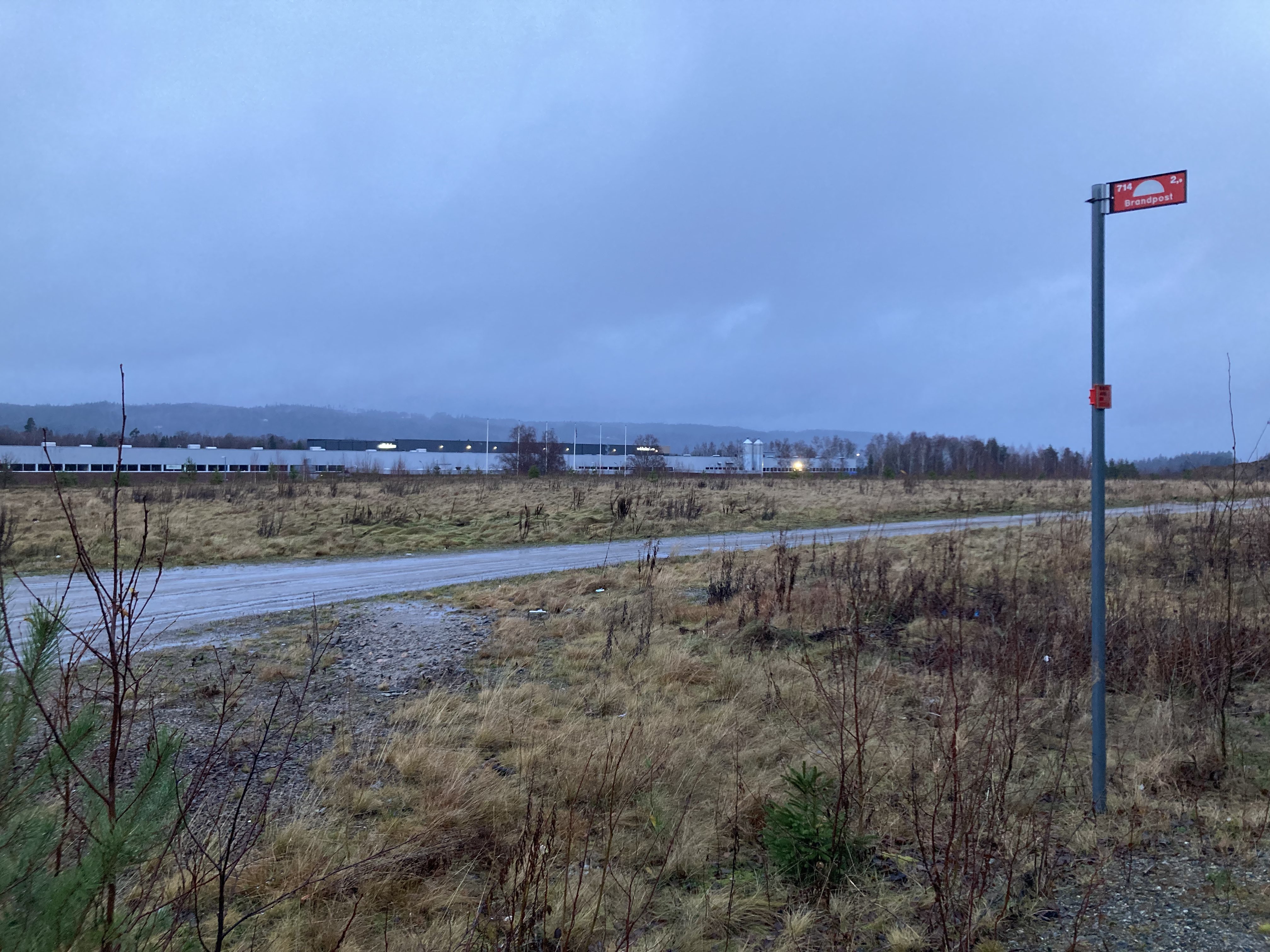

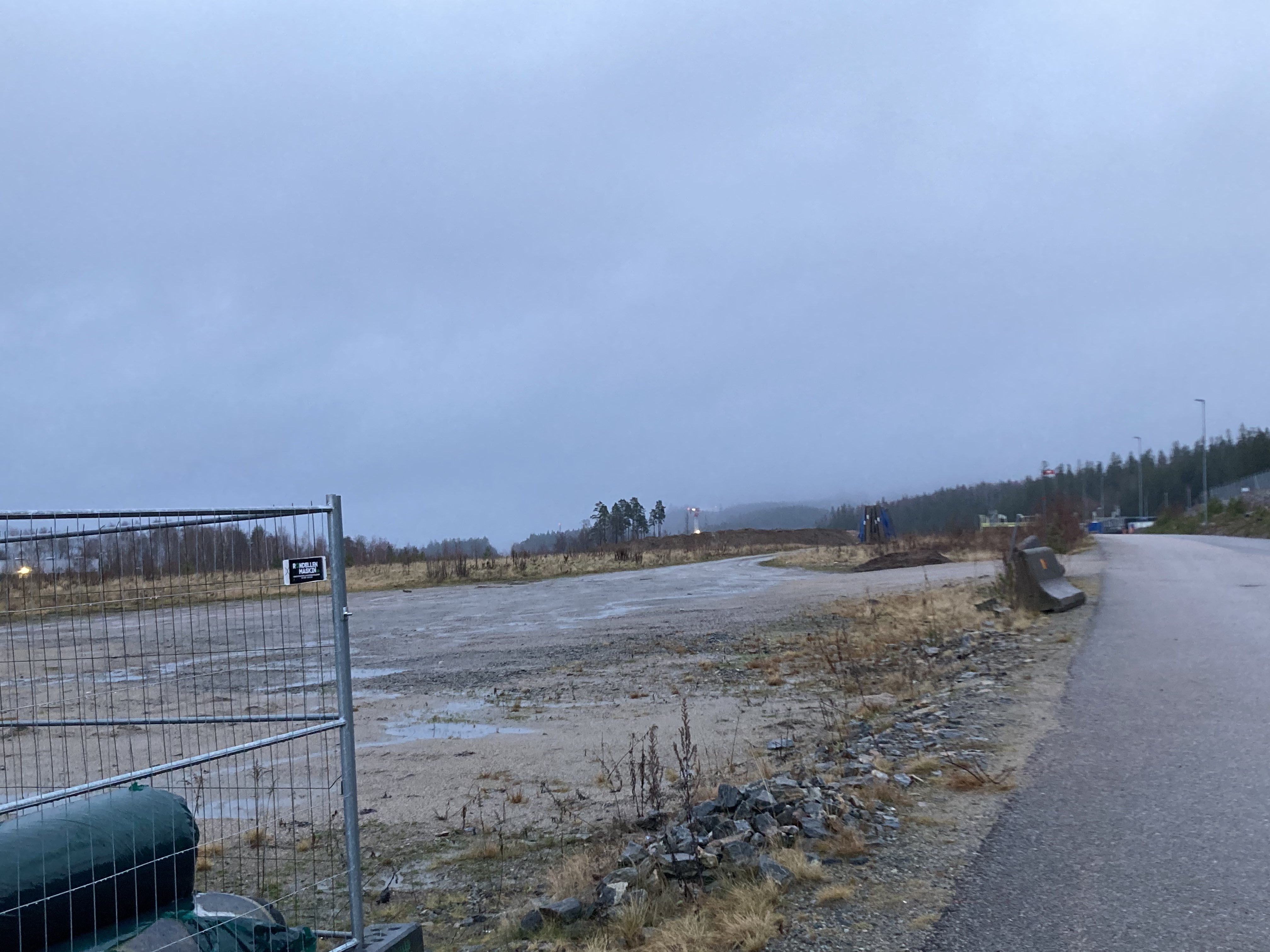

These images were taken as me and my friend were traveling and exploring an industrial complex close to where I live, much of which is still under construction. Both qualities were further added to the liminality of the shots I took the day’s images. The factories were mostly empty this close to the holidays, though many of the lights in the offices and the company glowing labels were still fully lit.
The unfinished nature of many of the buildings, as well as the fenced off areas further cemented the feeling that this is a place in transition, as well as a place that only a few are welcome.

As we walked further and further, more and more construction became apparent. As well as the grays of the construction sites, slowly making way for the darker greens and grays of the surrounding forests. Mist rising from the endless horizons of wooded hills in the distance.
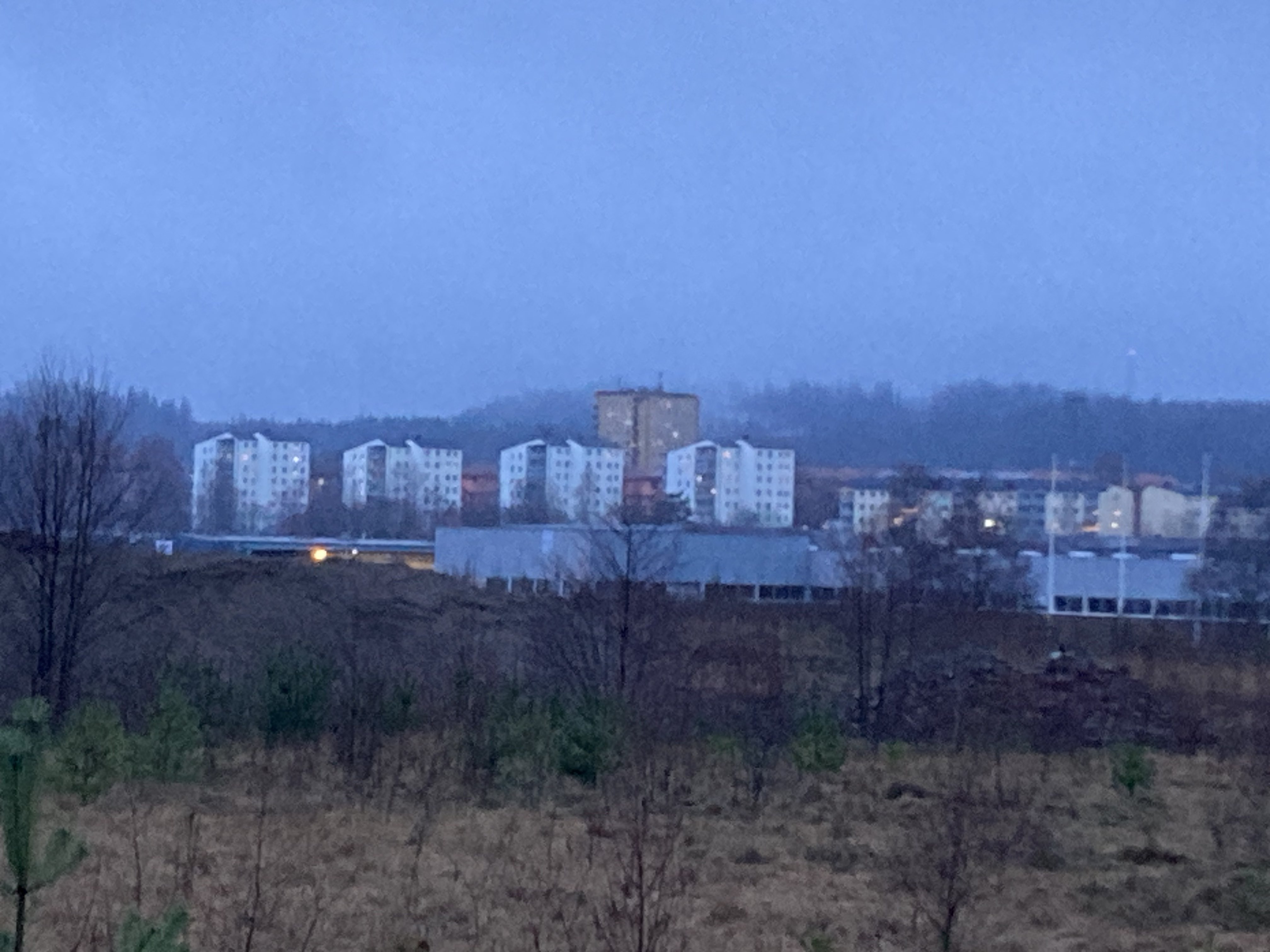
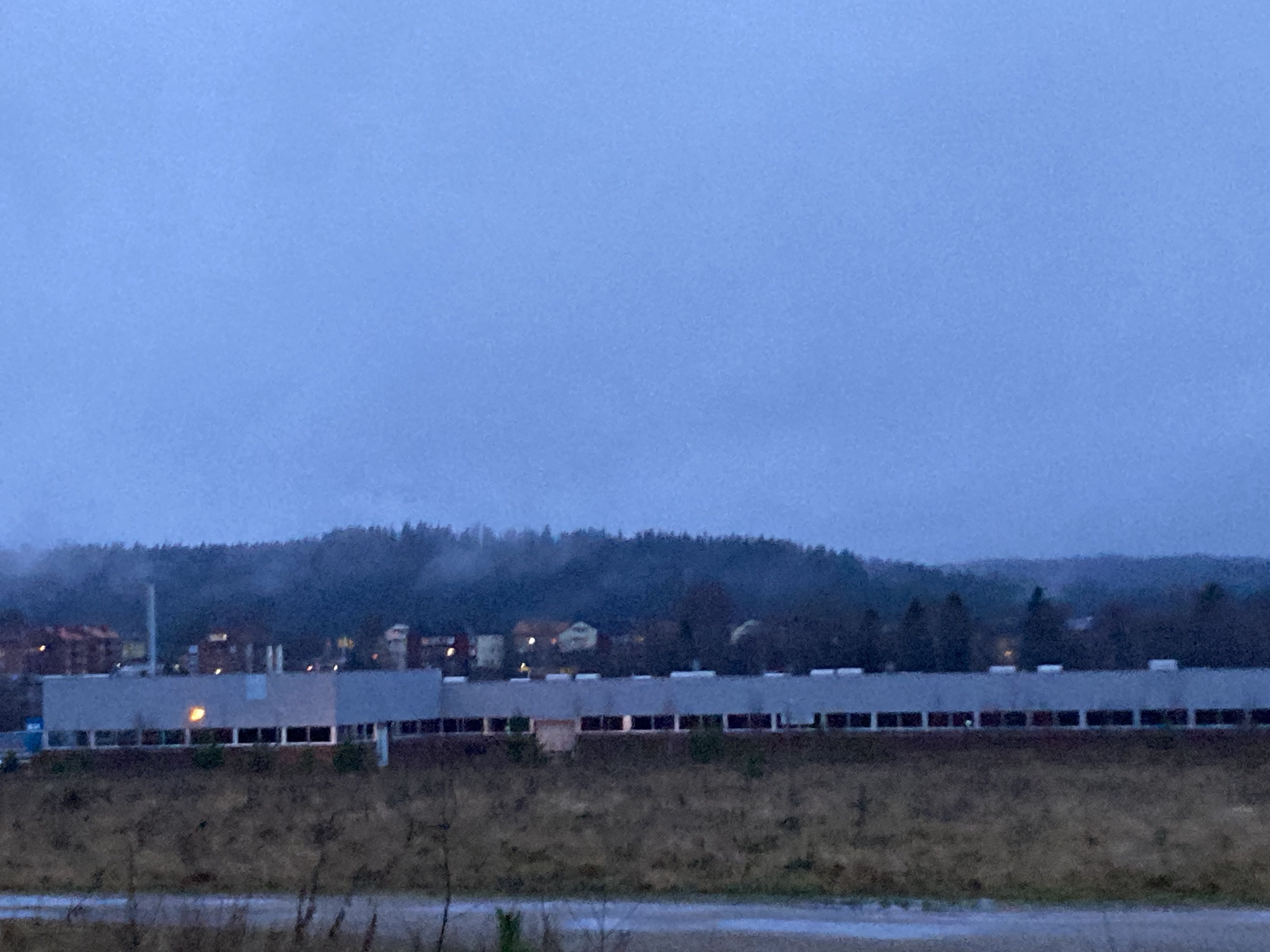
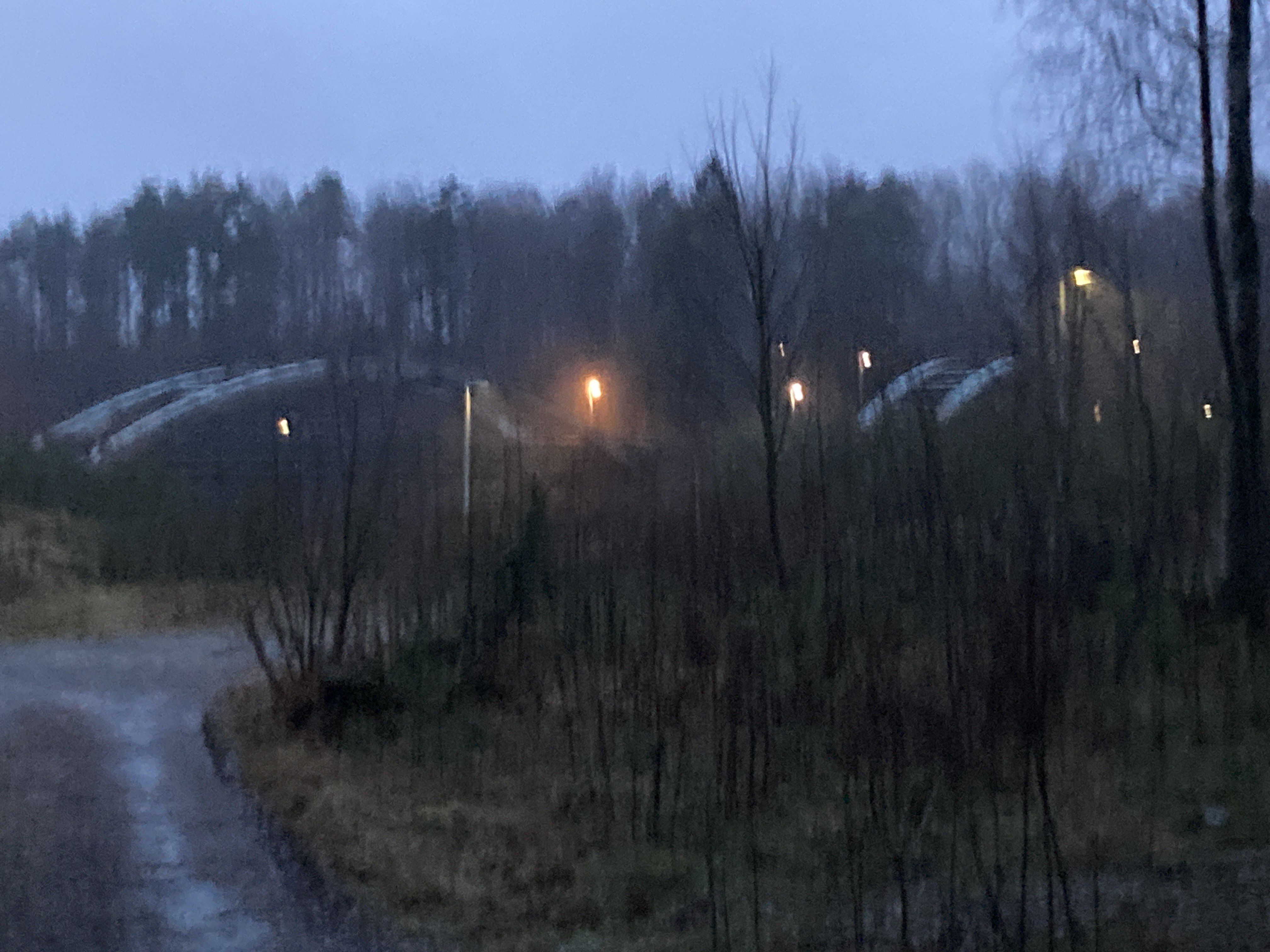
The gray grewever more apparent and dominating in the sky as the day passed on towards night. The mists rising from the forest, indicating that the temperature was slowly but surely rising, as the dew rose into mist, joining the clouds above.


As we walked, the sun started to set, and the mists started to rise ticker and ticker, blurring colors and making the horizon blend more and more with the sky. The lights started to glow brighter and more and more street lights started to glow, giving the scenes an even more eerie feeling.


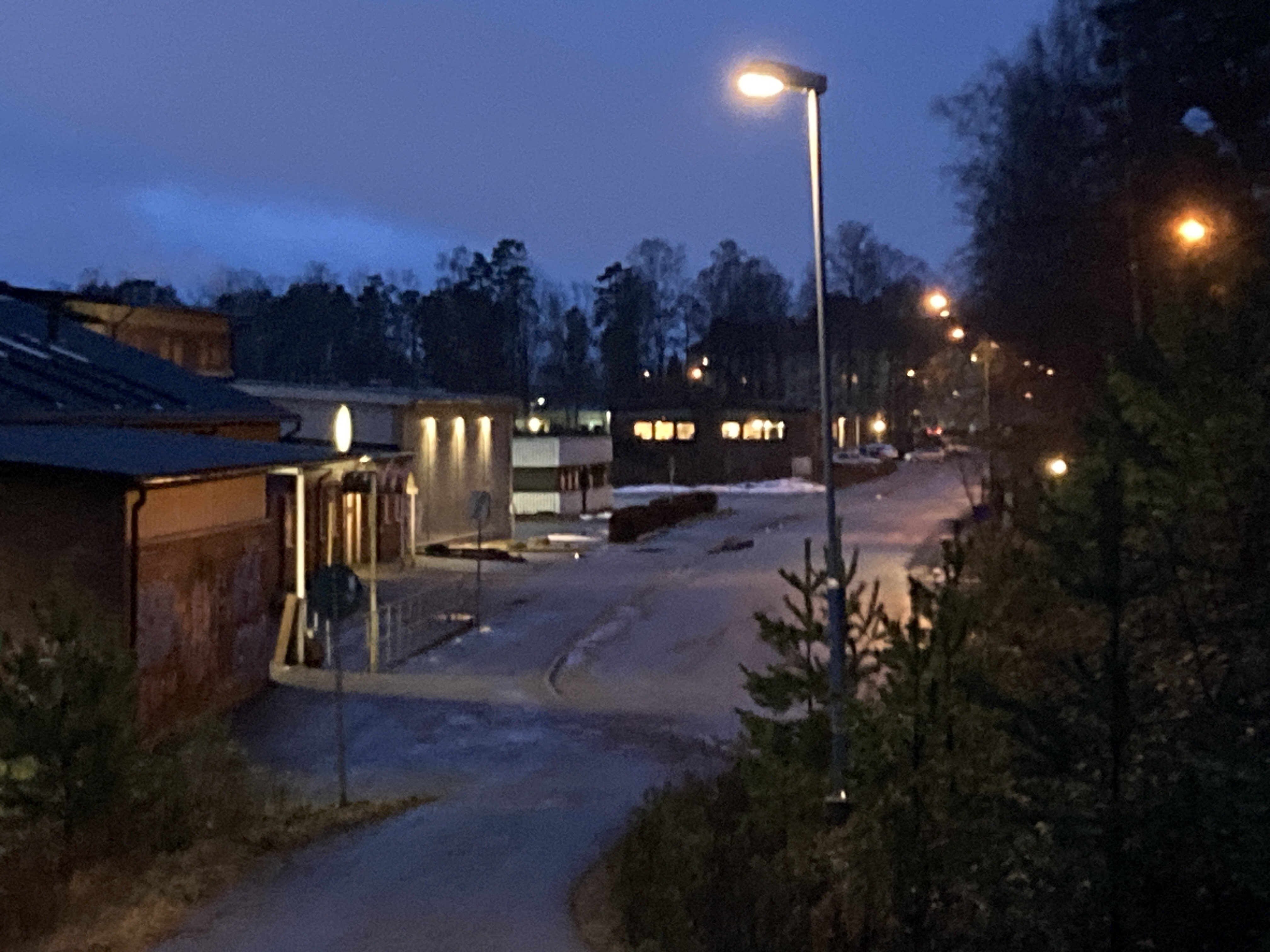
The wilder nature and the city share many liminal spaces, where the farmed forests of energy trees meet the suburbs in unplanned clusters of trees and bushes and greenery. These spaces are everywhere, and very easy to miss, but they are often defined by their lack of human involvement, as well as their wide variety of plants and, if you are lucky, animals.
As I was taking these photos, and writing this text, I was in the process of moving from my home of several years and going back to my hometown, to hopefully be able to follow my dreams. So in many ways, these pictures also resemble a liminality for myself, and my life, as I am waiting to leave my old life, and move towards my new, and hopefully better life.
I hope to be able to share more essays, photo collections and a lot more in the coming years, I hope to see you all there!
To build on my last chapter, I would like to ask this question; if it is up to the library to provide new experiences, or to provide for existing wants. This problem lies at the center of this essay. The question of what kind of collections a library should have, and how it should be formed. So far I have discussed the need for expertise, as well as a willingness and interest from the part of the patrons to interact and use the collections at the library. Either must be present in order for the motivation for a certain text to be brought into the collection, as well as for a collection to be created in the first place.
By presenting the patron with a wide selection of the texts that the librarians know that the patrons would want to consume (Feel good novels, detective novels, movies and cook books etc) will the librarians make sure that the patron almost always leaves the library with something to consume. As a result the patron will always leave the library somewhat happy. This form of preemptive and predictive form of acquisition is the most common form used in Swedish and other public libraries.
This approach has been discussed a bit in the earlier chapter, when I discussed how many, if not most patrons already at least somewhat know what they are after when entering the library. To make sure that these patrons leave happy it is vital that they are able to reach their texts as easily and quickly as possible. This can be done in a number of ways, firstly making sure that the search computers as well as the spaces where the reserved books are easy to reach. The second way is to make sure that the layout of the library is easy to navigate for those that know what they are after.
To minimize traffic and optimize throughput does it make the most sense from a patron point of view to add the most popular items front and center, at least if the goal is convenience. New titles are often presented in prominent positions of the library.
The library often crests specialty collections of the most well read topics and trends amounts that library patrons. Detective novels, feel good novels and historical dramas are common examples of specialty collections that are created. Now these are of course not static, and must adapt and change as the tastes of the patrons evolve as well. For, say, fifteen year olds, the feel good novel was not nearly as popular in the libraries I worked at.
This setup is great if we wish to be as effective as possible, when it comes to giving patrons the texts they want, as fast as possible. This system also allows the patrons to easily find similar texts to the ones that they are already looking for, something that is vital in non fiction collections, but non the less rather useful in fiction collections as well.
While this is a very effective way to make sure that the patrons get the books they are looking for, as well as making sure they don’t need to spend more time in the library than absolutely necessary, it also risks making sure the patrons miss much of what the library has to offer. It is less likely that a patron will pick up a gothic horror novel or a graphic novel if they already have all they feel they need in the feel good section for example.
There is another way of creating a collection, that instead aims to inspire and present the patrons with new forms of media, rather than to simply provide a convenient way of getting the media that the patrons already know that they want. There are some examples in which the Swedish libraries are already doing this, but I believe that we can go a lot further in presenting patrons with new experiences and forms of media.
As books in Sweden and the west become cheaper and more easily to acquire, I would argue that at least some of the public libraries should move towards media forms that are harder to acquire or consume. This could be VHS classics and cheap VHS players, or laser disks and ways to watch them, as well as ways to play old video games or VR technology that is currently out of most patrons’ abilities, either due to price, or scarcity. As technology moves forward more and more of these media forms will be left behind.
I argue that it is time that libraries as centers for art and knowledge embrace these forms of media as well. Much media is already lost simply due to the fact that the ways of experiencing them are lost, or default to acquire. A library that is built and curated this way, must by its nature be a lot more strict when it comes to the curation of its collections.
Due to the added work and infrastructure that is needed for each specialty collection would these collections be a lot smaller, and as a result need to be a lot more heavily and strictly curated. In other words a series of deep collections, rather than a few wide collections. This leads me to the last of my arguments before my conclusions, who gets to decide what kind of media to collect and what will be in it.
Much of the logic that I have presented in this text can be found echoed, and indeed being co-opted from the logic of store layouts. Should the goal be to get the customers to find the items they are looking for as fast as possible, or is it rather to make sure that the customer leaves with as many items as possible?
Now, both approaches are more or less useful depending on what store that you are running. In a supermarket it would make more sense to have stable items front and center, and then have the tempting offers on the way towards the register, while in a specialty store like a jewelry or electronics store, it might be more profitable to have the most commonly bought items in the back, to force the customers to walk past all the other options available to them, and as a result enticing more purchase.
While the library does not share a store’s profit goal, at least in theory, is it not a perfect allegory. But it is nonetheless an interesting framework upon which we can better understand what a library should and should not be. Just like a store, a library is there to provide a service, to aid in some goal that the patron or customer wishes to achieve, the biggest difference is that the library is free.
In this text I have presented two approaches to answering the question of what a library should be and how it should function. Just as with a store will the needs and uses of a library vary somewhat between institutions, user demographic and collection.
A university library for example would most likely keep the most relevant course materials for their specific schools easy to reach, while the less borrowed and used collections might be pushed more towards the back. This is assuming that the library is not strictly following an already established model.
The question of what a public library should be is less cut and dry, and while my personal preferences should have been made very apparent by now, can I see the value in both approaches. And it comes back to the core problem of what a library should do. Should the public library challenge its users’ habits and experiences, or cater to them? While the library of Odd Things by its very nature caters to the idea of expanding the users experiences and preferences, it must also cater to already existing preferences, partly due to the importance of nostalgia and interconnectedness rooted in the project.
The question of what a library should or not focus on leads me to the topic of my next chapter. Who gets to decide what a library should or should not be? Librarians, patrons or policy makers.
If you like what you read, please consider supporting me via kofi or pateron, doing so will really help me to be able to create more of the content you like! As a bonus you also get access to an ever growing library of essays and short stories, only available to my supporters!

