
Essay: Abandoned digital spaces; part 2, Second life, Life amongst the relics

Introduction

Second Life was a popular three dimensional chat room in the early 2000s, following in the footsteps of several programs and applications. What sets these chatrooms apart is the fact that they are fully modeled 3 dimensional spaces you can explore and interact with, much like in a first or third person video game. These environments are more often than not the creations of the users of the program themselves, often aided by tools created by the developers of the platform. Many of these areas, due to their technical limitations, as well as the varying artist skills of their users, often exhibit an alien, or surreal quality to them.

The creators of Second Life, Linden Labs envisioned, as the title of the program entails, that people would live two lives, one in real life, and one in Second Life. Businesses, relationships and educational endeavors were all things that were envisioned to, and still do to this day. Second life does indeed still have a very vibrant and colorful population, and the platform is far from abandoned. It is on the other hand not these areas that we are going to explore in this text, but rather we are going to use second life as a vehicle to explain creation, entropy and decay in the digital spaces.

Creation and destruction in digital spaces

The act of creation in a digital space as Second Life must by its very nature be an active act. Even if this creation is made by a program, or random algorithm is it something that needs to be started. What this means is that every single surface, regardless of how naturally created it seemed, is always willed into existence in one way or another. When it comes to the lands, the sea and the sky of Second Life is this created by Linden Labs, the self professed gods of the world. A topic worthy of its own essay, as well as the supposed roles of these gods.

Destruction is a more complicated topic to discuss. I will label destruction in two ways, intended and unintended. This distinction related to whether or not the program in question, here being Second Life, accommodated for this destruction to happen or not. In other words is intended destruction any form of deletion that happened in the similar way that creation happens, ultimately intentional and user created. Unintended destruction pertains to things not planned for by the program or its creator, such as glitches, power outages or hardware and software malfunctions. I would argue that the first category can be said to exist within the context of the digital world, while the second form pertains to destruction of the very world itself.

Degradation and entropy

The concept of degradation will here be defined as the slow and natural degradation of al mater and energy into its base components. everything breaks down, melts and crumbles, before it can be reformed into something else.
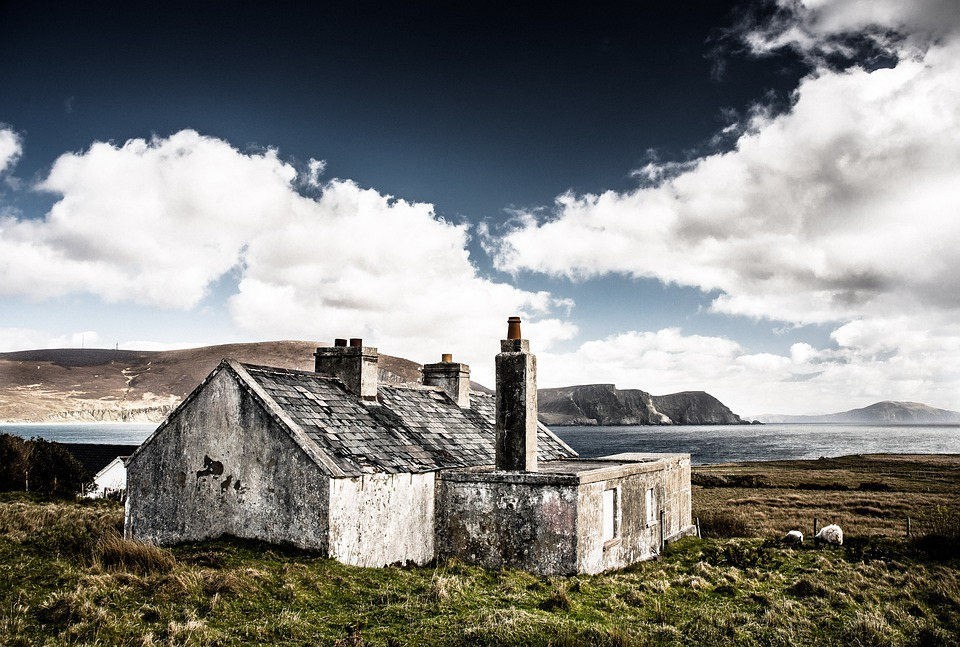
How can we tackle and quantify entropy and degradation in a world that, ideally never rots, breaks down or slows down. These examples would all fall under what I earlier described as external destruction. As we discussed before can these forces only enter the world of second life via external forces outside of the program itself. Outdated drives, invalid i.p addresses and the inevitable shutdown of a server. I would not argue that this is not to be seen as entropy in the world itself as the change of organic matter within an ecosystem or the reshaping of the planet itself. This would rather be a slow and inevitable degradation of the very framework of the world itself, the slow heat death of the universe.

Intentional destruction, as discussed before, pertains to the deletion or alteration of certain aspects of the worlds, either by the creators themselves, the creators of the program, or in some cases, by mellitus third parties such as hackers. These acts, are as the title implies, direct and intended acts of destruction, and can as a result not fall under our standard definition of entropy.

Abandoned lands

For a space to be considered abandoned in this text, must it still be available in the game world itself, but no longer in use by any of the original inhabitants or creators of the space. The space must also have fallen out of regular use and awareness of the population of Second Life in general. As long as these spaces are not actively removed, they will continue to exist in this state, in theory forever.

An area that has not been used, but not been deleted, will still exist within the world, unchanged, in status, until the server one day fails. While abandoned and left to their own devices, will their digital nature keep them from ever degrading or changing in any way, not unless any form of external or internal destruction occurs.
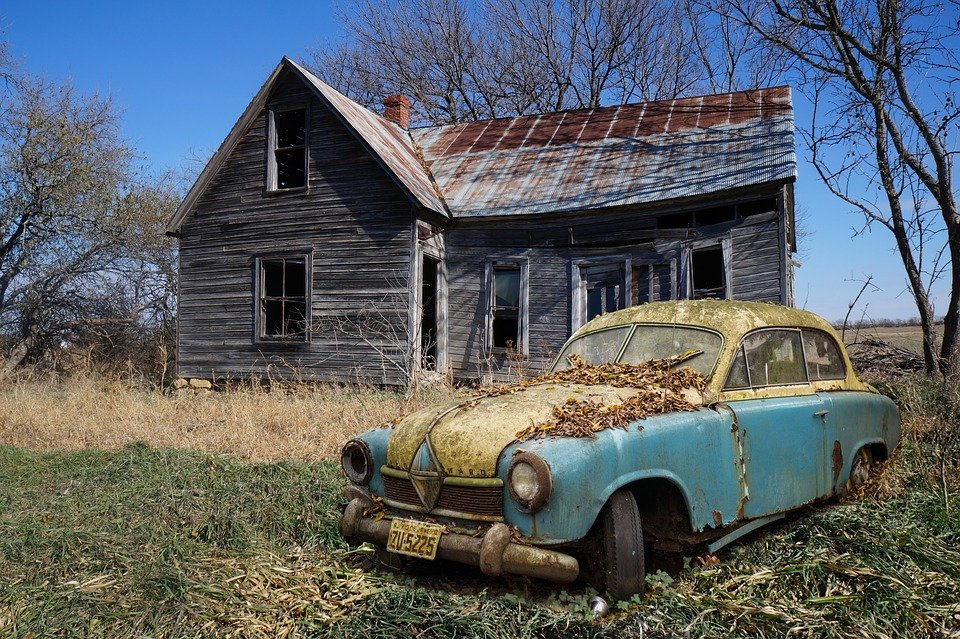
I have spent much time in these abandoned areas of second life in my travels of the program. It is an utterly serene, and horrifying notion to go through these still intact ruins, many of which will not be visited again for years, and will most likely never see use again. This state of affairs will however not last forever. As technology changes, code is rewritten, and new hardware is invented, these will become more and more out of sync with the rest of its reality. Visual objects will fail to load, links will break and, if care is not taken to renew these areas, will users eventually be unable to visit these areas altogether. And so, death comes to a digital land.

Reappropriation and renewal

Just as with the degradation and abandonment of an area, the appropriation and renewal of an area be made with even more of a direkt and active effort then any sort of real life area would need. Linden Labs as discussed earlier have the power to change, remove or regain control of any area or item in the game at any moment. This fact is not unique to Second life, and is indeed a basis to any website or internet product controlled by a single company. What sets Second life, and similar three dimensional chat rooms apart, is the visual aspects. Being able to control your character moving around a statue, and interact with it in real life, makes its disappearance, or replacement different, more tactile then if the same thing happened to say an image on a message board. 

The size and scope of the current Second life servers makes it unlikely that many areas need to be removed, though lands on what is known as the mainland is regularly bought, sold and confiscated as it is, as Linden Labs put it “under their direct control”. Other lands are known as Estates, and are, in theory, under the direct control of whoever leases the land, though they are as well, truly under the control of Linden Labs, if they would choose to enact their powers. These estates will, just as land on the mainland, assuredly be taken back by Linden Labs if the users are found to be in breach of the companies terms of service. It is very likely that, due to the economic and popular demand of Second Life, that no region or item in under Linden Labs care will ever become so obsolete that it will become inaccessible, but this too, is also temporary in the grand scale of time.

Conclusions

It is very likely that, due to the economic and popular demand of Second Life, that no region or item in Linden Labs care will ever become so obsolete that it will become inaccessible, but even I have, in my short travels through the lands, found a fair share of unavailable modules, addresses that no longer exist, and textures replaced with error messages. 

Second Life has reached its peak, and though their number of users seem stable, it is unlikely that it will make much of a resurgence in the future. So far the denizens of Second Life, and their worlds are safe from the slow breaking of their world, and if you stay within the populated areas, you would most likely not even notice it was happening.

But I implore you, if you ever visit Second Life, veer off the beaten paths, wander off into the never changing wilds, and behold the slow heat death of a universe with your own eyes.

Pictures taken from https://pixabay.com and used with their promition,

Essay: Abandoned digital spaces; part 1, introduction

This text is the second in a series of informal essays where I present a more causal argument then my normal analytical texts. I this text will be the first in a series discussing abandoned spaces of digital landscapes, and how they may seen as mirrors of their real life equivalents. This chapter will discuss the basic themes and concepts we will need for our furhter discussion of the topic.

Introduction

The abandoned and lost space of humankind have always intrigued me for as long as I can remember. From the ancient towns and burials of long lost civilisations, to the modern ruins of failed commercial enterprises, there is a certain sense of longing and sadness I feel when visiting these areas. It is a feeling I find hard to put in to words, and one that I surprisingly felt when exploring the virtual chat room Second Life for the first time, the vast square miles of now abandoned and forgotten buildings awoken something within me, a feeling that I wish to try and express trough this series.

Before we start this exploration proper, I have some concepts I would like to present. This chapter will be dedicated to a few analytical terms that we will use to explore a number of strange and partly to full abandoned digital spaces. By setting out clear parameters, I hope to make this series easier to follow, as well as more enjoyable to read.

Definitions

I will start this series by making some definitions of the material I will discuss in this series. These terms will be as a base for every world we will be analysing in this series. I will primarily discuss two aspects of the abandoned spaces we will find in this series. The first pertains to the places themselves, the second will discuss the creators of these spaces.

Virtual Landscapes

First of all I will present the main three various digital lands. By doing so will I hope to more easily help the reader conceptualize the spaces I am presenting. I will split up the areas we will explore in three separate categories, websites, games and virtual chatrooms.

The website

Arguably one of the oldest repository of digital content, along with chat rooms and databases. Many of these services had been lost to time, or simply fallen in to technological obscurity. The endless march of technological progress pushing more and more of these once high tech and modern services in to the void of obscurity.

Exploring some of these website, be it via an archive, or by visiting some of the few pages that are still up and unaltered, it is, at least to me an etherial experience in and of itself. The radically different design language, the esoteric ways of orienting oneself across the website, the inherent newness (at the time), of the hyperlinks. The infamous space jam website is still available and mostly fully operational after al this time, but there exist a wide number of various sites for you to explore on your leisure. I would be amiss if I did not mention the amazing work of internet archives, Wayback machine!

The most basic form of world we will look at will be a series of web sites, forums and databases that have for one reason or another been abandoned or neglected by their original creators. I mainly added this segment for completeness sake, and will most likely not spend most of my time discussing websites per say. Note that some games such as Neo-Pets will inevitably fall within the preview of website as well as game world. I will point these instances out when we encounter them.

The game

There are innumerable games that have been abandoned by their publishers over the years, but for this text in particular I wish to discuss the various online games, be it games played via a web browser or a dedicated platform. many online only games of today and yesteryear will eventually be met with this faith, of being left to their own devices, and slowly disappearing in to the void of obscurity.

For the sake of this series will I only discuss games that are explicitly meant to be experienced in an online environment, and one that is still accessible online in its original form, or via some form of facilely, like third party servers. I will only discuss games that are currently accessible online, and have some sort of servers running. I want to be able to experience the servers themselves, as much as the games, so any game that has an offline function as stand in, will as a result not be covered in this series.

The virtual chatroom

The virtual chat room is what this text will spend most of its time discussing. The concept of a virtual chatroom is one that has for a long time interested me deeply. The idea of having a visual representation of your avatar for the sole purpose of chatting is somehow deeply fascinating to me. The fact that many of these worlds allows the users to create their own custom content and avatars makes this concept so much more interesting to me personally.

The most well known of these virtual worlds currently would be VR chat, but for this series will primary spend our time discussion its predecessors such as second life. Due to the fact that Second Life and its contemporaries has existed for so long, it means that the existence of abandoned and or lost materials is rather prevalent amongst the its virtual landscapes. These abandoned structures, towns and monuments will be one of the main points of interest for this series.

The creators

We must also discuss the creators of these virtual worlds. Some creators, like when it comes to the developers of the worlds, be it a website or game are easy enough to pin down. The other creators, as we will see, are more elusive and harder to pin down. Much like how archaeologists tries to trace the identities and lives of the the architects of ancient civilisations, so will we try and gleam stories from what the makes of the worlds have left us.

Developers

The first category of creators we will discuss is the “official originators” of the digital world. The developers, publishers and owners . It is at their prerogative that the worlds itself was created and it is at their prerogative that the world can be destroyed. When it comes to most video games and websites, the creation is squarely set at the hands of the developers.

I will in this series define developers first as foremost as the “official”, original creators of the product, and any third party support or creation will be first and foremost be seen as creations of the users. I will note where there are exceptions to these rules.

Due tot he significant amount of official correspondence, journalism and other materials will it be rather easy to find official narratives to many, if not most of the abandoned worlds we will be discussing in this series. With that said, as I am a belier in the concept of the death of the author as a valuable tool for discussing media, will I be first and foremost look to the texts themselves when we go on our digital archaeological digs.

Users

Many websites or online games uses some form of user generated materials as part of their world building, be it posting, character creation of full on modifications to the base product. User generated contend takes a much bigger parts in virtual chatrooms such as second life and VR chat, where entire worlds are made out of the creations of its users.

By user I am in this text referring to individuals that have purchased or in other ways gained access to the product, and is creating content without ties to the official developers.

The nature of user created materials make it difficult to find out any details of the original creators. even if we have a name and ad ate of creation, it is more often then not some form on pseudonym or nickname. even if we were to know these creators, finding any additional information about them would be exceedingly difficulty, if not impossible. just when excavating real life settlements, we will have to really on general knowlage of the time period, and the general knowledge of the culture, to gleam some information from these digital dig sites.

“Nature”

Many of these worlds are enormous, and while much of it is created by and, many features are also created by algorithms or similar processes. These randomly generated materials are an inportant part of the wider digital worlds that we will be exploring in this series, and can ad a surprising amount of character and ambience to any area,

This this segment will I also ad any form of error, coding incomparability another problem with the media that the creators did not intent on. Due to their very nature, it is impossible to ascertain the nature of the “true” creators of these elements. With that said, examining these natural features, might gives us some hints on the rules that govern the worlds we are exploring.

Final thoughts

I have in this text, in as brief of an explanation as I can, presented the basis for this series. we will use this base formula, as we make our way on our digital scientific travels. My goal is to present this series in the form of a travel journal, together with an archaeological study. These are both formats that are new to me, and as a result this entire series will be a learning experience for me.

Note that this series will be a lot more informal and personal then my normal materials, and I hope that you will find this trip an interesting one, as we travel in to strange new lands. If this sort of text is not your cup of tea, then more traditional research and analysis is on the way as well!

Consider a state

Today we will follow up on our earlier discussion about the state as a concept. Historicity has states, as defined by Hobbes, exist as long as humans have lived in any form of organized tribe.

Today we will focus on defining the “modern nation state”. With this term I refer in this text, specifically to the unified nations that formed as a result of, and with the explicit help of the rise of European nationalism.

This nationalism can in part be attributed to the rise of unified nation states in the west. Germany, the UK, France and many more nations went from decentralized governance to a more centralized form. With this centralization came the need for a notion of a complete and uniform national identity. This identity would unify the nation’s citizens under one banner. This national identity would also legitimize the state’s rule. This act also helped legitimize the state’s interaction with other states. These interactions include everything from trade negotiations, to war and colonization.

This nation state is as much defined as what it is, as what it is not. What I mean by this statement is the following. When defining who are the citizens of a state (us), one must simultaneously define why is not (them). At the rise of European nationalism this often meant exaggerating some perceived virtue of the nation’s citizens while exaggerating negative traits of the “others”.

It is true that nationalism has similar themes, discussions and problems etc has evolved in several areas and time frames around the world. The somewhat unfortunate Eurocentric standpoint of the environment this blog is created in, makes me think that Europe is where our discussion starts. With this said, I believe there are some simulates that can be found in most if not all of these events.

The common element that we are going to focus on here is the following: all national identities are by their design, fabricated. What I mean by this is the following:

All national identities are created by its parent nation, state and most importantly, the people that embody it. Next time we will look closer at what makes up a national identity.

This blog post was spell checked and edited for readability at 2021-06-07

Conider a country part 1

Consider a country, consider it bearing in mind all we have considered before in these texts considering roads, towns, cities, cars and people. From above imagine the network of roads, towns, houses and businesses and lives. These collections are both independent, and completely dependent on each other.  Note that these dependencies do not end at an arbitrary land border, but spread freely, along the globe. But for this experiment, we will contain it within one nation’s imaginary borders. But a country constitutes more than that, more than the land it entitles, more than the people in it. These are in a way, arbitrary and incidental, simply existing in one time and space.

More than that a country also signifies a contract, for better or worse. A contract between the individual and a collective. This contract can be given the label of “citizenship”. These citizens collectively, and often forcibly build clumped together to create the populace of the “state”.

The state is a catch-all term for a ruling organ of some form, for where citizens get the rules of said citizenship contract. It is through these limitations, as well as the imagined borders of said country that the citizens get their shared history. This history, together with culture, traditions, customs and products created within these borders helps to form a citizens “national identity”. In doing this, these identity collectivity and simultaneously creates a country “identity”. Both affecting each other simultaneously.

This identity helps legitimize the state, and with it, its right to rule. The state rules with contracts between citizen and state and as Thomas Hobbes (1651) states “A monopoly of the legitimate use of physical force”. These nations also identify themselves in relation to other nations. Creating groupings of shared history, culture and other bonds, or forced together by one reason or another. A nation’s identity grows when it relates to others, for better or worse.

In this way a nation becomes more than itself, more than its borders, citizens and its culture. It becomes a collection of all these incidental parts, brought forth by time and space and becomes something else. Both as a physical force and as an illusion it becomes a nation, a country.

Thomas Hobbes, Leviathan 1651

This blog post was spell checked and edited for readability at 2021-06-07

Consider a city, part 2

We continue by examining other buildings of our city. The buildings in which we do not live, but yet spend much of our time. These would be the buildings of professions, either of ours, or of those needed for our lives and well being.

Let us begin with the prior category. This is your location of business, note that for some this is also our home, tough for most it is not. Here we perform a service, or produce a product for consumption. Services can range from selling to repairing, and selling can range from physical items such as food and toys to abstract concepts such as stocks and insurance.

You may or may not enjoy this work. Though for the process of these texts, all these facts are secondary. The main point is that you have an occupation, in which you spend a set amount of time. For the time and effort you are compensated a monetary sum, which you can buy goods and services from the second category of buildings.

These transactions will inevitably be handled by another individual, currently at their job. For the time and effort of handling your monetary transaction, they too will be compensated.

After a set number of transactions this individual will be able to make a purchase of their own, and the monetary flow stretches out, flown and intertwined throughout our city. This transactional chain does not stop in our town of course, but rather sprawls out in the world, as said worlds transactions sprawl back in.

In this way our imagination is not only interconnected through the physical lines of traffic, but through the metaphysical means of the exchange of goods and services.

Lastly there is one more group of buildings I would like to take up. These are the buildings of government and services. In some cases funded by public means, in other words the citizens of said city, or  in other cases they are funded privately privately. In this category do I put everything from police, to libraries and garbage collection. These are here due to, the are in their very core to more or less mean to serve the public.

Note that these buildings are also where individuals work, and are part of the previously mentioned monetary web. Even though some of these buildings (in some areas) have a need to stay profitable, this is not their main goal. Their goal is to provide the services needed for others to make a profit. See them as a foundation support for your city, which the rest of the city is built around.

Here is where I will conclude my contemplations of a city for now. My hope is that you will not see your city or town as a collection of blocks and stretches of land. But rather a collection of homes. That you will see the workspaces, where people like yourself work to meet similar ends. Roads full of individuals, as well as people and work of numerous services, making it all possible.

My hope is that you will look out upon your city or town and see, something more.

This blog post was spell checked and edited for readability at 2021-06-07

Consider a city part 1

Today we are going to continue where we left off, with a city or town. Full of rooms which, through complex norms, rules and social contracts, are considered homes. Homes that may be more or less yours.

Though these buildings make up so much of the actual city, their use and significance are rarely considered. Even less the apartments and lives within.

But leaving the apartment buildings behind, what else do we see? Homes yes, several, besides homes there are offices, stores, public buildings of different kinds, as well as industries and industrial complexes, we will return to these later.

For now, let us examine what lies in between these houses. Roads, paths and pavements. The grow, they shrink, they collide and they split up. They lead us towards our destinations, or away from them. At night, from above they spread out like glowing spider webs, like blood vessels they pump the traffic through the organism that is a city. Like so many things we will discuss in this series, they are simple, accepted, and almost invisible to us.

But what is a street? An area, or several, designated for transportation by car, bike, foot traffic etc. The speed, direction and phase, all dictated by abstract symbols and lights. These lines, and dots and arrows are each a message a symbol of a shared contract.

On these roads, our directions are predesignated by social and juridical norms and laws. We might walk on these roads, we might travel by bike or moped, we might travel by car. This journey might be spatially shared in a bus, in a car, or by foot traffic. Going towards something, going from something. But always with a goal, regardless if this goal is planned or not. But on all these occasions we are separate, in our own world, only these two places matter, and in a way only them exist. On our way there other travellers can seem like mere objects.

For example, you are in a car. You are travelling from your home to your job. It is rainy and cold outside, so you have your AC on. The radio plays the morning news. The car smells of home, and of you. This is your car, a several ton heavy machine, speeding along towards some-place else. But it’s not just a car, it’s your car, and it’s not just any destination, it’s yours.

Now consider the cars around you, imagine them with the same familiarity, as well as their goals, and a similar starting point. Continue with everyone on the same street, the same road, everyone from walking, to sitting half asleep on a bus. Continue to spread out through your city or town, the road full of, no longer traffic, but individuals, all from a starting point, to a goal, though not all of them planned.

Consider a city, as we consider the roads of said city.

This blog post was spell checked and edited for readability at 2021-06-07

Apartment blocks

Have you ever considered what makes up an apartment block? A cube of glass, stone, maybe wood that makes up so many towns, that so many people do and don’t call their home.

First of all is a physical thing. Big, imposing a brick. Man made, yet it seems almost natural, like a hill, or groups of threes. This is how we usually see apartment buildings, or at least, the ones we never enter.

But if we were to enter one, the become tangible, more real. It has an inside, we already knew that said inside exists. But now it’s more comprehensible for us. A hallway, a staircase or elevator, and of course the apartment itself.

The apartment as in a set of rooms that we, or someone we know, calls home is now a set point to us. The space becomes a tangled entity to us as we enter it, as we see, smell and feel it. The things in there, their concepts as well as the memories of these things, creates, together with the room they occupy, a home.

Though this apartment is not the only one on this floor. There are others, try and imagine them, just as real. Try to give them the same sense of physicality as the one you know. The same reality.

Now let’s go on to the same procedure on the next floors of said house. Not any-more a block of concrete, but a labyrinth of rooms, objects and consents that make up several individuals’ ideas of their own personal home.

Now stretch your view out the window, through the tens, maybe hundreds of similar apartment blocks outside. All of them are full of personal universes, coinciding without any conscious awareness of each other. All of them identical in purpose, yet, all of them unique.

Have you considered an apartment block?

This blog post was spell checked and edited for readability at 2021-06-07