Essay: The immersive world of Morrowind

This text will be my first in a series of essays, more informal texts that are more opinion oriented then my normal research oriented texts. The topic of today’s text is brought to you by Daipanda, a loyal viewer of my twitch stream. If you like to have your own topic suggestion featured on the blog, please visit Twitch.tv/samrandom13 for more information.

Introduction

This text will discuss the many aspects of world-building found in the video game Elder Scrolls: Morrowind, and how they in tern leads to a number of role-playing possibilities for the players. I have recently been playing trough the game at my twitch channel, and have as a result spent a lot of time analysing its story and world building aspects. I will today discuss three aspects that I have found of special note, the faction system, the in game dialogue, as well as the in game books and other texts of Morrowind.

Factions

Elder Scrolls: Morrowind uses a series of reputation systems, one being a personal disposition system for non playable character, that ranges between zero and hundred, that gauges how friendly each character is towards the player character. A second system, and the one I am the most interested in today is the faction reputation system. This system similarly scales between zero and a hundred, and dictates the player characters options while dealing with said faction, as well as dictating the base level for NPCs personal base disposition with the players. Bring in good standing with a faction will allow the player to use certain traders, get better prices, as well as to get specific quests from them. Being in bad standing will lock the players out of many of these features, and in some cases, will turn the entire faction hostile towards the player. Al factions starts with varying degrees of like or dislike toward the player, and some will always despise the player cahracter, regardless of what they do.

The most interesting aspect of this faction disposition system is that, besides affection the relationships between the player character and the faction, do also play a role between the factions themselves. Each faction has a set disposition ration to every other faction. For example will the two major magical factions, the mages guild, and House Telvanni, have a negative disposition towards the others members, due to them competing for the same markets, namely magical services.

When a player joins a faction, these negative modifies will be calculated in to the disposition of every other faction. <in some cases, like with the great houses, it is impossible to join more then one, and joining one of them will permanently stop the players from joining the others with said player character. Due to the immense powers struggles being a major theme of the setting of Morrowind, will it be made clear to the player right a way that joining one of these great houses will swear them in to said house, and bar them from joining any other. The actions of the player will, as they progress trough their chosen house storyline put them in direct conflict with the other houses, and as a result will their personal and faction wide disposition go down with each of the NPCs pertain to said faction.

Other factions conflicts are more obscure and easy to miss, and several are deliberately obtuse, one well known example comes to mind early in he game, where he player is first introduced to the staple factions of the Elder scrolls series, the mages, thieves and fighters guilds respectively. The players are initially able to join both the thieves and fighters guild at their leisure, but are at one point tasked with retrieving a certain item, a book containing sensitive information, for both factions. both factions will have vested interest in this book, and the players will be forced to chose a side, with some outcomes leading to the players being unable to join one of the factions in the future.

By forcing the players to take sides in these and many other conflicts does the game enforces the idea that the character the players is in fact, part of is a part of a greater narrative and world, and by forcing the player to make these decision is the player incentivised to crystallize an identity with said world. The player is not a omnipresent being that exits outside the narrative, or indeed the ultimate hero for al inhabitants of the world. They are a part of a wilder narrative, if a very crucial part of it.

Dialogue

As is the case with many role-playing games, is the interactions with player cahracter one of the bigger parts of Elder scrolls Morrowind. This is primarily doe by approaching an npc and engaging in a dialogue, here the players will be presented with a series of topics that they can ask this specific npc about. These topics vary greatly from npc to npc. The players are normally allowed to ask about as many of these topics as they like, and as many times as they like.

In some rare cases are the players forced in to a decision, here the dialogue box is frozen, and the player is presented with to or more red dialogue options, that they must pick one off, before they can continue. With this mechanic will the player be forced to conciser the context in where they ask certain questions, and take up specific topics.

One last note on the dialogue options of Morrowind, is that many of the characters will give fully, or partially incorrect information to the players, rather due to ignorance, or wilful malice. In no area is this as obvious as with the case of directions, that is often obtuse by the original quest givers, forcing the player to wander around the countryside, or look for alternate directions form other npc`s in the area.

Books

The last facet I want to touch on is the large number of books, scrolls and booklets that the player can find and read trough the game. These range from travel guides, and instructional manuals on proper trade conduct, to theological discussions and series spanning high fantasy novel series.

These books gives an incredible depth and nuance to the setting as as a whole, by giving examples of fiction and no fiction alike. Books like “The true nature of the Orks” and “The wild Elves” presents thoughts and biases of the various nations of the world, and tales and poetry describing the war of the red mountain gives grand examples on how the various cultures and nations of the Elder Scrolls series perceives the same historical event.

One of the more interesting facets of the books and scrolls in the Elder Scrolls series has always been the numerous contradictions and arguments that can be found within many of the non fictional texts. These contradictions do not come form sloppiness or oversight in the writing, rather the opposite in fact. The world of Elder scrolls is full of various cultures, and al with their own varying groups of philosophers, researchers, magicians and academics. The differences and arguments that the player will most often find is of a theological nature, more specifically on the nature of the divinity, or lack there off, of the living gods of the Tribunal, a topic that I promise I will return to in a more academic text later on!

The way that a lot of the information and lore of the elder scrolls series, and especially Morrowind, is presented in the way of books and scrolls. As with much of real life information and texts, is there always a sender with a message and a goal. By presenting the world via these complex and sometimes contradictory explanations on everything form the nature of the gods to how to best cast a fireball, will the players be incentivised to think critically about every text and piece of information they come across, and slowly puzzle together the truth, just like a scholar living in Morrowind would.

Final thoughts

Elder Scrolls: Morrowind uses a number of strategies to draw the player in to its world, chief amongst them obfuscation, and forcing the players to take sides. By obfuscating some of the information that is presented by the player, and presenting conflicting narratives, does the game force the player to conciser each new piece of information from various sides and angles. Furthermore, by presenting some of the information from the npcs in a similar contradictory way, are the players forced to think of them less as objective directions given by a story, and more like subjective interpretation of various real life people.

By forcing the player to choose between various factions are the player encouraged to form a more uniform image of their character, one that is slowly formed from a blank slate in to an individual by the choses they make along the way. The player character is formed as much by the factions they join, and friends they make, as by the once they choose, or are forced not to join. The lack of ability by the player to join every faction, to see every side of each debate, at least in one playtrough, further drives home the subjective and splintered nature of the narrative in Elder Scrolls: Morrowind.

I would argue that these two facets of Morrowinds storytelling greatly helps the immersion and ability for the player to fully play the role of their chosen character, and is a contributing factor to why the game is still played, and talked about to this day. I will return at a later stage with a more in depth analysis of many of the subjects touched upon in this text, especially the concept of ambiguity in the presentation of the texts of the Tribunal and other faiths.
Warcraft 3 and the otherness of the Horde: An introduction

Introduction

The concept of othering an individual, or more often a group, is a way of building one’s own identity. By defining what the other is, the individual defines what they are not.

In this chapter we will take a look at how the otherness of the Horde faction in Warcraft 3 is used to define the normalcy of the Alliance. In this chapter we will also discuss that exotifying sometimes, but not always, comes with the act of othering.

Tropes and exoticism

Before we start this analysis is it important to describe the terminology we will be using in this text. The main three analytical terms we are going to use in this text are:

  • othering
  • the concept of tropes
  • the concept of stereotypes

These three terms will form the basis of our analysis, and will be useful the discussion of other texts as well.

Othering

The concept of othering is the act of defining what you are by measuring yourself against a real or imagined other. These others are often framed in an antagonistic light, and compared negatively to the self. The other is often the representation of everything that the individual is not. If the person is to present themselves as enlightened, the other will be presented as stupid or barbaric. In post-colonial theory, the other is used to describe the colonized, and the “self” as the colonizer. In other words, it is a way for one group to assert themselves as a position of normalcy in a narrative, while the colonized is painted as unnatural. (Mushtaq 2011, Spiecker 2012)

The idea of the other in form of the Orc or Goblin can be seen in many fantasy texts predating the Warcraft series, non arguably being as influential as Tolkien’s Lord of the rings series, where the enemy orcs were presented as pure evil and completely irredeemable. Note that action oriented series like the Lord of the rings requires some sort of grand enemy, one that can be cut down by the heroes in droves, without diminishing the goodness of the heroes, or conjuring images of mass murder, a point Tolkien himself takes up in many of his personal letters. (Tally 2012)

Stereotypes and tropes

The term trope will in this text refer to a set of qualities and or signifiers that are tied to a certain group or individual. This stereotype is applied to this group as a blanket statement, regardless of accuracy or truthfulness. A stereotype in this concept is referring to broad and shallow concepts regarding communities, groups or individuals. (Spiecker 2012)

The concept of a stereotype is similarly based on a series of previous assumptions pertaining to a specific set of individuals or entities. I will in this text specificity discuss stereotypes pertaining to individuals ethnic and religious backgrounds, and how they pertain to the text of Warcraft 3, and the factions within it. I am basing these assumptions on the theory that no work of fiction is created in a vacuum, but rather built on a long series of fictional and non fictional inspirational sources, and by examining these links, can we come to understand the text itself more thoroughly.

Stereotypes are often the basis for many storytelling tropes. Tropes are in a way inevitable in storytelling, as they are often used as shorthand. Meaning that they are used as a way to convey more complex and complicated concepts in a quick and effective way to a specific target audience. Due to the fact that many tropes are based in stereotypes it is vital to critically analyse these tropes to come to terms with underlying prejudices and beliefs. Note that tropes can be used to describe far more then simply characters in a narrative, but for the sake of this series, this is how the term will be used.

The Horde

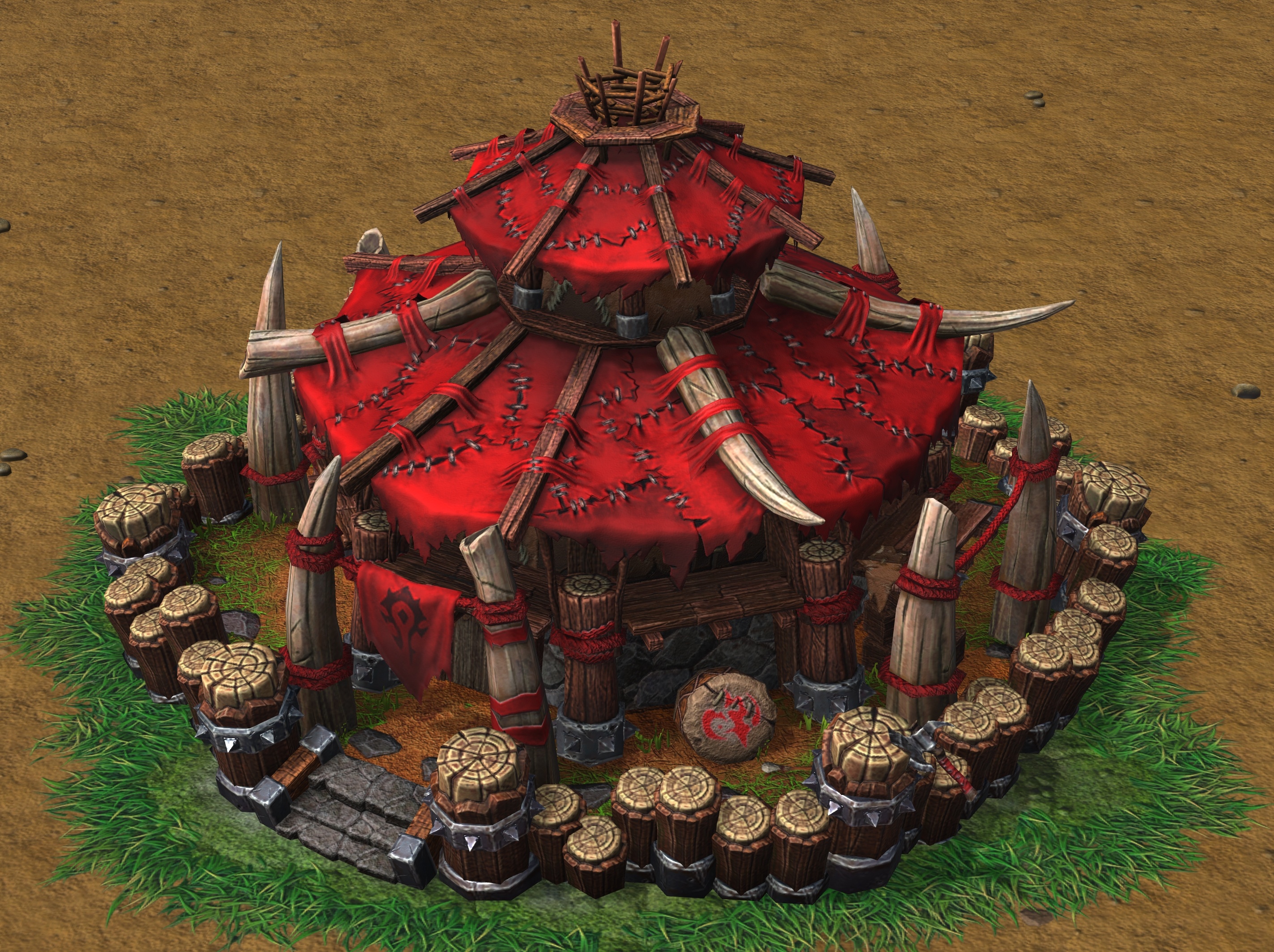
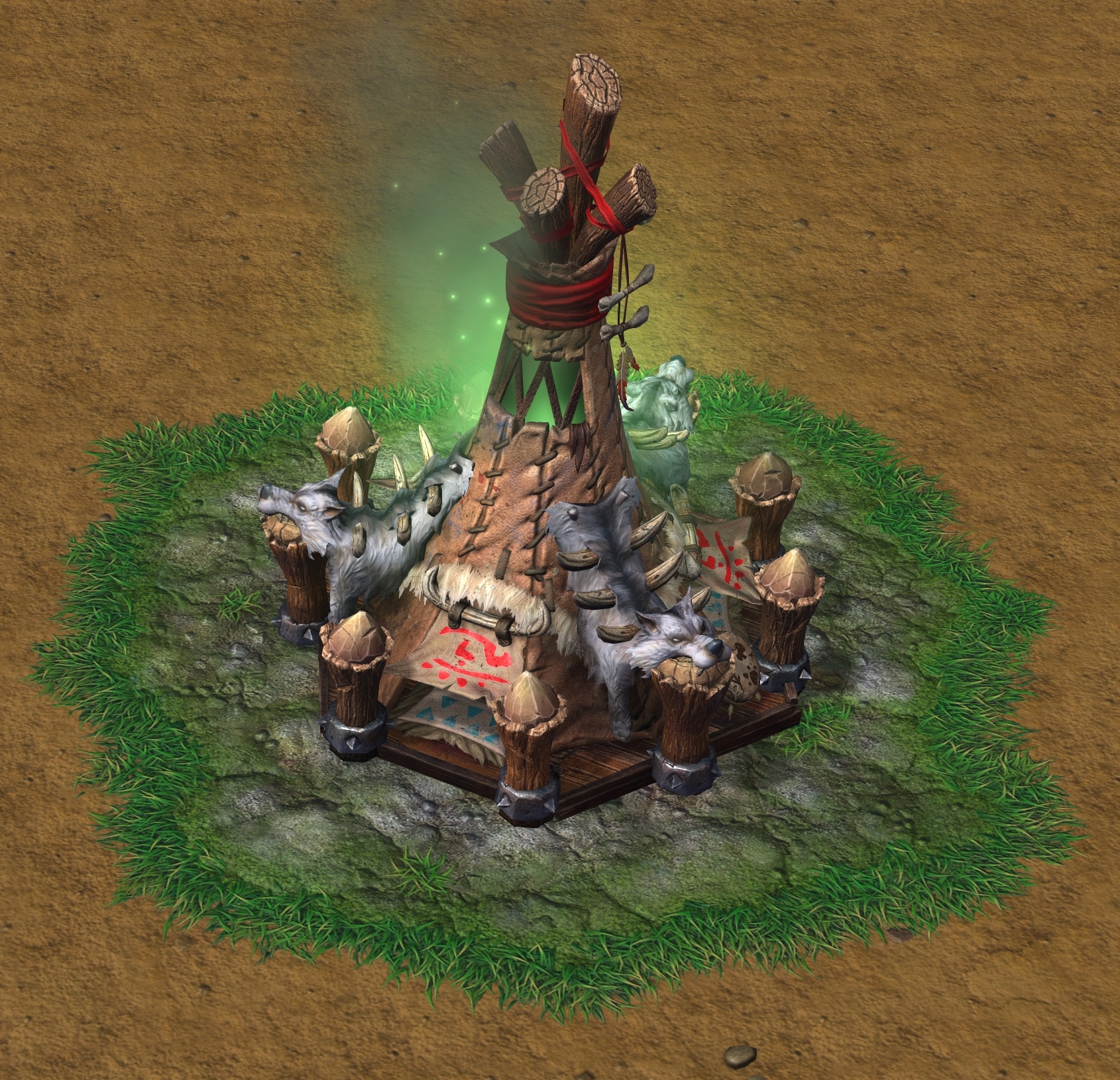
The very name horde conjure up images of something wild and untamed, something large and dangerous, an entity without number. The horde al consists of creatures that are in traditional contemporary fantasy seen as evil or villainous, be it trolls, minotaurs or Orcs. Their aesthetics and architecture conjure images of huts, bone jewellery and large ceremonial masks. They are set as the other and alien, in the case of Orcs in a rather literal sense, since they are later described as literal aliens. (Blizzard entertainment, 2002)

Source: https://www.wowhead.com/news/warcraft-iii-reforged-models-dark-portal-alliance-horde-campaign-buildings-295705

The description of the Horde cultures are often described as warlike or savage, in contrast to the more civilized and organized alliance organisations. The lands of the Horde is presented as wild mountain chains and far reaching savannas. The magical and spiritual practices in particular rely heavily on largely of shamans, totems and spirits. In particular when it comes to the Troll faction, that is explicitly “practising voodoo”. (Blizzard entertainment, 2002)

Source: https://www.wowhead.com/news/warcraft-iii-reforged-models-dark-portal-alliance-horde-campaign-buildings-295705

The horde is inescapable tied to the traditions and tropes of modern fantasy, many that has its roots in the era of Lord of the rings and other Tolkien works. While i would do a disservice by labelling the Horde as explicitly evil, it is still inportant to what the imagery of the faction tells us about them, and the work as a whole. (Blizzard entertainment, 2002)

The Alliance

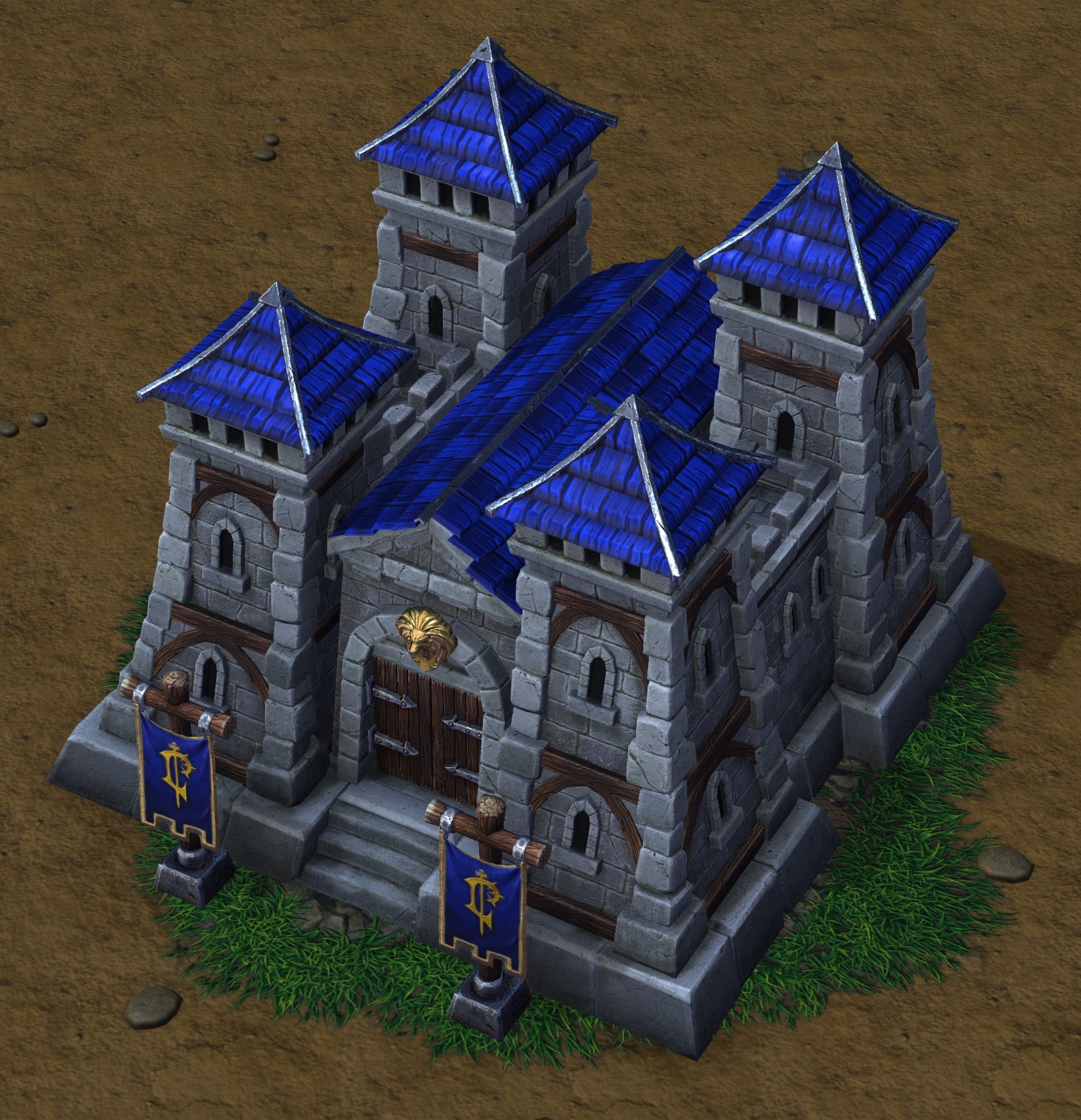
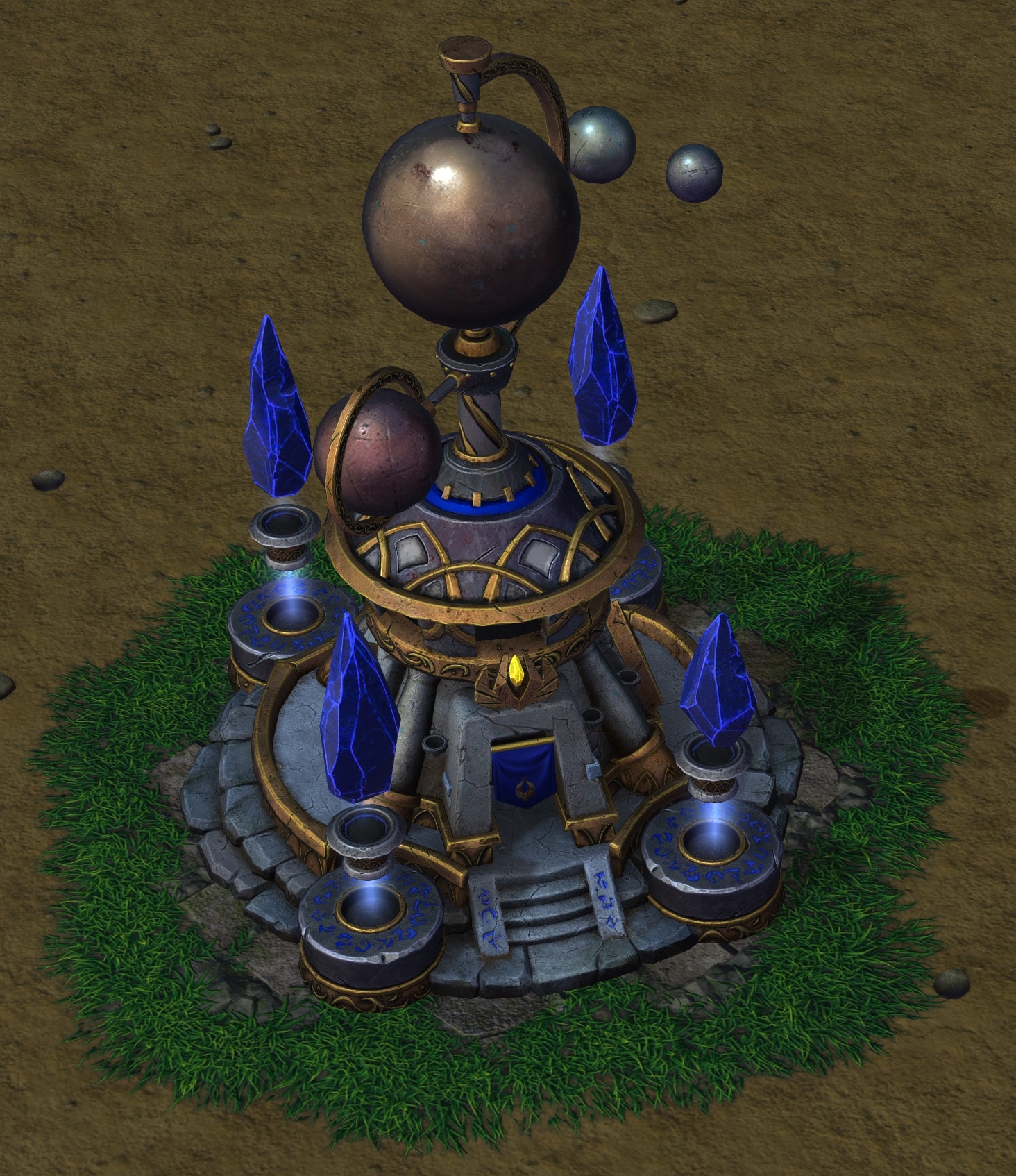
The alliance are made up of Elves, Gnomes and Humans, al races that closely resembles humans. More specificity does the alliance of warcraft 3 consists of, humans, dwarves and elves. Note that these races are often portrayed as the forces of good and order, following the traditions once again of J,R,R Tolkien. (Blizzard entertainment, 2002) The visuals of the Alliance are almost uniformly a romanticised version of renaissance and medical Europe, with grand forts, temples and factories. (Blizzard entertainment, 2002)

https://wow.zamimg.com/uploads/screenshots/normal/877429.jpg
Source: https://www.wowhead.com/news/warcraft-iii-reforged-models-dark-portal-alliance-horde-campaign-buildings-295705

The imagery of the Alliance is uniform and ordered, even tough the trademark cartoonish and busy visual language of Blizzard entertainment shines trough. The alliance is made out of cultures of high art, order, faith and wisdom. their magical practices comes in form of learned individuals and scholars, practising their craft in grand academies. (Blizzard entertainment, 2002)

https://wow.zamimg.com/uploads/screenshots/normal/877427.jpg
Source: https://www.wowhead.com/news/warcraft-iii-reforged-models-dark-portal-alliance-horde-campaign-buildings-295705

Their religious orders are made out of pious monks and devout paladins, their armies made out of knights and heavily armoured footmen, supported by archers and black powdered artillery. This is in stark contrast to the savage and direct tactics of the Horde. (Blizzard entertainment, 2002)

https://wow.zamimg.com/uploads/screenshots/normal/877430.jpg
Source: https://www.wowhead.com/news/warcraft-iii-reforged-models-dark-portal-alliance-horde-campaign-buildings-295705

I must once again reiterate that the status of the status of the Alliance as the heroes of the narrative in Warcraft 3 is far from clear-cut, and a lot of the narrative works to subvert this expectation. None the less is it important to evaluate what the visual language tells us about these faction, and what they tell us about the narrative as a whole. By evaluation what the visual language of the coded heroes in warcraft 3, can we find trends that runs trough much of its contemporary fantasy tropes and narratives.

Conclusions

I have in this text presented a series of basic concept that I will use to further discuss the idea of othering in the Warcraft 3 narrative. I have furthermore presented some basic differentiations and touchpoints that we will return to again and again in this series. One could argue that al these differences are made explicitly to show how different the two factions are from each other, and to explain the many wars in the narrative. I would argue that it is inportant to show what these differences are, and how they are presented, and more importantly, to shine light on the real life prejudices and assumptions that created these differences in the first place.

References

Mushtaq, Hammad (2011), Othering, Stereotyping and Hybridity in Fiction: A Post-Colonial Analysis of Conrad’s Heart of Darkness and Coetzee’s Waiting for the Barbarians. Journal of Language and Literature, No. 3, Available at SSRN: https://ssrn.com/abstract=1679116

Spiecker, Tara (2011) Beat Those Sleepy Slackers!: Color-Blind Racism in World of Warcraft’s Valley of Trials, Quadrivium: A Journal of Multidisciplinary Scholarship: Vol. 3 : Iss. 1 , Article 4. Available at: https://nsuworks.nova.edu/quadrivium/vol3/iss1/4

Tally, Jr., Robert T. (2010) Let Us Now Praise Famous Orcs: Simple Humanity in Tolkien’s Inhuman Creatures, Mythlore: A Journal of J.R.R. Tolkien, C.S. Lewis, Charles Williams, and Mythopoeic Literature: Vol. 29 : No. 1 , Article 3.
Available at: https://dc.swosu.edu/mythlore/vol29/iss1/3

Warcraft 3. Blizzard entertainment, 2002.

Warhammer 40k an in depth analysis: Part 3, The Eldar: part 6, The followers of the Laughing god.

Introduction

Our final segment of this series will describe a faction, that unlike any other Eldar sub faction do not have a direct connection to any fantasy trope per say, but is instead related to a much larger trope, that of the trickster. In this chapter will I once again give a comprehensive overview of the Harlequin Eldar as a faction. Furthermore will I present the trope of the trickster, as well as the role of the Harlequin within the concept of medieval theatre.

The trickster trope and the god of tricks

To properly understand these strange and erratic Eldar, must one first understand the trope that they are build upon. The idea of the trickster is one that can be seen in numerous cultures and myths. In Norse mythology we have the great shapeshifting Loki.

Trickster deities

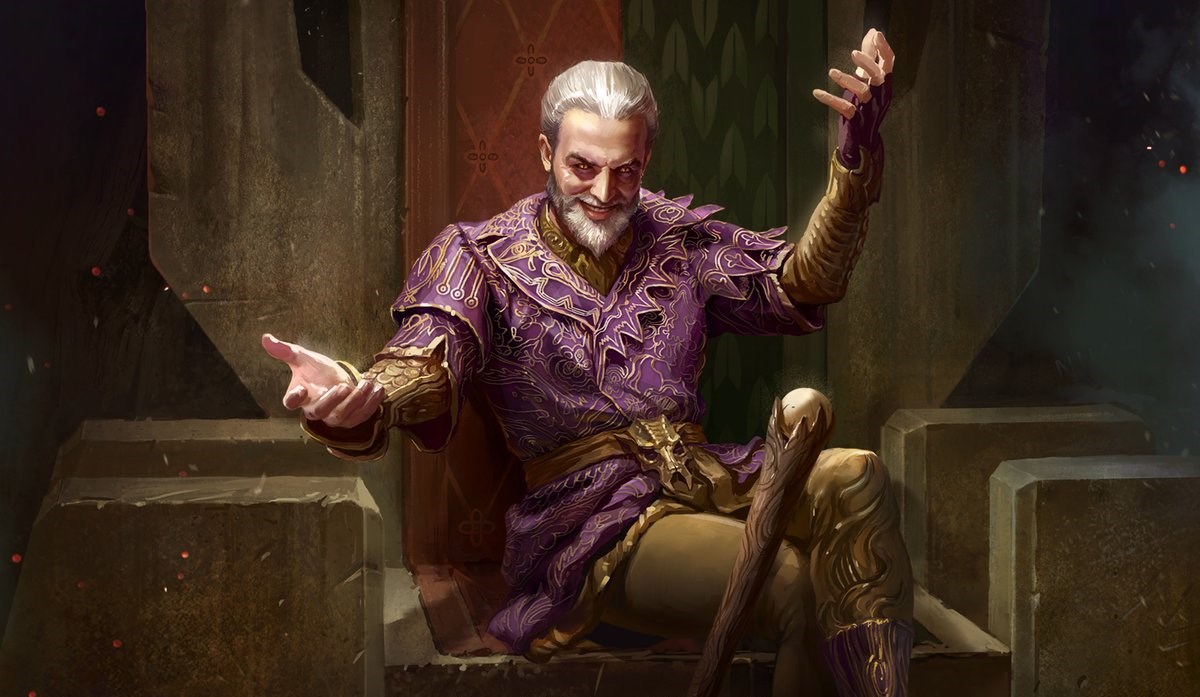
The trickster exist in one form or another within numerous faiths across the world. Sometimes in an antagonistic form, sometimes as a protagonist, but mostly they seem to switch roles as their mood changes. From pop culture we can also find examples of trickster deities, such as Sheagorath from the Elder Scrolls series. Many of these spirits or gods tends to really on their wit and intelligence, and often strive to show up their fellow gods as well as high and might mortals by tricking or pranking them in some way. The trickster gods tends to be morally ambivalent in their actions, and often simply work towards their own amusement. (Haase 2007)

https://cdn.mos.cms.futurecdn.net/dJu7rxbHZqi4ikc4EgtzaR.jpg
Source: https://cdn.mos.cms.futurecdn.net/dJu7rxbHZqi4ikc4EgtzaR.jpg

The trickster gods are often the embodiment of transgressions of norms and rules, often mixing and disregarding bounders between feminine and masculine, good and evil, homosexual and heterosexual, wise and foolish etcetera. (Haase 2007)

The character of the trickster

A trope that can be found within a large set of cultures and their written and oral traditions. Many myths and legends from the African hero Anansi the spider, to Loki of north mythology and more modern examples such as the Doctor from the series of Doctor who, and the Joker from the batman comics. (Haase 2007)

The trickster is often portrayed as a jester, clown, thief or prankster, seemingly working for no real goals other then for their own amusement. In folk lore they are often seen physically weak characters that wins the day trough their natural wit and sense of humour. (Haase 2007) They are sometimes presenters as heroes, but other times seems to live only to create chaos or acts fully for their own amusements. The tricksters roll in many narratives is to make fun out of established routines and power structures, and causing even the mightiest to fall.Fans of the Elder scrolls series are most likely familiar with the race of Kajiit, a catlike folk that in many ways honour and respect the many aspects of the trickster archetype, something we will discuss further in an upcoming series on the Elder scrolls universe! (Bethesda 2016)

The Harlequin in history and pop culture

Taking on many forms during the ages, but the version I will primarily look at today is the Harlequin of the Italian comedy school known as the commedia dell’arte. The role of the Harlequin was primarily to provide acrobatic amusements besides the more comical antics of the Joker and the clowns. Besides the acrobatic antics of the harlequin where they seminally also famous for sharp whit and mixing high and lowbrow humour.

Harlequin - Wikipedia

The Harlequin was, just as the rest of the trope, incredibly colourful dressed, often wearing a full or partial mask, as well as large patterned uniforms. One of their more common unifying features being their black masks. The most inportant tropes of the harlequin are seemingly to be to be able to combine wit with absent-minded, elegance with clumsiness, to internalise both qualities at once.

The Harlequin Eldar

As we have discussed in the introduction, are the Harlequin Eldar seen as strange and mysterious, even by their own kind. These individuals travel in troupes or small theatrical societies, and dedicate their lives to the perseveration of the cultures, myths and knowlage of the ancient Eldar empire.

The laughing god

Amongst the only one of the Eldar deities that escaped destruction at the hands of Slaanesh. Cegorach or the laughing god hides within the Webway, where he plots and schemes, and leads his followers from the shadows. The followers of Cegorach are unique amongst the Eldar, for they seem to live fully without fear for their souls. It seems as the trickster god has managed to ferry away the souls of his followers, away from the hungry eyes of Slaanesh. (Games Workshop 2015)

Cegorach plans and schemes from within the Webway, always looking for new ways to make a fool out of the great enemy, and at the end of times, the laughing god will reveal his greatest trick, and perhaps even manage to save the Eldar race. Cegorach shares many traits common to other trickster gods, both in pop culture and in ancient myths. Cegorach relies primarily on his wit and sense of humour rather then strength or magical abilities, and while the laughing god are happy to help his followers, as well as play pranks on their greatest enemy, does it seem that he is equally fine with spoiling the plans for anyone that are to high and might and sure about themselves, one would amuse that this would also entails fair amount of Eldar Far seers. (Games Workshop 2015)

The elder trickster god is not to be confused with the Necron god The deceiver. This ancient entity is seemingly the cause of the Necrons transformation in to the metallic undead creatures they later become. It is worth noting that both of these warring factions each has their own version of the trickster myth. While the Eldar god is benevolent to his followers, and uses his trickery to help them, the god of the Necrons are rather the opposite. Note that this fact does not contradict the trickster character, as they are often morally anbivilant or agnostic, and are in may ways the embodiment of such contradictions. (Games Workshop 2015)

Roles and masks

Much like a medieval theatre, and classic Greek play, are the various characters of each myth and play, represented by colourful masks and costumes. Each troupe member has at least one character dedicated to playing each inportant roll, both off and on stage. Because of the addictive and hypersensitive minds of the Eldar, will the players personality inevitably start to blend with the rolls they play. (Games Workshop 2015)

The masks themselves are constructed ins such a way that the enemies greatest fears are projected back at their enemies. In reality does these masks convey the face of whoever the Eldar is assigned to playing. (Games Workshop 2015)

Nowhere is this more true then with the Eldar that plays the role of Slaanesh themselves. The actor that plays the great enemy is revered, feared and pitted in equal measure. These individuals lives outside of even the Harlequins fractured society, appearing only when their role is needed, either on stage, or at war. (Games Workshop 2015)

The troupes of the Harlequins follows one of tree paths, dark, light and twilight. These paths inform the philosophies the Eldar follow both in and out of combat. The light path is focused primarily on the telling of grand heroes and triumphant adventures, where the dark troupes focuses on tragedy, villains and darkness, the twilight seeks to convey transitions between the paths. (Games Workshop 2015)

Female Harlequin Player Midnight Sorrow
It is not difficult to find visual cues tying the Eldar harlequin to their historical counterparts. Both parties wear full masks, as well as colourful large patterned clothing. While many of the roles played by the Eldar are tied to the traditional roles of the Harlequin, that of acrobatics and speed, will the harlequin Eldar play every single role of the traditional French comedy troupe. (Games Workshop 2015)

War as art

Even more so then then their cousins the Dark Eldar and Craftworld Eldar, does the Harlequins see conflict and warfare as another stage upon which to perform their craft. Each fighter knows their own role, and the others in their troupe fully, and completely, both when it comes to their combat roles, and their specific parts of their play. (Games Workshop 2015)

Acrobats perform daring stunts in melee, and dark jesters bring death to the enemy in the most ironic and tragi-comical way possible. Often tying each death to some sort of poetic irony, they take out their foes from afar. (Games Workshop 2015)

Al of the harlequins war machines, and specialised combat units are riddled in myths and latened with symbolic meaning. This once again ties in to how close art and war are tied, not only in harlequin performances, but in the Eldar society as a whole. (Games Workshop 2015)

The role of the trickster is one that both Cegorach and his worshipers follows rather well, as their actions are guided by tricking and fooling their enemies as much it is to defeat them. (Games Workshop 2015)

Conclusions

The harlequin Eldar is a highly interesting faction, and one that ties the other Eldar together, both figuratively, and within fiction. There are several truthiness that can be found throughout the Eldar factions, and most, if not al can be found with the harlequin Eldar. Just like the Exodietes do the Harlequin Eldar do their best to keep the old ways and traditions alive. The harlequins are endless wanderers, just as their cousins, the Craftworld Eldar, and just like the Dark Eldar do they see war more as an expression of art, then a means for survival or conquest. Note that the Harlequin Eldar seems to take their role as storytellers as seriously as they do their duties on the battlefield, and more often then not are the two closely interwoven.

The close ties to the medieval French theatre form, in many ways makes the Harlequin Eldar stand apart from the previous factions we have looked at so far. Other then perhaps the Sisters of battle have no other faction been so closely tied to such a specific cultural concept. In the Eldar harlequin we can also see ties medieval European cultures, a trend we saw time and again within the Imperium of mankind, but then from a mainly British point of view.

The role of the trickster is one that both Cegorach and his worshipers follows rather well, as their actions are guided by tricking and fooling their enemies as much it is to defeat them. (Games Workshop 2015)

References

The elder scrolls V Skyrim. (Special edition). (2016). [Rockville, Md]: Bethesda.

Donald, Haase. (2007). The Greenwood encyclopedia of folktales and fairy tales

Te Velde, H. (1968). The Egyptian God Seth as a Trickster. Journal of the American Research Center in Egypt,7, 37-40. doi:10.2307/40000633

Codex: Harelquin Eldar (7th Edition), Games Workshop, 2015 (2)

Dungeons and Dragons and History Part 4: The Sorceress

Introduction

The sorcerer is a wildly varied term, and once that has a number of connotations depending on which context it is used in, much like many of the other classes we have discussed so far in this series. As before will this text focus on comparing the Dungeons and dragons class to elements that can be found, primarily in western culture and myth.

The fantastical spellcaster

The sorcerer of the D&D universe represents one of several approaches to casting magic. What makes the sorcerer/sorceress unique is that they are seemingly given their magical abilities without any personal involvement, be it from birth or other external events, this puts them in stark contract to the Warlock, who has often needed to pay a great price for their magical abilities. (Wizards of the Coast 2014)

The natural spellcaster

The gifts of magic comes natural to the sorcerer, they do not need to study, mediate or mediate for their powers, instead it comes from some sort of internal pre existing ability. This sets them apart to most other spellcasters we will discuss in this series. The players handbook describes a series of origins for the sorcerers powers. (Wizards of the Coast 2014)

Source: https://www.dndbeyond.com/classes/sorcerer

Origins of power

The sorcerers of D&D always have some form of source for their arcane abilities. One of the more common ways are from gaining them from their parental heritage. Some have gotten their powers by exposure to strange magical energies, or divine forcers, other had them gifted to them by other magical being. What sets the Sorcerer apart from other spellcasters in D&D is that their magical abilities was never a result of a conscious depiction by the individual, and is described in the player handbook as a blessing as well as a curse. One interesting origin that the player handbook mentions again and again is the powers gained by the individuals connection to a draconic bloodline, tying them to one of the more iconic creatures, and the namesake of the series. (Wizards of the Coast 2014)

While some see their powers as blessings and wish to further their master y and understanding of them, do other see them as a curse or unwanted source of trouble. The sense of a curse becomes even more apparent when looking at the sorcerers origin known as “wild magic”. These sorcerers have inherited a form of wild and sometimes unpredictable set of magical skills, that can pose a real danger to themselves and everyone around them. (Wizards of the Coast 2014)

Changing the nature of magic

The sorcerers are described as having no need of “tomes and dusty books”, their mastery of the arcane art instead coming from training and intuition. In gameplay terms does this fact represent itself by the sorcerers ability to change certain properties of their spells on the fly, such as chancing a smells damage type, duration or intended effect. It is made clear that these magical abilities comes not from years of study, or from external powers, but rather from the innate powers of the sorcerer themselves. (Wizards of the Coast 2014)

The face of the real life sorcerer

The word sorcerer is one that has been used liberally and with huge variety in a number of contexts. In this chapter will we analyse a few of these and compare them to what we have discussed about the Dungeons and Dragons Sorcerer.

The ancient sorcerer

The idea of the sorcerer, as one that conducts sorcery has existed for as long as we have had recorded history. This individual has enacted certain rites and performed certain actions in order to magically produce certain results. Russel argues that sorcery by its nature is more intuitive and instinctive then methodical. This is in comparison to high magic that is more of an empirical and spiritually enlightened path. (Russel 2007)

Russel makes a distinction that can be found in many society between good and bad magic, and links the former to publicly accepted forms of magic meant to help the society, and private forms of sorcery made for personal gain or profit. (Russel 2007) Note that while D&D does not make any sort of distinction between the validity or justness of one classes use of magic above another, does the Sorcerer of D&D take on a more naturalistic or intuitive form of magic compared to for example the Bard or the Wizard.

High and low magic

As described in my chapter of the Wizard, does the medieval western studies of the arcane make a distinction between the high magic of the mage and the wizard as the learned and logical forms of magic, while sorcery and witchcraft is seen as a low, institutive and dangers form of magic, often relating to the the dealings with demons and other evil spirits. (Russel 2007)

The lower arcane traditions, sometimes called sorcery was seen as dangerous, physical and feminine. In contrast was high magic seen as ethereal, intellectual and masculine. (Wilson 2018) The Greeks for example created two forms of magic, the high form of magic called Theurgia, translated to “working things pertaining to the gods. This was seen as a benevolent form of high magic and very close to religion. The second from was called magia and can be considered to be much closer to sorcery. The low form of magia quickly gained a reputation of being harmful or even fraudulent. (Russel 2007) While the sorcerer in D&D is on now way presented as more evil or malicious then say a wizard, they are presented as more intuitive, and in some cases more wild and dangerous. I would argue, just as I have in my chapter on wizards, that the dichotomy between sorcerers and wizards in D&D can easily be linked to the dichotomy of high and low magic (Wizards of the Coast 2014).

High forms of magic in these contexts were often the domain of wise men who with the power of pure intelligence and willpower created grand miracles, while the lower forms of magic, or sorcery was often seen relating to the use of spells, potions and amulet’s, areas that in D&D is more often associated with the wizards of the world. (Russel 2007)

Lastly, can high and low magic be defined in to the categories of permitted public magic done in the name of the local faith, and the private, informal magic done against the wishes of the ruling theocratic elite. (Russel 2007)

The demon summoning sorcerer

One way the sorcerer is used in texts concerning occultism is to act as an evil “other” to the more good or righteous wizard or mage. Much like the concepts concerning the Warlock, are these individuals magic users that conspires with dark end evil forces rather then using more divine or personal means of magic incrustations. it is hard in some cases to draw a clear line between what should be considered sorcery, and what should fall under the preview of diabolism, such as the case with several cultures such as ancient Greece and Babylonia. (Russel 2007)

Conclusions

I have in this chapter presented various aspects of the sorcerers class in D&D 5th edition, as well as presented a few definitions of sorcerers and sorcery across history. Note that these definitions are in no way extensive, or representative of al definitions of sorcery across history. They are on the other hand a starting point to introduce the reader to a long traditions of sorcery across several cultures and historical eras.

Most relevant to our discussion of D&D is the differentiation of the lower or more intuitive version of magic next to the more higher forms of magic, that can be found in the D&D class of wizard. While nowhere as judgemental or derogatory as many of the definitions of sorcery we have discussed here, there is still an interesting discussion to have around the possible classicism and elitism that exists between the various forms of magic in D&D.

Lastly do I want to draw the attention of the reader to the fact that many times in defining Sorcery throughout this texts, has the goal of many of these definitions seem to be to create some sort of other. A less valid, pure or legal form of magic, that can act as an antagonist to the true and pure forms of theology or magic. We will return to this train of thought once we have discussed al the magically gifted classes of D&D.

As always, if you found this texts subjects interesting I have provided my sources and additional reading materials in the source list below.

Sources

Agrippa von Nettesheim, H.C. (1986). Three books of occult philosophy … London: Chthonios.

Lévi, Eliphas (2017) The Doctrine and Ritual of High Magic : A New Translation

Russell, J.B. & Alexander, B. (2007). A history of witchcraft: sorcerers, heretics and pagans. (2nd ed.) New York: Thames & Hudson.

Wilson, D.K. (2018). A magical world: superstition and science from the Renaissance to the Enlightenment. (First Pegasus books hard-cover edition.) New York, NY: Pegasus Books, Ltd.

Wizards of the Coast (2014). Dungeons & dragons Player’s handbook. Renton, WA: Wizards of the Coast LLC.

Dungeons and dragons and history: part 1, the Wizard

Introduction

The modern myth of the Wizard may be traced back to the renaissance in Europe, but the concept of magic and the men and women that could wield it goes way further back then that.

In this series will we discuss some of the classes available in the Tabletop role-playing game Dungeons and Dragons, and put them in a larger fictional and historical context.

The Mage

The concept of the wise old man with a long beard and a flowing robe is far from a new one, both in fantasy and in general lore as well. The modern idea of the mage can be traced back medieval Europe and the Renaissance as well and the middle ages. This mage or wizard gained his power trough diligent studies and the manipulation of the natural world to his advantage. The mage is seen as a seeker of knowlage and truth, in comparison to the Sorcerer and the superstitious magic user of the countryside. This can very much be understood by the climate of the times and the need to distance themselves from the heretics that the Inquisition were hunting at the time (Levi 2017).

The Wizard in D&D

The fifth edition handbook describes the wizard as a scholar of the arcane. Tough his craft does at first seem simple and their powers come form a single utterance of a short word, or waving of the hand, does this hide vast hours of preparation, study and meditation. The idea of the Wizard as a scholar is further cemented in the form of Arcane Traditions, these traditions are described as philosophical schools of thought, or general areas of study. A wizard tends to specialize in one of them. (Wizards of the Coast 2014)

Knowledge as Power

A mage becomes more and more powerful the more he or she studies the magical and natural world, this concept that exists within both sources we have discussed so far. Lévi argues that true magic can only come from study, and the wizard of Dungeons and Dragons must spend several decades of apprenticeship and studies to acquire any form of real power. In other word does their dedication to their studies and search for magical lore leads to the gain of real life wealth and power.

Booth texts puts large emphasis on the fact that the visual aspects of the magic, the hand waving, the chants and the components, are but a small part of the spell. The real power comes from within the mage itself, and from his long and careful preparations.

Dark vs Light Magic

In Lèvi´s texts (2017), as well as the text of his contemporaries is the Mage presented as the user of light and good magic, in comparison to the evil superstitions of the Sorcerers and Necromancers. This dichotomy between science and superstition, high and low, city and country has been written about in several places. This will not be our focus point today, but non the less will it be consider (Levi 2017). The magic in Dungeons and dragons, are as in many fantasy worlds organized in to good and evil magic to some extent. Dungeons and Dragons most clear example on “evil” magic, would be the study of necromancy (Wizards of the Coast 2014). Lèvi also condones any use of Necromancy in any shape or form.

The clothes of office

When most think of the image of a Wizard, they think of an old man in long robes and with a large white beard. Much of this image I would personally like to attribute to Tolkien’s works, but Dungeons and Dragons as well.

Wizard D&D 5:e taken from Players Handbook

Here we have two examples of Wizards as they are presented by Wizards of the coast1. Here we can see a clear symbols of the mage, the staff, the robes and the book/scrolls of his practice, not shown here is the wand, a symbol that is often related to the wizard as well2.

Wizard D&D 3,5:e taken from Players Handbook

Lèvi discusses a series of artefacts in his text. Chief amongst these are the robes, the staff and the magical wand. Levi explains that these artefacts are al needed to properly control the Astral light. He continues to g in to deep detail about how these instruments should be prepared, used and preserved. The robes in particular corresponds to the certain days of the week, which in turn reoffered to the different celestial bodies. (Levi 2017)

Many of these elements can be seen in the Tarot card The Magician. The Tarot is one of Lévis largest inspirations, and are a large element of occult studies even today. In this card can we find several of the artefacts we have already pointed out. Here we see the robes, the staff and of course the inportant wand. Note that there are several artefacts the Magician carries that do not have a clear translation to the D&D wizard. Chief amongst these are the sword, the talisman and the chalice or cup. Note that Lévi makes account for al of these in his text on occult science.

The Weave

This is the layer of magical energy that the Wizards of Dungeons and dragons uses to manipulate the world around them. This underlying force that combines everything in the multiverse (Wizards of the Coast 2014). A similar concept can be found in Lévis texts in the form of the Astral light. This once again the unifying force that ties the world together. Levi compares this Astral light to a series of contemporary ideas about magic and divinity, such as animal magnetism (Levi 2017).

Knowledge of the ancients

Both of our base texts built around the idea of a long historical tradition of study, as well as the idea of lost knowlage. That the forbearers grasped magic to a much higher degree, and that it is up to today’s Mages to find this lost knowlage (Wizards of the Coast 2014). Lévi (2017) in his studies ties a lot of his research back to the Egyptian and Greek knowlage on the arcane and religion. In Dungeons and Dragons is the call of knowlage very much used as a reason for the Wizard to leave their laboratories and workshops and go out in world and explore and discover old secrets of the world. Lévi also attributed much of his research to the Cabala of old, a topic way to big to take up in this text, but one we might return to.

Spells, Alchemy and Divination

The bread and butter of many magical vocations, including that of Dungeons and Dragons. Lèvi, amongst with his contemporaries all dabble in these arts, as well as the art of Divination. In the Era of the Renaissance and late the enlightenment did many nobles and lords still decide on wars and inportant meetings based on the alignments of the stars. It was the job of the mage to interpret and rely these messages from the stars (Wilson, 2018).

Alchemy was also a well trusted source of knowlage, power and wealth at the time of Lévi and earlier. Many Renaissance scholars and scribes were dabblers in magic as well as natural and social science. Much of was written in these subjects, at least in Europe, was done so with a clear Christian angle and viewpoint. It was hard, if not impossible to separate magic, science and religion.

An interesting side note, the famous Dungeons and Dragons spell Prestidigitation, is a French term, that toughly translates to “slight of hand trick” or “visual magic trick”. An amusing coincidence considering the fact that Lévi and many of his occult contemporaries were indeed from France.

Conclusions

we have in this text endeavoured to tie the Wizard of the Dungeons and Dragons, to his real world counterparts. We have managed to tie the practises, history and visuals of the fictional mage and the Wizard in Dungeons and Dragons.

I argue that we can find several connections between the two images of the Wizard archetype. I would not go so far as to draw direct lines between the two, but it does point towards a somewhat unambiguous and universal view of the Wizard in the west. This text also has quite effectively managed to draw links between modern pop culture and the traditions that came before it, our era do not exist in a vacuum. This is one of the major goals with this blog, to show our popular media, in a broader social and historical context.

If you find this topic interesting then I have a few suggestions for further reading in the references, and I will be adding more to this list as I find them. Feel free to share your suggestions and advice for further research in the comments.

References

Agrippa von Nettesheim, H.C. (1986). Three books of occult philosophy … London: Chthonios.

Wizards of the Coast (2014). Dungeons & dragons Player’s handbook. Renton, WA: Wizards of the Coast LLC.

Lévi, Eliphas (2017) The Doctrine and Ritual of High Magic : A New Translation

Wilson, D.K. (2018). A magical world: superstition and science from the Renaissance to the Enlightenment. (First Pegasus books hard-cover edition.) New York, NY: Pegasus Books, Ltd.

1The company responsible for the release of Dungeons and Dragons. Note that they to share the name of today’s chapters namesakes.

2An image popularized in to contemporary pop culture much thanks to J.K Rowling Harry Potter series, a series we will in the future discuss in relation to renaissance magic as well.

Apartment blocks

Have you ever considered what makes up an apartment block? A cube of glass, stone, maybe wood that makes up so many towns, that so many people do and don’t call their home.

First of all is a physical thing. Big, imposing a brick. Man made, yet it seems almost natural, like a hill, or groups of threes. This is how we usually see apartment buildings, or at least, the ones we never enter.

But if we were to enter one, the become tangible, more real. It has an inside, we already knew that said inside exists. But now it’s more comprehensible for us. A hallway, a staircase or elevator, and of course the apartment itself.

The apartment as in a set of rooms that we, or someone we know, calls home is now a set point to us. The space becomes a tangled entity to us as we enter it, as we see, smell and feel it. The things in there, their concepts as well as the memories of these things, creates, together with the room they occupy, a home.

Though this apartment is not the only one on this floor. There are others, try and imagine them, just as real. Try to give them the same sense of physicality as the one you know. The same reality.

Now let’s go on to the same procedure on the next floors of said house. Not any-more a block of concrete, but a labyrinth of rooms, objects and consents that make up several individuals’ ideas of their own personal home.

Now stretch your view out the window, through the tens, maybe hundreds of similar apartment blocks outside. All of them are full of personal universes, coinciding without any conscious awareness of each other. All of them identical in purpose, yet, all of them unique.

Have you considered an apartment block?

This blog post was spell checked and edited for readability at 2021-06-07