Warhammer 40k an in depth analysis: Part 2, The Warp: part 7, Chaos: Conclusions

Introduction

This will mark the last of the chapters dedicated to the topic of the Warp for a while. We have now gone trough the entire human pantheon of deities, both evil and benign. We will return to the Warp periodically across the series as we explore new factions and explain how these unique civilisations Interact with, and influence the Warp.
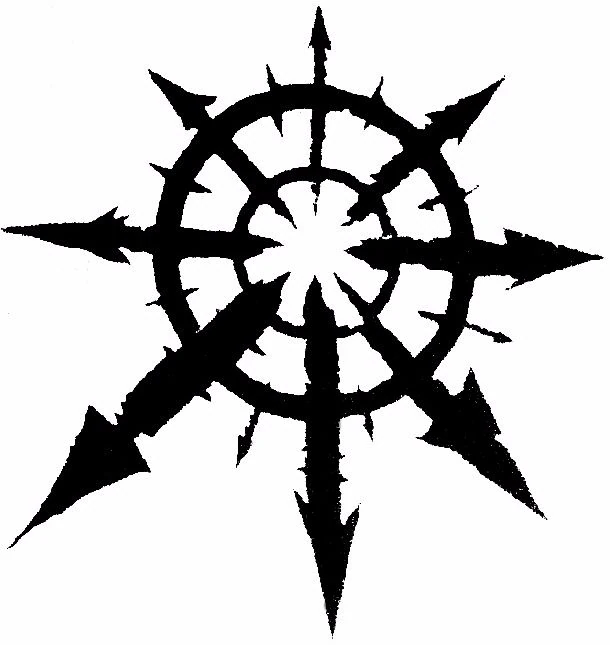
Chaos Undivided | Warhammer 40k | Fandom
Source: https://warhammer40k.fandom.com/wiki/Chaos_Undivided

A creation of mortal minds

The chaos gods, with the exemption of Slaanesh are al described as mainly a human creation, as well as a human adversary. I would argue that there is ground in this reading, as the warp is formed by the thoughts and feelings of the Mateirum, and humanity is the most prevalent sentient species in the galaxy would it make sense that they left the largest footprint on the Immaterium. We will also see in later chapters that, when the Eldar was described as the leading race in the galaxy, the warp was very much formed by their desires, hopes and fears. (Games Workshop, 2016. Games Workshop, 2012)

Fears and hopes

If the chaos gods are to be understood as the fears of humanity, (once again, exuding Slaanesh), can we learn a lot from how this fictional society works and how the outlook of its citizens appears. The three main fears we have discussed in this series would be as follows, the fear of violence, the fear of disease and the fear of the future. In such a dystopian, highly ridged society as the Imperium, and in such a war and pestilence ridden world as the 40k narrative, would al these fears be rather understandable. The are also fears that many readers can most likely relate to on one level or another. Since pain, sickness and the future are al things many of us struggle with in our daily lives. The majority of the citizens of the Imperium lives in object squallier, and the death from diseases and violence is ever present in their lives. Due to the rigid class system of the Imperium is it also very unlikely that any of these individuals stands any chance of ever escaping their terrible lives, at least if they do not wish to break the imperial creed. (Games Workshop, 2016. Games Workshop, 2012)

It is worth noting here that the cults dedicated to Slaanesh are almost exclusivity found in the upper circles of human society, where resources are abundant, and many individuals are required to do little other then making sure a steady supplies of war materials to the Imperium`s many wars continues to be produced and shipped out. In such circumstances is there no surprise that decadence, lawlessness and boredom strike the souls of many of its members. Some of these get bored of even the most extravagant pleasures available to them as the elite of the elite, and starts searching for more forbidden and esoteric pleasures. We have already discussed the birth of Slaanesh and the possible fears and dreams that they build upon, the fear of loosing once self to the draw of temptation and the endless hunger of the Eldar psyche. In texts relation to humanity has Slaanesh ben portrayed more as a representation of everything forbidden, dirty and perverted, everything the citizens of the Imperium is trained to repress and avoid. (Games Workshop, 2016. Games Workshop, 2012)

Giving in

There is another uniting factor, other then the representation of fear, that is how one becomes free from said fears. That is, the only way to truly join one of the chaos gods, and gain their blessings, one must embrace the very thing they represent. In order to become free from the pains of sickness, must one become a carrier of said disease. In order to gain the favour of the changer of ways and ultimate knowledge of the future, must one surrender their faith fully to this new master. The chaos god Khorns blessings comes with the implicit understanding that you as well will one day die by someone else hand, for the blood god do not care for where the blood flows, and yours are as good as anyone else. The followers of Slaanesh are presented with pleasures and experiences beyond their wildest imaginations, only to have every singly one of them become stale, grey and mundane, forcing them to search for mo0re and more ext ream ways to satisfy their needs. The god of pleasure and pain savours each of these emotions, and the suffering and anguish of their followers is just as rewarding as their pleasures. (Games Workshop, 2016. Games Workshop, 2012)

The idea of becoming a a servant of the very thing you are afraid of, makes an interesting contrast to the concepts of Imperium heresy we have discussed before, where the Space Marines, as well as the Tech priests needed to free themselves from the ridged systems of the Imperium to regain their humanity. Seemingly neither side, neither the loyalists or the heretical chaos worshippers gains true freedom in the end, and they are pawns in one system or another.

Conclusion

The aim of this series have been to explore how the 40k narrative uses the concept of the duel dimensions of the Materium and the Immaterium in order to form its narrative, as well as to present its mayor themes of hopelessness, fear and dramatic irony. The warp serves a duel nature in the Warthammer 40k narrative, as it presents a number of answers to certain questions, such as how space travel, and communication between planets works. Unlike some other such explanations, like faster then light travel does the Warp serve as a driving force in the narrative. The very existence of this Other dimension is a constant thereat to the denizens of the “normal” world, but it is also something none of them would be able to live without.

The cyclical nature of cause and effect between the warp and the material realm is also a very inportant part of the narrative. The fact that the Warp exists outside of space and time give the writers an endless opportunity to experiment with causality, time and space, as well as giving them a good explanation for why certain inconsistencies exists between the small army of writers tasked with writing and carrying on the narrative of Warhammer 40k. This topic is one that we will return to later in the series, as we discuss how the different factions create their own gods and demons. It will also play a large roll when we finally dive in to the rich library of novels, comics and short stories set in this setting. But before that we will continue to outline some of the basics of the narratives, presented in the Codex’s of the various factions.

Next part will present a new faction, the ancient and mysterious species of the Eldar, we will take a look at the themes, narratives and real life inspirations of this civilisation, as well as discuss how they help to further the Warhammer 40k narrative as a whole.

References

Codex: Chaos daemons (7th Edition), Games Workshop, 2016

Codex: Chaos Space marines(7th Edition), Games Workshop, 2012

Dungeons and dragons and history: part 3, the Warlock

Introduction

We will in this chapter go back to our series of examining the relationship between Dungeons and Dragons character classes and their ties to real life cultures, myths and practises. This time will we be examining the warlock, an individual that has willingly or unwillingly stricken a deal with a powerful entity, and made a grand sacrifice in order to gain otherworldly powers and abilities. Note that due to the authors currently limited scope on magical traditions, will I limit myself to study the warlock out of a western perspective since this is where my current expertise lies. I hope to one day return to this topic and expand upon it once my knowledge base has increased.

The warlocks of D&D

The warlock in the players handbook is described as an individual driven by their thirst for knowlage and power, it is in this search that the individual has met and made the pact with their patron. This arrangement tend to look more like a business deal then a spiritual connection like that find between the cleric and their deity. As the warlock is so deeply rooted in, and identified by their otherworldly patron, is it pertinent to examine both of them individually before looking at them as a whole. (Wizards of the Coast 2014)

The patron

To begin explaining what a patron is, it is useful to discuss what a patron is NOT. The patron is decidedly not a god, tough some deities are in fact rivalling gods in the terms of might and influence. The individuals are powerful creatures, apparitions or constructs that exists beyond or between the mortal realms. These can be everything from grand rulers of otherworldly plains, such as the Kings and queens of the fay wild, to ancient creatures that lurks beyond the fabric of time and space, and are so alien, that their touts and motivations are completely incomprehensible to mortals. (Wizards of the Coast 2014)

The servant

The warlock themselves, are as mentioned before an individual searching for ancient lore and power. This search has lead them to the discovery of their patron, be it by accident, exploring an ancient ruin, or by deliberately searching trough ancient texts and tomes. Regardless how they found their patron, are they now able to call upon their master for enhanced powers and otherworldly abilities. Just like Wizards are Warlocks described as students of the arcane arts, but unlike their more bookish cousins, does the Warlock take a more direct approach to research, and are as a result more capable fighters and explorers. The players handbook explains that the warlocks thirst for knowlage can not be sated by simple research alone, and that the demands of their patron often forces them to take up the life of an adventurer. (Wizards of the Coast 2014)

The pact

The most defining feature of the of the Warlock archetype. This relationship, as with most things in D&D is highly malleable and customisable. The pact may take several different forms, form the ritual practice of god and worshipper, not unlike that of the paladins or clerics, or it can be a completely practical business deal. The patron might give out their blessings freely and generously, to only do so begrudgingly and to very few select individuals. The patron might be loving of their servant, indifferent, maleficent, or in the case of some of the more strange and ancient beings, not even aware of the warlocks existence. (Wizards of the Coast 2014)

The warlocks in European myth

The most common use in a everyday context of the warlock, is that of the “male witch”. This definition is found in many dictionaries, including the Oxford dictionary and the National Encyclopedia. In this segment I wish to try and contextualize and problematize this seemingly very simple and straight forward explanation.

Witches and warlocks

The concept of the warlock is, much like the witch, sometimes used interchangeably with the term, sorcerer and sorceress. These individuals are said to gain their power from concerting with other creatures and forces. In the terms of a European and western context, and more specificity a unchristian context, these forces was the forces of the devil. These individuals was seen as partitioners of low forms of magic, the magic of evoking dark and evil spirits. This would be set in context to the Magus or the wizard, that uses High magic. This magic is further discussed in my chapter on wizards (found Here (see The wizard)). (Wilson, D.K. 2018)

Light and dark magic

This distinction has been given many names and definitions as the ideas of magic and witchcraft evolved. It has been known as dark and light magic, as well as high and low magic, and finally the left-handed vs the right handed path. The right handed path representing the use of divine forces or the “light” while the left handed path represents the use of various forms of of malignant or evil spirits, demons and devils in particular. Note that magic and occultism is a highly varied and diverse series of practices, and that this text represents a gross oversimplification of several ancient and complicated practices. (Lévi 2017)

Modern Wicca and pop-culture

In the modern interpretation of the Wicca religion is the warlock often seen as negative connotation, as a traitor or once that shall not be trusted. Tough some variations may be found, is the word warlock not used for male practitioner of the Wicca faith, as can often be found in their pop cultural representations. (Wilson, D.K. 2018)

In pop culture is the warlock often seen as a male user of “dark and evil magic”, or in some cases, as a male version of the witch. This image of the evil spell caster is one that can be found in many horror films and novels.

Conclusions

It is simple to see where the authors of dungeons and dragons might have found their inspiration for this class. I do not believe that the authors of Dungeons and dragons must necessarily know the occult and mythical origins of the Warlock, I would rather argue that the concept of the Warlock, just as many of the other classes we will discuss in this series, has such a clear image in the common western collective subconscious, that many of the tropes have survive more or less intact.

With this said, is it interesting to see just how close the concept of the Warlock of dungeons and dragons comes to that of Lévi and his contemporaries. Theses similarities becomes even more apparent when compared to the Wizard. The wizard and warlock dichotomy falls rather neatly, but not exactly in line with the dichotomy between left handed, and right handed magic. As I mentioned before is this text a rather large simplification of a large series of traditions, one that the reader can read more about in the works listed below.

Sources

The Doctrine and Ritual of High Magic: A New Translation Lévi, Eliphas (2017)

Wizards of the Coast (2014). Dungeons & dragons Player’s handbook. Renton, WA: Wizards of the Coast LLC.

The Wilson, D.K. (2018). A magical world: superstition and science from the Renaissance to the Enlightenment. (First Pegasus books hard-cover edition.) New York, NY: Pegasus Books, Ltd.

The use of hallways in Fiction

Source: Coralline

The hallway has been used as a number of symbolic objects in fiction, from doorways to other worlds, to extensions of characters mood and emotions.  I will in this essay present three genres of fiction, and their use of hallways in wildly different ways. Namely will we examine fantasy, science fiction and horror, and their uses of the hallway as a way of telling a narrative.

Fantasy

Many types of fantasy, especially those that follow the trope of “two worlds”, use some sort of doorway or hallway to access the different worlds. The use of hallways can be used to extend the notion of distance between the “real” and “other” world. A good example of this would be the wool corridor between the other mothers world, and the world of everyday life. The transportation through it, both with time and space, can create a larger sense of distance, and otherness. 

Science fiction

The blog post created by Curley (2015), discusses the idea of the corridor as a canvas to create world building and set dressing. The corridor can be used to present the tone, setting and themes of the narrative. Two examples would be the sleek corridors of the enterprise showing the futuristic utopian world that the story takes places in, where minimalism and simplicity of life has taken hold in the confederacy. This can be juxtaposed with the shops if the Alien franchise, where the ships are seemingly created from a lot of different manufacturers, and clearly made with a small  budget, where price comes before safety.

Horror

The corridor in the is almost a staple of the series, where it is used to great effect to show anything from loneliness, to claustrophobia and disorientation. A classical example would be the corridors in Saltney Cambrics, the Shining uses corridors very effective to create a sense of dislocation, and otherworldliness to the hotel of the movie. Nightmare of Elm Street uses the hallway as a way to enhance the sensation and feeling of nightmares and otherness.  

Source: the Shining

The corridors have been used as hunting grounds for monsters and villains to set harrowing chase scenes, or once again be used as a portal between the natural and the supernatural world. (Ripatrazone, 2015)

Romance

The corridor in romance films are used to show closeness as well as distance, separation and togetherness. By empathising the size and distance of the hallway can the physical distance between characters work as an allegory for both emotional and mental distance, as well as the actual distance between them in space and time.

Conclusions 

We have here seen how the hallway has been used to create a series of different moods and narrative cues, and concepts. Many of the themes are somewhat bleeding in to each other, and are used in similar ways, but I have in this chapter tried to show a distinct tradition and history of using the hallway in narratives. I wanted to show in this chapter that even a seemingly arbitrary set piece as the hallway can have a rich use of narrative and symbolic use within film making.

References: 

Let’s explore science fiction’s glorious hallways, Christopher Curley, 2015, taken from: https://news.avclub.com/let-s-explore-science-fiction-s-glorious-hallways-1798283284

The Long, Lonely Walk: Hallways in Horror Films, Nick Ripatrazone, 2015, taken from: https://themillions.com/2015/08/the-long-lonely-walk-hallways-in-horror-films.html

The scribe: A comparative look at the writing professional

The concept of the professional writer has changed wildly over the years, and are indeed still changing to this day. What this texts is going to focus on specificity is the invention of the printing press in Europe, and what that meant for the world of the written word, both socially, cultural and economically.

The manuscript and the ideal text

The ideal text is a concept within many fields of research, and has number of different connotations. In this text we are interested in the concept in therms of literary and writing history. The concept of the ideal text in this context is a text that is as close to the authors original intent or “original text”. In order to create these ideal texts are usually many different translations and editions used, to see which parts and passages that seems to correlate the best with each other. From these different editions is a so called Ideal text created. This text would then work as a basis, or a reference point for further studies.

One good example of such an ideal text would be certain plays made by Shakespeare, of which we only have second hand notes and recordings off. Plays being a personal property of the theatre troupe, and never shared outside the company, was the only way to acquire other theatres plays, to sit in the audience and try to record it line for line.

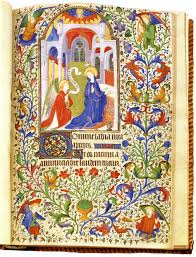
To understand the cultures of the medieval scribe work, and how the printing press changed it, one must first understand the concept of the Manuscript. The Manuscript of the medieval European scribes, and their coupes across the world is in and of themselves unique items. Each and every one of them created by a person, at a specific point in time. Things like spelling and grammar errors, translations errors, as well as corrections to these errors, al leads to the further differentiation of a text. Furthermore were many scribes not just tasked with creating an item of functionality, but also of creating an articulacy of value and beauty.

Bildresultat för medieval manuscript
Source: https://en.wikipedia.org/wiki/List_of_illuminated_manuscripts

One of the results of this is the fact that we need to conciser that, unlike a published and printed book, was these manuscripts made for a specific individual, or a small collection of individuals rather then for a public.

Many manuscripts were made for specific nobility or other inportant individuals, and it was not uncommon for historical or religious texts to be custom tailored to collaborate the stories and features of the ancestors of the chosen patron. These texts were, and still are considered great works of art for a very good reason, as many features large masterfully made artworks, as well as pretentious and rare materials, such as gold and rare pigments.

The medieval scribe

The image most have of the medieval scribe is of an elderly monk sitting hunches over his text books and slowly tracing the words and images of his predecessors. The work of the medieval scribe was indeed a lot mover involved then that, and often included correcting spelling errors or factual problems that the author has left in, (and accordantly creating their own errors from time to time). The work for the scribe was often seen to be of just as an inportant and vital task as the original author, and the two were seen as co creators for each work. It was indeed a common practice for the scribe to make themselves a small portrait in the manuscripts themselves.

The creation of each and every manuscript was as a result a unique and one of a time production, and each object that was created in this was was as well, a unique artefact. This will be put in to contrast of the mass produced series of identical texts possible with the invention of the printing press.

The printing press and the question of ownership

The concept of copy rite and ownership relay came to a head when the printing press and its use became more and more widespread. It became more and more easy to copy, redistribute and acquire the written word. This did do a lot of good for he spread of art, culture and science, as well as differing political ideals. One group that was both gained from, and suffers at the hands of the printing press was the authors of these new texts.

The authors of the renaissance had a vast new audience of hungry readers, but no clear way of safety monetizing said market. It was not uncommon to acquire books form other printers, and then undersell them by producing cheaper copies. These infringements was mostly done over national borders, and a few duchies of the holy Roman empire was nutritious for these bootlegging printers. They acquired books form across the border, and then managed to make significantly cheaper copies, due to them not needing to pay the original author.

The difficulty of the author, and publishers to properly monetize their products lead to the invention of more clear and universal copy write law. In order to properly push their newfound claims. To be able to properly make these claims, a new image of the author had to be created.

Copywriting and the idea of the author

The idea of the author of a author as a a unique genius, that springs original concepts from their very essence is a relatively new one as well, one which origin can be argued to be traced to (at least in Europe) the invention and refinement of the printing press.

In order to protect the writers livelihood in this new environment, was an image of the proses of writing, and the author was needed. German authors in particular was hurt by the introduction of the printing press, and its consequences for their ability to protect their economic safety. The concepts of a writer living solely on sales of reprints of their books are a relatively new concept in Europe. Before was writers usually paid on commissions, or even more often, by patronage of a noble or other rich individual. This new writers found themselves completely without any sort of safety net. In order to make sure these writers could protect their income and works, would they need to reinvent the very role of the author (Woodsmansee 1994). I will here present two different definitions of the author, and how it relates to the medieval manuscript.

The inspired craftsman

The renaissance, and pre printing press idea of the writer, was mainly that of a craftsman. An individual that has learned a trade, and applies heir tools, experience and the knowlage of previous craftsmen to create new works out of existing myths, stories and narratives. Much like a carpenter works with already existing wood, so does the writer work with pre existing themes and ideas. (Woodsmansee 1994)

When a writer seemingly created a completely new topic or concept, this was not attributed to the individual themself, but rather to some sort of divine or supernaturally inspirational force, be it a deity or a creatures such as a muse. Note that this puts the professional writer, in the position of a vessel for other ideas and beings, rather then being the originator of said ideas themselves. (Woodsmansee 1994)

The lone artist

After the introduction of the printing press, and the coming of the enlightenment, did another concept of the writer, the artist. This individual worked towards unevenness and individuality, they were the sole source of their work, and as a result the sole owner of it as well. Their inspiration came from within, lacking any mundane or supernatural force of inspiration. Because the writer is the single originator of the text, they also held the single credit and responsibility for the text, and as a result, also the single monetary and intellectual rights to it. (Woodsmansee 1994)

The influences of craftsmanship also disappeared gradually, and was instead replaced by the concept of solitary artistry. A similar trend could be found in al of the disciplines that would later be known as the “fine arts”. These being dance, theatre, paining, sculpting and writing. In al these disciple was there a clear move made to make a distinction between the crafts and the arts, as well as elevating the later over the former.

Conclusions

What I have tried to present here is a n introduction is a shift in mentality and reality of both the author and the book as an item when the printing press was fully introduced in Europe. With the artefact created going from a physical unique item, to the ethereal idea of the Text, so did the image of the writer go from the craftsman scribe, to the artist writer.

Sources

P.F.F. (2006). Manuscript, not Print: Scribal Culture in the Edo Period. The Journal of Japanese Studies 32(1), 23-52. doi:10.1353/jjs.2006.0016.

Woodmansee, Martha (1994). The author, art, and the market: rereading the history of aesthetics. New York: Columbia University Press

Food, in mediaeval fantasy and reality.

This chapter will be the first in a series of texts commissioned by the followers of my twitch channel (link in the references). To get your own chapter dedicated to a topic of your choice (within reason), go to my twitch and collect 8,000 channel loyalty points by watching my stream.

Introduction

This chapter will be dedicated to the depiction and use of food within the context of both real and fantasy foods in a roughly medieval European setting. We will tackle this topic form two angles, the first will present food in a medieval historical, cultural and medical context. Our second context will be that of a narrative tool, more specificity to look at how fantasy literature uses food in order to describe build and contextualize their worlds.

The Medieval cookbook

We will star this chapter by examining the concept of medieval food form a series of different angles. Food is closely linked to the social and economical situation of the individuals that prepares and consumes it. (Towle, et al 2017)

Food and alchemy

The food of medieval Europe was closely tied to health and having a healthy life. The most prevalent theory of medicine at the time consisted of Hippocratic School of medicine, or the theory of the four humours. The idea that the body have four essential liquids, which is in turn tied to one of the four elements of western alchemy.

Source: https://en.wikipedia.org/wiki/Humorism#/media/File:Humorism.svg

In order to keep a healthy body, one must make sure that their humours are properly balanced. One of the easiest, and most practical was to balance once humours was simply to eat a diet that contains al the needed humours. If one for example needed to have more phlegm, which is tied to water, one need to consume something related to waters two properties (wet and cold). One things that would work for this would be fish, as it comes from water (wet and cold), and as a result, has some of the elements of water, and as a result, the properties of phlegm.

Of Borth and Bread

Bread and porridge seems to have been a common staple of most British individuals living in the Medieval ages, regardless of social class. As noted before what the lower classes forced to sustain themselves on whichever foods that were the most readily available to them, so fish for example was mostly consumed near bodies of water where edible fish where found. This means that they were not able to follow the rules ranging the four humours as closely as those of higher social and economical classes.

The study performed by Leschziner et al (2011), seems to indicate that the medieval cooking more wildly combined different flavours throughout the meal. For example was sweet flavours not simply used as an end to the meal, but used equally as much as the other tastes. This was done party because the way meals were first and foremost created to make sure that the meal contained al the four elements needed to keep a harmonious balance of the four humours. Sugar is also believed to have been seen as another spice, and was as a result used as one. Sugar was also used as a preservative at the time. Medieval Europe also saw the split of pickling from other general cooking Leschziner (2011).

Class and food

As I have hinted at was, and is food very much tied to your class and status within a given community. What you ate was, even more then today tied to where and how you lived. Some studies, for example the study by Towle et al (2017), shows that the diets of many city dwellers were indeed rather diverse, and contained a lot of fruits and greens. Individuals in rural areas were mostly limited to eating whichever foods were produced and sold nearby, so seafood and fish was usually eaten amongst the coast or other bodies of water for example.

Fantasy food

There is no secret that many fantasy books are filled with talk of food. The sheer number of cookbooks, both official and unofficial attests to just how big of a part food plays in many fantasy narratives.

Food as narrative

Food used as a narrative device is by no means limited to fantasy narratives. A commonly brought up example is the Oranges in the Godfather. Every individual handed an orange in the film, is killed shortly after. In fantasy narratives on the other hand are food often used to create a sense of the world and how it functions. These is especially true in fantasy, where a lot of the setting is needed to be described and contextualized for the reader in order for them to understand the stakes and themes of the narrative. Food is an excellent way to tie the world in to a larger context, as well as to use it as a shorthand to compare it to other real life settings. The heathy and rural food of the Hobbits in the Lord of the rings series, draws clear ties to the English countryside. By introducing the eating habits of the Hobbits as comparable to that of the British countryside, especially during the 18th centenary, does the writer go a long way to tie the entire region and people of the hobbits to the British countryside as well, (if a rather picturesque and idyllic version of it).

Food as a exposition device

Food can be used to explain how certain aspect of the world works. An easy example would be the Lembas bread. These magical breads are able to sustain oneself for weeks. This dry bread can keep an individual not only alive, but also healthy for long periods of time. Food, especially in relation to magical and mystical topics, can help ground otherwise abstract subjects in more mundane terms. The preparation and serving of food (see, the cooking tools, producers and types of storing), can also be a good indicator and pointer on the overall state of technology in the setting of the narrative, as well as the characters relationship to said technology.

Food and social class

As described earlier in the text, is food, especially in medieval settings, very much tied in to the class of the individuals consuming it. The ice and Fire series uses food to a great extent to show the differences between the squallier of the peasantry and the opulence and grandeur that the noble houses live in. Food is also a good indicator of the different cultures and traditions present in the narrative.

The abundance of food in Hogwarts, where Harry feel safe and welcomed is put in to stark contrast to the near starvation he faces at the hands of the oppressive and cruel Dudley’s. The examples of this trope are to numerous to list, but needless to say, there is no accident that food has been used within fiction, fantasy and otherwise, to show the wealth and statue (or lack there of), of characters within fiction.

Conclusions

Food plays a large part of human identity, real as well as fictional. you can learn a lot about a culture from what they do and do not eat. In this text I have tied to show how you can understand both fictional and real cultures partly tough their food. As always are these chapters simply meant as an introduction to these topics, and I have provided a series of further reading in the sources.

Sources

JURAJ DOBRILA UNIVERSITY OF PULA DEPARTMENT OF HUMANITIES SUB DEPARTMENT OF HISTORY
https://dcplive.dekalblibrary.org/2011/05/20/food-in-fantasy-literature/ https://www.tor.com/2019/03/14/the-fantastical-food-of-fantasy-fiction/

Dietary and behavioural inferences from dental pathology and non-masticatory wea Towle, Ian & Davenport, Carole & Irish, Joel & De Groote, Isabelle. (2017). Dietary and behavioral inferences from dental pathology and non-masticatory wear on dentitions from a British medieval town. 10.1101/222091.

Leschziner, Vanina & Dakin, Andrew. (2011). Theorizing Cuisine from Medieval to Modern Times: Cognitive Structures, the Biology of Taste, and Culinary Conventions.

My twitch: https://www.twitch.tv/samrandom13

The art of the bootleg: An aesthetic analysis of copyright infringement.

Introduction

We will in this post take a look at the consent of the Bootleg. Specificity will we look at the bootleg products created after the image of pop culture. The definition of bootleg we will use is the following: any material or content created for consumption by the public, without the knowlage and/or approval of the copyright owners involved. In other words using the visuals or themes of an already established trademark in order to make profit. Note that fan works do not fall within this genera, even if they are sold. This is solely confided to companies making unlicensed product relating to another companies intellectual product.

we will start this chapter by giving a few examples of influential fictional properties, before making a more overarching analysis of the overall similarities between the different franchisees of bootlegs. Note that in this text will we only be discussing bootlegged toys, as including things like bootlegged movies and games etc would make this chapter al to big to handle within a reasonable time frame.

Star Wars bootleg

Star Wars is a monolith of a franchise, that barely requires any introduction. The iconic star wars font, together with their highly marketable characters are seen on everything from billboards to happy meal boxes. It is difficult to overstate the importance of this franchise on contemporary pop culture. The visage of Darth Vader is recognizable to people not even familiar with the franchise.

These intellectual properties might be explicit like the example of this figure of “R2-CP30”. That both mention the franchise Star Wars and two character (R2-D2 and CP30) by name. It also clearly uses the trademarked type font, as well as two characters from the series of movies.


Source: https://m.imgur.com/CpuaB46

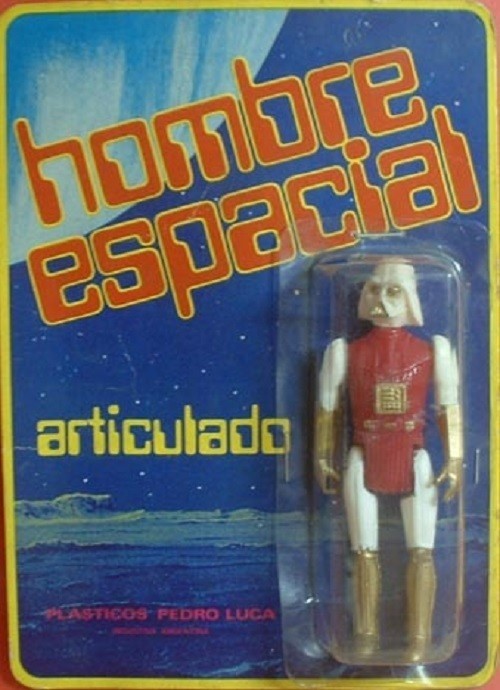
Or more subtly as with this toy of “space man” (my translation), that can be linked to star wars trough the helmet that looks early similar to the helmet and chest plate worn by the iconic character Darth Vader.

Source: http://runt-of-the-web.com/wordpress/wp-content/uploads/2015/12/star-wars-bootleg-darth-hombre.jpg
Source: http://static.srcdn.com/wp-content/uploads/Darth-Vader-Rogue-One-details.jpg
Bildresultat för star wars bootlegs
https://www.pinterest.se/pin/469218854907697489/?lp=true

Lastly we have an interesting one, with very few if any visual ties to Star Wars in the toy itself. The only thing that clearly ties it to the larger Star Wars franchise is the title as well as the type font used on the name.

As we see from just these two examples does bootleggers take a number of strategies in order to sell on the iconographic value of the Star Wars franchise. Note that both of these were released before the Disney buyout.

Star Wars has a very recognizable aesthetic, from the characters to the world, to even the type font itself, as a result is it prime materials for bootlegging, as you need very few means to tie it to the series itself.

Harry Potter

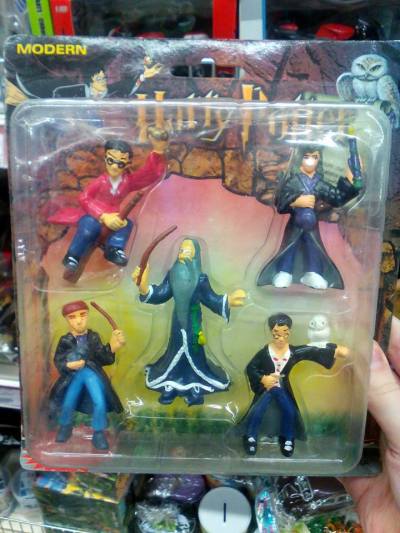
Another franchise that has become almost universality known, but in a much shorter time frame. A lot of the bootlegs related to Harry Potter I was able to find in my searches was relatively straight forward.

Bildresultat för harry potter bootleg toy
https://www.google.com/url?sa=i&rct=j&q=&esrc=s&source=images&cd=&cad=rja&uact=8&ved=2ahUKEwj4sZz1y_3kAhUQxcQBHY90DI8QjRx6BAgBEAQ&url=https%3A%2F%2Fknowyourmeme.com%2Fphotos%2F1036953-bootleg-knock-off&psig=AOvVaw28hFmwmzXnFDE7dJ7veOum&ust=1570106248846915

We can see here a good example getting the inportant details right, yet staying completely out of legal territory. The boy shares traits with harry yes, like the glasses and short hair, but still has another hair colour. He comes with a broom and a staff, but not once that tie directly to the franchise visually. The font as well, hints at the famous Harry Potter font, but only vaguely.

https://66.media.tumblr.com/f2d08e4af9afad46f749f77b9ffc3bc8/tumblr_ol2hoqEvVB1uxkzdxo1_400.jpg

Yet again we here have a much more overt tie between the bootleg and the franchise it is copying. each character has clear ties to who they are supposed to be copying. The product also clearly uses the name of Harry Potter in the trademarked font.

We here see examples of the explicit as well as implicit ties to the franchise the bootleg is trying to copy.

Miscellaneous and mixed bootlegs.

Even more interesting are those bootlegs that wildly mixes and matches different franchises and intellectual properties. These products tries to tie itself to as many franchises as possible, amusedly to cater to as many fans as possible.

Bildresultat för harry potter obama
https://bootlegtees.bigcartel.com/product/harry-potter-obama-sonic

The So called Harry potter Obama backpack, is quite infamous, to the point of even having its own merchandise. Something we will dive deeper in to later in this esse. The backpack has a differently coloured version of Sonic the hedgehog on it, and the name Harry Potter, as well as, Obama, the name of the previous president of the united states of America.

https://i.pinimg.com/236x/c7/76/ca/c776ca247a4af4b95dc89392543590ed–pokemon-memes-pokemon-mashup.jpg

This toy, seems to be a recolour of the Star wars character Bobba Fett (to which it also share its name), and the Pokemon Venusar. In the back is a Pikachu. Most interesting is the title of this series “Poké wars” which refers to both the franchise of Pokemon as well as Star Wars, with the wonderfully cryptic tag line “the power that is inside”. Here we can yet again see the use of a copy writen type font to more clearly tie the product together with the franchise it is copying.

Bootlegs and textuality

The bootleg raises interesting questions around paratextual connections, and what i and what isn’t considered Canon. I would like to preface this discussing by mentioning that we will not be discussing legality or the morality inherently tied to bootlegs. This text will solely by dedicated to discussing their visual and narrative implications.

Intertextuality

The concept of intertextuality refers to, as discussed in the chapter on Undertale, to the link between one text and another (see Undertale). More precisely are we going to discuss how these illegal toys ties to the legal representations of these franchises.

As discussed in the Undertale chapter, can you not point directly at an Intertextual connection within a work, unless of course directly tied to with a link or a reference.

With this logic would the ties between the the official and unofficial merchandise are equally as strong. At least from a purely Intertextual viewpoint. Does the connection of the bootlegged Star Wars toy being named Darth Vader, make it any less of a valid connection, that the on that the official toy with the same name makes?

Paratextuality

Paratextuality, as mentioned in the same chapter (see Undertale) refers to any connection point that is not found directly in the text itself. It is usually within this realm that ties between primary texts, such as books and movies, and secondary texts like toys and posters are found. A classic example is the use of a uniform type font and visual format.

The most easy reason that comes in mind is that canonical materials are al made by the same author. This of course falls apart, when we look at examples like Star Wars, where several authors. Th this point cant a single individual be called the source of the canon. The same thing can be said about a company, it is simple to try and tie al the canonical texts to a certain company. But what happens when several companies al produces texts individually and independently of each other. Should one of the companies texts be considered more canon then others, yet again the most simple solution would be to tie the canonical texts to those with the power over the copy-write. With this logic will the current copywrite-holders has the power to decide what is and what isn’t canon. This has some very strange implications for larger franchises and collections of texts, especially if the copywrite-holders change hands, like happened for example when Disney bought up Lucas-arts. This model of course falls apart, when we discuss things that no longer has an official copywrite-holder and has landed in the public domain.

Conclusions

The art of the bootleg is a fascinating one, and one that requires many revisits. At this juncture I mainly wished to introduce my readers to this wonderful world of wonky logic and near illegality. We have in this text managed to raise two interesting questions, as well as starting to answer them. These are questions of style and of authenticity.

Firstly have we managed to discern two schools of tough in the design of bootlegs, the direct and the abstract. The direct approach aims to get the likeness as close a possible while still being legally distinct. The abstract school goes in the other way, and tries to capture, an essence or vague concept of the original, and staying mostly visually distinct.

In the second part of this text did will endeavour to try and find or disprove canonical connections between the original and the bootleg. We failed to prove or disprove any ties intertextually, or within the texts themselves. We did manage to tie these bootlegs paratextualy to the original, but could not find any clear way of establishing if these ties were more or less valid then the ties between official materials, and other official materials. As mentioned before is this not a exhaustive analasys on the topic but rather meant to be an introduction to the topic, as well as an invitation to further discussions.

Consider a state

Today we will follow up on our earlier discussion about the state as a concept. Historicity has states, as defined by Hobbes, exist as long as humans have lived in any form of organized tribe.

Today we will focus on defining the “modern nation state”. With this term I refer in this text, specifically to the unified nations that formed as a result of, and with the explicit help of the rise of European nationalism.

This nationalism can in part be attributed to the rise of unified nation states in the west. Germany, the UK, France and many more nations went from decentralized governance to a more centralized form. With this centralization came the need for a notion of a complete and uniform national identity. This identity would unify the nation’s citizens under one banner. This national identity would also legitimize the state’s rule. This act also helped legitimize the state’s interaction with other states. These interactions include everything from trade negotiations, to war and colonization.

This nation state is as much defined as what it is, as what it is not. What I mean by this statement is the following. When defining who are the citizens of a state (us), one must simultaneously define why is not (them). At the rise of European nationalism this often meant exaggerating some perceived virtue of the nation’s citizens while exaggerating negative traits of the “others”.

It is true that nationalism has similar themes, discussions and problems etc has evolved in several areas and time frames around the world. The somewhat unfortunate Eurocentric standpoint of the environment this blog is created in, makes me think that Europe is where our discussion starts. With this said, I believe there are some simulates that can be found in most if not all of these events.

The common element that we are going to focus on here is the following: all national identities are by their design, fabricated. What I mean by this is the following:

All national identities are created by its parent nation, state and most importantly, the people that embody it. Next time we will look closer at what makes up a national identity.

This blog post was spell checked and edited for readability at 2021-06-07

Conider a country part 1

Consider a country, consider it bearing in mind all we have considered before in these texts considering roads, towns, cities, cars and people. From above imagine the network of roads, towns, houses and businesses and lives. These collections are both independent, and completely dependent on each other.  Note that these dependencies do not end at an arbitrary land border, but spread freely, along the globe. But for this experiment, we will contain it within one nation’s imaginary borders. But a country constitutes more than that, more than the land it entitles, more than the people in it. These are in a way, arbitrary and incidental, simply existing in one time and space.

More than that a country also signifies a contract, for better or worse. A contract between the individual and a collective. This contract can be given the label of “citizenship”. These citizens collectively, and often forcibly build clumped together to create the populace of the “state”.

The state is a catch-all term for a ruling organ of some form, for where citizens get the rules of said citizenship contract. It is through these limitations, as well as the imagined borders of said country that the citizens get their shared history. This history, together with culture, traditions, customs and products created within these borders helps to form a citizens “national identity”. In doing this, these identity collectivity and simultaneously creates a country “identity”. Both affecting each other simultaneously.

This identity helps legitimize the state, and with it, its right to rule. The state rules with contracts between citizen and state and as Thomas Hobbes (1651) states “A monopoly of the legitimate use of physical force”. These nations also identify themselves in relation to other nations. Creating groupings of shared history, culture and other bonds, or forced together by one reason or another. A nation’s identity grows when it relates to others, for better or worse.

In this way a nation becomes more than itself, more than its borders, citizens and its culture. It becomes a collection of all these incidental parts, brought forth by time and space and becomes something else. Both as a physical force and as an illusion it becomes a nation, a country.

Thomas Hobbes, Leviathan 1651

This blog post was spell checked and edited for readability at 2021-06-07