
Subscribe to continue reading
Subscribe to get access to the rest of this post and other subscriber-only content.
A roadmap to lands real and fictional.

Subscribe to get access to the rest of this post and other subscriber-only content.
When creating a narrative, it is up to the author to make the world around the text itself. When it comes to real world stories is this a relatively straightforward task. The references exist to draw upon, and more importantly, there are already rules that the reader will understand. The more removed from this common ground, the more the text needs to explain how it works.
There is an interesting problem in writing, and movie making, where you have a set a specific time to explain how a narrative works, and how the fictional setting works. The more time spent on making a setting work, the less time you can spend on the narrative itself, but without explaining the narrative the story might not work as well.
The less you explain the more holes are allowed to be filled in the text. There is less of a narrative background, and it is more difficult to explain and understand the text when thought about outside of the premise. The more the text is set in a world that is dissimilar to our own, the more things need to be explained, and the more space must be given for the audience to get used to how the world and narrative works.
Pixar, the branch of Disney has made a large number of amazing 3D animations and narratives over the years, and are very much pioneers in the field. Their stories are heartfelt, complex and often focus on family, friendship and loyalty. Very much following the stories of older Disney filmed. The pixar films are often very good at putting effective visuals to the narrative they are presenting. often is the fact that most, if not all their main characters in the early movies are not human. This allows them to discuss hard questions via proxy- By using humanised robots, toys or cars can you tell stories of death, growing up and loss without having explicitly tying them to humans. THere also let’s be honest, it’s a lot easier to monetize.
With that said, does many of their earlier films have things and settings that are very abstract, and can be downright strange if they are set under too much consideration. This is not a fault of these films, and not a criticism of the art, but rather an interesting analysis of how different stories are told,and what consequences the choices as well as restrictions are set on to a film.
A bug’s life is an interesting little film, and a grand example of early 3d. It is a classic pop cultural exploration of the time. One fascinating thing that seems to plague every animated film about swarming insects, is the concept of gender. In both bugs life, ants and in the bee movie are the main character, the downtrodden worker, a man, while all colones in reality are made out of almost exclusively women.
Cars is one of the most abstract films that the studio has made, while being the most straightforward on the surface. On a narrative level it is a simple tale of a popup superstar learning the joy of the little things, and the slow life. It is also a love letter to a certain american small town that may or may not have ever existed. It is nostalgic and feels like a good lesson in a simple but enjoyable tale.
The largest consist and the gimmick of the tale is the fact that every character is some sort of car or other kind of vehicle. There seems to be no humans in the setting, and they are never mentioned. With that said, do we later learn that cars are constructed, and it seems that most are made for a specific role in mind. Lighting Mcqueen is a race car so he races, his semi truck driver is made to transport cars, so he transports Lighting Mqueen.
There are some cars shown to not have a clear role to serve, and one school bus is working as a wrestler, or the car related version of wrestling. The general public seems to be made out of personal cars with no job related to them. In the later movies it is introduced that there are new models of cars being made and built explicitly. Before it was implicit since there are older and newer models of cars, especially in the racing circuit where old models are being retired for the newer faster cars to take their place.
There is a rule in the toy story universe where the toys must never be seen to be alive by humans. This is clearly a reference to the raggedy ann movies where the toys die if the humans see a toy moving, that toy dies. This is initially set up as somewhat of a rule in the first movie, until the climactic finale where the toy tortures a struggling depressed from a poor family for the crime of taking out his aggression on inanimate objects. There can be argued that the scare helped ZId, as his behavior could be seen as early
Later it is proven that the toys are not aware originally that they are toys and indeed believe that they are the person they are emptying. Making the rules about not being seen even more strange. In the third movie the implications of being a toe is being seen as a toy, ergo the craft comes to life. A concept that deepens the rabbit hole even further.
The rules are expanded and changed between the movies and does not entirely keep to the same internal logic. Something that is understandable since the goal is not to make a deep deconstruction on how toys work in the universe, but rather themes of growing up and family and aging.
Note that none of these critiques are meant to be critical of the texts, but rather how texts can be formed and presented when the goal is not to make a cohesive world but rather to present morals and a sense of a narrative. The early pixar movies are not meant to be deconstructed in this way. They are meant to present tales and lessons to kids, and in this way they are highly effective.
I write this text as a fun way to discuss and think about narratives, and the implications of what sections in storytelling can lead to. A way of peeling back the curtains and looking behind the walls of narrative writing. There are always limits for what you can tell in a story, there are boundaries for when a story starts and where it ends. You must choose what to tell and what to be left implied. The more fantastical a tale, the more things need to either be explained or left unsaid. For every sentence you lay on explaining a world or a narrative, is a sentence you can not use to drive the narrative forward.
This is why some fantasies can often either feel like they are giving you a lecture, or leaving you in the dark on how the world works. It is a delicate balance to tread, one that I myself struggle with a lot.
The wonder with analysing texts is that it will inevitably tell you something about yourself in the process. Just like telling a story, is there a limit for how much you can say in one analysis before it gets too long, too complex and granular. In this text I have focused on the holes in the canvas of a tale, the places where the set stops. I have done this because it inevitably opens a lot of room for imagination and contemplation.
I can not tell why these decisions were made, only that they were, and that me and many others have noticed them in one way or another. everything we write and not write into a text will have a reaction from the reader. the reader will understand it in one way or another. That is the joy of storytelling, you never have the entire picture, a story is always created in collaboration with the reader.
Subscribe to get access to the rest of this post and other subscriber-only content.
Subscribe to get access to the rest of this post and other subscriber-only content.
Become a paid subscriber to get access to the rest of this post and other exclusive content.
Warhammer fantasy has existed for decades in one form or another. What started as a roleplaying game with models and rather simple and generic fantasy settings has transformed and morphed with time into something very unique indeed. In a series this old, and with so many creative voices is it inevitable that changes happen. It is these changes that I am interested in, what changed and what have stayed the same.
The Warhammer fantasy franchise has recently taken the stance of having it both ways. Keeping the old and making the new. This is a rather strong contrast to how the company looked at Warhammer Fantasy when Age of Sigmar was first released, where more of a scorched earth approach was implemented. This was true both in the product line, where many options disappeared, as well as in the universe where the old world was literally and metaphorically destroyed.
This has had several explanations, ranging from a need to unify the narrative and to make sure that Games Workshop owns the copyright to all their model lines. This has historically been a problem as the warhammer franchise has involved a lot of generic fantasy terms like Orcs and Elves.
Similar changes have been done by several other franchises, for example did DC comics wildly simplify their extended universe in their series Crisis on Infinite Earths. Disney after acquiring the rights to Star Wars also drastically changed what texts were considered to be in the official canon, and what texts were considered to be in the Legends canon. In the narrative are the legends texts supposedly tall tales. In a meta sense is this a clear delineation of what is considered to be part of the marketable and saleable part of the franchises, and what will continue to be supported.
In this series I will return to my roots and analyse a series of texts given out by games workshop. Rather than making another breakdown will I this time focus on themes and settings as well as to try and set the series in a wider concept of fantasy and mythology. There are two distinct iterations of warhammer fantasy, and I aim to explore both of them in my series going forward.
First is the Age of Sigmar series, the largest departure from the classic elves and dwarfs fantasy of the past, with a clear cut from the past and making something that is wholly unique to the franchise. The magic is more abstract and the factions more extreme, the world is sundered and reality is warped. The setting is now made explicitly with the idea of marketability and copyright in mind. Creatures like Orks are now called Oruks, and a lot more care and time has taken in making sure that the races, nations and species present in Age of Sigmar are nor solely copies of other fantasy tropes, or asd was often the case in WF, a blatant copy or simplification of a real life culture.
The world if AoS is made out of realms, all that have their own rules and are governed by special kinds of magic. In order to travel between the realms one must use special gateways or risk the perils of the warp. This is as a result of the catastrophic disaster that sundered the old world into pieces. It is interesting to note that there once was a grand scale campaign played through hundreds of official matches of warhammer fantasy to decide the fate of the word world. IN that game the good side won and the world stayed intact.
The setting has indeed done a lot to reinvent the setting, and a lot of genre bending writing has come from the setting. To understand the genre defining changes and their implications must the reader first understand where the genre comes from.
In order to give this context I will also analyse and discuss the Old World franchise. The Old World series is a return to the old and more traditional setting of the franchise. WHere humans lived in either an exaggerated version of France or an even more exaggerated version of the Holy Roman empire. The empire is a land of olympus humans and poor and desperate peasants. It is a land of innovation and superstition. A place where you are just as likely to meet a town witch or seer as you are to meet a powerful steampowered tank. Bretonnia is likewise a land of grand contrasts, being primarily a parody of the glorification of the noble times of swords and dragons described in myths like the war of the roses and the Arthurian myths. In fact despite the fact that Beroettonia is clearly set in France, or brettony is the setting itself heavily inspired by the arthurian myth, down to the lady of the lake and the grand templars of the round table.
Dwarves and Elves are both present in the OW and share a lot of appearance with their Tolkien counterparts. Two things are distinctly different, the first is that they both have a distinct satirical side to them. The Dwarves are petty, long sighted and rather boring, the ELves are apathetic, selfish and condescending to everyone else.
The OW is inhabited by many strange and magical creatures, primary of them are the Ogres, Orcs, goblins and lizardmen. The Orcs and goblins primarily keep their role as general antagonists and destroyers that can be found both in classic mythology and in contemporary fantasy, their big twist being that they are part fungi, and grow out of fungal patches.
The Ogres are located geographically in what would be real life Mongolia, and are described as dumb, greedy and gluttonous. A description that is not made with the fact that the earlier Ogres was often described as having thick eyebrows and distinct pointy mustache.
The Old World title is a reference both to the fact that the series is set in the old Warhammer setting that was destroyed in the Age of Sigman franchise, as well as the fact that Europe in the old Warhammer setting was called The Old world. This old world is a clear and apparent translation of Europe, and much of the warhammer world is set in an allegory to the real world, with mixed results.
I will discuss both these series in the light of what was once called Warhammer Fantasy. In order to make it easier to differentiate will I dub Age of Sigmar AoS the old world OW and the original warhammer fantasy WF. Warhammer fantasy has in and of itself gone through a large number of iterations, one of the more interesting changes being a distinction from its Tolkien inspired roots, as well as a larger focus on humor and satire.
There is a clear theme of political and social commentary and comedy in the many factions of WF, especially the humans are more often than not painted in a comedically pathetic and backwards way, strongly contrasting the actual often uncultured and simple ways of even the highest of nobles with the grand and culture image that the nations like to present themselves as. There are these differences and similarities that I aim to analyze in this series. I will begin with analyzing and discussing how humanity is described in ToW followed by AoS, finishing with a discussion on who gets to be human, and who gets to be a monster.
The question of who gets to decide what a library should and should not be is deeply ingrained to what I aim to discuss in this series. There are several forces that need to be taken into account for this discussion, specifically librarians, patrons and policy makers. Each group has their own biases, needs and wants as well as underlying information when it comes to their news on the libraries collection. This chapter will break down how each group’s interests collide as well as contradict the creation of the library of odd things.
The users and visitors of libraries are known as patrons when speaking in library terms. Patrons are individuals that use one or all of the services that are available in public libraries. Patrons have many needs and uses related to the library. Many patrons wish to borrow some form of media or read them at the library. Some patrons also come to the library to use printers, scanners and computers that are available at the library, as well as access to free internet access.
Many patrons already know what they want well before they enter the library, when they do not they often refer to the librarian on duty, regarding tips on fiction or nonfiction media. The answers they are given are once again limited to the librarian’s skill and interest in that specific area. Sadly, it has been my experience that the Swedish librarians do not get enough time or resources to be as good of a source for this sort of help that I and many patrons would have liked.
When the knowledge exists it is mostly the thanks of the specific librarian putting down their own time and energy to learn these things. This lack of knowledge infrastructure is one of many problems that needs to be solved if the Library of Odd things is to work as proposed.
With this said, many patrons already know what they want, and simply wish to be pointed in the right direction of where it is located. It is naturally in most patrons’ interest that the things that they are after are as close at hand as possible, something that might lead to less used or known texts getting pushed to the background.
This need for what they know they want is balanced by the patrons’ needs and wishes for novelty and new experiences, as well as the fact that the patron may not always know best what they need or want.
The patron also expects that the text that they want is also available to them as soon as possible. And here we find the first conflict of interest, both with other patrons and with the library staff. Due to the fact that the library has both limited budgets and space, is it impossible to make everyone happy, and often texts that are more often requested or are well known get preferential treatment to the texts that do not.
While it would be easy to fill a library with nothing but the latest top sellers, does this work against the library’s goals of education, democracy and the need for everyone to be able to find what they need in the library’s collection. This is a problem I have gone deeper into in earlier chapters.
The role of the library is at the core of what this series of essays wish to explore, likewise are the role of the librarian at the core of what I wish to discuss. What should a librarian be, guides, guardians, curators?
In the role of the guide we are meant to lead the patrons to new experiences, new texts and new forms of knowledge. This role would fit particularly well in the library of odd things, as it would mean that the patrons would be able to get the most out of the library’s eclectic collections.
This approach would need a much larger amount of time and resource to be allocated to the education and training of these librarians, as well as the possible need to hire more librarians in order to be able to amicably cover all areas of the library to a satisfactory level.
The biggest downside of this approach, or way of looking at library work is that it takes up a lot of time for the institution as well as being costly to maintain. Furthermore can this hands on approach seem off putting to a fair few patrons who just want to get their books and leave.
The primary role of the guardian is to safeguard the library and its collection, this has been a role that has been emphasized for much of the library’s existence, especially before the notion of a public library became widely implemented.
There will, as long as we live in a capitalist system of scarcity, always need to be some form of enforcers, guards and collectors of materials and protectors against damage. As the general social climate gets more and more brutal, and more and more social expectations and work is put on less and less resources, will the libraries find themselves exponentially more under stress by various aggressive and dangerous forces.
It would be an easy solution to lock down the libraries as much as possible, to add guards and remove as much freedom as possible from the patrons. This would undoubtedly go against all that the public library as well as the library of odd things wishes to accomplish.
While it is vital that the librarians and patrons feel safe at the library, and that the collection and building is kept in good shape, it is not in my opinion the primary responsibility for librarians to make sure that this happens.
Another large and important part of the library profession is the work of the curator. Curating collections are vital when they are limited by space and budgetary constraints. Decisions must be made about what should be kept, and what needs to be thrown away, as well as what new materials will proquired.
As I have mentioned before, more or less all space being used in most Swedish public libraries, and as a result is the only way that a new text will enter circulation, is if another one takes its place. These decisions, while made with oversight of rules, regulations and guidelines are ultimately at the hands of the librarians, it is up to them to make the final dissection of keeping or discarding a text. The direction making is made partly by their own knowledge and intuition as well as with the help of policy documents created by library leadership and management.
Furthermore does the ability to fulfill this part of the job come from the same skill set and interest that makes a librarian a good guide. The librarian needs interest and knowledge to be able to properly curate and take care of a collection, they also need time and resources to carry out this work properly. This will be extra important in my proposed Library of odd things, as these collections will inevitably contain both rare and often technologically obsolete texts that require extra time and attention to look after.
While I have chosen to split up the roles of a librarian into disparate parts, and to some degree pitted them against each other, it is the truth that every librarian is all of these roles, and more, often at the same time. How much time, energy and resources that a librarian can spend on each role is very much linked to the libraries organization and guidelines, as well as the policymakers that write them.
The ultimate power of the future and shape of the public libraries lay in the elected officials and governing bodies that control and oversee the libraries. In Sweden are libraries ruled by counties, and as a result are given widely different structures, budgets and assigned goals. There is for example no set rule for what department should take care of the county’s libraries. These can range from education and culture, to tourism and sports and recreation. The department that the library lands under often strongly dictates what form of starting position the library has when it comes to arguing for their budget.
Just as with the problem of adding new books to a collection, is there often a problem with adding new programs or increasing budgets for programs on a county level, often is the entire budget spoken for, and it is a question of taking from one department and adding to another. These arrangements are of course not set in stone, and can change as the local political landscapes shift and transform.
As a result it is often that there exists a somewhat antagonistic relationship between those that need the money, and those that make the budgets. As there is always a limited amount of resources to go around, does it mean that someone will have to work with less than they hoped.
The allotted budget for a library is the most clear and direct way that policymakers can be seen to make a difference for a public library. The budget directly dictates how much space the library has to its disposal, how many librarians can be employed and how many new texts can be bought in.
As mentioned before, can policy makers also make decisions on what can and should be in public libraries, though this is a much more controversial point of their power. Ideally are the actions of the policymakers, that are directly or indirectly elected by the general public through elections, following the wishes of said public. This public also involves the patrons of the library, this group might indeed take the library in account when voting for a local election.
To finish up this chapter I will quickly break down how the decision process of what will turn up in a library looks like. The patrons may choose to ask for a text to be added to the collection, as well as ask for a book to be removed in some rare cases. Patrons can also indirectly steer the role of the library by voting on officials that share their views on the library question.
Elected officials then decide the budget, policies and guidelines of the library, and in doing so create the framework that the library works within. The librarian and chief librarian then take both of these facets into account when making decisions regarding, staffing, curation, programming and other decisions within the library itself. This is ofcourse a simplification of a very complex system but one that I hope helps contextualize what I aim to discuss with this series as a whole.
This leads me on to the topic of the next chapter, why any of this matters, and why I chose to start this series in the first place.
If you like what you read, please consider supporting me via kofi or pateron, doing so will really help me to be able to create more of the content you like! As a bonus you also get access to an ever growing library of essays and short stories, only available to my supporters!
This text is the third installment in a series of essays discussing a hypothetical new form of public library, the Library of odd things. This form of library focuses on providing new, old and novel experiences to their patrons, unbound by the need to show usefulness or to cater to statistics and loan numbers. This library is primarily meant to work as a thought experiment and present the readers with new ways to look at media curation and preservation.
In this chapter I will discuss two driving forces when it comes to acquiring new materials for a library, I will label them as wants and needs. What we balance and look at these terms, and how they are applied to collections will shape how our hypothetical library of odd things will take form. This text will discuss what a patron knows they want and need, as well as what they are unaware of that they want and or need.
A modern public library must always keep in mind what it is that their patrons are most likely to want to borrow, as well as what they might need in their everyday life, work and studies. This way the library will be sure that the library has the texts that the patrons are most likely to ask for. This assurance can partly be made through the following trends, news and interviews within the book world. Patron tips and suggestions are also a great way to expand this part of the library’s collection.
It is in my opinion more common than not that the patron already knows beforehand what they are after when entering the library, often looking for a specific title, or a specific topic of research. The patrons more often than not have a specific title in mind. The optimal solution for these patrons would of course be that we have these texts at hand for them when they come to the library. If a text is popular or new, as it often is, they are presented in prominent parts of the library, easily accessible to the patrons that want them. Likewise are collections of texts such as detective novels or cook books often given more space than less well read topics, yet again for ease of use.
In our library of odd things, popular texts might still need to take up a large part of its collection, but not necessarily in the shape and form as in current public libraries, less used media such as vhs tapes would be presented next to books and dvds. As the patrons get more used to the Libraries of odd things, it is my hope that the patrons will learn how to navigate the library’s new form of collection. Hopefully, just with tool libraries the patrons will come to look for specific texts and machines used to experience them.
A seemingly conflicting goal of the library is to introduce their patrons to new texts and information that they had no idea that they needed. While sometimes aware of this unspecified need, the patrons are more often not made aware of it when they are faced with a solution to said need. This means that the more varied our collection, the more topics and perspectives it covers, the bigger the chance that the patron will find the answer to a problem or a need that they did not know they had, or that a library could help with. This can range from a reference work that helps them see a problem at another angle, or present an unsuspected solution to a conundrum, to a story that gives them the insight, comfort or inspiration they need.
If a patron is unable to see the more specialized parts of our collections, it will be nearly impossible for them to become aware of it. By presenting the most popular texts and genres in the front, will the layout discourage hunting for new experiences and browsing around as the patron looks for their intended texts.
The easiest way to provide this need is with non fiction texts and other forms of reference materials. The realization that “I did not know that there is a book for that”, is an apt way of describing this unknown need. Perhaps a book on biology or botany may help a patron to get a handle on their garden slug problem. Maybe an obscure travel book is just what the patron needs to jog their memories. The examples are endless, and I have seen many examples of them first hand.
Fictional materials can likewise be used to solve problems that the patrons were not aware of, or to fill a need they did not know that they had. Once again is it a question of not knowing that they wrote texts about that, or more often than not, not being aware that there were books for them. As the adage goes, each book has its reader, and each reader its book.
This form of discovery will be the primary goal of the Library of odd things. As mentioned before, the library will have a large collection of popular texts, but the focus will always be on exposing the patrons to new and old forms of media that they would not be able to use otherwise. It is well noted here that the limits between known and unknown needs are not solid, and one unknown need is another patrons known need.
When it comes to known as well as unknown needs, we will run into the same problem of the patron needing to find the text, regardless if they are actively looking for it or not. First of all, must the library have the text in question at hand, bringing us back to the problem of curation and all that it entails.
The second problem is the fact that the patron must be able to find the text in question. This leads us to a problem that we have not hit on yet, the problem of organization and categorisation. The problem of categorisation rejects simple answers and simple solutions, as there is no universal and true way of cataloging anything to the most optimal and objective standard.
This is especially true when it comes to texts, both fiction and nonfiction. While there are of course general guidelines to follow, like keeping the authors in alphabetical order, and organizing non fiction under topic and fiction under general theme, there will never be an absolutely perfect system.
Many texts can be categorized in several topics at once, for example the history of medicinal plants, does it belong in history, medicine or botany, and how granular should a collection be with cataloging. The problem becomes even more complicated and granular when we are talking about fiction. What genre will we pick out, what genres will be placed in general fiction, should be pick out things like lgbtqiia+ characters for example. There are no simple and straightforward answers to these questions, but it will fundamentally shape how the patrons are interacting with our collections.
Just as mentioned with the comparison between large and general collections, and smaller more specialist collections will each specialty category lead to more work, and more space in the library. Each fiction genre we split will need its own space in one form or another, and each non fiction topic that we break down will mean more work, and cataloging for the library. These might not seem as great concerns, but over an entire library collection it will make huge differences.
How we present our collections are vital to how patrons can interact with the texts within its limits. The reason I split known and unknown needs between each other is that their goals are often at odds with each other when it comes to designing library spaces and other collections.
As mentioned before, will the patron that knows their need either go directly to the part of the collection that they want, or ask the librarian to send them to the right part of the collection. Because these patrons often are looking for similar things, would it make sense for these kinds of patrons to present the most borrowed texts in the front of the library, both physically and digitally.
This comes in conflict with the library trying to present the patron with texts that they are not aware of, or discovering texts that the patrons are not nearly as aware of. A patron looking for a specific popular detective novel for example might be annoyed that they need to traverse the entirety of the poetry collection to get there. On the other hand may moving forward the poetry section lead to patrons discovering a love for poetry the would never have found otherwise.
There are no right and wrong answers to these conflicting goals, but they will be very important for my project for the Library of odd things. This conflict leads us to our next set of questions, what should the library be for, and who gets to decide that purpose.
This is the second part in an essay that I wrote about media curation and the role of public libraries in Sweden, as well as how it can be handled differently. I discuss the concepts of quality and quantity in this chapter, as well as the implications these definitions have on media curation, both in current public libraries, as well as in my imagined Library of things.
I will begin my arguments with the most straightforward, but possibly one of the more controversial aspects of the Library of things. The idea that media can have quality, and that someone by default, needs to decide what that quality is. The concept of quality is by its very nature a subjective form of measurement, and one that does change over time and space, culture and public.
The term quality will in this chapter primarily be used in the differentiation between nice and mainstream media. With nice media I am here referring to things that stand out from the rest in its category, be it from awards, professional and academic acclaim or by the uniqueness of its presentation and content. This definition is not to be confused with the term good, but rather as a way to single out certain texts from a broader context.
This definition is in contrast to mainstream media, that is made to be broad, approachable and in many cases, disposable. Here would find the masses of feel good novels and thrills written to be read and then forgotten. Likewise here is where you will find cookbooks, tv dramas, action and horror films of all kinds. Note that I do not use the term quality here as a direct notation of what is good and what is bad, as that is frankly a topic that is too wide, and too complex for this text to cover in any meaningful way. I am also fully aware that these definitions are strenuous at best, and often blend into each other in complex and fascinating ways.
For the interest of this text will this definition be used to define between texts that the library can count on being borrowed, and texts that, while not being as popular, are more likely to leave a larger impression on the patron that do borrow it.

Besides quality, must the question of quantity be taken into account. The quantity of texts, or the number of items that a library can have at a single moment is ofcourse limited by its physical space. There is only so much room that one library can fill with texts before something needs to be removed in order to make room for something new. It is an unfortunate result that every piece of media that is bought in a modern library does need to take the place of another piece of media, each purchase and removal of a text much as a result be argued for.
The physical space of bookshelves and other storage devices must also be taken into account when planning for what form a library’s collection will take. A current public library tends towards having a small variety of media available, books, audiobooks and movies for example. This approach allows them to maximize the space available for these collections, as well as minimizing the curation time needed, as they all follow the same general workflow. This allows the library to take a quantitative approach to media collection, leading to a large chance of the patron finding the item they are looking for, as long as it is not too obscure or old.
In this form of library, can the librarian be a bit more lenient with how much the library buys, especially if they are under no obligation to keep the media in question for posterity or future research. This means that texts of both mainstream and more nice material can quite often easily find their place side by side. There are still limitations however, especially considering the libraries limited, and sadly often restrictive budgets. This budget still makes sure hard choices must be made about what to buy and not to. I discuss the librarian’s role in curating a collection in more detail in a future chapter.
In the form of the library that I am describing, will this question become even more important, as the nature of the collections means that different areas will need to be set aside for each collection, and more complex and varied storage forms will need to be put in place. This would sadly mean that the librarians would need to be even more discriminatory in the forms of media that they choose to take in. This, I would argue, will be one of the biggest limiting factors, but also one of the biggest assurances of quality for the library’s services.
When creating a collection it is always important to keep in mind why this collection is created, what form of problems they are meant to solve and for who. The current driving forces behind many purchases that I have been purview to have been based on the concept that we should buy them, because people want to borrow them from our collection. In my experience will these collections gravitate more towards mainstream media, unless there are librarians present with a special interest or dedication to a certain media form or genre.
By Evan-Amos – Own work, Public Domain, https://commons.wikimedia.org/w/index.php?curid=12814264
In comparison would the Library of odd things need to be even more discriminatory with what they buy in, and as a result does the question of nieces versus mainstream become even more important.
In this scenario will the work of curating become even more important, as the space and time is even more limited. This means that the questions of what and why certain media is included or excluded becomes even more important. When for example, a library decides to include a series of Nintendo 64 cartridge games from the popular and groundbreaking gaming console with the same name, what should be included?
Do we include titles that we know were popular, like Super Mario 64, do we only include those titles that were critically acclaimed at the time, like Goldeneye 64. Do we aim to search out more obscure titles that later became cult classics, or that may be remembered fondly by our patrons?
I do not claim to have any easy answers to these questions, as they are complex and deeply rooted in each library’s situation and capabilities. I would argue that a balance is to be strived for, between high and low culture, nice and mainstream, obscure and well known, in this way will the library of odd things best serve its purpose of exposing their patrons to the largest amount of new and novel experiences, as well as old and potentially nostalgic ones.
With the implementation of more Libraries of odd things can this problem be alleviated somewhat by allowing cross library loans, much in the same way that Swedish public libraries are today able to borrow books from other public libraries as well as some university libraries.
While this is not a perfect solution, is it one that can be readily applied with already existing infrastructure.
This chapter is meant as a beginning to the discussion rather than the be all and end all solution to a series of very complex and somewhat controversial problems within the contemporary library world. Next chapter will discuss the needs and wants of the library patron, as well as how these concepts can be defined and used in everyday library work, especially when it comes to the question of curation.
What you are about to read is the first part of a longer essay that I have decided to split into smaller chapters for ease of reading in a blog setting. In this essay I will discuss several concepts regarding how the Swedish library system works, and the role of the Swedish public library. Later in the text I will introduce an alternative to this model, that I have dubbed the library of odd things. This chapter will contain the introduction to this model, as well as my primary arguments.
I have for a long time noticed a trend in public library work I can only liken to a form of gentrification of the materials at the public libraries that I work at. The first and most obvious way that the libraries are limited are the kinds of books and movies that are available at the libraries that I have worked at. I have noticed that collections of short stories, comics and poetry have become fewer. While this is a vital discussion as well, is it not the topic that I wish to discuss in this essay. Today I wish to discuss the usefulness and novelty of discounted and obscure media formats. As I start to work, MP3 audiobooks and other older audio formats have already disappeared, along with the fate of VHS and CDs.

It can easily be argued that these forms of media have long served its purpose, and given the limited space of the libraries, it would make sense to remove the older, and seemingly useless forms of media. In this text I will argue that this does not always have to be the case. We do not always have to buy every åpopulauir feel good novel or detective series to every library. These series do take up lage part of many libraries’ budgets, as well as library space. As publishing of books only seems to increase as they are catching up with lowering costs of books, and companies like Amazon selling books on a loss, is this something that libraries need to look into sooner rather than later.
I would argue that it is impossible to keep up with this form of publishing and release pressure, and it will lead to more and more rare and old collections needing to be moved to give place for these new, and cheap books. Not to mention that the shelf life of these books will inevitably become shorter and shorter as well, as they too will be replaced with new best sellers of the month. With a shifting media landscape and the ability to get your hands on mainstream books becoming cheaper and easier, and in the face of dwindling library numbers, would I argue that it is time for the library to return to its roots, and provide the media that no others can, and most importantly, do it for free.
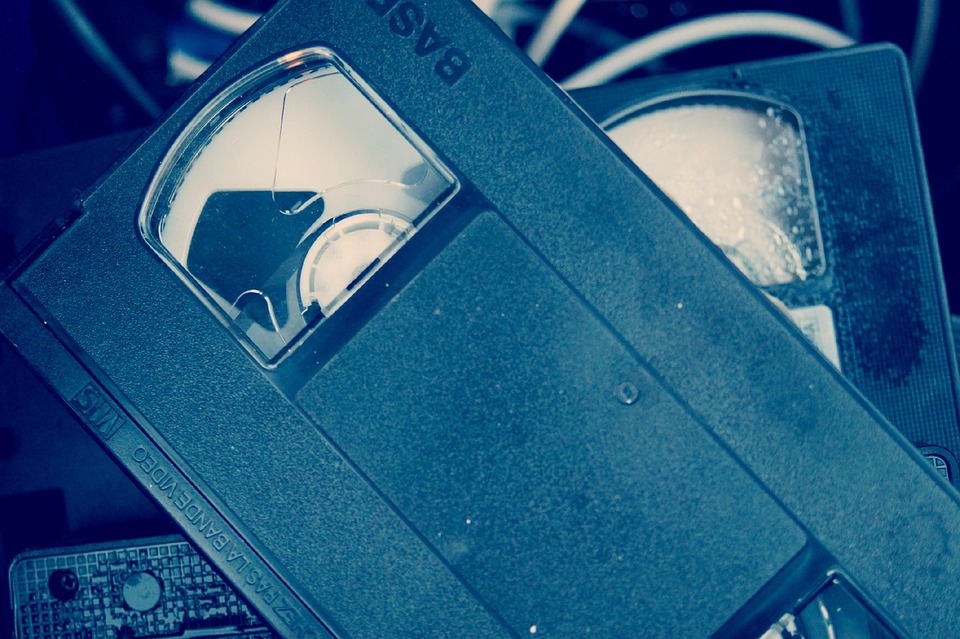
In light of this development I would like to argue another form of libraries, a somewhat controversial topic in modern librarianship. In this, an older form of the library would once again be put in the center, rather than the services that the library currently struggles to produce. In this kind of library the focus will be on discovery and the exploration of media old and new. Here old VHS and vinyl records would share shelf space with high end vr games and digital multimedia. A library like this would be able to, in theory, encompass all of human expression, and let it be available to the general public, free of charge.
This essay will be separated into several chapters, each which takes up its own aspect of the core question behind the essay, at the end I will present and discuss some of the more common counter arguments to this thesis, and finishing of with some concluding thoughts about how one can continue to work on this project if it seems interesting. The next chapter will discuss the controversial topic of quality and quantity when it relates to handeling media in public libraries.
All images taken, and used with promition from: https://pixabay.com

 An Unused Frequency