The library of odd things: A home for obsolete media, and rare finds: part three: Known and unknown needs

Introduction

This text is the third installment in a series of essays discussing a hypothetical new form of public library, the Library of odd things. This form of library focuses on providing new, old and novel experiences to their patrons, unbound by the need to show usefulness or to cater to statistics and loan numbers. This library is primarily meant to work as a thought experiment and present the readers with new ways to look at media curation and preservation.

In this chapter I will discuss two driving forces when it comes to acquiring new materials for a library, I will label them as wants and needs. What we balance and look at these terms, and how they are applied to collections will shape how our hypothetical library of odd things will take form. This text will discuss what a patron knows they want and need, as well as what they are unaware of that they want and or need.

What the patron knows they want

A modern public library must always keep in mind what it is that their patrons are most likely to want to borrow, as well as what they might need in their everyday life, work and studies. This way the library will be sure that the library has the texts that the patrons are most likely to ask for. This assurance can partly be made through the following trends, news and interviews within the book world. Patron tips and suggestions are also a great way to expand this part of the library’s collection.

It is in my opinion more common than not that the patron already knows beforehand what they are after when entering the library, often looking for a specific title, or a specific topic of research. The patrons more often than not have a specific title in mind. The optimal solution for these patrons would of course be that we have these texts at hand for them when they come to the library. If a text is popular or new, as it often is, they are presented in prominent parts of the library, easily accessible to the patrons that want them. Likewise are collections of texts such as detective novels or cook books often given more space than less well read topics, yet again for ease of use.

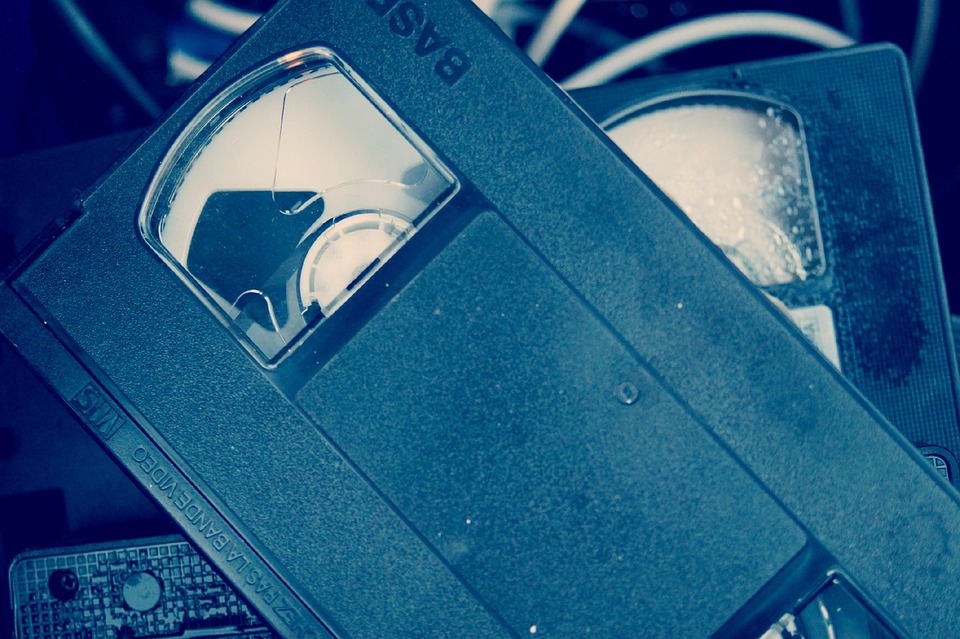
In our library of odd things, popular texts might still need to take up a large part of its collection, but not necessarily in the shape and form as in current public libraries, less used media such as vhs tapes would be presented next to books and dvds. As the patrons get more used to the Libraries of odd things, it is my hope that the patrons will learn how to navigate the library’s new form of collection. Hopefully, just with tool libraries the patrons will come to look for specific texts and machines used to experience them.

What they are unaware of

A seemingly conflicting goal of the library is to introduce their patrons to new texts and information that they had no idea that they needed. While sometimes aware of this unspecified need, the patrons are more often not made aware of it when they are faced with a solution to said need. This means that the more varied our collection, the more topics and perspectives it covers, the bigger the chance that the patron will find the answer to a problem or a need that they did not know they had, or that a library could help with. This can range from a reference work that helps them see a problem at another angle, or present an unsuspected solution to a conundrum, to a story that gives them the insight, comfort or inspiration they need.  

If a patron is unable to see the more specialized parts of our collections, it will be nearly impossible for them to become aware of it. By presenting the most popular texts and genres in the front, will the layout discourage hunting for new experiences and browsing around as the patron looks for their intended texts.

The easiest way to provide this need is with non fiction texts and other forms of reference materials. The realization that “I did not know that there is a book for that”, is an apt way of describing this unknown need. Perhaps a book on biology or botany may help a patron to get a handle on their garden slug problem. Maybe an obscure travel book is just what the patron needs to jog their memories. The examples are endless, and I have seen many examples of them first hand.

Fictional materials can likewise be used to solve problems that the patrons were not aware of, or to fill a need they did not know that they had. Once again is it a question of not knowing that they wrote texts about that, or more often than not, not being aware that there were books for them. As the adage goes, each book has its reader, and each reader its book.

This form of discovery will be the primary goal of the Library of odd things. As mentioned before, the library will have a large collection of popular texts, but the focus will always be on exposing the patrons to new and old forms of media that they would not be able to use otherwise. It is well noted here that the limits between known and unknown needs are not solid, and one unknown need is another patrons known need.

The problem of cataloging and finding texts

When it comes to known as well as unknown needs, we will run into the same problem of the patron needing to find the text, regardless if they are actively looking for it or not. First of all, must the library have the text in question at hand, bringing us back to the problem of curation and all that it entails. 

The second problem is the fact that the patron must be able to find the text in question. This leads us to a problem that we have not hit on yet, the problem of organization and categorisation. The problem of categorisation rejects simple answers and simple solutions, as there is no universal and true way of cataloging anything to the most optimal and objective standard.

This is especially true when it comes to texts, both fiction and nonfiction. While there are of course general guidelines to follow, like keeping the authors in alphabetical order, and organizing non fiction under topic and fiction under general theme, there will never be an absolutely perfect system.

Many texts can be categorized in several topics at once, for example the history of medicinal plants, does it belong in history, medicine or botany, and how granular should a collection be with cataloging. The problem becomes even more complicated and granular when we are talking about fiction. What genre will we pick out, what genres will be placed in general fiction, should be pick out things like lgbtqiia+ characters for example. There are no simple and straightforward answers to these questions, but it will fundamentally shape how the patrons are interacting with our collections.

Just as mentioned with the comparison between large and general collections, and smaller more specialist collections will each specialty category lead to more work, and more space in the library. Each fiction genre we split will need its own space in one form or another, and each non fiction topic that we break down will mean more work, and cataloging for the library. These might not seem as great concerns, but over an entire library collection it will make huge differences. 

Conclusions

How we present our collections are vital to how patrons can interact with the texts within its limits. The reason I split known and unknown needs between each other is that their goals are often at odds with each other when it comes to designing library spaces and other collections.

As mentioned before, will the patron that knows their need either go directly to the part of the collection that they want, or ask the librarian to send them to the right part of the collection. Because these patrons often are looking for similar things, would it make sense for these kinds of patrons to present the most borrowed texts in the front of the library, both physically and digitally.

This comes in conflict with the library trying to present the patron with texts that they are not aware of, or discovering texts that the patrons are not nearly as aware of. A patron looking for a specific popular detective novel for example might be annoyed that they need to traverse the entirety of the poetry collection to get there. On the other hand may moving forward the poetry section lead to patrons discovering a love for poetry the would never have found otherwise.

There are no right and wrong answers to these conflicting goals, but they will be very important for my project for the Library of odd things. This conflict leads us to our next set of questions, what should the library be for, and who gets to decide that purpose.

The library of odd things: A home for obsolete media, and rare finds: Part two, quailty and quantity

This is the second part in an essay that I wrote about media curation and the role of public libraries in Sweden, as well as how it can be handled differently. I discuss the concepts of quality and quantity in this chapter, as well as the implications these definitions have on media curation, both in current public libraries, as well as in my imagined Library of things.

Quality and quantity

I will begin my arguments with the most straightforward, but possibly one of the more controversial aspects of the Library of things. The idea that media can have quality, and that someone by default, needs to decide what that quality is. The concept of quality is by its very nature a subjective form of measurement, and one that does change over time and space, culture and public.

The term quality will in this chapter primarily be used in the differentiation between nice and mainstream media. With nice media I am here referring to things that stand out from the rest in its category, be it from awards, professional and academic acclaim or by the uniqueness of its presentation and content. This definition is not to be confused with the term good, but rather as a way to single out certain texts from a broader context. 

This definition is in contrast to mainstream media, that is made to be broad, approachable and in many cases, disposable. Here would find the masses of feel good novels and thrills written to be read and then forgotten. Likewise here is where you will find cookbooks, tv dramas, action and horror films of all kinds. Note that I do not use the term quality here as a direct notation of what is good and what is bad, as that is frankly a topic that is too wide, and too complex for this text to cover in any meaningful way. I am also fully aware that these definitions are strenuous at best, and often blend into each other in complex and fascinating ways.

For the interest of this text will this definition be used to define between texts that the library can count on being borrowed, and texts that, while not being as popular, are more likely to leave a larger impression on the patron that do borrow it.

Besides quality, must the question of quantity be taken into account. The quantity of texts, or the number of items that a library can have at a single moment is ofcourse limited by its physical space. There is only so much room that one library can fill with texts before something needs to be removed in order to make room for something new. It is an unfortunate result that every piece of media that is bought in a modern library does need to take the place of another piece of media, each purchase and removal of a text much as a result be argued for.

The physical space of bookshelves and other storage devices must also be taken into account when planning for what form a library’s collection will take. A current public library tends towards having a small variety of media available, books, audiobooks and movies for example. This approach allows them to maximize the space available for these collections, as well as minimizing the curation time needed, as they all follow the same general workflow. This allows the library to take a quantitative approach to media collection, leading to a  large chance of the patron finding the item they are looking for, as long as it is not too obscure or old.

In this form of library, can the librarian be a bit more lenient with how much the library buys, especially if they are under no obligation to keep the media in question for posterity or future research. This means that texts of both mainstream and more nice material can quite often easily find their place side by side. There are still limitations however, especially considering the libraries limited, and sadly often restrictive budgets. This budget still makes sure hard choices must be made about what to buy and not to. I discuss the librarian’s role in curating a collection in more detail in a future chapter.

In the form of the library that I am describing, will this question become even more important, as the nature of the collections means that different areas will need to be set aside for each collection, and more complex and varied storage forms will need to be put in place. This would sadly mean that the librarians would need to be even more discriminatory in the forms of media that they choose to take in. This, I would argue, will be one of the biggest limiting factors, but also one of the biggest assurances of quality for the library’s services.

When creating a collection it is always important to keep in mind why this collection is created, what form of problems they are meant to solve and for who. The current driving forces behind many purchases that I have been purview to have been based on the concept that we should buy them, because people want to borrow them from our collection. In my experience will these collections gravitate more towards mainstream media, unless there are librarians present with a special interest or dedication to a certain media form or genre.

By Evan-Amos – Own work, Public Domain, https://commons.wikimedia.org/w/index.php?curid=12814264

In comparison would the Library of odd things need to be even more discriminatory with what they buy in, and as a result does the question of nieces versus mainstream become even more important.

In this scenario will the work of curating become even more important, as the space and time is even more limited. This means that the questions of what and why certain media is included or excluded becomes even more important. When for example, a library decides to include a series of Nintendo 64 cartridge games from the popular and groundbreaking gaming console with the same name, what should be included?

Do we include titles that we know were popular, like Super Mario 64, do we only include those titles that were critically acclaimed at the time, like Goldeneye 64. Do we aim to search out more obscure titles that later became cult classics, or that may be remembered fondly by our patrons?

I do not claim to have any easy answers to these questions, as they are complex and deeply rooted in each library’s situation and capabilities. I would argue that a balance is to be strived for, between high and low culture, nice and mainstream, obscure and well known, in this way will the library of odd things best serve its purpose of exposing their patrons to the largest amount of new and novel experiences, as well as old and potentially nostalgic ones.

With the implementation of more Libraries of odd things can this problem be alleviated somewhat by allowing cross library loans, much in the same way that Swedish public libraries are today able to borrow books from other public libraries as well as some university libraries.

While this is not a perfect solution, is it one that can be readily applied with already existing infrastructure. 

This chapter is meant as a beginning to the discussion rather than the be all and end all solution to a series of very complex and somewhat controversial problems within the contemporary library world. Next chapter will discuss the needs and wants of the library patron, as well as how these concepts can be defined and used in everyday library work, especially when it comes to the question of curation.

The library of odd things: A home for obsolete media, and rare finds: Part one, introductions

What you are about to read is the first part of a longer essay that I have decided to split into smaller chapters for ease of reading in a blog setting. In this essay I will discuss several concepts regarding how the Swedish library system works, and the role of the Swedish public library. Later in the text I will introduce an alternative to this model, that I have dubbed the library of odd things. This chapter will contain the introduction to this model, as well as my primary arguments.

Introduction

I have for a long time noticed a trend in public library work I can only liken to a form of gentrification of the materials at the public libraries that I work at. The first and most obvious way that the libraries are limited are the kinds of books and movies that are available at the libraries that I have worked at. I have noticed that collections of short stories, comics and poetry have become fewer. While this is a vital discussion as well, is it not the topic that I wish to discuss in this essay. Today I wish to discuss the usefulness and novelty of discounted and obscure media formats. As I start to work, MP3 audiobooks and other older audio formats have already disappeared, along with the fate of VHS and CDs.

It can easily be argued that these forms of media have long served its purpose, and given the limited space of the libraries, it would make sense to remove the older, and seemingly useless forms of media.  In this text I will argue that this does not always have to be the case. We do not always have to buy every åpopulauir feel good novel or detective series to every library. These series do take up lage part of many libraries’ budgets, as well as library space. As publishing of books only seems to increase as they are catching up with lowering costs of books, and companies like Amazon selling books on a loss, is this something that libraries need to look into sooner rather than later.

I would argue that it is impossible to keep up with this form of publishing and release pressure, and it will lead to more and more rare and old collections needing to be moved to give place for these new, and cheap books. Not to mention that the shelf life of these books will inevitably become shorter and shorter as well, as they too will be replaced with new best sellers of the month. With a shifting media landscape and the ability to get your hands on mainstream books becoming cheaper and easier, and in the face of dwindling library numbers, would I argue that it is time for the library to return to its roots, and provide the media that no others can, and most importantly, do it for free.

In light of this development I would like to argue another form of libraries, a somewhat controversial topic in modern librarianship. In this, an older form of the library would once again be put in the center, rather than the services that the library currently struggles to produce. In this kind of library the focus will be on discovery and the exploration of media old and new. Here old VHS and vinyl records would share shelf space with high end vr games and digital multimedia. A library like this would be able to, in theory, encompass all of human expression, and let it be available to the general public, free of charge.

This essay will be separated into several chapters, each which takes up its own aspect of the core question behind the essay, at the end I will present and discuss some of the more common counter arguments to this thesis, and finishing of with some concluding thoughts about how one can continue to work on this project if it seems interesting. The next chapter will discuss the controversial topic of quality and quantity when it relates to handeling media in public libraries.

All images taken, and used with promition from: https://pixabay.com