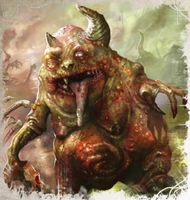
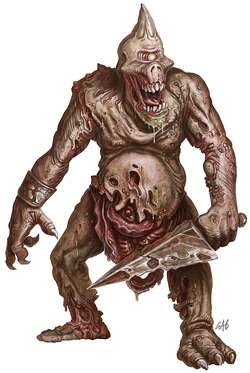
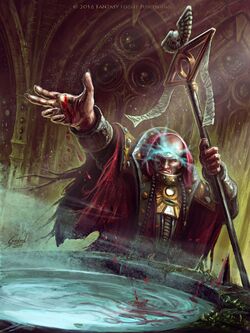
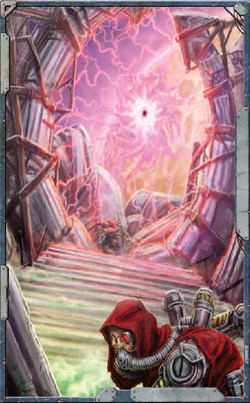
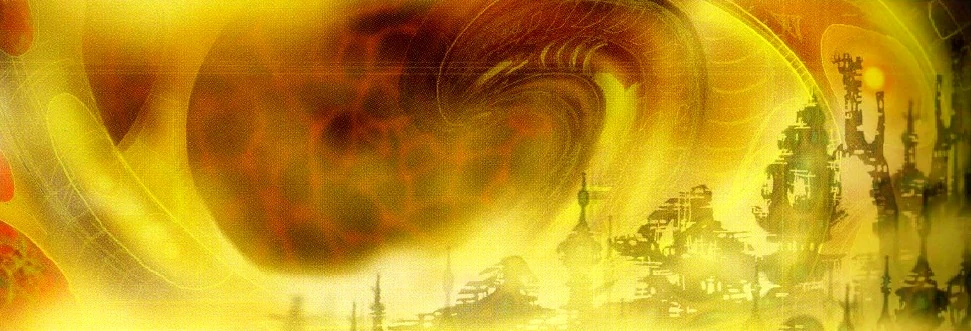
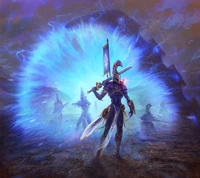
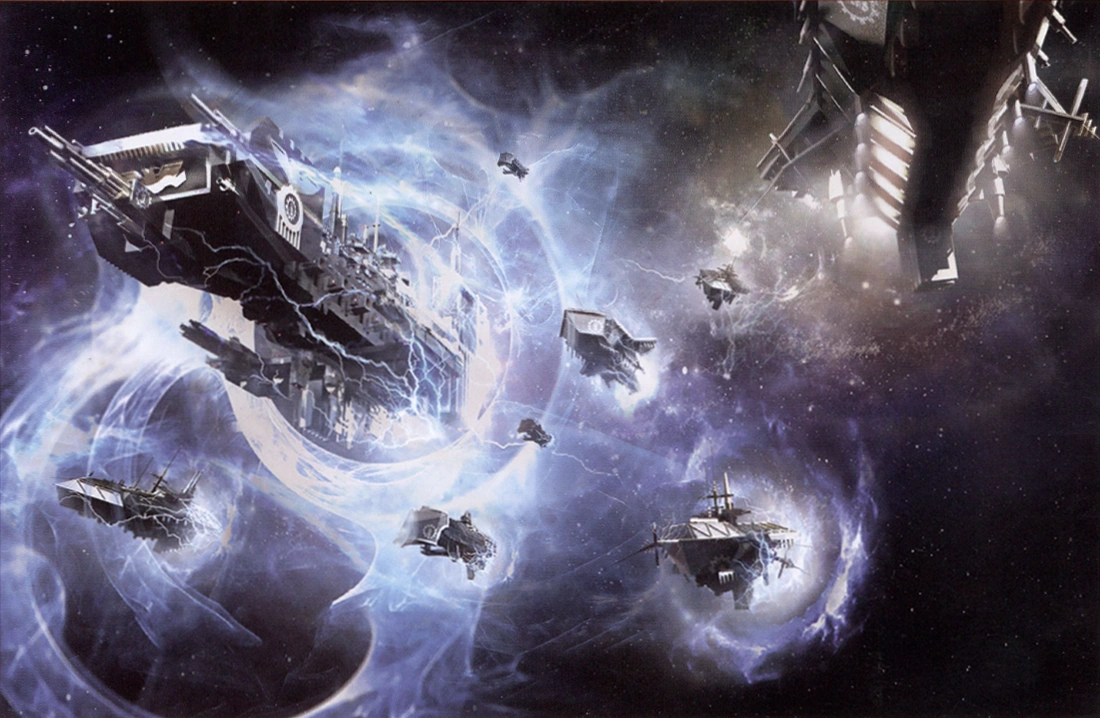
Warhammer 40k an in depth analysis: Part 2, The Warp: part 4, Chaos: Tzeentch, Master of magic and schemes

Whenever a human lie to another, or schemes against them, Tzeentch hears, and uses them as a puppet on a string. The changer of ways sees and hears al, the ultimate master of manipulation and trick. He is the patron god of politicians, generals and scholars, for he promises his followers endless knowlage and power.
Source: https://warhammer40k.fandom.com/wiki/Tzeentch

The weaver of fate

The god of change sees and knows al, present and past, and he uses this to navigate the many possible futures towards one that is most beneficial to himself. It is inportant to note that Tzeentch do not see the future, only the present. What this is, can no mortal say, and it is possible that Tzeentch himself do not know.

The masters of change plans are complex, varied and seemingly endlessly contradictory, a yarn that seems to spin deeper and deeper as it gets more entwined with itself. It is hinted in the text that these schemes has no end, and that if the schemer would ever fulfil his scheme, there would be no need for him, and he would cease to be. (Games Workshop, 2016)

Warp and time

As I have hinted at before is time and space a strange concept in the 40k Narrative, especially when the warp is involved (which is usually is).

We have already discussed the fact that the Warp exists outside of time, space and classicality, which could explain the seeming randomness of the Changer of ways plans, as he is seeing the universe out of order, or arranged in different constellations then those in the material plain. To further complicate this concept, can certain races such as Necrons or Eldar travel in time, and change the course of certain events using magic and or technology. The concept of an al seeing and all knowing mastermind seem to falter here a bit, a point we will come back to later. (Games Workshop, 2016)

Master of magic and mutation

The changer of ways are also said to be the originator and creator of al magical powers, as well as a representation of the mutating power of the warp. The most powerful mages and sorcerers are unattainably found amongst the followers of Tzeentch.

We must here go back to an earlier chapter and discuss what exactly magic is within the 40k narrative. We have seen that the line between psycic powers and magic is strenuous at best, and that the concept of magic changes depending on which race describes and uses it.

Mutation is not something that is the clear preview of Tzeentch, but it non the less falls within his domain. It is very possible that, just like Nurgle is not the representation of death and decay, but rather the human fear of it, is Tzeentch the representation of human fear over the future, faith, power and knowlage. (Games Workshop, 2016)

Lands of change and chaos

Within ever changing labyrinths and glass mazes of the changers of ways lands, lays the grand library, where every single written word is collected and reviewed by the master of magic himself.

The surrounding lands are beyond the comprehension, as every single possible reality is shown simultaneously within the mirrored walls, as time and spaces looses al meeting within Tzeentch realm. Only Tzeentch himself can navigate the endless pathways to reach the secret library within.

In Tzeentch is every single written word ever created stored and archived by an army of daemons known as red and blue horrors.

Demons of magic

The daemons of Tzeentch are by far the most intelligent, and also the most magically gifted.

The servants of the changer of ways hate the predictable mundane and secure, and do their best to topple lives and change futures in to new and unpredictable paths. To chive this goal do they use al manner of manipulation and schemes, preferring diplomacy to open confrontations. (Games Workshop, 2016)

The lords of change are the greatest of Tzeentch demons is the changer of ways, creatures of great mind stunning intelligence, they use this power to change one stable planets and societies by breaking them down and building them anew, for there is little more that these daemons hate then mundanity and letting the galaxy taking the predictable path, for they crave renewal and change above al things. (Games Workshop, 2016)
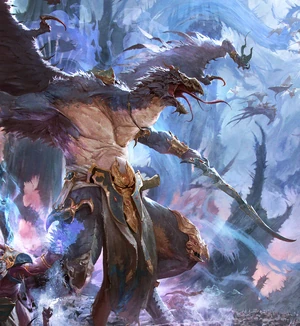
https://vignette.wikia.nocookie.net/warhammerfb/images/9/97/Warhammer_Lord_of_Change.png/revision/latest/scale-to-width-down/300?cb=20170226092645
Source: https://warhammerfantasy.fandom.com/wiki/Lord_of_Change

The lesser creatures of Tzeentch is known as pink and blue horrors, they are manifestation of pure magical energies, and as a result a pure representation of Tzeentch power. Pink Horrors are happy and juvenile, telling jokes and doing cart wheels as they frolic in to battle, and peppering the enemy with magical energies. The daemons put on dazzling light shows for each other, often leading to the death of any nearby enemies, something the daemons find immensely amusing. (Games Workshop, 2016)

Blue horrors are created when a Pink Horror is split in twain, these daemons are the polar opposite of their cousins, being sombre, sad, and spending most of their time arguing on which fault it was that they one again lost their pink form.
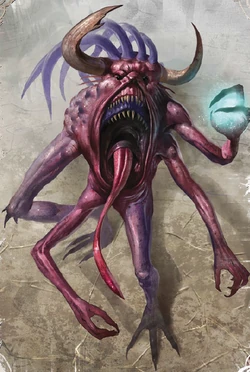
Warhammer Daemons of Chaos Pink Horrors
Source: https://warhammerfantasy.fandom.com/wiki

Flamers of Tzeentch represents in many way, the pure chaotic and mutating power of the Warp, and Tzeentch himself. Their bodies move and contort in ways beyond human comprehension, as they constantly shift and change. They bellow forth magical fire, the pure essence of the mutating power of the warp. These flames are known to do anything from heal their victim, to grow them new limbs, sometimes these flames keeps the body unharmed, but instead changes and shifts the very soul of the victim. Much to the shock of the victim, and unbridgeable joy of any nearby horrors. (Games Workshop, 2016)
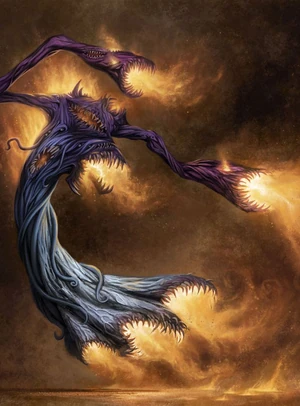
Warhammer Daemons of Chaos Flamers
Source: https://warhammerfantasy.fandom.com/wiki

The last demons we will discuss today is the Screamers of Tzeentch, beasts that prowls the warp in search for things to consume, they seem to not be directly affiliated with the changer of ways, but serves as a good example of the other daemons and denizens that inhabits the endless void of the Warp. (Games Workshop, 2016)
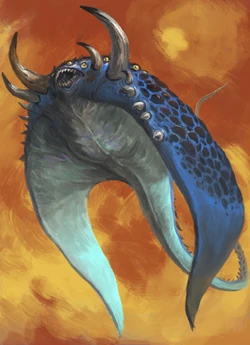
ScreamerofTzeentch
Source: https://warhammer40k.fandom.com/wiki/Screamer

Followers of Tzeentch

Politicians, generals and researchers of al kinds are drawn to Tzeentch, as he is in turn, drawn to them. Great power and knowlage are promised those that follow Tzeentch, but just as with any of the Chaos gods, is the price both high and heavily ironic.

The followers of Tzeentch gains immense knowlage, as well as magical power, which they use to achieve their own goal. This power comes with a great price tough, for they are now forever bound to the magical power and will of their patron god, and he only helps those that serves his schemes, and have no qualm about sacrificing his own pawns, if it means getting an upper hand against his rivals. (Games Workshop, 2016)

Conclusions

Tzeentch is by design full of enigma and contradiction, for he is that which humanity can not, and should not know. I have here but given a small taste of the many things worth exploring related to the changer of ways as I wish for my reader to continue exploring on their own. I will at the end of this chapter provide a few examples on how to continue their reading in this much interesting and strange subgenre of horror, but first, a short conclusion of the things we have discussed today.

Cosmic horror

The term Cosmic horror (or Lovecraftian Horror), is usually reoffered to and related to the fear of the unknown, or the unknowable, of the vast spaces of time and space beyond human comprehension, about fate, life, death and our part in it.

Tzeentch is the representation of humanities fears of the future, past, and their ability to change their place and path within these things. It is not surprising then that Tzeentch design borrows so much from the grandfather of cosmic horror, H.P Lovecraft.

Fate and the future

Tzeentch represents humanities fear of the future, and their own ability to control it. Just as with Nurgle, is Tzeentch the actual source or controller of the things humanity fear, but as humanity spreads throughout the galaxy, so does their fears, and as a result the power of their manifestations in the warp.

Tzeentch do not in of itself control the future, or the individual humans part in it, but as Tzeentch power grows, so does his ability to do just that. To join Tzeentch is to give up once own goals and dreams, to become a pawn in the great schemers plans. (Games Workshop, 2016)

The unreliable narrator

This will be another point that we will take up time and again as we deep dive in to the other factions of the narrative. This will become more and more apparent as we start to look at the narrative from the other factions point of view. So far we have seen the narrative from only one point of view, but the statements made about the chaos gods (as well as any other faction), will very much be put in to question here. I take this up now, for it is worth to keep the supposed all knowing nature of Tzeentch (as well as the powers of the other gods) in mind as we move forward.

Uncertainty as well as the almost myth like structure of the storytelling in Warhammer 40k is partly what makes it both frustrating and interesting topic to read and study. (

References

Codex: Chaos daemons (7th Edition), Games Workshop, 2016

Codex: Chaos Space marines (7th Edition), Games Workshop, 2012
Warhammer 40k an in depth analysis: Part 2, The Warp: part 3, Chaos: Nurgle, the god of death and rebirth

Every advanced emotion felt by enough sentient species is reflected within the warp. No feeling is so universal, and so often felt then the fear and relief related to the trails and tribulations of death and disease. It is these emotions, these fears, hopes and dreams that fuels Nurgle, the god of death and suffering, but also the god of hope, life and rebirth.

https://vignette.wikia.nocookie.net/warhammer40k/images/c/c1/Nurgle_mark.png/revision/latest?cb=20050727104008
Source: https://vignette.wikia.nocookie.net/warhammer40k/images/c/c1/Nurgle_mark.png/revision/latest?cb=20050727104008

Introduction

We will begin our series of the Deities of the 40k narrative, by looking at the most contradictory, and ambiguous of al the strange inhabitants of the Warp. Nurgle is said to have been a part of the fate of humanity since the very start, or maybe, even before that. The fear of rot, decay and death has always been prevalent in the human psyche, tough revered by some, most try their best to repress and ignore the sinking feelings of the inevitable, it is in these notions that Nurgle truly thrives. (Games Workshop 2016)

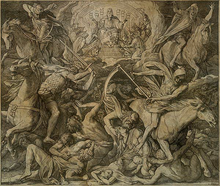
The gods of death and plague is one that can be found in most if not al major human faiths, as it has been a large part of human history, al from the start. Just like decease rot and death has been with humanity from the start, so has Nurgle been there, walking besides us. Few things has caused as much fear and dread in human society as the slow extinction at the hands of a malignant disease or plague. One of the more common faces of disease in the west is that of pestilence, one of the possible identifies of the four horsemen of the apocalypse.

Source: https://en.wikipedia.org/wiki/Four_Horsemen_of_the_Apocalypse#As_infectious_disease

Nurgle is not, as one might think, a sombre spirit, or even one of malice or contempt, he is rather a figure full of life and lustre, full of the wishes to organize, create and educate. To understand Nurgle, one must understand the constant contradictions that he, even more then the other chaos gods represent. (Games Workshop 2016)

Nurgle is a grand example on how the Warhammer 40k narrative uses dramatic irony to create a sense of dread and hopelessness. Dramatic irony, as we have discussed earlier, is the practice of making the audience preview to more information the the characters in the text has. In this case are the readers fully aware of the immense pain and suffering that Nurgles “gifts” wreck on the sentient life of the galaxy, as well as the seemingly loving and well-meaning spirit of Nurgle himself.

A creed of duality

The domains of Nurgle are the duel domains of life and death, decay and rebirth. For every spore, every cell of a disease is new life and from every corpse grows new and fascination life forms. Life leads to death, which leads to new life. It is this cyclical nature that Nurgle represents. His fascination has always been chiefly with life, and its many struggles. (Games Workshop 2016)

Nurgle shares his plagues and diseases as gifts and blessings to a seemingly uncaring universe. He watches with fatherly pride as his minions spreads his foul contingents, and the deaths and pains that they spread throughout the galaxy. (Games Workshop 2016)

To ally once self with Nurgle is to accept this endless cycle and embrace the gradual decay of al things. In return will Nurgle give you immunity from the pains and discomfort related to eutrophy, and can as result conformably enjoy Nurgles great work. (Games Workshop 2016)

The garden of rot

Nurgles lands within the Warp manifests as an enormous bloated swampy garden, beautiful and terrifying in equal measure. Great vine trees reach to the sky, and colourful toxic mushrooms, some the size of humans or taller, fill the ground, spreading colourful spores across the lands. (Games Workshop 2016)

One can not survive Nurgles lands uninvited, for only he can protect you from the various illnesses and parasites that inhabits Nurgles forests. Many invaders and unwelcome visitors has learned this the hard way, as they have become a permanent resident in one form or another, to the gardens of Nurgle. (Games Workshop 2016)

Within this garden lays Nurgles Manor, it is described as rotten overgrown and creaking, yes fundamentally strong and immovable at its base. Driving home the theme of gaining strength from weakness and life from death.

The daemons of Nurgle

The daemons of Nurgle can roughly be categorised in one of two categories, the sombre and serous and the playful and mischievous. This further drives home the idea of the duality that exits within Nurgle himself. (Games Workshop 2016)

The playful beasts

Amongst the many beasts and creatures that serve Nurgle, is few as obvious and the duality of Nurgle as the Plauge beasts, large slug like creatures that are abhorrent to visit, and is highly toxic to touch. They pair this abhorrent physical appearance with the temperament, energy and personality of an attention star puppy. They do not see the enemy combatants as foes to slay, but rather new friends to play. The beasts are blissfully unaware of the fact that their touch are fatal to every living creature, and gets genuinely upset when their latest victim don’t want to play along. This is until another hapless mortal catches their eye at least. This is another clear example of the dramatic irony coming in to play. Both the attacker and the attacked misses vital pieces of information, only at the preview of the reader. The attacked is not aware of the beasts intention to simply play, and the attacker is not aware of the fatal outcome for their new playthings. (Games Workshop 2016)

The Nurglings, small creatures, looking like miniature version of the grand god of rot himself. These small creatures are born from the Great unclean once, and spend most of their time fighting for attention from either the larger daemons, or Nurgles faithful follower. (Games Workshop 2016)

Nurgling closeup
Source: https://warhammer40k.fandom.com/wiki/Nurglings

The legion of research

The second category of daemons are in one way or another representation of Nurgles wish to educate and research. Chief amongst these are the Plague bearers, mortals that has consumed to the plague known as Nurgle rot, and reborn in the Garden of Nurgle as one eyed, bloated version of themselves.

Plaguebearer
Source: https://warhammer40k.fandom.com/wiki/Plaguebearer

These creatures are now tasked with cataloguing, spreading and researching the effects of Nurgles so called gifts. They are also tasked with carrying out Nurgles will, and making sure his feat work do unchallenged. The tasks of these tally-men are an endless one, for Nurgles creations are always changing morphing and transforming, even as they take its course on the helpless victims. This bothers the plague bringers little, as they find great enjoyment in this seemingly monotonous and endless task. (Games Workshop 2016)

These two subsets of daemons are seemingly always at odds with each others, and the Plaguebringers see the Nurglings as nothing else but painful distractions from the endless work of helping their master achieve his goal of creating the ultimate illness.

Followers of ruin

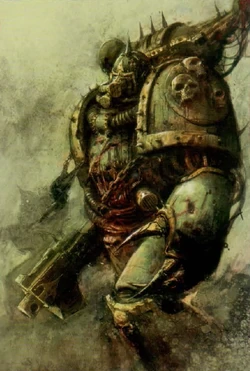
The followers of Nurgle are legion, for the church of the fly is open to everyone, and turns no one away, for after al, Nurgle will embrace al in the end. Amongst the more eye catching are the members of the Adeptus Astarties that at one point or another abandoned the Imperium of man and embraced the Plague father. Chief amongst the many children of Nurgle is the Death Guard. hailing from a planet of plague and disease, did the death guard see themselves as immune to such maladies, and were often sent in to the most toxic environments, that was until one day they were stricken down with one of Nurgles finer creations, and left stranded in the warp, they turned to the only thing that could save them, the Plague father himself. The Death Guard of the modern imperium are great rotting monstrosities, a fusion of armour and rotten flesh, blessed with the absence of any pain and discomfort from their dread father. Stricken down by the very thing they saw themselves the masters of, they now server the very being that brought forth their downfall. (Games Workshop 2012)

Plague Marine battle
Source: https://warhammer40k.fandom.com/wiki/Death_Guard

Beyond spreading death and disease wherever they travel, do these fallen Astartes also take pride and joy in the Masters great work, either indirectly by cataloguing and tallying the victims of his many plagues, or directly in one of many laboratories and research station located on the Death Guards home planet. (Games Workshop 2012)

Origins of the plagues

I will here raise an inportant question, one that will follow the rest of our investigations in to the deities of the warp. Did the existence of Nurgle, create the first plague, or did humanities fear for dying this way, lead to the birth of Nurgle? The evidence I would say supports the second interpretation, but this raises another question. How did Nurgle go from a representation of the fear of death and disease, to an actual creator of these things? This is a question we will come back to in a later chapter, and one I am note sure I have an answer to myself.

Conclusions

Nurgle is an interesting and complex character within the 40k narrative, and a good example to the inherent paradoxical nature of the warp and the creatures that lives within. The fear and dread that Nurgle creates in his followers are in a stark opposition to the demeanour and mannerisms of the god himself. he calls his followers his children, and see his creations not at curses, but rather blessings and gifts that he sends out on the material plain.

Lastly, to follow and embrace Nurgle is to embrace the inevitable, to accept the death of al things, and in the process be freed from the more physical distresses that comes with such entropy. It is also to internalize the dual nature of Nurgle, to grow strong as the rest of the world grow weak. To take suffering and rot, and make it your power and life. This is a trait that we will find with the followers of al the chaos gods, and one that further drives home the horror of these creatures. In order to become free, you must embrace that you fear the most.

References

Codex: Chaos daemons (7th Edition), Games Workshop, 2016

Codex: Chaos Space marines(7th Edition), Games Workshop, 2012
Warhammer 40k an in depth analysis: Part 2, The Warp: part 2, Travelling trough hell

Introduction

Warp travel is a large and mostly deliberately obfuscated topic within the 40k narrative. This is partly because of the first or second hand accounts the writes often uses to describe the world of Warhammer (link here). In other words, does the Imperium for example know very little about warp travel, and how their own processes to navigate function, as a result, will the readers not be made preview to this information either. Note that in this chapter, due to the lack of information, will I need to go to earlier and later editions of the codex’s to paint a bigger and more interesting picture. I will in the references clearly label witch book is from witch edition, so you can clearly see witch lore is old and witch is new.

The Imperium of man

We will once again begin with discussing the Imperium, as a way to contextualize the rest of this chapter. This will then help us further understand how the warp travel of the other factions works. The warp and the factions relationship to it, plays a large role in how each faction function on both a large and small scale. This is partly due to the fact that the immense size of the galaxy in Warhammer 40k is a large part of the overall setting, and the ability to travel this vast space is a huge component in how narratives are presented and unfolds.

Galler field generator

The technology of the Geller field is poorly understood by those that uses it, technology from a long lost dark age of humanity (Adeptus Mechanicus).

The geller field creates a bubble of real space (or Materium) inside of the warp that the ship can travel inside, with relative safety. This bubble is the only thing that stands between the ship and utter destruction as the forces of the warp rips material object to shreds.

The navigators

We discussed in the last chapter of the psycic mutants known as the Navigator, these feared and hated individuals that held so much sway on the Imperium, despite their mutated state (The psyker). The navigators are the only humans with the ability to see the ebbs and flows of the warp, and be able to navigate their way trough it.

Bildresultat för warhammer navigator
Imperial Navigator, Source: https://warhammer40k.fandom.com/wiki/Navigator

Warp lanes

As we discussed in our chapter on the warp, does the Imaterium exists of swirling pools of purse emotion and toughs and desires of mortals. The warp do have more stable areas then others, manifested as rovers or streams of warp energy. Following these streams are a lot safer and faster then trying to navigate the more hostile areas of the warp. These warp lanes are heavily used by the Imperium to travel between planets. These warp lanes has a huge impact on where humanity do and do not settle. This leads to the Imperium`s habited planets, are like cities in ancient the real world, located mostly along rivers and coasts that enables commerce.

Warp gates

We discussed in the previous chapter, the numerous rifts between the Imaterium and the materium, and the danger it poses to any living creatures nearby. There exists stable portals between the two worlds, these are known as warp gates. It is uncertain if these structures are artificial or naturally formed. Most Warp Gates are large enough for space ships to pass trough, but a few rare once are not larger then a doorway.

Warp Gate
Source: https://warhammer40k.fandom.com/wiki/Warp_Gate

These gates do have a very inportant purpose tough. There do exist stable warp rifts, that always leads to the same place in the warp, and they are usually tied to specific warp lanes. This makes warp rifts indispensable when travelling trough the warp, as the ability to arrive at the same time, and in the same place each time is immensely inportant both for commercial and military travel.

The Tau

The Tau is the youngest of the space faring races (at least of those that play a major role within the narrative). They are presented as a strictly feudal society, living their entire lives in one of for casts, with no ability to travel between them. The Tau started as a highly aggressive race, almost at the level of the Orks, and almost destroyed themselves, if it weren’t for the arrival of the Etheirials, today they focus al their energy on the betterment of the lives of the community. This “greater good”, has been risen to the status of religion and dogma, as everything is made of the betterment of the larger community. as always, this will be discussed in more detail in a later chapter. (Games Workshop 2105 1)

The Tau do not travel in to the warp itself, as they do not have psykers ins the more traditional sense, that allows them to breach the wall between dimensions.

Gravitic Drives

As the Tau lack psyker they are unable to properly enter the warp, this is due to the fact no amount of pure power or technical know-how will let an individual or space ship enter or leave the warp without a connection to the other side. This link is most often found in a pyker. The Tau did on the other hand manage to enter an in-between realm of the Imaterium and materium, before being spit out in to realspace. This pocket of inbetween is still effected by the warping abilities on space and time from the Imaterium, and it is as a result possible to use this as a way to move vast differences in a very shorty amount of time. Th Tau ships travel to and from the Imateirum, much like a stone skips over the water, each time it touches the water its propelled forward. (Games Workshop 2105 1)

Bildresultat för tau battleships
Tau battleship, source: https://levelskip.com/strategy/Battlefleet-Gothic-Armada-II-Tau-Merchant-Battleships-Advanced-Ship-Guide

The Eldar

The ancient and mysterious race of Eldar used to be the major influence on the Materium as well as them Imaterium. We will discuss this race of creatures in their own series later. They are one of the oldest races in the galaxy, and is slowly declining in numbers and power. Several allegories can be found between the Eldar, and the High Elves of the Warhammer Fantasy narrative, as well as other high fantasy Elves. The most striking one being their long pointy ears and slender build. The Eldar also plays the same role as Elves usually do in fantasy narrative, that of the distant and mysterious mentor/ally/enemy, representing ages long gone by. (Games Workshop 2105 2)

The Webway

The Eldar has in the past, with the help of their creators the Old Once (a topic for a later day), created stable corridors and rooms within the warp, as well as gates in to these corridors. These corridors let safe and unhindered travel to take place from specific points in the materium. After the fall of the Eldar has these webways fallen in to disrepair, and most lead to dead ends, or in to rifts in to the warp itself. The Emperor himself managed to access these webways, with disasters end results. (Games Workshop 2105 2)

Bildresultat för the webway 40k
Source: https://warhammer40k.fandom.com/wiki/Webway

Webway gates

These are small stable portals the Eldar uses to access the web-way. These are usually the since of individual Eldar, or small vehicles. These wabways are the most common ways the Eldar travel trough space, as their fortress ships they call home are often equipped with at least one heavily guarded webway gate. The Eldar can send troops from these portal to far flung parts of the galaxy, and in doing so, making sure they never have to put their own home at risk in the conflict. (Games Workshop 2105 2)

Warp Gate
Source: https://warhammer40k.fandom.com/wiki/Webway

The Orks

The Orks are once again the most difficult to explain,as they by design defy the logic and rules set up by the wider Warhammer 40k narrative. They are a race of genetically engineered soldiers, made only to conquer and fight. It is hinted that they, just like the Eldar, were created by the Old once. Unlike other species, that grow weaker from war and strife, do Orks in a very real and litteral sense grow stronger from it, as Orks that have survived combat for a long time, is visibly larger and stronger, that Orks that have spent time away from combat. (Games Workshop 2014)

Gork and Mork

The Gods of the Orks are as direct and violent as their subjects, they clearly and fully embody the values of their worshippers. These creatures are monsters of pure muscle and unbridled joy for combat and excitement, it is explained that they are so powerful that they easily shrug of any attacks made by the other gods. This is partly due to the fact that the Orks are by far the most numerous of the races in the galaxy, and as a result do they cast the biggest shadow in the Warp. (Games Workshop 2014)

Space Hulks

There are enormous space ships travelling trough the void of the warp, these hulking masses are amalgamation of asteroids, ice and destroyed space ships. These enormous monstrosities drifts out of and in to real space at seemingly random intervals. The Space Hulks are notorious for being infested with al sorts of monstrosities, as well as priceless ancient technology. The lack of any form of steering mechanisms also makes the ship almost impossible to control, made even worse by their tendency to randomly disappear in to the Warp. (Games Workshop 2014)

Bildresultat för space hulk Ork
Source: https://wh40k.lexicanum.com/wiki/Space_Hulk

The Space Hulk is the primary transport of the Orks, as they genuinely do not care where or when they arrive, as long as there is a fight waiting for them, any previous inhabitants of the space hulk also serve as a nice distraction form the boredom of space travel. (Games Workshop 2014)

The shock attack gun

No discussion about Orks and the warp would be complete would complete without the mention of the Shock Attack gun. This device is a perfect example of the vast instinctual mechanical knowlage of the Ork species, as well as their utter inability to use it for anything then warfare and short sighted destruction.

Bildresultat för shock attack gun
Source: https://wh40k.lexicanum.com/wiki/Shokk_Attack_Gun

The Shock Attack gun works much like an Eldar Webway only on a much smaller scale. This device has the ability to create a (relatively) stable tunnel trough the warp, from the entrance of the gun, to wherever the wielder is holding. This technology is not used to revolutionize space travel, or improve logistics, but rather its used to fire Snotlings (small Orkids), in to the armours, tanks and or bodies of their enemies. (Games Workshop 2014)

Bildresultat för shock attack gun artwork
Source: https://40k.gallery/view/shokk-attack-gun/

The Necrons

The ancient species of the Necrons do not use the warp as the rest of the factions in Warhammer 40k do. These ancient creatures are made entirely out of living metal, their bodies forever locked in the limbo between life and death. The Necrons do not have psykers within their ranks, and can as a result either enter the warp, or navigate its invisible currents, they are as a result forced to use other means of transportation. (Games Workshop 2011)

Inertialess Drive

This seemingly arcane piece of technology allows the Necrons to travel faster then light without expending endless amount of energy, or expanding endlessly in mass. Making it possible for the Necrons to travel short distances in much faster speeds then the younger races of the galaxy. (Reynolds, 2014) The inertless drive has been used in other fictional universes such as Triplanetary and Lensman series of novels. Michael Pedler claimed to have created such an intereteller drive in the late 90s. He supposedly did this troguh his company called Inertialess Drive Corporation Limited, this company foreclose for bankruptcy in early 2007.

Dolmen Gates

As their war with the Eldar continued, did the Necrons manage to squire access to the biggest advantage available to their enemies, the Web way. Using the technology of living metal, were they able to boar holes in to the web-ways itself. It is interesting to not that the Web way is described to be somewhat sentient, it is as a result, capable of detecting and shutting down these breaches in to its system. The Necrons needs to quickly leave and exit the web-way as a result, or be trapped forever. Even with this disadvantage, does the Web way allow the Necrons to travel far faster then any other race, apart from the Eldar themselves. (Games Workshop 2011)

Discussion

I have here presented a number of Factions within the 40k narrative as well as how they travel trough vast distances of space. The ways the civilizations travel to space partly explains how the different civilisations function.

The Psyker

The Psyker is a vital part of travelling trough the warp, as well as accessing the powers of the warp. A civilization that do not have access to psykers, do not have access to the Warp. Races like the Tau and Necrons that lack a psychic link al have different ways around this fact. Their solution and mentality towards this problem is also indicative on how the overall philosophy of the species works.

Technology and the Warp

Warp travel is both a mechanical and magical procedure. The warp, and any procedure related to the warp are by far the area where the two mix the most. As I have tried to show in this and previous chapters, are the lines between science and magic often highly fuzzy within the the narrative of the 40k narrative. Terms like Alchemy is almost interchangeably used, and concepts like miasma and neurological diseases, can be used to describe the same thing. In no other area is this as clear as the navigation of the Warp, as its partly a mechanical procedure, and partly a mystical ritual.

Now with a basic understanding on what the warp is, and how it is used, will we move on to some of the denizens of the warp, beginning with the human centred pantheon.

Referencer

Codex: Necrons (5th Edition), Games Workshop, 2011 pp. 6, 8, 27

Codex: Tau Empire(7th Edition), Games Workshop, 2015 1

Codex: Craftworld Eldar (7th Edition), Games Workshop, 2015 2

Codex: Orks (7th Edition), Games Workshop, 2014

Shield of Baal: Exterminatus, Joshua Reynolds, 2014

Bay of plenty times, on the inertless drive.

Warhammer 40k an in depth analysis: Part 2, The Warp: part 1, the mage and the psyker

Introduction

The powers of the warp has many names, and take numerous forms. In this chapter will we discuss a few of them. This discussion will mostly have a focus on the Imperial side of the narrative, because it is the side that I have introduced so far, and as a result are the easiest to use as a bases for this discussion.

The mutant

To understand the view that humanity holds on Psychic powers, one must first understand their views on mutations. Mutants, heretics and aliens are the three things that the Imperium of man fears the most. The mutant is anyone that exhibits any large physical divination from the “normal” human citizen. These effects can be due to genetics, external natural sources, or exposure to warp energies. (Hill 2016)

By far the most feared of al these mutations are that of the Psyker. These individuals have a direct and inherent link with the Warp (the Imaterium). These anchor points works as a way for the individual to pull energies of the warp in the Materium and form it to their will. This connection do work both ways, and a psyker is also a entry point for creatures of the Warp to enter the Materium. (Hill 2016)

The psyker

Many races and civilisations has psykers in one form or another, some are revered and worshipped, while others are feared and hated. With the psyker I will refer to individuals that are able to use the powers of the warp, but lack any of the esoteric or occult imagery that comes with the Mages.

The Imperial psyker

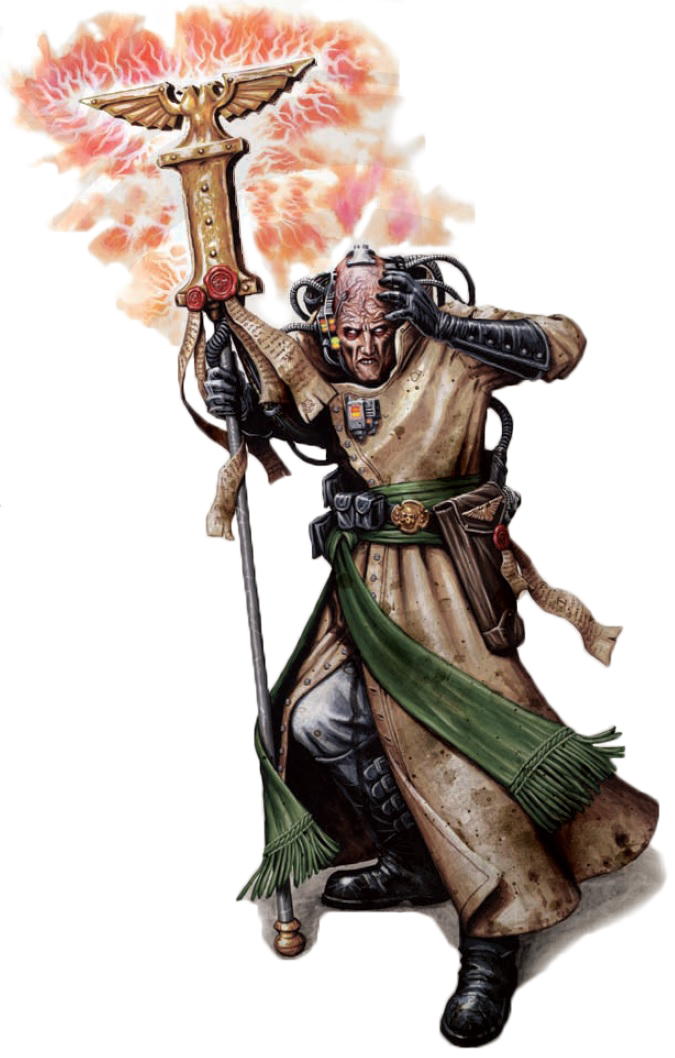
The psykers of the Imperium are often hunted and terrorised for their abilities. Most psykers of the Imperium are captured and fed in to the Golden Throne in order to keep the dying Emperor alive. These individuals are rightfully feared, as an unprotected and untrained psyker can become an unwilling host to a host of dangerous and powerful entities from the warp. (Hill 2016)

Bildresultat för warhammer imperial psyker
Imperial Psyker. Source: https://warhammer40k.fandom.com/wiki/Sanctioned_Psyker

This is the average vestige of the Imperial psyker, most commonly known as the Sanctioned psyker. The large coat and cybernetics is the most striking features of this individuals, along with his staff. (Hill 2016)

Most of these psykers are operating small groups known as Wyrdvane Psykers. These groups are made up of psykers that has not yet learned to individual control their psycic abilities and become primaris psykers, tough others will never leave this stage of their training. These psykers are linked in both mind and soul, and their lacking control and powers can be funnelled in to a much grander whole. (Hill 2016)

Some Psykers manages to control their abilities and allowed to operate with some form of independence away from constant supervision. These individuals are known as primaris psykers. These individuals are rather skilled at controlling their individual powers, each person seemingly manifesting the powers of the Warp in distinctly unique ways. Despite this increased mastery and control are they just as feared and hated as the rest of the psykers of the imperium, often going by the label of Witch. (Hill 2016)

Like much of the Imperium, are the psychic affairs and organisations handled by one large organisation, in this case the Scholastica Psykana. This organization prowls the stars to collect and evaluate any possible psyker. As we discussed in previous chapters are psykers a two way connection between the Materium and the Imaterium and are as a result, a huge danger to anyone around them. (Hill 2016)

The Scholastica Psykana uses fleets of so called Black ships, dreaded vessels made only to carry those inflicted with the psycic mutation. Al of these unfortunates are carried to Terra, where they are tested and evaluated, most are either feed to the “infernal mechanisms of the Golden Throne” or to the “blazing beacon of the Astronomican”. The individuals that are considered to be stable enough, are instead ferried of to secret training facilities to hone and control their abilities. It is noteworthy that Imperium do not see any value in these psykers beyond their pure battlefield applications. (Hill 2016)

The librarian

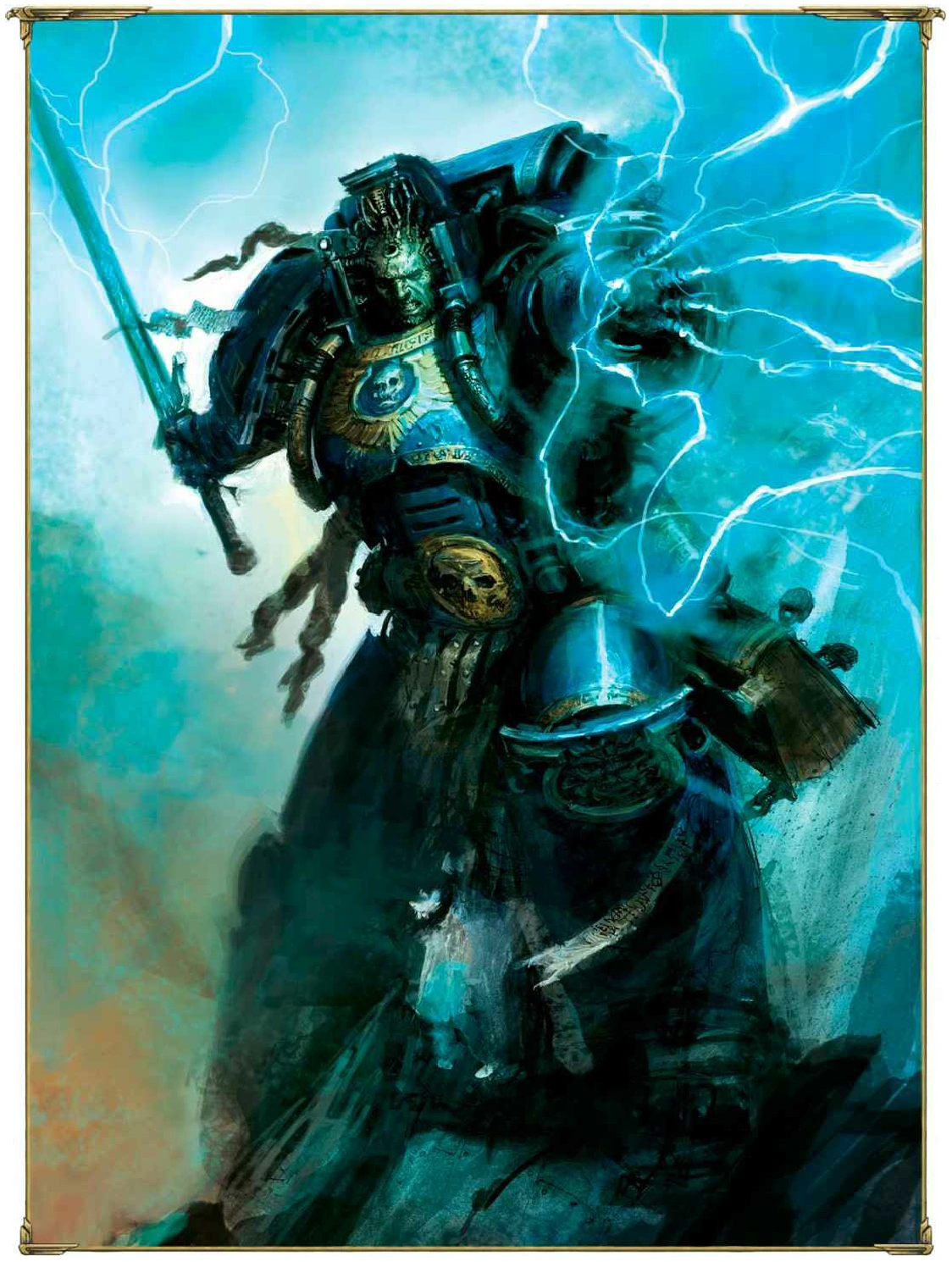
An Astarties that has been gifted or cursed with psycic powers. The Imperium, as mentioned earlier are extramarital wary of mutants, and the Space marines are no exception to this rule. The librarian are subjected to growling tests of fate, as well as mental and physical fortitude, in order to make sure that they will not hear the lure of forbidden knowlage and power. The Librarians are described to use the power of their psychic abilities to their fullest in combat, hurling lightning bolts, or even warping time and space around them to help their battle brothers get an advantage in combat. (Games Workshop 2015, 3)

Bildresultat för warhammer librarian
Space Marine Librarian: https://warhammer40k.fandom.com/wiki/Librarian

Befitting of the name, are the librarians also in charge of collection, analysing and distributing the knowlage base of the chapter that they serve. Each librarian have a set roll and office within their chapter, but each are focused on the conservation and betterment of the chapters knowledge base. (Games Workshop 2015, 3)

The Ork weird boy

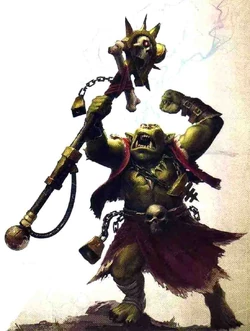
The Orks use of psycic powers are as pragmatic, straightforward and mindbogglingly strange as everything else they do. To understand how the weird boy work, one must first understand how the Orks and the power of the Waaaaaagh! works. Orks generates psycic energies all by themselves, seemingly independently of any connection to the warp. These energies are the basis for many of the Orks strange abilities, but for this chapter is it enough to know that this is where the Ork psykers (or weird boys) gets their powers from.

The Ork psyker works as sponge to these energies, and will collect and build up a charge of energy over time. If the Psyker do not find a safe way to release this energy will they combust in a awe inspiring display of energy. To avoid such a gory fate, has the more successful Weird Boyz managed to find several and deadly ways to get rid of this build-up of energy, usually at the cost of any fellow Orks nearby. Weird Boyz are as result forced to live outside of the Ork settlement proper, and kept under surveillance at al time.

Ork Weirdboy power
Ork Weird boy. Soource: https://warhammer40k.fandom.com/wiki/Weirdboy

Visually can we see a lot of similarities between the Ork psykers and that of the Imperium, as well as the Eldar. The staff he uses to focus his energy, the robes, as well as the various preferential items. The Orks also mistrusts their psykers just as much, if not more then the Imperium, a trend that will become more and more common as we continue this series. (Games Workshop 2015, 2)

The mage

The mage is a psyker that uses their powers in more ritual and more overtly magical forms. Note that these two distinctions are not clear cut, and the lines between them are blurry at best.

The navigator

The role of the navigator is a vital one, for they alone has the power to safely lead the Imperium`s ships trough the ebb and flow of the Imaterium. They achive this feat by the use of a rare human gene, known as the navigator gene. This mutation allows the individual to open a third eye, and peer in to the otherwise invisible realm of the Warp (see The Warp) The families of navigators are secretive and powerful, feared and hated, but still vital to the Imperiums continued existance. (Hill 2016)

Bildresultat för warhammer imperial navigator
An imperial Navigator. Source: https://warhammer40k.fandom.com/wiki/Navigator

The most obvious connection between the navigator and the occult is their third eye. The third eye is a common sigh for otherworldly sight and or abilities. (Hill 2016)

Emperors tarot

The Emperors tarot is a mysterious and poorly defined system of which imperial psykers tries to explore possible future events, many decisions are made based on the omens of the Emperors Tarot (Hill 2016). The ties between this system and the real life system of Tarot are very clear and obvious. Much like the Imperial officials did many rules in medieval Europe rely on seers, astronomers and readers of the tarot to make inportant decisions, Lévi names i the “noblest of magical arts” (Lévi 2017).

The Sorcerer

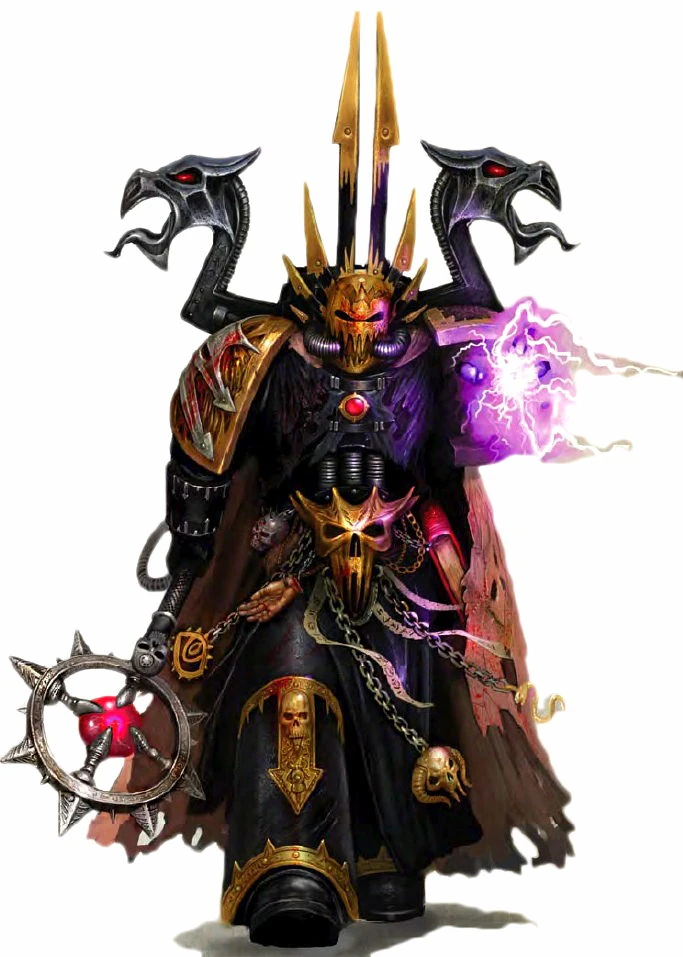
The Chaos sorcerer is the most clear example of the category of the mage. The sorcerer denotes many thing within the Warhammer 40k narrative, but for the process of this text will we use it to denote the Astarties Chaos Sorcerer. In other words, a space marine librarian that has gone in league with one or several of the chaos gods. (Games Workshop 2012)

Bildresultat för warhammer sorcerer

The term sorcerer in many magical texts from medieval Europe, and in to the Relicense denotes low or untrained magic. In a Christian context does the term Sorcerer often mean magic user in league with daemons or devils. In both cases does it refer to lesser or unofficial magic (Games Workshop 2012). Lévi describes sorcerers as users of demonic powers to curse, harm or even raise the dead. Sorcerers and sorceress are evil foes that any true mage must fight at any cost (Lévi 2017) .

This line between good and evil psycic powers can be found again and again within the 40k narrative. The difference between the sanctioned psyic powers and mental abilities of the Librarian, and the hexes, spells and rituals of the Sorcerer is one of the more striking once. One is based in self control and rigid training, the other in research and forbidden knowlage. The wordings of the different groups are interesting as well and can tell us a lot about each faction, and how they function. It is inportant to keep in mind, as the Codex of the Chaos Space marines describes, that the differences between the two are tenuous at best. (Games Workshop 2012)

The Eldar Farseer and warlocks

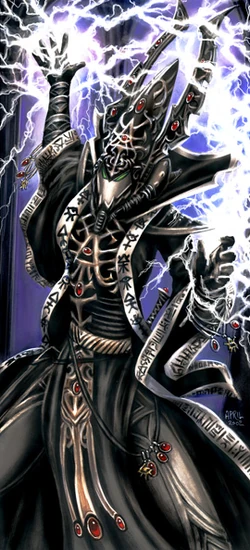
The psykers of the Eldar race are often denoted as mystics. One of the Farseers chief concerns is to scry the possible futures of their races by consoling runes of arcane magic. They guide their race trough the mists of possible futures, trying to reach one that will one say safe their civilisation from destruction. (Games Workshop 2015, 1)

FarseerUlthwe

The warlocks on the other hands uses their powers in purely a combat roll. They cast searing flames of energy, cast up barrier of blinding energy, and crush battle tanks with a single hand gesture. (Games Workshop 2015, 1)

The enigmatic race of the Eldar are steeped in occult and esoteric symbolism, most notably by their use of runes in their work. This can be partly explained by their ties to the Warhammer Fantasy equivalents, the Elves. These creatures are often seen as innately magical creatures in pop culture as well as folklore.

Bildresultat för The rune of the mystic eye eldar
The rune of the mystic eye. Source: https://warhammer40k.fandom.com/wiki/Seer

This sign, or versions of it is often worn by Farseers, or followers of “the path of the witch”. these symbols are easily recognizable to anyone with a passing knowlage and interest in the occult or esoteric, or pop culture in general for that matter. (Games Workshop 2015, 2)

Conclusions

As mentioned earlier are there a fine, often blurred line between the more scientificality denoted psykers and the magically denoted mages and warlocks. With that said is it an inportant distinction to try to make, as it will help us understand the build up of much of the narratives later.

The staff of office, and other symbols

I have in this chapter pointed to a series of artefacts and symbols, some more overt then other, that points towards real world philosophies and faiths. I have done this to point out that this text, as any other exists within a wide cultural context. Analysing and reflection on this context, can both deepen the enjoyment and understanding of this and future texts a reader experiences. The most recognizable symbols we have discussed today is the al seeing eye, the robes of the mage as well as the magic staff.

The use of psychic powers

As we can see in this chapter is psycic powers widely varied in both paratactic and theoretical use, from the rigid and pragmatic use of the Imperium, to the mystical and grand uses of the Eldar, to the accidental and random methods of the Orks. Psycic powers, and the attitudes towards them are another tool the writers use to expand and deepen their narratives universe. We will go further in to these distinct practices and cultures as we examine each faction in turn.

Science and magic

Lastly is it inportant to keep in mind the distinction between the psyker and the mage, magic and science. It is a theme that we are going to return to time and time again. Next chapter will make this concept even more convoluted, as we look in to the definitions and themes of warp travel.

References

Hill, DisclaimerJ.D. (2016). Astra militarum. Games Workshop. Lenton, Nothingham.

Games Workshop (2015, 1). Codex: Craft-world Eldar. Games Workshop. Lenton, Nottingham.

Games Workshop (2012). Codex: Chaos Space Marines. Games Workshop. Lenton, Nottingham.

Games Workshop (2016). Codex: Chaos Space Marines. Games Workshop. Lenton, Nottingham.

Games Workshop (2015, 2). Codex: Orks. Games Workshop. Lenton, Nottingham.

Games Workshop (2015, 3). Codex: Space Marines. Games Workshop. Lenton, Nottingham.

Lévi, Eliphas (2017) The Doctrine and Ritual of High Magic : A New Translation

Wilson, D.K. (2018). A magical world: superstition and science from the Renaissance to the Enlightenment. (First Pegasus books hard-cover edition.) New York, NY: Pegasus Books, Ltd.

Warhammer 40k an in depth analysis: Part 2, The Warp: part 1, The Materium and the Immaterium

Introduction

This chapter will mark this blogs official return to the Warhammer 40k franchise. In this series discuss the epic and daunting fictional series set in the 40th millennium. With this chapter will we start looking at one of the largest cornerstones of the Warhammer 40k franchise, that of the warp. We will begin with trying to describe the Warp, and how it relates to other similar worlds.

The Materium

The physical world or material world of Warhammer 40k. This would be the allegory of our Real world. The Materium is the place of physical laws and life. The Materium more or less follows the same laws of physics that our world does. The biggest difference being the direct connection to to the warp. One of these connections are that some individuals are given (or cursed) with special special powers. These powers are referred to as magic or psychic powers interchangeably, depending on who describes them. (Games Workshop 2016)

The Immaterium

In contrast to to the Materium, the Immaterium is void of any form of physical matter, at least in any traditional terms of the word. The Immaterium is described a misty sea of smokey clouds of vapour and colour, impossible structures of impossible size and angles fill this wiling space, constantly moving and changing. Within the warp does the laws of physics, time and causality seise to exist. The warp is described as an unknowable landscape of dreams, emotions and fears. The warp itself can not be seen, heard touched or smelled, it is a realm built up entirely of abstract ideas. (Games Workshop 2016)

Everything within the Warp is a reflection of the beliefs, hopes and fears of the inhabitants of the Materium. Every sentient creature has a an effect on the landscape of the Warp. Similar emptions clump together, and forms a strange landscape of rives, lakes and mountains of love fear and hatred. They eventual form in to what can be seen as rudimentary forms of life.(Games Workshop 2016)

The ever shifting tides of the Warp. Source: https://vignette.wikia.nocookie.net/warhammer40k/images/3/36/Waves_of_the_Warp.jpg/revision/latest?cb=20160211182552

These life forms with time forms a sentience of their own, with wants and desires, these reflections is what is most commonly known as gods within the 40k universe. The Orks project their image of grandeur in the form of the titans of Gork and Mork, the Eldar has their gods of old, and the strife and struggles of the Imperium has given birth to three chaos gods, as well as a projection of the Emperor of mankind himself. These creatures battle in endless wars, stuck in struggles with no clear end or starting point. The warp exists outside the confines of time, causality and logic, as does its inhabitants. These gods and daemons of the Warp can not directly effect the physical world of the Materium, but must instead act trough followers and servants. (Games Workshop 2016)

The world beyond

The duality that the Materium and the Immaterium represents is far from a new idea. To visualize this point will I present a series of examples of similar worlds in philosophy as well as fiction. These universes all have the same dichotomy of duality. One world is physical and tangible, while the other is abstract and incorporeal in one way or another. Al of these worlds are also deeply intertwined with their double.

Plato’s world of duality

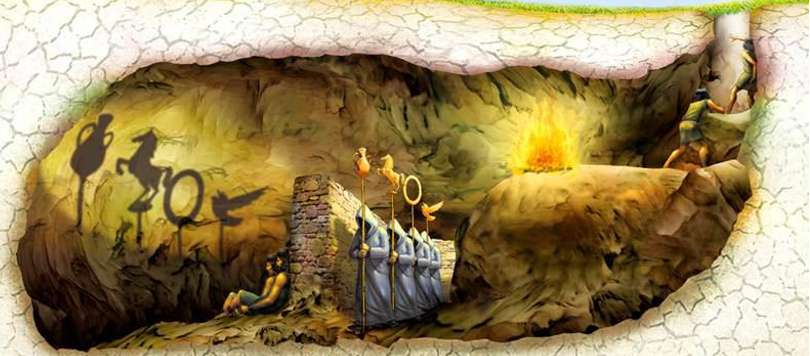
The concept of Plato´s cave is well known to anyone that has studied any level of philosophy. The basic tenements is that there exists a natural world of physical items, and an ethereal eternal world of ideas. The physical world is mere reflections of the ideas present in the ethereal world.

The world of ideas, is ethereal, endless and never-changing. Each and every object that exists within the physical world is a mere reflection of its true self within the idea-world. The physical world is a mere reflection of the true world of the idea world. (Plato 1892)

A visualization of Plato’s Cave. Source: https://sociable.co/wp-content/uploads/2017/08/platos-cave.jpg

Lovecrafts other-world

The world of Lovecraft is described as being separated in to the world of the mundane, and the world of the supernatural. Much of the horror in Lovecraft fiction comes from the world of the supernatural in one way or another bleeds in to the realm of the mundane. The Old gods, deities of Lovecrafts world, are said to have escaped from the world beyond, to settle in to the mundane reality of humans. The world of the supernatural is said to be abstract and beyond the realm of mortal comprehension. (Lovecraft 2008)

Bildresultat för lovecraft old gods
A visualisation of Shub-Niggurath: https://vignette.wikia.nocookie.net/lovecraft/images/c/c8/Tumblr_n72r7hKWR91s748a0o1_1280.jpg/revision/latest?cb=20140818055056

Digimon

The other-world within Digimon is called the Digital World, and was created when the first Digital computor on this narratives real world (earth), was started for the first time. This created the foundations for this words physics and ground rules. Its explained as the expansion of digital communication, the digital world has expanded rapidly. (Bandai 2001)

These are but a few examples, but enough to five us a general idea about these kinds of worlds, and how they are represented elsewhere.

The Warp and its uses

It is possible for the Immaterium to spill out in to the world of the Materium, when this happens it is often referred to as a tear or a storm. When a tear in the Materium occurs, the abstract representations and fears of the warp pour in to the world. As one can imagine by a galaxy beset on al sides by war, sickness and strife, are the reflections in the warp, just as, or even more terrifying then the galaxy that willed them in to existence. (Games Workshop 2016)

A warp rift consuming a planet. Source: https://vignette.wikia.nocookie.net/warhammer40k/images/8/8c/Warpstorm_.jpg/revision/latest?cb=20151013183924

To breach in to the Immaterium from them Materium is indeed also very possible. This is a highly dangerous and unpredictable process, but a very useful one, if done correctly. Because of the fact that the warp exits outside of time and space as mortal minds understand it, is it possible for physical objects (such a s a space craft), travel over immensely vast distances. The Warp needs to have a connection point to the Materium in the shape of a psychically sensitive sentient individual. These psykers can use their powers to draw forth powers from the warp, as well as to travel in to it (Hill 2016). This power can be used to navigate space ship safely trough the Immaterium, call forth storms of pure Warp energies, or even to send messages trough vast distances of space. I will go further in to the details on how the different races and species handle and work with the warp in a future chapter. (Games Workshop 2016)

Ships entering real space from the Warp. Source: http://img3.wikia.nocookie.net/__cb20140415161335/warhammer40k/images/d/d9/Iron_Hands_Fleet_Arrives.png

The gods and their worshippers

The gods of the Warp grows as the emptions that first birthed them grows. This influence grows either by direct worship, or by the creatures that willed them in to being, feel certain sensations. For example, every time a human feel ambition or lust for knowlage, the power of the god of knowlage Tzeentch grow.

Bildresultat för tzeentch warhammer
A representation of the physical form of Tzeentch. Source: https://1d4chan.org/images/thumb/9/97/Tzeentch_the_Architect_of_Fate.jpg/500px-Tzeentch_the_Architect_of_Fate.jpg

This is true of al the sentient races of the galaxy (with the possible exception of the Tau). The larger and more successful a species become, the larger of an imprint will they have on the warp. In aeons past, the Galaxy was ruled by a species known as the Aeldari (or the Eldar), and as a result was the warp a reflection of their hopes, dreams and fears. In the 40th millennium the Galaxy is fought over, and more or less ruled over, by humanity, and their strife and homes and fears help shape most of the warp. I would argue that humanity is the birthplace of a number of Warp entities, more specificity Nurgle, Korn and Tzeentch (Games Workshop 2016). These entities are feared by some and worshipped by many others others. The Orks for example are adamantly loyal to their representations in the warp Gork and Mork. Most humans hate and fear their reflections in the warp, but some choose, or are forced in to their service and worship. Yet again will we discuss the pantheon of the Warhammer 40k setting in a much deeper detail in later chapters. (Plato 1892)

Conclusions

This is a basic introduction to how the Warp operates and how it relates to the world of the Materium. We have compared it to the ideas of Plato’s idea world, as well as a few other similar fictional worlds. I have trough this chapter shown that the narrative of the dual worlds exists in many places of the world, within classical as well as modern narratives. I have also tried to lay the groundwork for further discussion of the Warp, and ids significances for forming the rest of the Warhammer narrative. Next time we will start discussing how the different factions and races handle and look upon magic and psychic powers.

References

Hill, DisclaimerJ.D. (2016). Astra militarum. Games Workshop. Lenton, Nothingham.

Plato. (1892). The Republic [Electronic recurse]. Auckland: The Floating Press.

Games Workshop (2016). Codex: Chaos daemons . Games Workshop. Lenton, Nottingham.

Games Workshop (2015). Codex: Orks. Games Workshop. Lenton, Nottingham.

Bandai (2001). Digimon Tamers: Brave Tamer. Tokyo, Japan.

Lovecraft, H.P. & Jones, S. (2008). Necronomicon: the best weird tales of H. P. Lovecraft. (Commemorative ed.) London: Gollancz.

Undertale: an example of multileveld textuality.

Warning: This text do contain several major spoilers for the game Undertale. We will in this examine the games narrative in its entirety. As a result we ask you to only read this paper if you have already consumed the medium in question, or don’t mind being spoiled on key parts of its narrative.

Introduction

Undertale is an indie game created in 2015 by Toby Fox. Undertale is s classic turn based role-playing games in the vein of Earthbound and the early Final fantasy games. The unique mechanic of Undertale is that every single foe can either be killed or befriended, as well as, the game saving everything you do contiguously, regardless of the players own saving and loading.

This is not going to be the focus of this paper tough, rather this text will focus on how Undertale plays with different narrative and textual levels. This text will begin with a small introduction to the terms and general theories this analasys will be based on, followed by an in depth analysis of the text concluded with a concluding discussion on the analasys as well as tips on further reading materials on the subject.

Terminology

Before we start with the analysis of Undertale itself, will I present a series of terms that we will use in this, and future texts like this. It is inportant when writing any kind of academic text to always clarify how You the author will use the terms used. A term like text or contextulity will have different meanings, and it is vital to specify which meaning you will use.

Text

Firstly the term Text will refer to everything that is traditionally considers to be part of a video game, graphics, music, game mechanics, dialogue etcetera. In other words is the term text not limited to the written word. In this chapter will text mean the game Undertale.

Textuality

This is a breakdown of the different textualists we will examine in this chapter. We will also analyse how these levels interact with each other.

Text– Everything that is explicitly part of the narrative or story itself. Characters, plot, game mechanics, items, rooms etc, game assets. The text encompass everything that can be part of the text itself, this is different between genera and media forms.

Subtext– Everything that is implied or offered by the author in the text. Themes, morals lessons etc. These themes are not directly mentioned openly in text, but inferred using allegory or hints left for the reader to find for themselves.

Intertextuality– Anything connecting this text with another text, for example Toby Foxes other games or games in similar genera. The most common example of intertextuality is between the texts within the same series. In the terms of literary theory is there no connection between, for example, part 1 and part 2 of the Harry Potter series. These ties are instead left for the reader to create, just as the subtextual connections. Intertextuality more difficultly means the narrative ties between books. Titles, the text on the back and the numbering of series, falls within the category of paratextuality.

Paratextuality– Surrounding texts not part of the text, including the code, the title screen and border etc. These are part of what is sometimes reoffered to as the “artefact” or the object of study. Code, the box, the background blurb.

Analysis

The text we are to analyse today is a video game titled Undertale, its tag line being “a friendly game where no on needs to die”.

Undertale is constructed as a traditional turn based RPG where you traverse several game maps or “rooms” and fight enemies on a “battle screen”. By battling you gain either experience or money. You get money by choosing to ”spare” an enemy, and you get XP for killing an enemy.

Battle menu, source: Havoc teh Raven

The picture above represents the battle screen in Undertale. Here you have a series of options presented to you, you can do one of the following things on your turn, fight, act, use an item or try to spare your opponent. Here you also see your level and your current hit points.

The large black screen is representing the enemy attacks, and here you will dodge, their attacks in the vein of bullet hell shooters1. This area is, as described earlier very much a physical plane within he game world. Other characters can very much influence this seemingly purely mechanical plane. This fact become even more apparent within the games so called ”dating hub”.

Papyrus discussing dating hub, source: Havoc teh Raven
The dating hub, source: Havoc teh Raven

The paratextual connections, are used very often as a narrative device. This can most most easily be seen in the border window of Undertale, this border is not what we would consider part of the normal text. The border is often used as a narrative device, this is done by either changing the title of the game or moving the program around the desktop in various ways.

Papyrus has his special ability stolen, source: Havoc teh Raven

A second layer of paratextuality is a lot more closely tied to the text. This layer consists of the gameplay vs story. The battle screen is most often considered a semi real plane, existing only to drive the story forward. The most obvious moment being, the fight with Papyrus being interrupted by the annoying dog physically stealing his ultimate attack. A more obscure example is that the different areas within the world is know as ”rooms”. Rooms are usually what these areas are called within game terms. These rooms are then tied together, with ”doors” or ”portals”. The character Sans ability to teleport can be, the ability to freely enter these rooms out of order. These doors can at different points also lead to different areas, something we will discuss later.

Relaterad bild
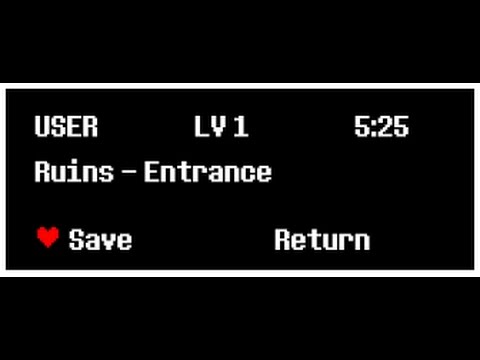
Save screen, source: Nasıl Yüklenir

Lastly we need to discuss the concept of Loading and Saving. I here refer to the ability to create a ”save state”, this save state can later be returned to by loading a save state. The power of loading and saving is something that some characters have this ability to ”save” and ”load” at will. More specificity do you the player, and the main antagonist share this mechanics laden ability. This ability in game lets you return to a previous ”save state”, and fix potential problems and or misses you may have done. From a gameplay perspective does saving not actually create a save state per say, but rather moves you along a different narrative path, the game instead autosaves whenever the game is closed. This fact become apparent rather quickly as your player character has reactions to characters they meet for ”the first time”. Certain characters like Sans, and the shop keeper Temmie also seems to be able to keep track on whenever you load and save.

Subtext and the mystery of Gaster in the code.

In this last segment will indulge ourselves in some theorising on some materials not directly tied to a first hand source. In this area we will partly discuss things found within some second hand sources, mostly in the form of Wiki pages and other peoples analysis of Undertale. The character known as Gaster can only be encountered if some very specific criteria are met in the games algorithms. These algorithms are known in the games files as “fun values”, and are used to calculate a series of random events occurring.

One of the more interesting random events bring that of the character Gaster. Hem as well as any character related to him, can only be met if certain fun levels are met. One of these individual explains that Gaster was “lost in his own creation”. This could either relate to the grand power plant known as the Core, witch he supposedly created, or that he got lost in the very code itself.

Conclusion

The narrative style of Undertale takes up on a rich tradition of fourth wall breaking. This tradition was common in certain schools of theatre and film. These breaks go further then the simple acknowledgement of the audience, and makes both the game and the player itself, part of the narrative.

Different characters, such as Flowey, Sans and Asgore al have some sort of power to influence the game mechanics or objects on a Paratextual level. These are but a few examples of the various ways Undertale plays with differencing levels of textuality. I will leave it to the readers if the wish, to discover the rest for themselves.

Footnotes

1The genre of games where you play as a ship or other small object, dodging a series of bullets or other fast moving objects.

References and further reading

Click to access Narrative%20in%20Games.pdf

https://www.jesperjuul.net/text/clash_between_game_and_narrative.html

Analyzing the Game Narrative Structure and teqnice – Huaxin Wei

Undertale – Full Pacifist Play-through – No Commentary: Havoc teh Raven

Undertale Save File Nasıl Yüklenir

https://undertale.fandom.com/wiki/W._D._Gaster

Introduction to literary studies: part 1, sources and reliability

This will start a shorter series discussing the different terms and themes commonly used in art and culture studies. This first chapter will give a general idea of how to think about sources and how they can be, and cant be used.

Today will start our Wednesday series on general literary and art studies. Today’s topics is on sources and how to properly evaluate them. This series is designed to help future and current Humanities students, as well as general readers of my blog.

The level of sources

We will begin with dividing our sources in different level. These levels is related to how close, or far away they are from the original text we are studying.

First hand source: The artefact itself, in other words the object of study. In this case the object of study is the game Undertale. In most cases are the first hand sources to be proffered in any kind of serious analysis.

Second hand source: a text about the artefact, in our case the second hand sources is going to take the form of Game wiki pages about Undertale, as well as other discussions about the first hand source. If the first hand sources is not available to you, then second hand sources can be used. The first hand source may be rare, or lost, or difficult to handle in one way or another.

Third hand source: usually an analysis or compilation of second hand sources. These types of sources will not be very important in the case of this study in particular, but they are important to keep in mind none the less. Third hand sources can be used when talking about wider concepts about the Artefact, but they should be avoided when making the actual analysis.

The origin of the source

It is inportant to always keep in mind where a source comes from, and who is the sender of said source. By examining the source of a text, can we learn a lot about the credibility of the text, as well as the intention of the sender.

Some things to look out for:
a) Does the source has a clear sender/author?
b) Do the source mention any form of references?
c) Is the book/magazine/website well known?
d) Do the source seem to be pushing a specific angle?

Keep in mind that these are mere guidelines and not exact rules for research. A source can still be interesting even if it comes from a dubious origin, as long as you are aware of, and transparent with this dubiousness as you work with the source.

Conclusion

When selecting your sources, keep in mind on how it relates to the text, as well where it comes from. This is but a short introduction to the subject, but it will let you start thinking about sources, and how to properly use them.

Warhammer 40k an in depth analysis: Part 1, IoM, part 9, Final thoughts

Introduction

This will be the final chapter in our introduction to the humans of the Warhammer 40k universe. We will in this chapter combine what we have learned in previous chapters to create a uniform image of the Imperium of Mankind. Furthermore, will we deepen and contrast these themes with each other to see how they work together to create a coherent whole in a way that we will not see in many of the other factions in the Warhammer 40k franchise.

Knowledge and Faith

One defining feature of the different factions we examine, is how they view knowledge and the use of said knowledge. In the case of the IoM is knowledge, and the pursuit of knowledge, deeply tangled in with the pursuit of theological enlightenment and purity, this is particularly true in the case of the cult of the Adeptus Mechanicus (see Adeptus Mechanicus).

Magic and science

The British writer Arthur C. Clarke said the famous quote “Any sufficiently advanced technology is indistinguishable from magic.” This statement is most assuredly true when it comes to the scientific and technological advancements of the Imperium of Mankind. As described earlier are technology and knowledge highly mistrusted and mystified amongst most of the citizenry of the Imperium.

The members of the Imperium that do follow scientific pursuits uses terms of mysticism and magic rather than pursue science. A good example of this is that Chemistry is referred to as Alchemy, and the psychic powers of many races, are referred to interchangeably as magic. Furthermore is the term Miasma and similar terminology frequently used within fiction, giving us a good idea of how the scientific outlook works within the Imperium of man.

The last point is something that we have not yet had a chance to go into detail about, the concept of the “Machine Spirit”. The Machine spirit or, or the “Prime motivating force” is the name that the Adeptus Mechanicus has given to the force responsible for the function of al machinery in existence. This force is sentient and have wants and needs. As a result are machines not seen as tools to be used, but allies to be cooperated with, and in some cases, deities to be venerated. This further blurs the line between magic, science and faith. (Sanders, R 2016)

Doctrine vs innovation

As we have discussed previously, is innovation highly frowned upon, and in some cases, illegal. This taboo is particularly true within the Adeptus Mechanicus, and their punishment of supposed “Techno heretics”, goes far beyond that of their own priesthood. Citizens as well as members of the Imperial military has felt the ire of the Adeptus Mechanicus for “unlawful modification” of holy machines. To try and carelessly modify or invent new technology would be to put oneself above the wisdom of the ancients.

Most research stations and laboratories of the Imperium are described to be worked by several generations of scribes and scientists. It is rare that any of these scholars knows the original purpose of their research, even rarer for them to see any form of results within their own lifetime. This further drives home the idea of hopelessness, helplessness and overwhelming scale, as even such an innovative and creative task as research is turned into a series of monotonous and seemingly pointless tasks.

There are exceptions to this rule tough, for example does the Space Marine chapters personal engineers (known as Tech marines), often modify, or even create new forms of war gear. This blatant breaking of the status quo creates even more tension within an already fractured imperium.

Technology and religion

Lastly do we have the subject of technology and how it pertains to faith. The Adeptus Mechanicus are the most obvious of these connections, as they literally and metaphorically worship technology and knowledge, In this search do they willingly sacrifice flesh for metal in their quest of spiritual purity.

The Adeptus Mechanicus is far from the only area where technology and religion melds. We see it in the weapons they wear, the mechanical angels and statues, and the warships and tanks they use in battle. They are all used to give the feeling of the machines superiority over thee human. The venerated machines such as the bolter, is also valued many more times higher than that on any individual life.

The warrior culture of mankind

Throughout the narratives focused on the IoM, there is the notion of omnipresent war, a culture that is so deadest on victory and conquest, that peace is al but inconceivable.

Divine destiny

We have already discussed this concept earlier, but now we have a fuller understanding of the faith and philosophies of the Imperium, we can dig further into these concepts.

Both the pre and Post Horus Heresy Imperium is lead by a distinct notion of an ultimate destiny, that the galaxy is the property of humanity by birthright. The biggest difference between the two, would be that one crusade was done in the name of logic and reason, while the other was made in the name of faith and duty. The end result is tough, arguably still the same.

Be it the Imperial truth or the Imperial faith, both are highly strict doctrines, that meets any opposition with extreme violence. We see it in the Emperor’s crusade, where all those human civilisations that had no interest in joining peacefully were brutally torn down, and again where the Word Bearers were forced to watch as their cult to the Emperor were utterly destroyed before their very eyes. The same sort of unforgiving rhetoric is very much present in the current era of the Imperium, it can be found in the aggressively anti alien propaganda of the public officials, the strict and unforgiving teachings of the Ecclesiarchy and Adeptus Mechanicus, and in the uncaring and brutal methods of the inquisition. (Games Workshop 2013)

The cult of war

War is in general described as glorious within the Imperium of man, and a society is often measured by how skilled and or powerful their warriors are. One of the greatest imperial planets, is the Planet of Cadia, here the concept of a civilian do not exist, and most have gotten their first kills at the age of 14. This kind of dedication to war and combat it is seen as a sign of great cultural strength within the Imperium.

Another good example of this is the sector of Ultramar, the homeland of the mighty Ultramarines. The strength of this system is described to come from their “noble and warrior like citizens”. The greatest honour is to be chosen in to the grand space marine chapter. (Games Workshop 2017)

The individual and the masses

The dichotomy of the faceless masses and the lone hero is one that go through all the texts we have examined so far. This theme more than anything signifies the themes that strongest represent the Imperium of Man.

The hero and the expendable masses

The dichotomy between the faceless masses, and the heroic individual is most clearly seen then in the Astra Militarum. The organisation is described as unimaginably large, and one that sacrifices countless lives each day. Despite these facts, are the actions of single individuals, or small groups of valiant heroes been said to save the day constantly. This might also be meant to represent the large amount of propaganda the Imperium is constantly producing. The story of a lone hero in a large and careless world, is an interesting one when put next to the further narrative of the 40k universe, and one that we will surely come back to at a later date. (Hill, J.D. 2016)

Grand names and grand wars

The Warhammer narrative is usually signified by large distances, and long spans of time, this is often done to further drive home the idea of the vastness of the world, and the hopelessness of the characters struggles.

There are characters that are seemingly immune to the effects of time and space, that can freely travel large distances, and be able to have large sway over world changing events, sometimes even, galaxy spanning once. A good example of this would be during the Horus Heresy related texts. Here a few named individuals take up central and leading roles in a galaxy spanning event, spanning over decades if not centuries. We will discuss the Horus Heresy later, once I have presented a more complete image of the Warhammer 40k narrative as a whole. (Games Workshop 2013)

These examples can easily be explained away using “narrative convenience”, these breaks of the fictional rules needed to happen in order for the narrative to flow. With that said, are these points still important to keep in mind as we move forward.

The horrors of The Imperium

Lastly we will take a look at our final unifying theme, that of horror and dread, be it from the body horror of the twisted technology of the Imperium, to the existential dread of the Adeptus Militarum, is dread something that is always lurking beneath the surface.

Icons of horror

The iconography of horror and death is one that has run through most, if not all of the areas we have looked at through this series. The most easily recognizable one is that of the skull, it is a unifying sign throughout the Imperium, often as a sign of power or authority. This symbol can easily be tied to death, for obvious reasons.

The horror of scale

This is other tool of producing terror we have seen time again and again throughout the series. The size of the enemy armies, the vast distances between the characters and possible salvation, the size of the Imperium itself, al is is use to further a sense of dread and despair. One excellent examples of scale used to build dread, would be the Manufactorum with its endless scribes, protocol’s and barley functioning logistics. Another example is, the size of the galaxy itself, and the time and effort it takes to send a single message from one star system to another, not to mention, physical space travel.

Conclusion

With this analysis have we managed to create a coherent image of the Imperium of mankind, as well as presented some of the tools we will be using in the rest of the series. We have so far presented an image of our subject as a Xenophobic, highly religious civilisation that values war, and venerates as well as worships technology. I have during this series tried to show the coherency of these themes, as well as to categorize them into the three different areas presented above. We will give each faction the same analysis, and when we have a good grasp of the subject matter, will we use this as a platform to discuss smaller and intricate subjects.

This wraps up our first chapter on the Warhammer 40k franchise, the next few series of episodes will be shorter one offs to cleanse our pallet, before returning and taking a deep dive into the strange and intriguing world of the Immaterium.

References

Games Workshop (2013). Codex: Inquisition. Games Workshop. Lenton, Nottingham.
Hill, J.D. (2016). Astra militarum. Games Workshop. Lenton, Nottingham. Games Workshop (2017). Codex Space Marines . Games Workshop.
Sanders, R. (2016).Adeptus Mechanicus . Games Workshop.

Copyright Disclaimer

Under section 107 of the Copyright Act 1976, allowance is made for “fair use” for purposes such as criticism, comment, news reporting, teaching, scholarship, education and research. I do not claim to own an of the pictures in this post. Al copyrighted materials belongs to their respective owners.

Warhammer 40k an in depth analysis: Part 1, IoM, part 8, The holy God Emperor

The Emperor of Mankind is a symbol of many things, some which are direct contradictions of each other. In this chapter we will try to explore the major themes, as well as relate them to the rest of the Imperium of man as a whole. By understanding the Emperor of mankind can we get a more clear picture of the rest of the faction, as well as the narrative of Warhammer 40k as a whole.

The hidden saviour

The Emperor is described as being an ageless stoic giant, silently leading humanity from the shadows. It was only at the 30th Millennium, during humanity’s greatest struggle that he first chose to reveal himself. He arrived at the head of a group of  genetically engineered soldiers known as Thunder Warriors, the precursor to the Space Marine. They rapidly unified the Earth under one banner, his banner. With his home now united once more, with his genetically engineered sons at his side, he set his gaze on the winder galaxy.

The image of a lone saviour  can be found in many faiths and mythological stories. To keep the catholic allegory, the easiest connection would be to Jesus, the saviour of the catholic faith. This is, though far from the only example we find of this character trope.

Due to the fact that the material we have discussed so far does not deliver very far into the past of the Emperor, then neither will we do so here.

https://vignette.wikia.nocookie.net/warhammer40k/images/5/50/EmperorsWisdom.jpg/revision/latest?cb=20110727213356
Source: https://warhammer40k.fandom.com/wiki/Emperor_of_Mankind

Above we see an image of the Emperor of Mankind leading the Imperium across the stars. Some of the common imagery, such as the seal and the skull are here overshadowed by another icon, one we have yet to discuss. This icon is the two headed eagle, a common symbol for Empires and Imperiums through history. (Chariton 2011)  

In the context of Warhammer 40k does the two headed eagle represent the two leading powers of the IoM, the Lords of Terra, and the Tech Mages of Mars. While this icon is widely used within the imperium of Mankind, especially within the imperial guard (hill 2016), this icon has been joined by the symbol of the Ecclesiarchy and the Inquisition, amongst others to show the might of the Emperor and his might Imperium. (Games Workshop 2013) 

The great crusade

The great crusade here refers to the time where the Emperor set out from earth to conquer the stars in the name of humanity. The term crusade once again makes connections to the Christian faith, via the Catholic crusades. The term Great crusade refers in the context of Warhammer 40k, to the time where the Emperor set out from Earth to conquer the stars in the name of humanity. The term crusade once again makes connections to the Christian faith, in particular to the Catholic crusades against the people they saw as infidels and heretics.

The imperialistic themes and undertones of the Great Crusade are hard to ignore, tying it closer to the themes of colonialism discussed in earlier chapters. The biggest difference being that the Emperor’s great crusades, and those carried out by the catholic faithful, was not made in the name of any god. The Emperor in fact, banned all forms of magic, mysticism and occultism. These crusades were, much like the British colonization, made under the mantra of reason, logic and civilisation (see Manifest destiny). One can argue, that due to the fact that the Emperor, were in several ways a god, even before he became the centre of a monotheistic religion, was the Crusades a perfect example of the will of god.(Games Workshop 2017) 

The father and his sons

During the time of the great crusades the Emperor of mankind perfected his thunder warriors. The Thunder Warriors had proven themselves to be violently unstable and prone to going into psychotic murderous rages from where there was no stopping them. The Emperor eventually managed to create the Primarch Space marines from his DNA, and from these templates he created the space marines. The grand forces of Chaos, the big evil of the 40k narratives conspired and managed to kidnap the primarches as children, and spread them across the universe. All of them seemed to land on planets that reflected their specific sentiments, talents and personalities, for better or worse.

After being separated from his sons by the forces of chaos (explained further in a future chapter) he slowly reunited with them as his great crusade progressed, giving them commands of legions of their own lesser clones, or sons. These Primarches have been moulded by the life they have lived away from their gene father, as well as by the various genetic mutations they had endured. These changes ranged from differences in eye and hair colour, to having fangs or even wings in the case of Sanguinius. These genetic differences later showed up in their clones to a greater or lesser degree.lones to a greater or lesser degree. The Space Marines of a certain chapter seemed to also take on the mentalites and quirks of their gene fathers, be it as mild as the Salamanders sharing their Genefathers humbleness and love for craftmanship, to the more sever anger of the Blood Angles, or the almost obsessive cybernetic enchantments of the Iron Hands.

The Emperor, the Primarchs and the Space Marines, all use terms like father, son and brother when referring to the relationship to each other. The Emperor created the Primarchs from his own genetic makeup, though despite this, it would be more accurate to call them his creations rather than his children. Note that this repudiation of heritage was made without sexual repudiation, a theme common in both post-humanist and futurist works.

The Space Marines see their Primarchs, as well as the Emperor both as deities and as their parental figures. It is true that the Space Marines share some genetic materials via their implants (see Space Marines),but other than that they do not necessarily share family bloodlines. Note that the term brother is also a reference to battle brothers, as well as brothers of the same convent, much like a priest or monk would speak about his equal. The term Father, may also be used in the same way as the elder or superior member of the same religious order would be addressed. The term Son would be similarly be applied by this superior member while addressing his lesser. (Games Workshop 2017)

Conflict, betrayal and defeat

During the great crusade, the Emperor was forced to rely more and more on his Primarchs. This left them alone and leaderless for long periods of time, and some started to resent their gene father. Some felt used, treated like nothing more than a tool by their creator, Magnus the Red felt scorned by the ban on Psychic powers, that greatly limited his and his sons research. But none were as resentful as Logar.

Logar had, despite his father’s wishes, started a religion venerating his immortal creator. On each planet he and his sons would conquer, they would erect huge temples, and form cults in his father’s honour. This, of course, went against the Imperial Truth, and the wishes of the Emperor himself. Logar was forced to kneel and watch, as his most prized achievement, a city sized monastery and temple was burned to the ground. He was also forced to swear off worship of the Emperor, as well as any other form of deity or god.

Instead of following his gene fathers wishes, Logar instead, simply found other gods, darker more sinister gods. These gods, the Ruinous Powers, will be discussed in a later chapter. He proceeded to try and convince his fellow Primarchs to join him, and his new gods.

This rebellion would be known as the Horus Heresy, so named after the general, Horus, chosen to lead the rebellion. TThis rebellion would be known as the Horus Heresy, so named after the general, Horus, chosen to lead the Emperor’s armies in his fathers absence. This rebellion saw half of the Space Marine legions join the rebellion, as well as leave much of what the Emperor had built in ruins. This rebellion was eventually stopped, at holy Terra itself, this victory was not without great cost though. Chief amongst them, being the Emperor being left mortally wounded by his son Horus. (Games Workshop 2017)

The absent leader

After defeating, and being mortally wounded by War-master Horus, the Emperor was entombed in an archaic machine known as the Golden throne. This golden throne keeps the Emperor clinging to life, using poorly understood science, and the sacrifice of a thousand souls each day. This throne keeps the Imperium’s beloved god Emperor alive, but also works as a beacon for interplanetary space travel for the Imperium.

https://vignette.wikia.nocookie.net/warhammer40k/images/2/25/Emperor_Upon_Throne.jpg/revision/latest?cb=20110726003909
Source: https://warhammer40k.fandom.com/wiki/Emperor_of_Mankind

Many of the same visual themes are present here, as in much of the other artwork we have seen representing the IoM. The Emperor is an amalgamation of machine and man, there are sigils as well as themes of Gothic and catholic Much of the same themes we have found in earlier visual designs is present in the representation of the Emperor in his Golden throne. The Emperor is an amalgamation of machine and man, there are sigils as well as themes of Gothic and catholic architecture in the form of the dust, holy statues and arches covering the throne. Skulls are once again prevalent, both in the form of the Emperor himself being a literal skeleton, but also in the iconography and decoration of the Golden throne itself. The dust driving home the point of how ancient and poorly kept this machine truly is, and the row of skulls is an apt metaphor for the millions of lives lost every day to keep the machinery running. This allegory works both for the Golden Throne, but also for the Imperium itself. (Games Workshop 2017) 

Conclusion

As we can see from this quick breakdown is many of the themes we have discussed earlier present here as well, with that said are they for the most part subtly, or not to subtly altered. This further drives home the scale and timespan of the narrative within the 40k universe. The most striking of these differences, would be the Emperor’s “ascension” from leader, to godhood in the eyes of his followers, a move he himself adamantly opposed. This ascension is common in man

We can once again see several different themes return in the design of the Emperor himself. The mystical blend of magic and science return both in the Golden Throne as well as the Primarches. The focus on gothic architecture and death is present in the throne itself. The fact that the Emperor himself is, literally in life support, drives home a certain inevitable horror of a grand collapse and slow painful death. The Imperium as a whole holds a similar fate in the not too distant future.

Time once again placid a major part in the narrative. One of the major examples would be the Emperor’s ascension from leader, to godhood in the eyes of his followers, a move he himself adamantly opposed. The change of Emperor from secular leader to mythical deity closely mirrors that of the Imperium´s change from a secular society honouring technology and research, to a conservative theocracy.

We now have all the pieces we need to more fully understand one of the major parts of the Warhammer 40k narrative, the Imperium of Mankind. Next chapter will be focused on combining all these pieces to form a coherent picture of the faction. Next series will focus on the mystical dimension of the Warp and the gods of the Warhammer 40k universe that reside within it.

References

Games Workshop (2013). Codex: Inquisition. Games Workshop. Lenton, Nottingham.

Chariton. J (2011) The Mesopotamian Origins of the Hittite Double-Headed Eagle

Hill, J.D. (2016). Astra militarum. Games Workshop. Lenton, Nothingham.

Games Workshop (2017). Codex Space Marines . Games Workshop.

Copyright Disclaimer

Under section 107 of the Copyright Act 1976, allowance is made for “fair use” for purposes such as criticism, comment, news reporting, teaching, scholarship, education and research. I do not claim to own an of the pictures in this post. Al copyrighted materials belongs to their respective owners.

This blog post was spell checked and edited for readability at 2021-07-03

Warhammer 40k an in depth analysis: Part 1, IoM, part 7, In the service of the Emperor

Introduction

In this chapter we will take a look at a series of different factions, all related in one way or another to the primary religion of the Imperium of Man. This religion goes by the name of the Imperial faith, and shares some similarities to the European Catholic Christian faith. These similarities will quickly become apparent as we move forwards. The different factions we will be looking at are in this chapter are the Ecclesiarchy, the Adeptus Sororitas and the Inquisition. We will also examine the visual and theological similarities between the Imperial faith and the Catholic Christian faith.

The Imperial faith

The Imperial faith is the official, but far from the only, religious belief within the IoM. The tenements of the Imperial faith is straight forward, the will of the Emperor is law, and the Emperor wishes humanity to rule the stars, so rule then, humanity will.

The only problem is that, the Emperor (for reasons we will explore later) has not been able to speak for over ten millennium, and this has resulted in interpretations of interpenetrates of his original words, ranging over decades of dogma and scholarly debates. The original ideology preached by the Emperor himself was in fact known as “The Imperial Truth”, and while equally as dogmatic, was it focused on knowledge, truth, and the rejection of the supernatural in all its forms. It based on learning and initiative, tough it still thought humanities superiority over every other form of life, sentient or not.

This rejection of all thing supernatural, will as will learn, later become the Emperor’s downfall. The Emperor indeed forbade al sort of worship of gods and spirits, especially the worship of him. In the Emperor’s absence has this belief in initiative and exploration transformed in to a faith of dogma and submission. To question the Imperial faith is to question the Emperor himself!

The Ecclesiarchy

This is the main governing body of the Imperial faith, and has risen to power after the events of the Horus heresy, and has become the dominant spiritual organisation in the Imperium, and their faith is strictly enforced by the various governors and interplanetary organisations of the Adminstrarium.

The Ecclesiarchy follows the belief that the Emperor is the force of ultimate good in the universe, and that the humans are his messengers and servants. Humanity, as a result, can do no wrong, as long as they work in the Emperor’s will.

Cleric
Source: https://warhammer40k.fandom.com/wiki/Adeptus_Ministorum

The Ecclesiarchy, just like many other aspects of the IoM are visually heavily inspired by the catholic church. Noticeable similarities being the robes, seals and rosaries, al commonly attributed to the Catholic church.

The Adepta Sororitas

Known as the standing army of the Ecclesiarchy. This organisation of warrior-nuns and diplomats follows a similar naming scheme as many other organisations in the IoM. The adeptus being a Latin amalgamation of “belonging to” or “serving”, and Sororitas, as you might have figured out, translates to, “sisterhood”. In other words “in the service of the sisterhood”.

Using a loophole that excludes the Ecclesiarchy from employing “Men at arms”, does the Sororitas, only consist of women. This, as well as the Sisters of silence, is the only “female only”, organization within the IoM.

SisterofBattle2
Source: https://warhammer40k.fandom.com/wiki/Adepta_Sororitas

As we have seen in earlier examples, does the incents and and the regalia give them a clear connection to the catholic church. (Games Workshop 2011) The fleur de leis also invokes the other major inspiration for the Adepta Sororitas, that of the historical figure of Jeanne d’Arc, famous general, warrior and pious believer.

The The Adepta Sororitas are organized in chapters, not unlike their Space Marine brethren, tough unlike the decentralized and isolationist organization of the Astartis, does the Sororitas follow strict hierarchies and works closely with other chapters. The Sororitas also have several chapters that are not dedicated to fighting, but instead serve functions as diplomats, administrators, teachers or healers, al of them, in some way, helping in spreading and preserving of the Imperial faith. This shares a fair number of simulates to how real life Catholic convents have different voes and serves God and the church in different ways. (Russell 2007)

Much of the Sororitas work are concerned with of matters of fate in al its forms. The sisters often fight enemies that goes against the Emperor’s will in one way or another, be it aliens, humans of different faith or any other criminal that would be branded heretical in the eyes of the ecclesiarhy. This sacred mission, combined with the fact that the sisterhoods preferred weapon is fire, makes connection between them and the medieval witch-hunts pretty easy to make. (Games Workshop 2011)

The Inquisition

This faction is the easiest to relate to their real life counterpart, or at least, the myths of it. The most well known real life instances of an Inquisition, would most likely either be, the Spanish Inquisition, or one of the many separate Inquisitions involved in hunting witches al across Europe during the medieval witch craze.

The Inquisition in Warhammer 40k is in many ways the ultimate authority in all things concerning the safety of the Imperium, and they are seen as the ultimate arbiters of the Empires will. The inquisitors are mysterious, all-powerful people, with the utmost authority, only answerable to one of their own rank. The in universe Inquisition faces a large variety of threats, but the once we are interested in today, relates to perpetrators of “heresy”, this branch is, helpfully enough, named “Ordo Hereticus”, or the “witch hunters”. (Games Workshop 2013)

The real life European inquisition was a lot less organized, but did hold some authority in the matters of a heretical nature, thanks to Pope Jon XX II who give the Inquisition the authority to any sorcerer they encountered on trail, as well as to doll out punishment to those found guilty. (Russell 2007)

OrdoHereticus Inquisitor
Source: https://warhammer40k.fandom.com/wiki/Inquisition

The same visual cues, can be seen in the inquisition, as we have seen in the other factions that we have looked at today. The seals of purity, the skulls and the various religious regalia. It is not as obvious as with the other two, but the visual themes are still there. the Ordo Hereticus, are in charge of, as it sounds, heretics, but what is a heretic according to the Imperium? (Games Workshop 2013)

Heresy

Heresy takes many shapes and forms within the Imperium of Mankind. Most of them are related to helping, or concerting with the “enemies of mankind” or researching “forbidden lore”. (Games Workshop 2013)

These enemies are the Chaos gods, aliens and mutants. Forbidden lore concerns knowledge of magic, the chaos gods, alien technology as well as technology from the “dark age of technology” something we looked at in the Adeptus Mechanicus chapter. (Games Workshop 2013)

This might seem incredibly harsh and draconian, that the IoM punishing its own citizen for not strictly following the creed of its rulers. But, as we saw in the Adeptus Mechanicus chapter, are many of these rules set in place for a reason. Dark age technology was highly powerful and destructive, and the reliance on it inevitably led to humanity’s downfall. Magic, and its use draws from the incredibly dangerous dimension of the warp, where the chaos gods reside, and many of the alien species humanity has encountered has indeed been hostile. (Games Workshop 2013)

Conclusion

We can here see further ties to real life institutions and events, and slowly does a picture form of how we can critically analyse the IoM as a mirror and exaggeration of certain western traditions and institutions.

Here we once again how dramatic irony is used to further the sense of dread and fear within the narrative. At face values, the actions of the Imperium of Man are deplorable, and completely unjustifiable, but at a further inspection we learn what would happen if one of these measures of control fails.

Once again, this has been an incredibly short introduction to these concepts and factions, and I highly suggest you looking up further materials for further information, the reference giving you a good starting point. Next time we will look at the final piece of the puzzle, the Emperor of Mankind himself.

References

Doorn-Harder, P.V. (1995). Contemporary Coptic nuns. Columbia, S.C.: University of South Carolina Press.

Russell, J.B. & Alexander, B. (2007). A history of witchcraft: sorcerers, heretics and pagans. (2nd ed.) New York: Thames & Hudson.

Games Workshop (2013). Codex: Inquisition. Games Workshop. Lenton, Nottingham.

Games Workshop (2011). Codex: Sisters of Battle. Games Workshop. Lenton, Nottingham.

Copyright Disclaimer

Under section 107 of the Copyright Act 1976, allowance is made for “fair use” for purposes such as criticism, comment, news reporting, teaching, scholarship, education and research. I do not claim to own an of the pictures in this post. Al copyrighted materials belongs to their respective owners.

This blog post was spell checked and edited for readability at 2021-06-14