Dungeons and dragons and history: part 3, the Warlock

Introduction

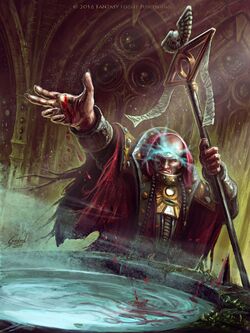
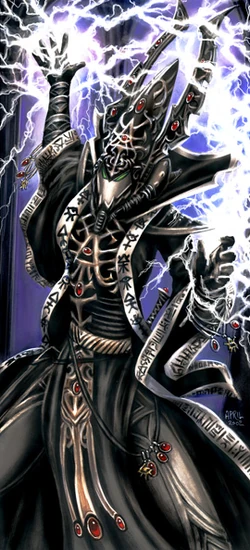
We will in this chapter go back to our series of examining the relationship between Dungeons and Dragons character classes and their ties to real life cultures, myths and practises. This time will we be examining the warlock, an individual that has willingly or unwillingly stricken a deal with a powerful entity, and made a grand sacrifice in order to gain otherworldly powers and abilities. Note that due to the authors currently limited scope on magical traditions, will I limit myself to study the warlock out of a western perspective since this is where my current expertise lies. I hope to one day return to this topic and expand upon it once my knowledge base has increased.

The warlocks of D&D

The warlock in the players handbook is described as an individual driven by their thirst for knowlage and power, it is in this search that the individual has met and made the pact with their patron. This arrangement tend to look more like a business deal then a spiritual connection like that find between the cleric and their deity. As the warlock is so deeply rooted in, and identified by their otherworldly patron, is it pertinent to examine both of them individually before looking at them as a whole. (Wizards of the Coast 2014)

The patron

To begin explaining what a patron is, it is useful to discuss what a patron is NOT. The patron is decidedly not a god, tough some deities are in fact rivalling gods in the terms of might and influence. The individuals are powerful creatures, apparitions or constructs that exists beyond or between the mortal realms. These can be everything from grand rulers of otherworldly plains, such as the Kings and queens of the fay wild, to ancient creatures that lurks beyond the fabric of time and space, and are so alien, that their touts and motivations are completely incomprehensible to mortals. (Wizards of the Coast 2014)

The servant

The warlock themselves, are as mentioned before an individual searching for ancient lore and power. This search has lead them to the discovery of their patron, be it by accident, exploring an ancient ruin, or by deliberately searching trough ancient texts and tomes. Regardless how they found their patron, are they now able to call upon their master for enhanced powers and otherworldly abilities. Just like Wizards are Warlocks described as students of the arcane arts, but unlike their more bookish cousins, does the Warlock take a more direct approach to research, and are as a result more capable fighters and explorers. The players handbook explains that the warlocks thirst for knowlage can not be sated by simple research alone, and that the demands of their patron often forces them to take up the life of an adventurer. (Wizards of the Coast 2014)

The pact

The most defining feature of the of the Warlock archetype. This relationship, as with most things in D&D is highly malleable and customisable. The pact may take several different forms, form the ritual practice of god and worshipper, not unlike that of the paladins or clerics, or it can be a completely practical business deal. The patron might give out their blessings freely and generously, to only do so begrudgingly and to very few select individuals. The patron might be loving of their servant, indifferent, maleficent, or in the case of some of the more strange and ancient beings, not even aware of the warlocks existence. (Wizards of the Coast 2014)

The warlocks in European myth

The most common use in a everyday context of the warlock, is that of the “male witch”. This definition is found in many dictionaries, including the Oxford dictionary and the National Encyclopedia. In this segment I wish to try and contextualize and problematize this seemingly very simple and straight forward explanation.

Witches and warlocks

The concept of the warlock is, much like the witch, sometimes used interchangeably with the term, sorcerer and sorceress. These individuals are said to gain their power from concerting with other creatures and forces. In the terms of a European and western context, and more specificity a unchristian context, these forces was the forces of the devil. These individuals was seen as partitioners of low forms of magic, the magic of evoking dark and evil spirits. This would be set in context to the Magus or the wizard, that uses High magic. This magic is further discussed in my chapter on wizards (found Here (see The wizard)). (Wilson, D.K. 2018)

Light and dark magic

This distinction has been given many names and definitions as the ideas of magic and witchcraft evolved. It has been known as dark and light magic, as well as high and low magic, and finally the left-handed vs the right handed path. The right handed path representing the use of divine forces or the “light” while the left handed path represents the use of various forms of of malignant or evil spirits, demons and devils in particular. Note that magic and occultism is a highly varied and diverse series of practices, and that this text represents a gross oversimplification of several ancient and complicated practices. (Lévi 2017)

Modern Wicca and pop-culture

In the modern interpretation of the Wicca religion is the warlock often seen as negative connotation, as a traitor or once that shall not be trusted. Tough some variations may be found, is the word warlock not used for male practitioner of the Wicca faith, as can often be found in their pop cultural representations. (Wilson, D.K. 2018)

In pop culture is the warlock often seen as a male user of “dark and evil magic”, or in some cases, as a male version of the witch. This image of the evil spell caster is one that can be found in many horror films and novels.

Conclusions

It is simple to see where the authors of dungeons and dragons might have found their inspiration for this class. I do not believe that the authors of Dungeons and dragons must necessarily know the occult and mythical origins of the Warlock, I would rather argue that the concept of the Warlock, just as many of the other classes we will discuss in this series, has such a clear image in the common western collective subconscious, that many of the tropes have survive more or less intact.

With this said, is it interesting to see just how close the concept of the Warlock of dungeons and dragons comes to that of Lévi and his contemporaries. Theses similarities becomes even more apparent when compared to the Wizard. The wizard and warlock dichotomy falls rather neatly, but not exactly in line with the dichotomy between left handed, and right handed magic. As I mentioned before is this text a rather large simplification of a large series of traditions, one that the reader can read more about in the works listed below.

Sources

The Doctrine and Ritual of High Magic: A New Translation Lévi, Eliphas (2017)

Wizards of the Coast (2014). Dungeons & dragons Player’s handbook. Renton, WA: Wizards of the Coast LLC.

The Wilson, D.K. (2018). A magical world: superstition and science from the Renaissance to the Enlightenment. (First Pegasus books hard-cover edition.) New York, NY: Pegasus Books, Ltd.

The use of hallways in Fiction

Source: Coralline

The hallway has been used as a number of symbolic objects in fiction, from doorways to other worlds, to extensions of characters mood and emotions.  I will in this essay present three genres of fiction, and their use of hallways in wildly different ways. Namely will we examine fantasy, science fiction and horror, and their uses of the hallway as a way of telling a narrative.

Fantasy

Many types of fantasy, especially those that follow the trope of “two worlds”, use some sort of doorway or hallway to access the different worlds. The use of hallways can be used to extend the notion of distance between the “real” and “other” world. A good example of this would be the wool corridor between the other mothers world, and the world of everyday life. The transportation through it, both with time and space, can create a larger sense of distance, and otherness. 

Science fiction

The blog post created by Curley (2015), discusses the idea of the corridor as a canvas to create world building and set dressing. The corridor can be used to present the tone, setting and themes of the narrative. Two examples would be the sleek corridors of the enterprise showing the futuristic utopian world that the story takes places in, where minimalism and simplicity of life has taken hold in the confederacy. This can be juxtaposed with the shops if the Alien franchise, where the ships are seemingly created from a lot of different manufacturers, and clearly made with a small  budget, where price comes before safety.

Horror

The corridor in the is almost a staple of the series, where it is used to great effect to show anything from loneliness, to claustrophobia and disorientation. A classical example would be the corridors in Saltney Cambrics, the Shining uses corridors very effective to create a sense of dislocation, and otherworldliness to the hotel of the movie. Nightmare of Elm Street uses the hallway as a way to enhance the sensation and feeling of nightmares and otherness.  

Source: the Shining

The corridors have been used as hunting grounds for monsters and villains to set harrowing chase scenes, or once again be used as a portal between the natural and the supernatural world. (Ripatrazone, 2015)

Romance

The corridor in romance films are used to show closeness as well as distance, separation and togetherness. By empathising the size and distance of the hallway can the physical distance between characters work as an allegory for both emotional and mental distance, as well as the actual distance between them in space and time.

Conclusions 

We have here seen how the hallway has been used to create a series of different moods and narrative cues, and concepts. Many of the themes are somewhat bleeding in to each other, and are used in similar ways, but I have in this chapter tried to show a distinct tradition and history of using the hallway in narratives. I wanted to show in this chapter that even a seemingly arbitrary set piece as the hallway can have a rich use of narrative and symbolic use within film making.

References: 

Let’s explore science fiction’s glorious hallways, Christopher Curley, 2015, taken from: https://news.avclub.com/let-s-explore-science-fiction-s-glorious-hallways-1798283284

The Long, Lonely Walk: Hallways in Horror Films, Nick Ripatrazone, 2015, taken from: https://themillions.com/2015/08/the-long-lonely-walk-hallways-in-horror-films.html

Food, in mediaeval fantasy and reality.

This chapter will be the first in a series of texts commissioned by the followers of my twitch channel (link in the references). To get your own chapter dedicated to a topic of your choice (within reason), go to my twitch and collect 8,000 channel loyalty points by watching my stream.

Introduction

This chapter will be dedicated to the depiction and use of food within the context of both real and fantasy foods in a roughly medieval European setting. We will tackle this topic form two angles, the first will present food in a medieval historical, cultural and medical context. Our second context will be that of a narrative tool, more specificity to look at how fantasy literature uses food in order to describe build and contextualize their worlds.

The Medieval cookbook

We will star this chapter by examining the concept of medieval food form a series of different angles. Food is closely linked to the social and economical situation of the individuals that prepares and consumes it. (Towle, et al 2017)

Food and alchemy

The food of medieval Europe was closely tied to health and having a healthy life. The most prevalent theory of medicine at the time consisted of Hippocratic School of medicine, or the theory of the four humours. The idea that the body have four essential liquids, which is in turn tied to one of the four elements of western alchemy.

Source: https://en.wikipedia.org/wiki/Humorism#/media/File:Humorism.svg

In order to keep a healthy body, one must make sure that their humours are properly balanced. One of the easiest, and most practical was to balance once humours was simply to eat a diet that contains al the needed humours. If one for example needed to have more phlegm, which is tied to water, one need to consume something related to waters two properties (wet and cold). One things that would work for this would be fish, as it comes from water (wet and cold), and as a result, has some of the elements of water, and as a result, the properties of phlegm.

Of Borth and Bread

Bread and porridge seems to have been a common staple of most British individuals living in the Medieval ages, regardless of social class. As noted before what the lower classes forced to sustain themselves on whichever foods that were the most readily available to them, so fish for example was mostly consumed near bodies of water where edible fish where found. This means that they were not able to follow the rules ranging the four humours as closely as those of higher social and economical classes.

The study performed by Leschziner et al (2011), seems to indicate that the medieval cooking more wildly combined different flavours throughout the meal. For example was sweet flavours not simply used as an end to the meal, but used equally as much as the other tastes. This was done party because the way meals were first and foremost created to make sure that the meal contained al the four elements needed to keep a harmonious balance of the four humours. Sugar is also believed to have been seen as another spice, and was as a result used as one. Sugar was also used as a preservative at the time. Medieval Europe also saw the split of pickling from other general cooking Leschziner (2011).

Class and food

As I have hinted at was, and is food very much tied to your class and status within a given community. What you ate was, even more then today tied to where and how you lived. Some studies, for example the study by Towle et al (2017), shows that the diets of many city dwellers were indeed rather diverse, and contained a lot of fruits and greens. Individuals in rural areas were mostly limited to eating whichever foods were produced and sold nearby, so seafood and fish was usually eaten amongst the coast or other bodies of water for example.

Fantasy food

There is no secret that many fantasy books are filled with talk of food. The sheer number of cookbooks, both official and unofficial attests to just how big of a part food plays in many fantasy narratives.

Food as narrative

Food used as a narrative device is by no means limited to fantasy narratives. A commonly brought up example is the Oranges in the Godfather. Every individual handed an orange in the film, is killed shortly after. In fantasy narratives on the other hand are food often used to create a sense of the world and how it functions. These is especially true in fantasy, where a lot of the setting is needed to be described and contextualized for the reader in order for them to understand the stakes and themes of the narrative. Food is an excellent way to tie the world in to a larger context, as well as to use it as a shorthand to compare it to other real life settings. The heathy and rural food of the Hobbits in the Lord of the rings series, draws clear ties to the English countryside. By introducing the eating habits of the Hobbits as comparable to that of the British countryside, especially during the 18th centenary, does the writer go a long way to tie the entire region and people of the hobbits to the British countryside as well, (if a rather picturesque and idyllic version of it).

Food as a exposition device

Food can be used to explain how certain aspect of the world works. An easy example would be the Lembas bread. These magical breads are able to sustain oneself for weeks. This dry bread can keep an individual not only alive, but also healthy for long periods of time. Food, especially in relation to magical and mystical topics, can help ground otherwise abstract subjects in more mundane terms. The preparation and serving of food (see, the cooking tools, producers and types of storing), can also be a good indicator and pointer on the overall state of technology in the setting of the narrative, as well as the characters relationship to said technology.

Food and social class

As described earlier in the text, is food, especially in medieval settings, very much tied in to the class of the individuals consuming it. The ice and Fire series uses food to a great extent to show the differences between the squallier of the peasantry and the opulence and grandeur that the noble houses live in. Food is also a good indicator of the different cultures and traditions present in the narrative.

The abundance of food in Hogwarts, where Harry feel safe and welcomed is put in to stark contrast to the near starvation he faces at the hands of the oppressive and cruel Dudley’s. The examples of this trope are to numerous to list, but needless to say, there is no accident that food has been used within fiction, fantasy and otherwise, to show the wealth and statue (or lack there of), of characters within fiction.

Conclusions

Food plays a large part of human identity, real as well as fictional. you can learn a lot about a culture from what they do and do not eat. In this text I have tied to show how you can understand both fictional and real cultures partly tough their food. As always are these chapters simply meant as an introduction to these topics, and I have provided a series of further reading in the sources.

Sources

JURAJ DOBRILA UNIVERSITY OF PULA DEPARTMENT OF HUMANITIES SUB DEPARTMENT OF HISTORY
https://dcplive.dekalblibrary.org/2011/05/20/food-in-fantasy-literature/ https://www.tor.com/2019/03/14/the-fantastical-food-of-fantasy-fiction/

Dietary and behavioural inferences from dental pathology and non-masticatory wea Towle, Ian & Davenport, Carole & Irish, Joel & De Groote, Isabelle. (2017). Dietary and behavioral inferences from dental pathology and non-masticatory wear on dentitions from a British medieval town. 10.1101/222091.

Leschziner, Vanina & Dakin, Andrew. (2011). Theorizing Cuisine from Medieval to Modern Times: Cognitive Structures, the Biology of Taste, and Culinary Conventions.

My twitch: https://www.twitch.tv/samrandom13

Warhammer 40k an in depth analysis: Part 2, The Warp: part 6, Chaos: Slaanesh, Master and mistress of excess

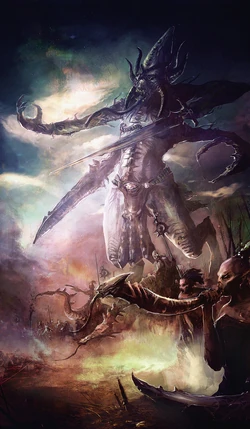
Whenever a creature gives in to the pleasures of sensuality and excess so does the master of pleasure of pain share in it as well, for they are the ruler of al sensation big or small. Slaanesh is the master of excess in al things, as well as the architect of the destruction and removal of al things decent and prudent from the universe.

Source: https://warhammer40k.fandom.com/wiki/Slaanesh

The birth of a god

We have in Slaanesh a clear and decisive origin, both in time and space. The master of pain and pleasure was created as a direct result of the decadence of the Eldar race. As the Eldar grew more and more obsessed with pleasure, knowlage and the arts, did their collective society gravity towards more and more cruel and brutal practices. At the peak of a specificity debouchures murder orgy on the Eldar capital, did the slumbering giant known as Slaanesh wake up, and in doing so creating a tear between the warp and the Materium, this hole would be known as the eye of terror. The entirety of the heart of the Eldar empire was swallowed in to the this stable hole in to the warp.

Because of the fact that the Warp exists outside of both time, space and causality, to their fellow, have Slaanesh simultaneously always existed, and never existed. (Games Workshop. 2016)

The mind of the Eldar

In order to fully understand Slaanesh and what they represent, must we fist quickly discuss the species that created them. The Eldar is a race of ancient highly advanced hominoids, with powerful psychic powers. There exists clear thematic connections between the Elder and the Tolkien trope of an Elf. The Eldar are often described as highly mystical and spiritual in nature, their culture is built on magic as much at is is on science.

One defining feature of the Eldar race is their heightened senses compared tp the other sentient races of the galaxy. The Eldar also possesses “Highly additive personalties”, and they risk loosing themselves very easily in one task or pleasures experience if they are not careful. At the Apex of the Eldar Empire has the majority of the Eldar species fallen to such obsessions, be it drugs violence or sensual pleasures, they were ceaselessly driving each other and themselves to deeper and deep acts of thrills and depravity. It is from this obsession that Slaanesh, or “she who hungers” was born, a physical manifestation of a species endless need for sensation and pleasure. Furthermore do they represent the fear that every Eldar carries with them, the fear of loosing themselves fully to a specific sensation or pleasure, forever losing their sense of self to the experience. (Games Workshop. 2016)

The deadly sins

The palace of Slaanesh is surrounded by six areas, each dedicated to one of the seven deadly sins of the Christian faith. Greed, gluttony, lust, pride, envy and sloth are al represented in the lands of the Prince of excess, here each moral are trapped in an ironic prison of their own making, each mirroring their specific sin. The seventh sin, that of Wrath is as already discussed represented by the god of war Khorne.

For example is the land of gluttony an endlessly rich banquet of food, where the members of the feast can never sate their ravaging hunger, and greed are represented by halls full of gold and jewels, where mortals forever count endless amount of gold in stacks, only to have the stack topple over and their work go to waste. (Games Workshop. 2016)

In the 40k narrative is forbidden pleasure often tied directly or indirectly with some form of violence. The sensation of personal pleasure is often directly tied to some sort of extreme pain for someone else. Murder and torture is often described as the height of euphoric pleasure for the perpetrator, and one that seemingly stays when al other losses its lustre.

Demons of pleasure and excess

The daemons of Slaanesh are a representation on their masters psyche and mood, for they, the god and the realm they live in are al the same.

Keeper of secrets by columbussage
Source: https://warhammer40k.fandom.com/wiki/Keeper_of_Secrets

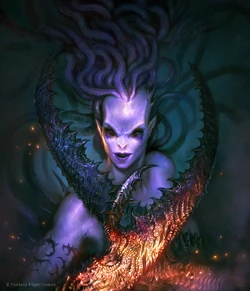
The demons of Slaanesh is described as being both simultaneously unimaginably repulsive, and unfathomably enthralling and attractive to the eye of mortals and fellow demons alike. Each of them are described as being otherworldly fast, well coordinated and dexters, and every single one of them revels in the pain and suffering of others.

Keeper of secrets

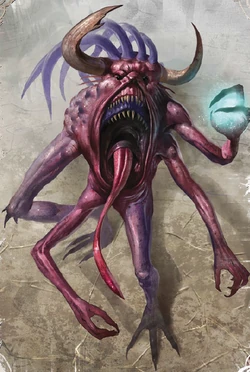
The master of the armies of Slaanesh is described as one of the most horrid and grotesque creature of the warp, multiple limed humanoids who hides their true form behind lavish masks. These creatures are highly intelligent, masterful warriors and skilled mages al. Their most interesting trait tough, is their supposed knowlage of al mortals most inmost and shameful desires. The demons uses these secrets against them, to gain power and influence. (Games Workshop. 2016)

Deamonettes

Heralds, messengers, guards and pleasure servants of the Dark god Slaanesh, these creatures lives to serve their god in every way imaginable. These daemons will go to any length to secure more prestiges place, closer to their deity, and murder, backstabbings and plotting is not unusual in the courts of the god of pleasure and pain, for the Deamonettes are just as fickle, sadistic and egocentric as the god that created them. (Games Workshop. 2016)

Tomeofexcess by Mathias Kollros

Beasts of Slaanesh

The god of pleasure and pain also has a number of strange and onerous beasts that roams their realms and takes care of any unwanted intruders. These creatures are able to secrete scents and sounds that hypnotizes and captivates their pray, despite their outwardly grotesque appearance. (Games Workshop. 2016)

The search for pleasure, and their consequences

The followers of Slaanesh seek sensation and pleasure in al of its myriad forms, for the galaxy is vast, and the ways to experience it seems endless. The gifts of Slaanesh allows their followers to experience these pleasures in an even more detailed and intimately they could ever do on their own. Such is the power of these gifts tough, that even the most powerful drug or erotic experience soon looses its value, as the individual grows resistant to its effects. AS a result are the followers of the master of pleasure and pain forced to find more and more powerful drugs to feed their heighten senses, until the entire world becomes a grey background noise, where only Slaanesh tempting words seems real. This mad rush to self destruction pleases their patron god greatly, for they feel every sensation, and their anguish is just as sweet as their eustacy. (Games Workshop. 2012)

Conclusions

The god of pleasure and pain possesses a few qualities that puts them aside from the other chaos gods. First and foremost are they not created from the pains and fears of the human race, but instead a direct result of the decadence and obsessions of the Eldar race. We will discuss the rise of Slaanesh and the fall of the Eldar more closely in a future chapter. Secondly is Slaanesh seemingly not interested in entering and concerning real-space in any tangible way, instead they are content in letting mortals come to them to be enthralled and captured by their powerful grace and guile. (Games Workshop. 2016)

To follow Slaanesh, just as it si to follow any other chaos god, is to see destruction at your own hands. Slaanesh promises sensation and euphoria beyond imagining, but their gifts burn so bright, that even the strongest spirit is soon a burnt out husk, for which al the pleasures of the universe are but misery and endless anguish. (Games Workshop. 2012)

References

Codex: Chaos daemons (7th Edition), Games Workshop, 2016

Codex: Chaos Space marines(7th Edition), Games Workshop, 2012

Warhammer 40k an in depth analysis: Part 2, The Warp: part 5, Chaos: Khorn, The father of murder and war

For every murder, for every sentient being struck down in fear, anger or vengeance, there is a corresponding ripple in the warp, Khorn is the culmination of al those sensations. Every time a life is taken in anger, is the power of Khorne increased.

Bildresultat för khorne symbol
Source: https://warhammer40k.fandom.com/wiki/Khorne

Skulls for the skull throne

No other of the chaos gods are as direct and apparent in his iconography as the god of skulls. The saying of his followers “blood for the blood god, skulls for the skull throne” is beyond a doubt the more iconic and well known of the franchise.

His realm very much reflects his straight forward nature and philosophy, might is right, and but one single rule “blood must flow”. Khorns realm is a land of red deserts and large volcanic mountain ranges, it is rage and fury made manifest. (Games workshop, 2016)

Here Khorne sits upon his throne brooding over al of his domain. His throne is a huge brass monstrosity, that stands in a mountain of al the foes that has consciously or unctuously been slain in his name. Here the skulls of his champions lays next to their former victims. The land itself is made out of blood and bones of the fallen, and under large volcanos are those warriors who died in their sleep, and a as a result, is not even a peaceful death an escape for those who has once taken the life of another. Here they are forced to toil for al eternity forging weapons for the Blood gods armies. (Games workshop, 2016)

An uncaring god

The truth is that Khorne do not care from where the blood flows, and yours are as good as any other. The god of murder do in other words not care for winners or losers in wars, or why they are fought. Khorne only care that blood is being spilled.

Khorne by baklaher
Source:

The single goal for Khorne is to one day see al life in the galaxy destroyed and turned in to corpses in front of him. In other words is there no saving, even for the followers of the blood good, for they to must perish for their masters ultimate wish to be fulfilled. To become a champion of Khorne, and his ideals is in other words, also becoming a future inevitable victim to the same deity you yourself serve. To die in the service of Khorne is simply speeding up the inevitable. As mentioned before will not even a peaceful save them from the servitude of the Blood good. (Games workshop, 2016)

Disciples of bloodshed

Every warrior and soldier, every murderous thug and mercenary, knowingly and unknowingly pays homage to Khorn,for his worship is done solely by the spilling of others blood. Every time war breaks out, or another sentient being is struck down in anger, be it from a murder of passion, to a genocide of an entire planet, does Khorns power grow. (Games workshop, 2016)

The blood gods servants perfectly mirrors the straightforward and dogmatic mentality of their patron god.

https://vignette.wikia.nocookie.net/warhammer40k/images/1/17/Bloodthirster_by_columbussage-d47j02l.jpg/revision/latest?cb=20120117042500
Source:https://warhammer40k.fandom.com/wiki/Bloodthirster

Most if not al of Khorns personal daemons takes the shape of muscular horned red skinned creatures or slavering monsters hunting dogs. These beasts and creatures, just like their creators lives for little other then battle, murder and bloodshed. They sally forth from the warp killing and maiming everything in their path at the behest of their ever vengeful master. (Games workshop, 2016)

Of al the daemons of the warp we have discussed so far are those of Khorne the closest in appearance to the traditional Christian daemons. Khorne also, much more then his rivals, represents a clear Christian vice, more specificity one of the seven deadly sins, that of wrath. This theme is strengthened by the fact that Khorne is also the patron god of murder and murderers. (Games workshop, 2016)

The concept of Khorne being the embodiment of the Christian sin of wrath also fits well in to our earlier comparison between the Imperial Creed and the catholic church (see The Ecclesiarchy).

War in fiction

As the name of the franchise (Warhammer 40.000) insinuates is war indeed a large part of the setting. This fact comes partly from the origin of the franchise, namely the tabletop wargame forms the basis of the franchise. With this fact in mind do Khorne almost seem inevitable, a representation of raw fighting and combat, a simple narrative justification for the endless war and strife that goes on in the universe, making sure that every players army always have a reason to fight any other players army. He is a obvious and easily understood metaphor for endless and inevitable war. This is indeed a fine read of Khorne, but I believe that we can dig deeper, and find more nuances in the narrative then a simple justification for war. (Games workshop, 2016)

The many faces of war

As we will see as we continue our exploration of the various factions will we find that Khorne is far from the only icon, or even god, of war. Many factions have their own ideas and deities dedicated to war, and each of them corresponds to their specific beliefs regarding war. From the Ork gods Gork and Mork, who revels in the thrill of close quarters combat, and the thunder of guns just as much as their subjects, to Khaine the vengeful avatar of war, destroyer of the unworthy. This leads us to the next question, to who do Khorne belong? (Games workshop, 2016)

The god of human warfare and death

Most readers will not find this answer surprising, but I will argue that Khorne, like the previous Chaos gods, are Khorne the representation of humanities fears of war and senseless murder. As we described in the Nurgle episode are most of humanities lives full of strife and death, from the endless front lines of the many war fronts of the Imperium, to the endless factories and mines that keeps the Imperium alive.

As we have described earlier is the Imperium of man, an empire of endless warfare, for their xenophobic and dogmatic faith and politics allows no coexistence and no peace. Its understandable that humans living under these conditions would start and see death and war as an inevitability, as a grinding and careless machine of blood and broken bone. (Hill 2016) I argue that Khorne, are the culminations of these fears and notions that are deep in humanities collective continuousness. (Games workshop, 2016)

Conclusions

Khorne might at the first glance seem like a very straightforward and simple god to analyse, but I would argue that he represents a lot of themes within the 40k narrative, that we will definitely return to in the future. The seemingly endless and needless warfare and strife is a constant theme in the narrative, and one of the driving motives when it comes to the narrative hopelessness and cosmic horror of the universe. Next time will we discuss the last chaos gods, and one that is not so directly tied to humanity, the deity of pleasure and pain, she who thirsts, the bane of Eldar, Slaanesh.

References

Codex: Chaos daemons (7th Edition), Games Workshop, 2016

Codex: Chaos Space marines (7th Edition), Games Workshop, 2012

Hill, J.D. (2016). Astra militarum. Games Workshop. Lenton, Nothingham.

Warhammer 40k an in depth analysis: Part 2, The Warp: part 4, Chaos: Tzeentch, Master of magic and schemes

Whenever a human lie to another, or schemes against them, Tzeentch hears, and uses them as a puppet on a string. The changer of ways sees and hears al, the ultimate master of manipulation and trick. He is the patron god of politicians, generals and scholars, for he promises his followers endless knowlage and power.

Source: https://warhammer40k.fandom.com/wiki/Tzeentch

The weaver of fate

The god of change sees and knows al, present and past, and he uses this to navigate the many possible futures towards one that is most beneficial to himself. It is inportant to note that Tzeentch do not see the future, only the present. What this is, can no mortal say, and it is possible that Tzeentch himself do not know.

The masters of change plans are complex, varied and seemingly endlessly contradictory, a yarn that seems to spin deeper and deeper as it gets more entwined with itself. It is hinted in the text that these schemes has no end, and that if the schemer would ever fulfil his scheme, there would be no need for him, and he would cease to be. (Games Workshop, 2016)

Warp and time

As I have hinted at before is time and space a strange concept in the 40k Narrative, especially when the warp is involved (which is usually is).

We have already discussed the fact that the Warp exists outside of time, space and classicality, which could explain the seeming randomness of the Changer of ways plans, as he is seeing the universe out of order, or arranged in different constellations then those in the material plain. To further complicate this concept, can certain races such as Necrons or Eldar travel in time, and change the course of certain events using magic and or technology. The concept of an al seeing and all knowing mastermind seem to falter here a bit, a point we will come back to later. (Games Workshop, 2016)

Master of magic and mutation

The changer of ways are also said to be the originator and creator of al magical powers, as well as a representation of the mutating power of the warp. The most powerful mages and sorcerers are unattainably found amongst the followers of Tzeentch.

We must here go back to an earlier chapter and discuss what exactly magic is within the 40k narrative. We have seen that the line between psycic powers and magic is strenuous at best, and that the concept of magic changes depending on which race describes and uses it.

Mutation is not something that is the clear preview of Tzeentch, but it non the less falls within his domain. It is very possible that, just like Nurgle is not the representation of death and decay, but rather the human fear of it, is Tzeentch the representation of human fear over the future, faith, power and knowlage. (Games Workshop, 2016)

Lands of change and chaos

Within ever changing labyrinths and glass mazes of the changers of ways lands, lays the grand library, where every single written word is collected and reviewed by the master of magic himself.

The surrounding lands are beyond the comprehension, as every single possible reality is shown simultaneously within the mirrored walls, as time and spaces looses al meeting within Tzeentch realm. Only Tzeentch himself can navigate the endless pathways to reach the secret library within.

In Tzeentch is every single written word ever created stored and archived by an army of daemons known as red and blue horrors.

Demons of magic

The daemons of Tzeentch are by far the most intelligent, and also the most magically gifted.

The servants of the changer of ways hate the predictable mundane and secure, and do their best to topple lives and change futures in to new and unpredictable paths. To chive this goal do they use al manner of manipulation and schemes, preferring diplomacy to open confrontations. (Games Workshop, 2016)

The lords of change are the greatest of Tzeentch demons is the changer of ways, creatures of great mind stunning intelligence, they use this power to change one stable planets and societies by breaking them down and building them anew, for there is little more that these daemons hate then mundanity and letting the galaxy taking the predictable path, for they crave renewal and change above al things. (Games Workshop, 2016)

https://vignette.wikia.nocookie.net/warhammerfb/images/9/97/Warhammer_Lord_of_Change.png/revision/latest/scale-to-width-down/300?cb=20170226092645
Source: https://warhammerfantasy.fandom.com/wiki/Lord_of_Change

The lesser creatures of Tzeentch is known as pink and blue horrors, they are manifestation of pure magical energies, and as a result a pure representation of Tzeentch power. Pink Horrors are happy and juvenile, telling jokes and doing cart wheels as they frolic in to battle, and peppering the enemy with magical energies. The daemons put on dazzling light shows for each other, often leading to the death of any nearby enemies, something the daemons find immensely amusing. (Games Workshop, 2016)

Blue horrors are created when a Pink Horror is split in twain, these daemons are the polar opposite of their cousins, being sombre, sad, and spending most of their time arguing on which fault it was that they one again lost their pink form.

Warhammer Daemons of Chaos Pink Horrors
Source: https://warhammerfantasy.fandom.com/wiki

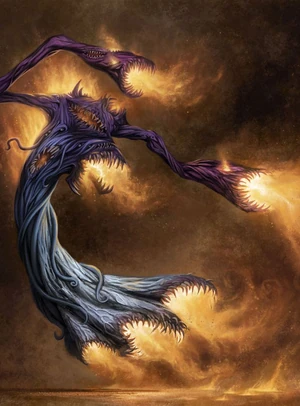
Flamers of Tzeentch represents in many way, the pure chaotic and mutating power of the Warp, and Tzeentch himself. Their bodies move and contort in ways beyond human comprehension, as they constantly shift and change. They bellow forth magical fire, the pure essence of the mutating power of the warp. These flames are known to do anything from heal their victim, to grow them new limbs, sometimes these flames keeps the body unharmed, but instead changes and shifts the very soul of the victim. Much to the shock of the victim, and unbridgeable joy of any nearby horrors. (Games Workshop, 2016)

Warhammer Daemons of Chaos Flamers
Source: https://warhammerfantasy.fandom.com/wiki

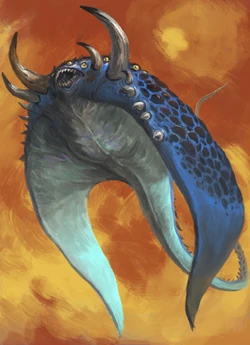
The last demons we will discuss today is the Screamers of Tzeentch, beasts that prowls the warp in search for things to consume, they seem to not be directly affiliated with the changer of ways, but serves as a good example of the other daemons and denizens that inhabits the endless void of the Warp. (Games Workshop, 2016)

ScreamerofTzeentch
Source: https://warhammer40k.fandom.com/wiki/Screamer

Followers of Tzeentch

Politicians, generals and researchers of al kinds are drawn to Tzeentch, as he is in turn, drawn to them. Great power and knowlage are promised those that follow Tzeentch, but just as with any of the Chaos gods, is the price both high and heavily ironic.

The followers of Tzeentch gains immense knowlage, as well as magical power, which they use to achieve their own goal. This power comes with a great price tough, for they are now forever bound to the magical power and will of their patron god, and he only helps those that serves his schemes, and have no qualm about sacrificing his own pawns, if it means getting an upper hand against his rivals. (Games Workshop, 2016)

Conclusions

Tzeentch is by design full of enigma and contradiction, for he is that which humanity can not, and should not know. I have here but given a small taste of the many things worth exploring related to the changer of ways as I wish for my reader to continue exploring on their own. I will at the end of this chapter provide a few examples on how to continue their reading in this much interesting and strange subgenre of horror, but first, a short conclusion of the things we have discussed today.

Cosmic horror

The term Cosmic horror (or Lovecraftian Horror), is usually reoffered to and related to the fear of the unknown, or the unknowable, of the vast spaces of time and space beyond human comprehension, about fate, life, death and our part in it.

Tzeentch is the representation of humanities fears of the future, past, and their ability to change their place and path within these things. It is not surprising then that Tzeentch design borrows so much from the grandfather of cosmic horror, H.P Lovecraft.

Fate and the future

Tzeentch represents humanities fear of the future, and their own ability to control it. Just as with Nurgle, is Tzeentch the actual source or controller of the things humanity fear, but as humanity spreads throughout the galaxy, so does their fears, and as a result the power of their manifestations in the warp.

Tzeentch do not in of itself control the future, or the individual humans part in it, but as Tzeentch power grows, so does his ability to do just that. To join Tzeentch is to give up once own goals and dreams, to become a pawn in the great schemers plans. (Games Workshop, 2016)

The unreliable narrator

This will be another point that we will take up time and again as we deep dive in to the other factions of the narrative. This will become more and more apparent as we start to look at the narrative from the other factions point of view. So far we have seen the narrative from only one point of view, but the statements made about the chaos gods (as well as any other faction), will very much be put in to question here. I take this up now, for it is worth to keep the supposed all knowing nature of Tzeentch (as well as the powers of the other gods) in mind as we move forward.

Uncertainty as well as the almost myth like structure of the storytelling in Warhammer 40k is partly what makes it both frustrating and interesting topic to read and study. (

References

Codex: Chaos daemons (7th Edition), Games Workshop, 2016

Codex: Chaos Space marines (7th Edition), Games Workshop, 2012

Warhammer 40k an in depth analysis: Part 2, The Warp: part 3, Chaos: Nurgle, the god of death and rebirth

Every advanced emotion felt by enough sentient species is reflected within the warp. No feeling is so universal, and so often felt then the fear and relief related to the trails and tribulations of death and disease. It is these emotions, these fears, hopes and dreams that fuels Nurgle, the god of death and suffering, but also the god of hope, life and rebirth.

https://vignette.wikia.nocookie.net/warhammer40k/images/c/c1/Nurgle_mark.png/revision/latest?cb=20050727104008
Source: https://vignette.wikia.nocookie.net/warhammer40k/images/c/c1/Nurgle_mark.png/revision/latest?cb=20050727104008

Introduction

We will begin our series of the Deities of the 40k narrative, by looking at the most contradictory, and ambiguous of al the strange inhabitants of the Warp. Nurgle is said to have been a part of the fate of humanity since the very start, or maybe, even before that. The fear of rot, decay and death has always been prevalent in the human psyche, tough revered by some, most try their best to repress and ignore the sinking feelings of the inevitable, it is in these notions that Nurgle truly thrives. (Games Workshop 2016)

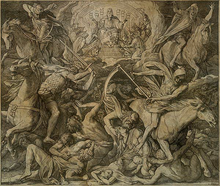
The gods of death and plague is one that can be found in most if not al major human faiths, as it has been a large part of human history, al from the start. Just like decease rot and death has been with humanity from the start, so has Nurgle been there, walking besides us. Few things has caused as much fear and dread in human society as the slow extinction at the hands of a malignant disease or plague. One of the more common faces of disease in the west is that of pestilence, one of the possible identifies of the four horsemen of the apocalypse.

Source: https://en.wikipedia.org/wiki/Four_Horsemen_of_the_Apocalypse#As_infectious_disease

Nurgle is not, as one might think, a sombre spirit, or even one of malice or contempt, he is rather a figure full of life and lustre, full of the wishes to organize, create and educate. To understand Nurgle, one must understand the constant contradictions that he, even more then the other chaos gods represent. (Games Workshop 2016)

Nurgle is a grand example on how the Warhammer 40k narrative uses dramatic irony to create a sense of dread and hopelessness. Dramatic irony, as we have discussed earlier, is the practice of making the audience preview to more information the the characters in the text has. In this case are the readers fully aware of the immense pain and suffering that Nurgles “gifts” wreck on the sentient life of the galaxy, as well as the seemingly loving and well-meaning spirit of Nurgle himself.

A creed of duality

The domains of Nurgle are the duel domains of life and death, decay and rebirth. For every spore, every cell of a disease is new life and from every corpse grows new and fascination life forms. Life leads to death, which leads to new life. It is this cyclical nature that Nurgle represents. His fascination has always been chiefly with life, and its many struggles. (Games Workshop 2016)

Nurgle shares his plagues and diseases as gifts and blessings to a seemingly uncaring universe. He watches with fatherly pride as his minions spreads his foul contingents, and the deaths and pains that they spread throughout the galaxy. (Games Workshop 2016)

To ally once self with Nurgle is to accept this endless cycle and embrace the gradual decay of al things. In return will Nurgle give you immunity from the pains and discomfort related to eutrophy, and can as result conformably enjoy Nurgles great work. (Games Workshop 2016)

The garden of rot

Nurgles lands within the Warp manifests as an enormous bloated swampy garden, beautiful and terrifying in equal measure. Great vine trees reach to the sky, and colourful toxic mushrooms, some the size of humans or taller, fill the ground, spreading colourful spores across the lands. (Games Workshop 2016)

One can not survive Nurgles lands uninvited, for only he can protect you from the various illnesses and parasites that inhabits Nurgles forests. Many invaders and unwelcome visitors has learned this the hard way, as they have become a permanent resident in one form or another, to the gardens of Nurgle. (Games Workshop 2016)

Within this garden lays Nurgles Manor, it is described as rotten overgrown and creaking, yes fundamentally strong and immovable at its base. Driving home the theme of gaining strength from weakness and life from death.

The daemons of Nurgle

The daemons of Nurgle can roughly be categorised in one of two categories, the sombre and serous and the playful and mischievous. This further drives home the idea of the duality that exits within Nurgle himself. (Games Workshop 2016)

The playful beasts

Amongst the many beasts and creatures that serve Nurgle, is few as obvious and the duality of Nurgle as the Plauge beasts, large slug like creatures that are abhorrent to visit, and is highly toxic to touch. They pair this abhorrent physical appearance with the temperament, energy and personality of an attention star puppy. They do not see the enemy combatants as foes to slay, but rather new friends to play. The beasts are blissfully unaware of the fact that their touch are fatal to every living creature, and gets genuinely upset when their latest victim don’t want to play along. This is until another hapless mortal catches their eye at least. This is another clear example of the dramatic irony coming in to play. Both the attacker and the attacked misses vital pieces of information, only at the preview of the reader. The attacked is not aware of the beasts intention to simply play, and the attacker is not aware of the fatal outcome for their new playthings. (Games Workshop 2016)

The Nurglings, small creatures, looking like miniature version of the grand god of rot himself. These small creatures are born from the Great unclean once, and spend most of their time fighting for attention from either the larger daemons, or Nurgles faithful follower. (Games Workshop 2016)

Nurgling closeup
Source: https://warhammer40k.fandom.com/wiki/Nurglings

The legion of research

The second category of daemons are in one way or another representation of Nurgles wish to educate and research. Chief amongst these are the Plague bearers, mortals that has consumed to the plague known as Nurgle rot, and reborn in the Garden of Nurgle as one eyed, bloated version of themselves.

Plaguebearer
Source: https://warhammer40k.fandom.com/wiki/Plaguebearer

These creatures are now tasked with cataloguing, spreading and researching the effects of Nurgles so called gifts. They are also tasked with carrying out Nurgles will, and making sure his feat work do unchallenged. The tasks of these tally-men are an endless one, for Nurgles creations are always changing morphing and transforming, even as they take its course on the helpless victims. This bothers the plague bringers little, as they find great enjoyment in this seemingly monotonous and endless task. (Games Workshop 2016)

These two subsets of daemons are seemingly always at odds with each others, and the Plaguebringers see the Nurglings as nothing else but painful distractions from the endless work of helping their master achieve his goal of creating the ultimate illness.

Followers of ruin

The followers of Nurgle are legion, for the church of the fly is open to everyone, and turns no one away, for after al, Nurgle will embrace al in the end. Amongst the more eye catching are the members of the Adeptus Astarties that at one point or another abandoned the Imperium of man and embraced the Plague father. Chief amongst the many children of Nurgle is the Death Guard. hailing from a planet of plague and disease, did the death guard see themselves as immune to such maladies, and were often sent in to the most toxic environments, that was until one day they were stricken down with one of Nurgles finer creations, and left stranded in the warp, they turned to the only thing that could save them, the Plague father himself. The Death Guard of the modern imperium are great rotting monstrosities, a fusion of armour and rotten flesh, blessed with the absence of any pain and discomfort from their dread father. Stricken down by the very thing they saw themselves the masters of, they now server the very being that brought forth their downfall. (Games Workshop 2012)

Plague Marine battle
Source: https://warhammer40k.fandom.com/wiki/Death_Guard

Beyond spreading death and disease wherever they travel, do these fallen Astartes also take pride and joy in the Masters great work, either indirectly by cataloguing and tallying the victims of his many plagues, or directly in one of many laboratories and research station located on the Death Guards home planet. (Games Workshop 2012)

Origins of the plagues

I will here raise an inportant question, one that will follow the rest of our investigations in to the deities of the warp. Did the existence of Nurgle, create the first plague, or did humanities fear for dying this way, lead to the birth of Nurgle? The evidence I would say supports the second interpretation, but this raises another question. How did Nurgle go from a representation of the fear of death and disease, to an actual creator of these things? This is a question we will come back to in a later chapter, and one I am note sure I have an answer to myself.

Conclusions

Nurgle is an interesting and complex character within the 40k narrative, and a good example to the inherent paradoxical nature of the warp and the creatures that lives within. The fear and dread that Nurgle creates in his followers are in a stark opposition to the demeanour and mannerisms of the god himself. he calls his followers his children, and see his creations not at curses, but rather blessings and gifts that he sends out on the material plain.

Lastly, to follow and embrace Nurgle is to embrace the inevitable, to accept the death of al things, and in the process be freed from the more physical distresses that comes with such entropy. It is also to internalize the dual nature of Nurgle, to grow strong as the rest of the world grow weak. To take suffering and rot, and make it your power and life. This is a trait that we will find with the followers of al the chaos gods, and one that further drives home the horror of these creatures. In order to become free, you must embrace that you fear the most.

References

Codex: Chaos daemons (7th Edition), Games Workshop, 2016

Codex: Chaos Space marines(7th Edition), Games Workshop, 2012

Warhammer 40k an in depth analysis: Part 2, The Warp: part 2, Travelling trough hell

Introduction

Warp travel is a large and mostly deliberately obfuscated topic within the 40k narrative. This is partly because of the first or second hand accounts the writes often uses to describe the world of Warhammer (link here). In other words, does the Imperium for example know very little about warp travel, and how their own processes to navigate function, as a result, will the readers not be made preview to this information either. Note that in this chapter, due to the lack of information, will I need to go to earlier and later editions of the codex’s to paint a bigger and more interesting picture. I will in the references clearly label witch book is from witch edition, so you can clearly see witch lore is old and witch is new.

The Imperium of man

We will once again begin with discussing the Imperium, as a way to contextualize the rest of this chapter. This will then help us further understand how the warp travel of the other factions works. The warp and the factions relationship to it, plays a large role in how each faction function on both a large and small scale. This is partly due to the fact that the immense size of the galaxy in Warhammer 40k is a large part of the overall setting, and the ability to travel this vast space is a huge component in how narratives are presented and unfolds.

Galler field generator

The technology of the Geller field is poorly understood by those that uses it, technology from a long lost dark age of humanity (Adeptus Mechanicus).

The geller field creates a bubble of real space (or Materium) inside of the warp that the ship can travel inside, with relative safety. This bubble is the only thing that stands between the ship and utter destruction as the forces of the warp rips material object to shreds.

The navigators

We discussed in the last chapter of the psycic mutants known as the Navigator, these feared and hated individuals that held so much sway on the Imperium, despite their mutated state (The psyker). The navigators are the only humans with the ability to see the ebbs and flows of the warp, and be able to navigate their way trough it.

Bildresultat för warhammer navigator
Imperial Navigator, Source: https://warhammer40k.fandom.com/wiki/Navigator

Warp lanes

As we discussed in our chapter on the warp, does the Imaterium exists of swirling pools of purse emotion and toughs and desires of mortals. The warp do have more stable areas then others, manifested as rovers or streams of warp energy. Following these streams are a lot safer and faster then trying to navigate the more hostile areas of the warp. These warp lanes are heavily used by the Imperium to travel between planets. These warp lanes has a huge impact on where humanity do and do not settle. This leads to the Imperium`s habited planets, are like cities in ancient the real world, located mostly along rivers and coasts that enables commerce.

Warp gates

We discussed in the previous chapter, the numerous rifts between the Imaterium and the materium, and the danger it poses to any living creatures nearby. There exists stable portals between the two worlds, these are known as warp gates. It is uncertain if these structures are artificial or naturally formed. Most Warp Gates are large enough for space ships to pass trough, but a few rare once are not larger then a doorway.

Warp Gate
Source: https://warhammer40k.fandom.com/wiki/Warp_Gate

These gates do have a very inportant purpose tough. There do exist stable warp rifts, that always leads to the same place in the warp, and they are usually tied to specific warp lanes. This makes warp rifts indispensable when travelling trough the warp, as the ability to arrive at the same time, and in the same place each time is immensely inportant both for commercial and military travel.

The Tau

The Tau is the youngest of the space faring races (at least of those that play a major role within the narrative). They are presented as a strictly feudal society, living their entire lives in one of for casts, with no ability to travel between them. The Tau started as a highly aggressive race, almost at the level of the Orks, and almost destroyed themselves, if it weren’t for the arrival of the Etheirials, today they focus al their energy on the betterment of the lives of the community. This “greater good”, has been risen to the status of religion and dogma, as everything is made of the betterment of the larger community. as always, this will be discussed in more detail in a later chapter. (Games Workshop 2105 1)

The Tau do not travel in to the warp itself, as they do not have psykers ins the more traditional sense, that allows them to breach the wall between dimensions.

Gravitic Drives

As the Tau lack psyker they are unable to properly enter the warp, this is due to the fact no amount of pure power or technical know-how will let an individual or space ship enter or leave the warp without a connection to the other side. This link is most often found in a pyker. The Tau did on the other hand manage to enter an in-between realm of the Imaterium and materium, before being spit out in to realspace. This pocket of inbetween is still effected by the warping abilities on space and time from the Imaterium, and it is as a result possible to use this as a way to move vast differences in a very shorty amount of time. Th Tau ships travel to and from the Imateirum, much like a stone skips over the water, each time it touches the water its propelled forward. (Games Workshop 2105 1)

Bildresultat för tau battleships
Tau battleship, source: https://levelskip.com/strategy/Battlefleet-Gothic-Armada-II-Tau-Merchant-Battleships-Advanced-Ship-Guide

The Eldar

The ancient and mysterious race of Eldar used to be the major influence on the Materium as well as them Imaterium. We will discuss this race of creatures in their own series later. They are one of the oldest races in the galaxy, and is slowly declining in numbers and power. Several allegories can be found between the Eldar, and the High Elves of the Warhammer Fantasy narrative, as well as other high fantasy Elves. The most striking one being their long pointy ears and slender build. The Eldar also plays the same role as Elves usually do in fantasy narrative, that of the distant and mysterious mentor/ally/enemy, representing ages long gone by. (Games Workshop 2105 2)

The Webway

The Eldar has in the past, with the help of their creators the Old Once (a topic for a later day), created stable corridors and rooms within the warp, as well as gates in to these corridors. These corridors let safe and unhindered travel to take place from specific points in the materium. After the fall of the Eldar has these webways fallen in to disrepair, and most lead to dead ends, or in to rifts in to the warp itself. The Emperor himself managed to access these webways, with disasters end results. (Games Workshop 2105 2)

Bildresultat för the webway 40k
Source: https://warhammer40k.fandom.com/wiki/Webway

Webway gates

These are small stable portals the Eldar uses to access the web-way. These are usually the since of individual Eldar, or small vehicles. These wabways are the most common ways the Eldar travel trough space, as their fortress ships they call home are often equipped with at least one heavily guarded webway gate. The Eldar can send troops from these portal to far flung parts of the galaxy, and in doing so, making sure they never have to put their own home at risk in the conflict. (Games Workshop 2105 2)

Warp Gate
Source: https://warhammer40k.fandom.com/wiki/Webway

The Orks

The Orks are once again the most difficult to explain,as they by design defy the logic and rules set up by the wider Warhammer 40k narrative. They are a race of genetically engineered soldiers, made only to conquer and fight. It is hinted that they, just like the Eldar, were created by the Old once. Unlike other species, that grow weaker from war and strife, do Orks in a very real and litteral sense grow stronger from it, as Orks that have survived combat for a long time, is visibly larger and stronger, that Orks that have spent time away from combat. (Games Workshop 2014)

Gork and Mork

The Gods of the Orks are as direct and violent as their subjects, they clearly and fully embody the values of their worshippers. These creatures are monsters of pure muscle and unbridled joy for combat and excitement, it is explained that they are so powerful that they easily shrug of any attacks made by the other gods. This is partly due to the fact that the Orks are by far the most numerous of the races in the galaxy, and as a result do they cast the biggest shadow in the Warp. (Games Workshop 2014)

Space Hulks

There are enormous space ships travelling trough the void of the warp, these hulking masses are amalgamation of asteroids, ice and destroyed space ships. These enormous monstrosities drifts out of and in to real space at seemingly random intervals. The Space Hulks are notorious for being infested with al sorts of monstrosities, as well as priceless ancient technology. The lack of any form of steering mechanisms also makes the ship almost impossible to control, made even worse by their tendency to randomly disappear in to the Warp. (Games Workshop 2014)

Bildresultat för space hulk Ork
Source: https://wh40k.lexicanum.com/wiki/Space_Hulk

The Space Hulk is the primary transport of the Orks, as they genuinely do not care where or when they arrive, as long as there is a fight waiting for them, any previous inhabitants of the space hulk also serve as a nice distraction form the boredom of space travel. (Games Workshop 2014)

The shock attack gun

No discussion about Orks and the warp would be complete would complete without the mention of the Shock Attack gun. This device is a perfect example of the vast instinctual mechanical knowlage of the Ork species, as well as their utter inability to use it for anything then warfare and short sighted destruction.

Bildresultat för shock attack gun
Source: https://wh40k.lexicanum.com/wiki/Shokk_Attack_Gun

The Shock Attack gun works much like an Eldar Webway only on a much smaller scale. This device has the ability to create a (relatively) stable tunnel trough the warp, from the entrance of the gun, to wherever the wielder is holding. This technology is not used to revolutionize space travel, or improve logistics, but rather its used to fire Snotlings (small Orkids), in to the armours, tanks and or bodies of their enemies. (Games Workshop 2014)

Bildresultat för shock attack gun artwork
Source: https://40k.gallery/view/shokk-attack-gun/

The Necrons

The ancient species of the Necrons do not use the warp as the rest of the factions in Warhammer 40k do. These ancient creatures are made entirely out of living metal, their bodies forever locked in the limbo between life and death. The Necrons do not have psykers within their ranks, and can as a result either enter the warp, or navigate its invisible currents, they are as a result forced to use other means of transportation. (Games Workshop 2011)

Inertialess Drive

This seemingly arcane piece of technology allows the Necrons to travel faster then light without expending endless amount of energy, or expanding endlessly in mass. Making it possible for the Necrons to travel short distances in much faster speeds then the younger races of the galaxy. (Reynolds, 2014) The inertless drive has been used in other fictional universes such as Triplanetary and Lensman series of novels. Michael Pedler claimed to have created such an intereteller drive in the late 90s. He supposedly did this troguh his company called Inertialess Drive Corporation Limited, this company foreclose for bankruptcy in early 2007.

Dolmen Gates

As their war with the Eldar continued, did the Necrons manage to squire access to the biggest advantage available to their enemies, the Web way. Using the technology of living metal, were they able to boar holes in to the web-ways itself. It is interesting to not that the Web way is described to be somewhat sentient, it is as a result, capable of detecting and shutting down these breaches in to its system. The Necrons needs to quickly leave and exit the web-way as a result, or be trapped forever. Even with this disadvantage, does the Web way allow the Necrons to travel far faster then any other race, apart from the Eldar themselves. (Games Workshop 2011)

Discussion

I have here presented a number of Factions within the 40k narrative as well as how they travel trough vast distances of space. The ways the civilizations travel to space partly explains how the different civilisations function.

The Psyker

The Psyker is a vital part of travelling trough the warp, as well as accessing the powers of the warp. A civilization that do not have access to psykers, do not have access to the Warp. Races like the Tau and Necrons that lack a psychic link al have different ways around this fact. Their solution and mentality towards this problem is also indicative on how the overall philosophy of the species works.

Technology and the Warp

Warp travel is both a mechanical and magical procedure. The warp, and any procedure related to the warp are by far the area where the two mix the most. As I have tried to show in this and previous chapters, are the lines between science and magic often highly fuzzy within the the narrative of the 40k narrative. Terms like Alchemy is almost interchangeably used, and concepts like miasma and neurological diseases, can be used to describe the same thing. In no other area is this as clear as the navigation of the Warp, as its partly a mechanical procedure, and partly a mystical ritual.

Now with a basic understanding on what the warp is, and how it is used, will we move on to some of the denizens of the warp, beginning with the human centred pantheon.

Referencer

Codex: Necrons (5th Edition), Games Workshop, 2011 pp. 6, 8, 27

Codex: Tau Empire(7th Edition), Games Workshop, 2015 1

Codex: Craftworld Eldar (7th Edition), Games Workshop, 2015 2

Codex: Orks (7th Edition), Games Workshop, 2014

Shield of Baal: Exterminatus, Joshua Reynolds, 2014

Bay of plenty times, on the inertless drive.

Warhammer 40k an in depth analysis: Part 2, The Warp: part 1, the mage and the psyker

Introduction

The powers of the warp has many names, and take numerous forms. In this chapter will we discuss a few of them. This discussion will mostly have a focus on the Imperial side of the narrative, because it is the side that I have introduced so far, and as a result are the easiest to use as a bases for this discussion.

The mutant

To understand the view that humanity holds on Psychic powers, one must first understand their views on mutations. Mutants, heretics and aliens are the three things that the Imperium of man fears the most. The mutant is anyone that exhibits any large physical divination from the “normal” human citizen. These effects can be due to genetics, external natural sources, or exposure to warp energies. (Hill 2016)

By far the most feared of al these mutations are that of the Psyker. These individuals have a direct and inherent link with the Warp (the Imaterium). These anchor points works as a way for the individual to pull energies of the warp in the Materium and form it to their will. This connection do work both ways, and a psyker is also a entry point for creatures of the Warp to enter the Materium. (Hill 2016)

The psyker

Many races and civilisations has psykers in one form or another, some are revered and worshipped, while others are feared and hated. With the psyker I will refer to individuals that are able to use the powers of the warp, but lack any of the esoteric or occult imagery that comes with the Mages.

The Imperial psyker

The psykers of the Imperium are often hunted and terrorised for their abilities. Most psykers of the Imperium are captured and fed in to the Golden Throne in order to keep the dying Emperor alive. These individuals are rightfully feared, as an unprotected and untrained psyker can become an unwilling host to a host of dangerous and powerful entities from the warp. (Hill 2016)

Bildresultat för warhammer imperial psyker
Imperial Psyker. Source: https://warhammer40k.fandom.com/wiki/Sanctioned_Psyker

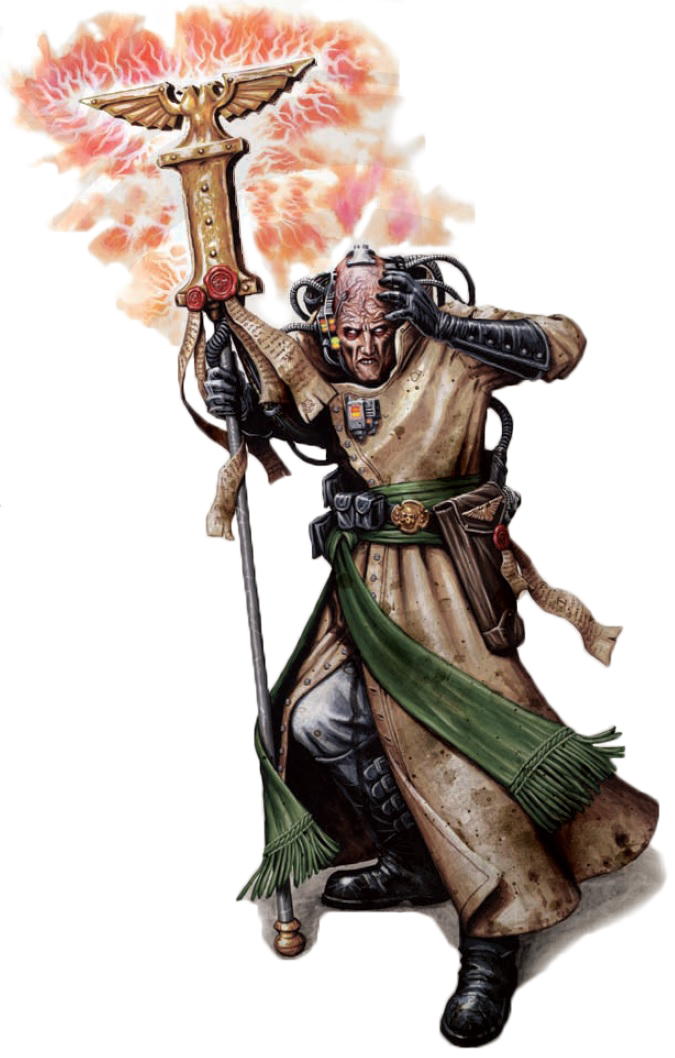
This is the average vestige of the Imperial psyker, most commonly known as the Sanctioned psyker. The large coat and cybernetics is the most striking features of this individuals, along with his staff. (Hill 2016)

Most of these psykers are operating small groups known as Wyrdvane Psykers. These groups are made up of psykers that has not yet learned to individual control their psycic abilities and become primaris psykers, tough others will never leave this stage of their training. These psykers are linked in both mind and soul, and their lacking control and powers can be funnelled in to a much grander whole. (Hill 2016)

Some Psykers manages to control their abilities and allowed to operate with some form of independence away from constant supervision. These individuals are known as primaris psykers. These individuals are rather skilled at controlling their individual powers, each person seemingly manifesting the powers of the Warp in distinctly unique ways. Despite this increased mastery and control are they just as feared and hated as the rest of the psykers of the imperium, often going by the label of Witch. (Hill 2016)

Like much of the Imperium, are the psychic affairs and organisations handled by one large organisation, in this case the Scholastica Psykana. This organization prowls the stars to collect and evaluate any possible psyker. As we discussed in previous chapters are psykers a two way connection between the Materium and the Imaterium and are as a result, a huge danger to anyone around them. (Hill 2016)

The Scholastica Psykana uses fleets of so called Black ships, dreaded vessels made only to carry those inflicted with the psycic mutation. Al of these unfortunates are carried to Terra, where they are tested and evaluated, most are either feed to the “infernal mechanisms of the Golden Throne” or to the “blazing beacon of the Astronomican”. The individuals that are considered to be stable enough, are instead ferried of to secret training facilities to hone and control their abilities. It is noteworthy that Imperium do not see any value in these psykers beyond their pure battlefield applications. (Hill 2016)

The librarian

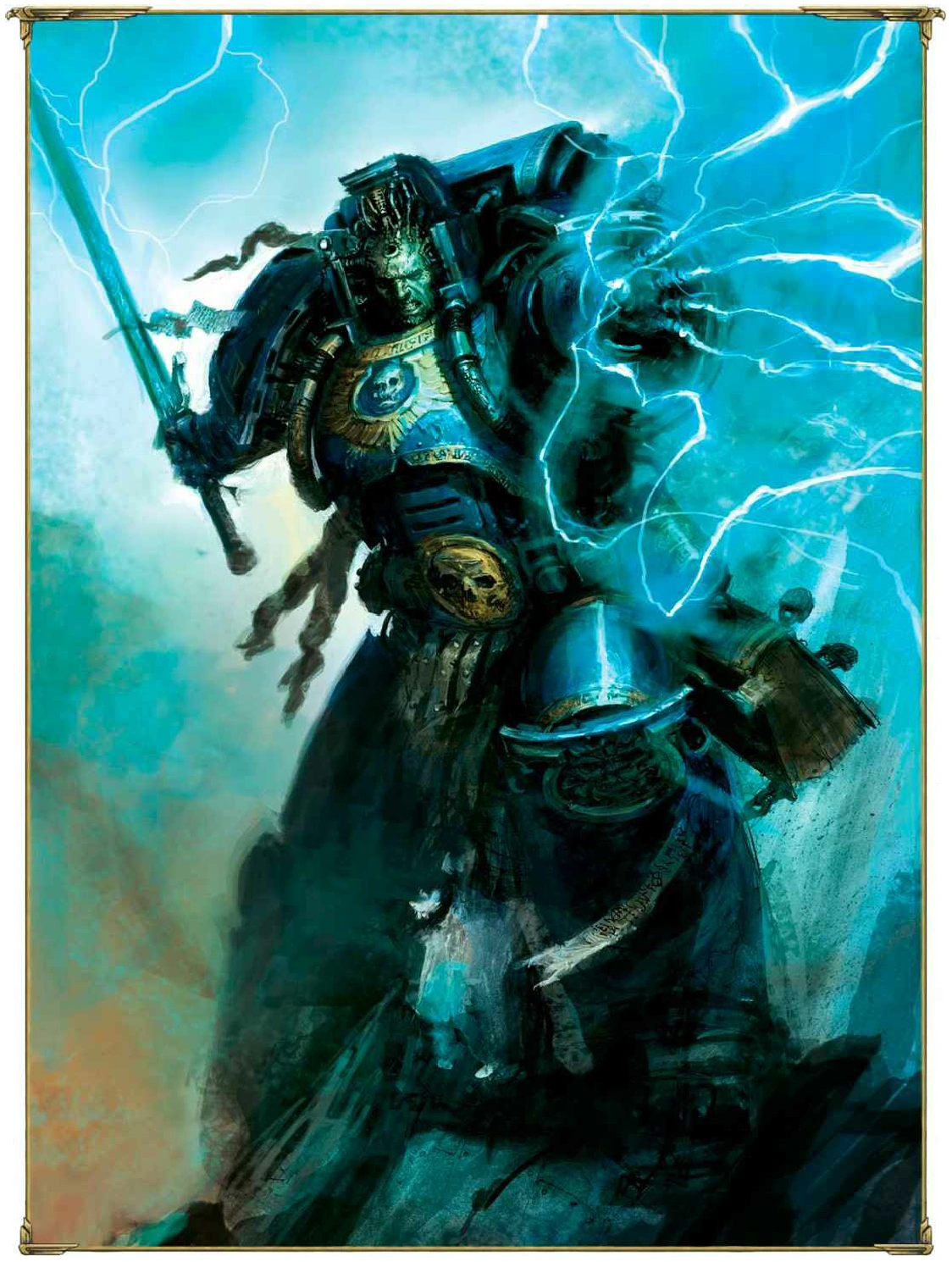
An Astarties that has been gifted or cursed with psycic powers. The Imperium, as mentioned earlier are extramarital wary of mutants, and the Space marines are no exception to this rule. The librarian are subjected to growling tests of fate, as well as mental and physical fortitude, in order to make sure that they will not hear the lure of forbidden knowlage and power. The Librarians are described to use the power of their psychic abilities to their fullest in combat, hurling lightning bolts, or even warping time and space around them to help their battle brothers get an advantage in combat. (Games Workshop 2015, 3)

Bildresultat för warhammer librarian
Space Marine Librarian: https://warhammer40k.fandom.com/wiki/Librarian

Befitting of the name, are the librarians also in charge of collection, analysing and distributing the knowlage base of the chapter that they serve. Each librarian have a set roll and office within their chapter, but each are focused on the conservation and betterment of the chapters knowledge base. (Games Workshop 2015, 3)

The Ork weird boy

The Orks use of psycic powers are as pragmatic, straightforward and mindbogglingly strange as everything else they do. To understand how the weird boy work, one must first understand how the Orks and the power of the Waaaaaagh! works. Orks generates psycic energies all by themselves, seemingly independently of any connection to the warp. These energies are the basis for many of the Orks strange abilities, but for this chapter is it enough to know that this is where the Ork psykers (or weird boys) gets their powers from.

The Ork psyker works as sponge to these energies, and will collect and build up a charge of energy over time. If the Psyker do not find a safe way to release this energy will they combust in a awe inspiring display of energy. To avoid such a gory fate, has the more successful Weird Boyz managed to find several and deadly ways to get rid of this build-up of energy, usually at the cost of any fellow Orks nearby. Weird Boyz are as result forced to live outside of the Ork settlement proper, and kept under surveillance at al time.

Ork Weirdboy power
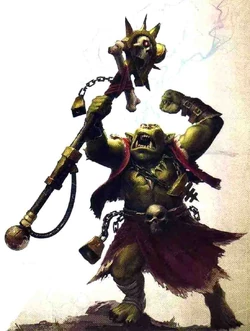
Ork Weird boy. Soource: https://warhammer40k.fandom.com/wiki/Weirdboy

Visually can we see a lot of similarities between the Ork psykers and that of the Imperium, as well as the Eldar. The staff he uses to focus his energy, the robes, as well as the various preferential items. The Orks also mistrusts their psykers just as much, if not more then the Imperium, a trend that will become more and more common as we continue this series. (Games Workshop 2015, 2)

The mage

The mage is a psyker that uses their powers in more ritual and more overtly magical forms. Note that these two distinctions are not clear cut, and the lines between them are blurry at best.

The navigator

The role of the navigator is a vital one, for they alone has the power to safely lead the Imperium`s ships trough the ebb and flow of the Imaterium. They achive this feat by the use of a rare human gene, known as the navigator gene. This mutation allows the individual to open a third eye, and peer in to the otherwise invisible realm of the Warp (see The Warp) The families of navigators are secretive and powerful, feared and hated, but still vital to the Imperiums continued existance. (Hill 2016)

Bildresultat för warhammer imperial navigator
An imperial Navigator. Source: https://warhammer40k.fandom.com/wiki/Navigator

The most obvious connection between the navigator and the occult is their third eye. The third eye is a common sigh for otherworldly sight and or abilities. (Hill 2016)

Emperors tarot

The Emperors tarot is a mysterious and poorly defined system of which imperial psykers tries to explore possible future events, many decisions are made based on the omens of the Emperors Tarot (Hill 2016). The ties between this system and the real life system of Tarot are very clear and obvious. Much like the Imperial officials did many rules in medieval Europe rely on seers, astronomers and readers of the tarot to make inportant decisions, Lévi names i the “noblest of magical arts” (Lévi 2017).

The Sorcerer

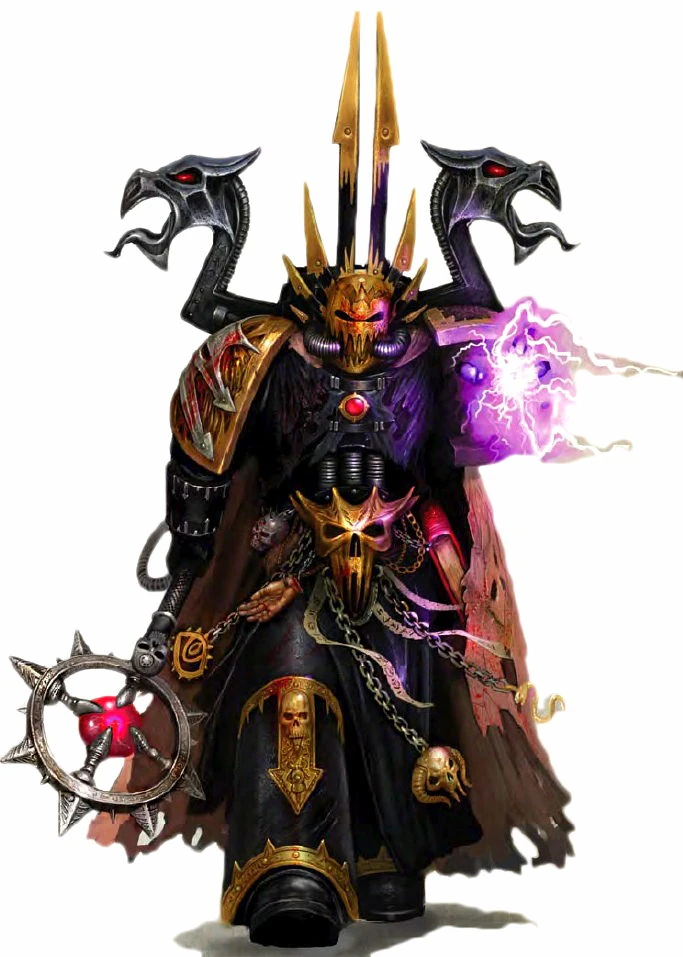
The Chaos sorcerer is the most clear example of the category of the mage. The sorcerer denotes many thing within the Warhammer 40k narrative, but for the process of this text will we use it to denote the Astarties Chaos Sorcerer. In other words, a space marine librarian that has gone in league with one or several of the chaos gods. (Games Workshop 2012)

Bildresultat för warhammer sorcerer

The term sorcerer in many magical texts from medieval Europe, and in to the Relicense denotes low or untrained magic. In a Christian context does the term Sorcerer often mean magic user in league with daemons or devils. In both cases does it refer to lesser or unofficial magic (Games Workshop 2012). Lévi describes sorcerers as users of demonic powers to curse, harm or even raise the dead. Sorcerers and sorceress are evil foes that any true mage must fight at any cost (Lévi 2017) .

This line between good and evil psycic powers can be found again and again within the 40k narrative. The difference between the sanctioned psyic powers and mental abilities of the Librarian, and the hexes, spells and rituals of the Sorcerer is one of the more striking once. One is based in self control and rigid training, the other in research and forbidden knowlage. The wordings of the different groups are interesting as well and can tell us a lot about each faction, and how they function. It is inportant to keep in mind, as the Codex of the Chaos Space marines describes, that the differences between the two are tenuous at best. (Games Workshop 2012)

The Eldar Farseer and warlocks

The psykers of the Eldar race are often denoted as mystics. One of the Farseers chief concerns is to scry the possible futures of their races by consoling runes of arcane magic. They guide their race trough the mists of possible futures, trying to reach one that will one say safe their civilisation from destruction. (Games Workshop 2015, 1)

FarseerUlthwe

The warlocks on the other hands uses their powers in purely a combat roll. They cast searing flames of energy, cast up barrier of blinding energy, and crush battle tanks with a single hand gesture. (Games Workshop 2015, 1)

The enigmatic race of the Eldar are steeped in occult and esoteric symbolism, most notably by their use of runes in their work. This can be partly explained by their ties to the Warhammer Fantasy equivalents, the Elves. These creatures are often seen as innately magical creatures in pop culture as well as folklore.

Bildresultat för The rune of the mystic eye eldar
The rune of the mystic eye. Source: https://warhammer40k.fandom.com/wiki/Seer

This sign, or versions of it is often worn by Farseers, or followers of “the path of the witch”. these symbols are easily recognizable to anyone with a passing knowlage and interest in the occult or esoteric, or pop culture in general for that matter. (Games Workshop 2015, 2)

Conclusions

As mentioned earlier are there a fine, often blurred line between the more scientificality denoted psykers and the magically denoted mages and warlocks. With that said is it an inportant distinction to try to make, as it will help us understand the build up of much of the narratives later.

The staff of office, and other symbols

I have in this chapter pointed to a series of artefacts and symbols, some more overt then other, that points towards real world philosophies and faiths. I have done this to point out that this text, as any other exists within a wide cultural context. Analysing and reflection on this context, can both deepen the enjoyment and understanding of this and future texts a reader experiences. The most recognizable symbols we have discussed today is the al seeing eye, the robes of the mage as well as the magic staff.

The use of psychic powers

As we can see in this chapter is psycic powers widely varied in both paratactic and theoretical use, from the rigid and pragmatic use of the Imperium, to the mystical and grand uses of the Eldar, to the accidental and random methods of the Orks. Psycic powers, and the attitudes towards them are another tool the writers use to expand and deepen their narratives universe. We will go further in to these distinct practices and cultures as we examine each faction in turn.

Science and magic

Lastly is it inportant to keep in mind the distinction between the psyker and the mage, magic and science. It is a theme that we are going to return to time and time again. Next chapter will make this concept even more convoluted, as we look in to the definitions and themes of warp travel.

References

Hill, DisclaimerJ.D. (2016). Astra militarum. Games Workshop. Lenton, Nothingham.

Games Workshop (2015, 1). Codex: Craft-world Eldar. Games Workshop. Lenton, Nottingham.

Games Workshop (2012). Codex: Chaos Space Marines. Games Workshop. Lenton, Nottingham.

Games Workshop (2016). Codex: Chaos Space Marines. Games Workshop. Lenton, Nottingham.

Games Workshop (2015, 2). Codex: Orks. Games Workshop. Lenton, Nottingham.

Games Workshop (2015, 3). Codex: Space Marines. Games Workshop. Lenton, Nottingham.

Lévi, Eliphas (2017) The Doctrine and Ritual of High Magic : A New Translation

Wilson, D.K. (2018). A magical world: superstition and science from the Renaissance to the Enlightenment. (First Pegasus books hard-cover edition.) New York, NY: Pegasus Books, Ltd.

Warhammer 40k an in depth analysis: Part 2, The Warp: part 1, The Materium and the Immaterium

Introduction

This chapter will mark this blogs official return to the Warhammer 40k franchise. In this series discuss the epic and daunting fictional series set in the 40th millennium. With this chapter will we start looking at one of the largest cornerstones of the Warhammer 40k franchise, that of the warp. We will begin with trying to describe the Warp, and how it relates to other similar worlds.

The Materium

The physical world or material world of Warhammer 40k. This would be the allegory of our Real world. The Materium is the place of physical laws and life. The Materium more or less follows the same laws of physics that our world does. The biggest difference being the direct connection to to the warp. One of these connections are that some individuals are given (or cursed) with special special powers. These powers are referred to as magic or psychic powers interchangeably, depending on who describes them. (Games Workshop 2016)
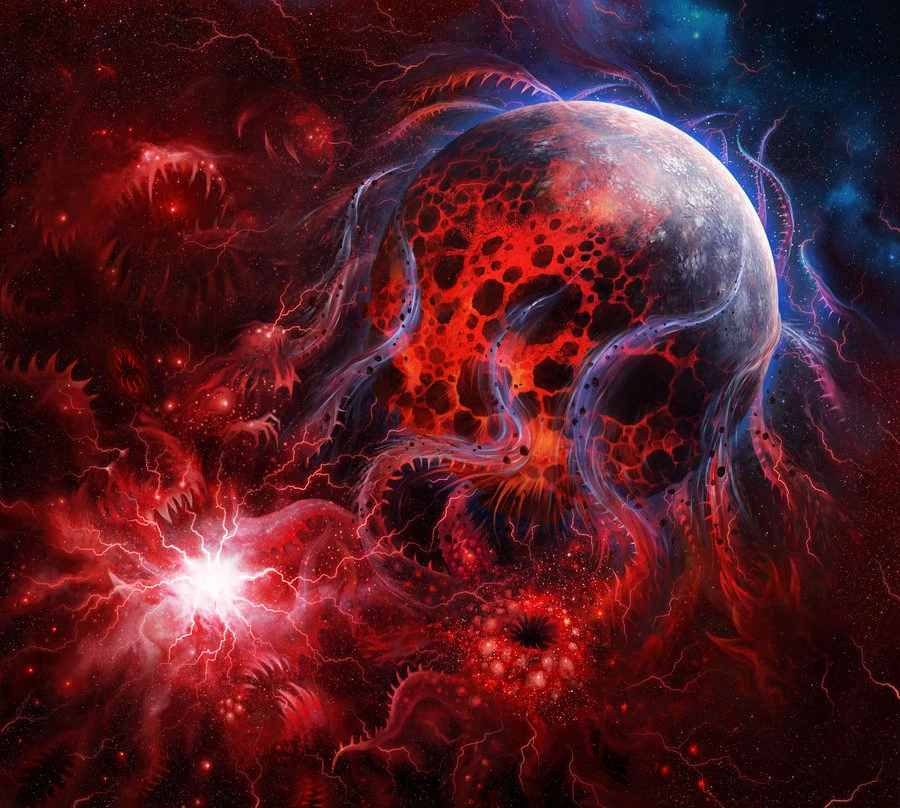
The Immaterium

In contrast to to the Materium, the Immaterium is void of any form of physical matter, at least in any traditional terms of the word. The Immaterium is described a misty sea of smokey clouds of vapour and colour, impossible structures of impossible size and angles fill this wiling space, constantly moving and changing. Within the warp does the laws of physics, time and causality seise to exist. The warp is described as an unknowable landscape of dreams, emotions and fears. The warp itself can not be seen, heard touched or smelled, it is a realm built up entirely of abstract ideas. (Games Workshop 2016)

Everything within the Warp is a reflection of the beliefs, hopes and fears of the inhabitants of the Materium. Every sentient creature has a an effect on the landscape of the Warp. Similar emptions clump together, and forms a strange landscape of rives, lakes and mountains of love fear and hatred. They eventual form in to what can be seen as rudimentary forms of life.(Games Workshop 2016)

The ever shifting tides of the Warp. Source: https://vignette.wikia.nocookie.net/warhammer40k/images/3/36/Waves_of_the_Warp.jpg/revision/latest?cb=20160211182552

These life forms with time forms a sentience of their own, with wants and desires, these reflections is what is most commonly known as gods within the 40k universe. The Orks project their image of grandeur in the form of the titans of Gork and Mork, the Eldar has their gods of old, and the strife and struggles of the Imperium has given birth to three chaos gods, as well as a projection of the Emperor of mankind himself. These creatures battle in endless wars, stuck in struggles with no clear end or starting point. The warp exists outside the confines of time, causality and logic, as does its inhabitants. These gods and daemons of the Warp can not directly effect the physical world of the Materium, but must instead act trough followers and servants. (Games Workshop 2016)

The world beyond

The duality that the Materium and the Immaterium represents is far from a new idea. To visualize this point will I present a series of examples of similar worlds in philosophy as well as fiction. These universes all have the same dichotomy of duality. One world is physical and tangible, while the other is abstract and incorporeal in one way or another. Al of these worlds are also deeply intertwined with their double.

Plato’s world of duality

The concept of Plato´s cave is well known to anyone that has studied any level of philosophy. The basic tenements is that there exists a natural world of physical items, and an ethereal eternal world of ideas. The physical world is mere reflections of the ideas present in the ethereal world.

The world of ideas, is ethereal, endless and never-changing. Each and every object that exists within the physical world is a mere reflection of its true self within the idea-world. The physical world is a mere reflection of the true world of the idea world. (Plato 1892)

A visualization of Plato’s Cave. Source: https://sociable.co/wp-content/uploads/2017/08/platos-cave.jpg

Lovecrafts other-world

The world of Lovecraft is described as being separated in to the world of the mundane, and the world of the supernatural. Much of the horror in Lovecraft fiction comes from the world of the supernatural in one way or another bleeds in to the realm of the mundane. The Old gods, deities of Lovecrafts world, are said to have escaped from the world beyond, to settle in to the mundane reality of humans. The world of the supernatural is said to be abstract and beyond the realm of mortal comprehension. (Lovecraft 2008)

Bildresultat för lovecraft old gods
A visualisation of Shub-Niggurath: https://vignette.wikia.nocookie.net/lovecraft/images/c/c8/Tumblr_n72r7hKWR91s748a0o1_1280.jpg/revision/latest?cb=20140818055056

Digimon

The other-world within Digimon is called the Digital World, and was created when the first Digital computor on this narratives real world (earth), was started for the first time. This created the foundations for this words physics and ground rules. Its explained as the expansion of digital communication, the digital world has expanded rapidly. (Bandai 2001)

These are but a few examples, but enough to five us a general idea about these kinds of worlds, and how they are represented elsewhere.

The Warp and its uses

It is possible for the Immaterium to spill out in to the world of the Materium, when this happens it is often referred to as a tear or a storm. When a tear in the Materium occurs, the abstract representations and fears of the warp pour in to the world. As one can imagine by a galaxy beset on al sides by war, sickness and strife, are the reflections in the warp, just as, or even more terrifying then the galaxy that willed them in to existence. (Games Workshop 2016)

A warp rift consuming a planet. Source: https://vignette.wikia.nocookie.net/warhammer40k/images/8/8c/Warpstorm_.jpg/revision/latest?cb=20151013183924

To breach in to the Immaterium from them Materium is indeed also very possible. This is a highly dangerous and unpredictable process, but a very useful one, if done correctly. Because of the fact that the warp exits outside of time and space as mortal minds understand it, is it possible for physical objects (such a s a space craft), travel over immensely vast distances. The Warp needs to have a connection point to the Materium in the shape of a psychically sensitive sentient individual. These psykers can use their powers to draw forth powers from the warp, as well as to travel in to it (Hill 2016). This power can be used to navigate space ship safely trough the Immaterium, call forth storms of pure Warp energies, or even to send messages trough vast distances of space. I will go further in to the details on how the different races and species handle and work with the warp in a future chapter. (Games Workshop 2016)

Ships entering real space from the Warp. Source: http://img3.wikia.nocookie.net/__cb20140415161335/warhammer40k/images/d/d9/Iron_Hands_Fleet_Arrives.png

The gods and their worshippers

The gods of the Warp grows as the emptions that first birthed them grows. This influence grows either by direct worship, or by the creatures that willed them in to being, feel certain sensations. For example, every time a human feel ambition or lust for knowlage, the power of the god of knowlage Tzeentch grow.

Bildresultat för tzeentch warhammer
A representation of the physical form of Tzeentch. Source: https://1d4chan.org/images/thumb/9/97/Tzeentch_the_Architect_of_Fate.jpg/500px-Tzeentch_the_Architect_of_Fate.jpg

This is true of al the sentient races of the galaxy (with the possible exception of the Tau). The larger and more successful a species become, the larger of an imprint will they have on the warp. In aeons past, the Galaxy was ruled by a species known as the Aeldari (or the Eldar), and as a result was the warp a reflection of their hopes, dreams and fears. In the 40th millennium the Galaxy is fought over, and more or less ruled over, by humanity, and their strife and homes and fears help shape most of the warp. I would argue that humanity is the birthplace of a number of Warp entities, more specificity Nurgle, Korn and Tzeentch (Games Workshop 2016). These entities are feared by some and worshipped by many others others. The Orks for example are adamantly loyal to their representations in the warp Gork and Mork. Most humans hate and fear their reflections in the warp, but some choose, or are forced in to their service and worship. Yet again will we discuss the pantheon of the Warhammer 40k setting in a much deeper detail in later chapters. (Plato 1892)

Conclusions

This is a basic introduction to how the Warp operates and how it relates to the world of the Materium. We have compared it to the ideas of Plato’s idea world, as well as a few other similar fictional worlds. I have trough this chapter shown that the narrative of the dual worlds exists in many places of the world, within classical as well as modern narratives. I have also tried to lay the groundwork for further discussion of the Warp, and ids significances for forming the rest of the Warhammer narrative. Next time we will start discussing how the different factions and races handle and look upon magic and psychic powers.

References

Hill, DisclaimerJ.D. (2016). Astra militarum. Games Workshop. Lenton, Nothingham.

Plato. (1892). The Republic [Electronic recurse]. Auckland: The Floating Press.

Games Workshop (2016). Codex: Chaos daemons . Games Workshop. Lenton, Nottingham.

Games Workshop (2015). Codex: Orks. Games Workshop. Lenton, Nottingham.

Bandai (2001). Digimon Tamers: Brave Tamer. Tokyo, Japan.

Lovecraft, H.P. & Jones, S. (2008). Necronomicon: the best weird tales of H. P. Lovecraft. (Commemorative ed.) London: Gollancz.