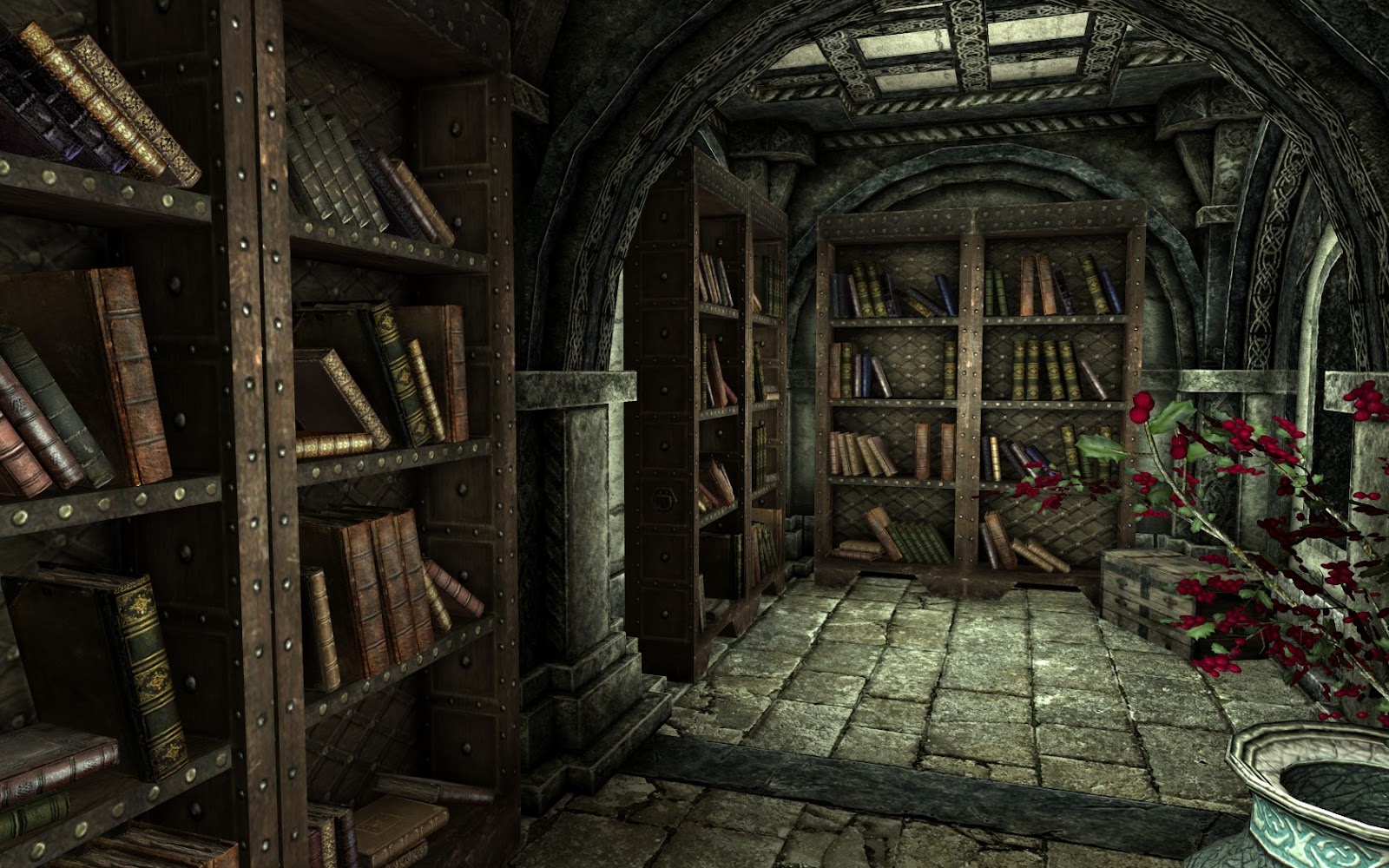
Oakendale Academy

Enroll in the prestigious Oakendale academy, one of the Empire’s most prestigious academies for studying the arcane arts. Learn about the cultural and historical roots of arcane practices, study herbology and ecology and so much more.

This is a small demo where you are introduced to the school, its philosophy and its teaching practices. You will also be introduced to a few of your fellow students as well as the faculty of the academy. This demo is rather short and will not take more than a few hours to complete. You can save the game at any time by visiting your dorm room.

Oakendale academy by SamRandom

This is my first attempt at a text adventure, the demo is free to play and runs in your browser! I hope to be aböe to create many more games in the future, in many formats, not just text adventures.

Writing update

So, funny story. I have several papers cooking, but none of them are finished for today! One, almost was. But would make no sense without the other. So here’s a little rundown of upcoming topics!

Gwylim notes on Skyrim: health potions and visual shorthand

This is the next part of my Skyrim series, it needs some more research done, and I need to take some reference photos before it’s ready but the base is there.

The potion bottle is a staple of the fantasy game genre, and can be found in most every game of the genre, from Dark souls to legend of Zelda. In Skyrim are the potions easily labeled and color coded to the stat that they refill, green for stamina, blue for mana and red for health. What I wish to discuss in this text is their prominence in the game world.

Health potions can be bought by vendors for sure, but can also be found in caverns, dungeons and most interestingly, inside people’s homes. While this makes sense from a gameplay sense, it does lead to some interesting narrative consequences. At some points are you able to hand these magical potions to an npc, that indeed does get better. Others you are forced to leave to their death. It is worth noting that Elder Scrolls Online is much more guilty of this crime than Skyrim.

Gwylim notes on Skyrim: Books and magical excavations

This will be a continuation of my exploration of books and their use in narrative building in Skyrim and Oblivion. I want to lay a fair bit of groundwork before I post this one. There is a fair bit of research to do for this, and the other essays in the series.

Books are a fundamental part of the narrative building of the Elder scrolls series, they can often bring context to the greater narratives as well as specific quests. In this essay I will discuss four different quests, two from Oblivion and two From Skyrim.  The unifying themes for these quests is that, except for one, they get a lot of context from the lore books surrounding, or being part of the quest.

In this way I will discuss the strengths and weaknesses of relying on a player to read a book, and when in the narrative the book becomes available to the player.

Warhammer essay: Wild creativity and measured preservation

I have slowly been working on more Warhammer essays, but currently are the Skyrim essays taking precedence. I need to get my hands on a few lore books first if I want to be able to discuss Warhammer properly again, as a lot of the texts I have are either too old, or too new for what I want to write about.

Warhammer fantasy as well as warhammer 40k has an interesting relationship to the concept of creativity, knowledge and the art of creation. There are two opposing forces that are present in much of the texts. These are of innovation and of tradition, as well as carelessness and caution.

Each faction lands somewhere between these parameters, and a lot of the faction’s philosophy, morals and history can be gleaned from these traditions. There are some ideas that returns again and again. Tradition often comes with stagnation and loss of generational knowledge. On the other side is carefree innovation leading to explosive results. I will present a few examples of these themes in this essay, but they are by my way exhaustive.

Umvelon: City of magic

I have been writing a lot on a lore supplement for my homebrew setting Landhurst. I have posted a bit of this project on my patreon, so if this sounds like something that is interesting to you, you can find more information there. I want to present the introductory text here, to give my readers an idea of what I have been working on.

Introduction

Umvelon is Landhurst’s third largest city, and the second largest centre for education in the entire nation.  It is most importantly the undisputed centre for arcane education, research and regulation. The seemingly ancient city is in fact one of the younger cities in the nation’s history.

After the Elven defeat did the nascent mage guilds take the arcana rich site to be their centre of learning and research. From the humble campus on top of a ruined Elven metropolis did the mighty city of today take shape. Spreading ever downwards towards the muddy waters of the surrounding swamplands that keeps the city isolated from the mainland.

Magic education and bureaucracy.

Umvelon is the seat for higher arcane learning, and the only place where one can learn the many trades that require a full time commitment, such as battle mage, alchemist or healer. While the rest of the nation have rudimentary research and safety training for proper arcane use is it only in Umvelon that one can become a full fledged member of the mage guilds.

Furthermore the city is the centre for the governing body of the mage guilds. It is from here that arcane disasts, corruption and other dangers are investigated and rooted out. The dreaded Mage hunters, the personal juridical wing of the mage guilds also have their headquarters in the city, brazenly displaying their clandestine operations in broad daylight.

Patrons of art and education

Besides the arcane colleges there are several smaller academic institutions present in the city, not least of them the Librarians and archival collage, as well as the academies for History and the liberal arts. These campuses can be found all across the city, but everyone boasts at least one lecture hall on the coveted Campus hill in the fourth ring of the city.

Beyond the official institutions is the city sprawling with museums, bookstores and coffee shops that hold unplanned lectures and readings for anyone interested. Most of these institutions are free for citizens and are paid for by the many rich trade families that have made the city their home. A grand payment to one or more of the educational institutions of the city not only garners good will with the citizens, but also gives them rather generous tax cuts from the city’s mayor and mayoral staff.

Arcane trade

Umvelon is the centre of all arcane trade in Landhurst, and all arcane items are either made here, or made by someone who has been educated here. The guilds keep a close eye on all wares of an arcane nature that moves through the nation’s many waterways. Close, but not so close that smuggling and bribery is not permitted, solely to make sure that research and production runs smoothly ofcourse.

Arcane artifact

While many of the bulk products such as magically enchanted ammunition, scrolls, crystals and potions are made in large warehouses elsewhere, the city is still full of production. It is unsurprisingly full with the kind of production that will not disturb a college professor’s mid day nap with its noise, or the kind of smell that makes a high society lady reach for her perfumed handkerchief.

Patreon blog

Hi everyone, I realized that after getting so many new readers, some of you may not know that I have a patreon where I add more light and free form texts and essays. I just happened to add a rather fun one about playing as researchers in D&D 5e. If you like what I do here and would like to support me, while getting more of my content, please consider joining my patreon at the link below!

Blog update: July

Hi, I am currently working on several rather big projects that are hopefully coming to fruition sooner rather than later! In the meantime I have been semi-regularly updating my patreon page with some interesting shorter essays. If you like what I write and would like some more, as well as support me financially in the process, please consider taking a look!   

Blog update 7th December

Another premium blog is up for your personal at kofi and pateron! This is another text discussing one of my long time obsessions, Fallen London. This topic of this post is once again chosen by one of my Twitch viewers.

https://ko-fi.com/post/Queering-Fallen-London-S6S2GNOIB

In other news, I recently started a new library job, though it will not take off fully until next spring, so hopefully I will be able to get a nice backlog ready until then!

Blog update: 16 November 2022

My first premium blog post in what seems like ages is now available on my kofi for those that want to support me, and get a bit more of my writing in return!

https://ko-fi.com/samrandom

As a monthly donor you get access to all new posts, as well as my backlog. On my kofi I tend to post things that do not fit the main theme of this blog, but I still want to discuss. Please consider heading over there if you like my work!.

In other news, I am working on a small anthology of short stories relating to medicine and healing, as well as studying Chinese alchemy! Look forward to more content real soon!

Media literacy 101, part 2, The author

In this chapter I will present the reader with a number of ways we can approach the concept of the author, and how to critically deconstruct and analyze it. All the methods I mention here are viable and used in media and art analysis. I will present the various methods in a rough historical order.

Note that, just as my other texts in this series, this chapter is simply meant as an introduction to the topic, and a way to start learning more about the media we all love to enjoy.

The scribe and the codex

Without going too far back, but still getting some context to the rest of the text, I will start by quickly describing how scribes worked in medieval Europe and how these scribes created their codexes, texts created to be specifically made for a single customer’s needs. A scribe was foten, but not always employed by a monestary, and were tasked to copy texts for reditrtbuition and selling. Some texts were copied as is, but many texts were made out of materials from various diferent texts, to create compilations of certain topics.

These compilations of knowledge could contain anything from poetry, to history and philosophy and alchemy. It was not uncommon for historical or mythical events to be subtly changed to give the contractor’s family a bigger role in the commissioned version.(Woodmansee, 1994). More importantly were these books seen as objects in and of themselves Many of these texts that were sold, were carefully and lovingly edited and decorated by the scribe or one of the scribes colleagues. These codexes as a result were created as unique one of a kind items.  These items were created in a communal setting, with a clear tradition and history behind their creation (Barthes, 1968).

There were of course well known named authors and scholars in medieval and renaissance Europe, though much less before the introduction to the printed word. These writers would publish under their own name, and have their works copied and circulated by the above mentioned scribes. Attributing one’s findings and research to a more well known, or even mythical figure was also far from unheard of either

I bring this up primarily as a background for what we will discuss later on in the chapter, that what we imagine as the writer and the artist is a relatively new invention all things considered. What is of most import to this discussion is the fact that the author, creator of the text, and the text itself was not nearly as closely entwined as they are today.

The genius and the craftsperson

During the late medieval and renaissance period, a new image of the creator and artist started to arise. The individual changed from a craftsperson that has worked within a tradition of art and craftsmanship to create singulair items, into a genius creaing series of texts or works. This new creative figure worked in isolation, and whatever they created, was from their own mind, or divine inspiration. This is in stark contrast to the more collectively driven bardic and craftsman traditions of past artistic endeavors (Barthes, 1968).

Ownership of the art also moved from the owner of the piece, to the originator of said piece. This has a number of reasons, as well as ramifications, but we are interested in two of these today, intellectual property rights, and canon forming (Barthes, 1968).

By strengthening the image of the writer as a genius, of one with almost divine inspiration, could works be more tightly tied to them. This meant that a specific work of art was seen as the unique and singulair creation of the genius artist, rather then the continuation of a comunal tradition. By tying the work to a singular person, can more strict control over production and distribution be justified (Barthes, 1968, Woodmansee, 1994). The elevation of the creator of art, from a mere craftsperson to one of an artist and genius also helped funding in a landscape where patronage from wealthy nobles and business men became less and less available.

The author and their environment

We would today argue that no creator exists in a vacuum, and this approach aims at understanding the text and the creator from their contemporary history. Every written word can, acording to this methond be placed within a certain context, that can, at least partly explain why the work turned out the way it did. J.R.R Tolkien’s works can for example be contextualized by his dramatic experiences fighting in world war 1, where he got a first hand experience of the brutal war machine.

We must always be weary in that when making these sorts of analyses we can not fully escape our own biases. Our knowledge and lived experiences will inevitably lead us to focus on certain aspects of the author’s experiences over others. With that said, a thorough investigation, and immersion into the context of a work’s creation, can open up a more rich and detailed understanding of the text you are taking in.

“Death of the author”

The phrase “Death of the author” refers to an essay by French literary scientist Roland Barthes (1915 – 1980) by the same name . This essay formed the basis of a new form of  analysis that discards the agency and creative power of the writer, in order to move the text to the forefront of the analysis. The arguments layed forward, and that are often used in modern literary criticism can be laid out like this. The authorial intent of a text can take two forms. They can either:

a) Be apparent in the text, and as a result, it would be pointless to ask the author, since the reader can discern it themselves.

b) Not apparent in the text, and as a result, was the author unable to bring forth their intention, and as a result, it is not relevant to the text.

This removes the focus of analysation and interpretation from the author, and moves it to the reader themselves. No longer would the writer have the utmost say in what and how their works conveyed (Barthes, 1968. Woodmansee, 1994). These ideas tie closely into the idea of sender-message-receiver I discussed in the previous chapter.

To give a practical example. Will Wright, the creator of the series of video games, the Sims has argued that he did not create the game The Sims 1 in order to parody the modern American dream. I would argue, and many others have, that this is just what Will Wright did. I would argue that the focus on the acquisition of material things, chasing careers, and eventually owning the biggest house on the block, neatly transfers into a cynical, if lighthearted take on the capitalist American dream.

This method does have several advantages, primarily by removing anything between you as a reader, and the text itself, at least for as far as that is possible. I want to once again reiterate that allowing yourself to take the author, and their lived experiences into account, will also equally lead to interesting discoveries about the text in question.

Final thoughts

I have with this chapter presented a few ways one may look at the concept of the author and how we might understand them in relation to their work. The author has in this text gone from being a craftsperson or the creation of a text, to isolated genius, to being a genius that wads non the less influenced to their environment, to once again stepping down and giving the text the ultimate center stage.

All these methods do have their uses, and I wish that my readers will see these, not as competing theories, but rather as tools that can be applied to different problems when it comes to thinking about art and media. In the next chapter we will add even more tools to this theoretical toolbox.

Sources and further reading 

Barthes, R. The Death of the Author 1968 – University Handout

Woodmansee, M. (1994). The author, Art, and the market: Rereading the history of aesthetics. Columbia University Press.