Warcraft 3 and the otherness of the Horde: Orcs

The archetype of the Orc is perhaps most well known today as the primary foil for the heroes of the series Lord of the Rings as well as many Dungeon and Dragons campaigns. The Orcs, just as the other factions discussed in this series have had a history of being portrayed as villains and monsters, obstacles to be dispatched by various heroes and forces of good.

Introduction

The Orcs of the Warcraft world is described as warlike and proud, living a life of conflict and warfare. The Orcs of the warcraft world live for the honor of their clan and their name, and will rather die than to lose either. The influences of war and combat can be seen in most depictions of their culture and traditions, from the titles of their leaders, to the layout and construction of their buildings (Blizzard 2012).

The comparison between Orcs in warcraft and certain stereotypes relating to African natives is a topic that is very well handled in the text by Spiecker (2011). I will in this text primarily focus on the Orc as an expression of the other. Here the Orc will be positioned against the more westernized human. This dichotomy is something that has existed since the series inception. The humans always presented as logical, civilized and faithful. The Orcs, and later the hoard being their opposite of vilient, illogical and savage.

The other

The Other is one way of describing the object of the self, is to relate it to, or contrast it with something outside of the self. This outside force or individual is known as the other, and by defining the other, the individual can use said outer to describe what they are not. This sense of otherness can be used to draw lines between, secualities, nationalities religions and cultures. Otherness can furthermore be related to individuals, as well as to groups of people, be them companies, religions or nation states.

I will primarily use the other to discuss race, and nationality, but also religion and politics to some extent. The other has been used to describe the underlying motivational forces, and justifications for western colonialism, where the western white and supposedly enlightened race was set against the so called savage and wild African and later Native American nations. By describing what the European explorers saw as wild, savage and uneducated, they could place themselves as cultured, logical and educated. The Others were creatures of wars, cannibalism and brutality while the Europeans represented peace, enlightenment and prosperity. The process of describing the west by a perceived other is what  is in academic circles often described as Orientalism. (Mountz 2016)

The otherness of the Horde

I have described in earlier chapters how culture and religion has been used to present some of the members of the hordes as stereotypically “non European”, starkly contrasted to the eurocentric Alliance. The same sort of tropes that were used by Europeans to describe the other is present within the Horde, and within the Orcs in particular. Characteristics such as violence, superstition and “primitive” craftsmanship are all things that make out the visual language of the Orcs and the Horde as a whole.

Due to the Orcs and the Humans being the most fleshed out factions, being the only ones playable in all three original games, it does make sense that these factions, more than the rest, color the visual language of the games. It is not a far stretch to imagine that the human is meant to be considered the protagonist of the series, seeing that the writers, as well as the players are indeed human. As mentioned before, human architecture and cultures borrow heavily from western medieval costumes and architecture, something that’s made even more apparent when taken in account the witness of all of the major human characters’ skin.

One source of the creative decision of the Warcraft series comes from its original inspiration, Warhammer Fantasy. A series that is set in a fantasy version of Europe during the late medieval period,, Indeed most continents are present in the Warhammer Fantasy world, but with a large focus on Europe or “the old world”. Warhammer fantasy is a series I will return to later on.

Orcs are, as discussed earlier, often used as the typical antagonist in modern fantasy, a brutal warlike evil that can be set against the heroes and can be dispatched with impunity. While Warcraft, especially Warcraft 3 goes out of its way to humanize the Orcs and give them more redeeming qualities throughout the campaign, they still represent a society of war and strict hiercies. Where the humans have kings and ministers, the Orcs have warchiefs and warlords. Instead of building citides, they create war camps and forts. Each thing the Orcs create seems to be geared towards violence and aggression.

While the human faction also has soldiers, and fought in wars, it is not described to be so integral and tied to their culture and way of life. While not necessarily the intentions of the creators, this distinction nonetheless points towards a trend in western fantasy of the era. By tying certain cultural traits and tropes to the human factions, the text creates a link between certain culture, and humanity.

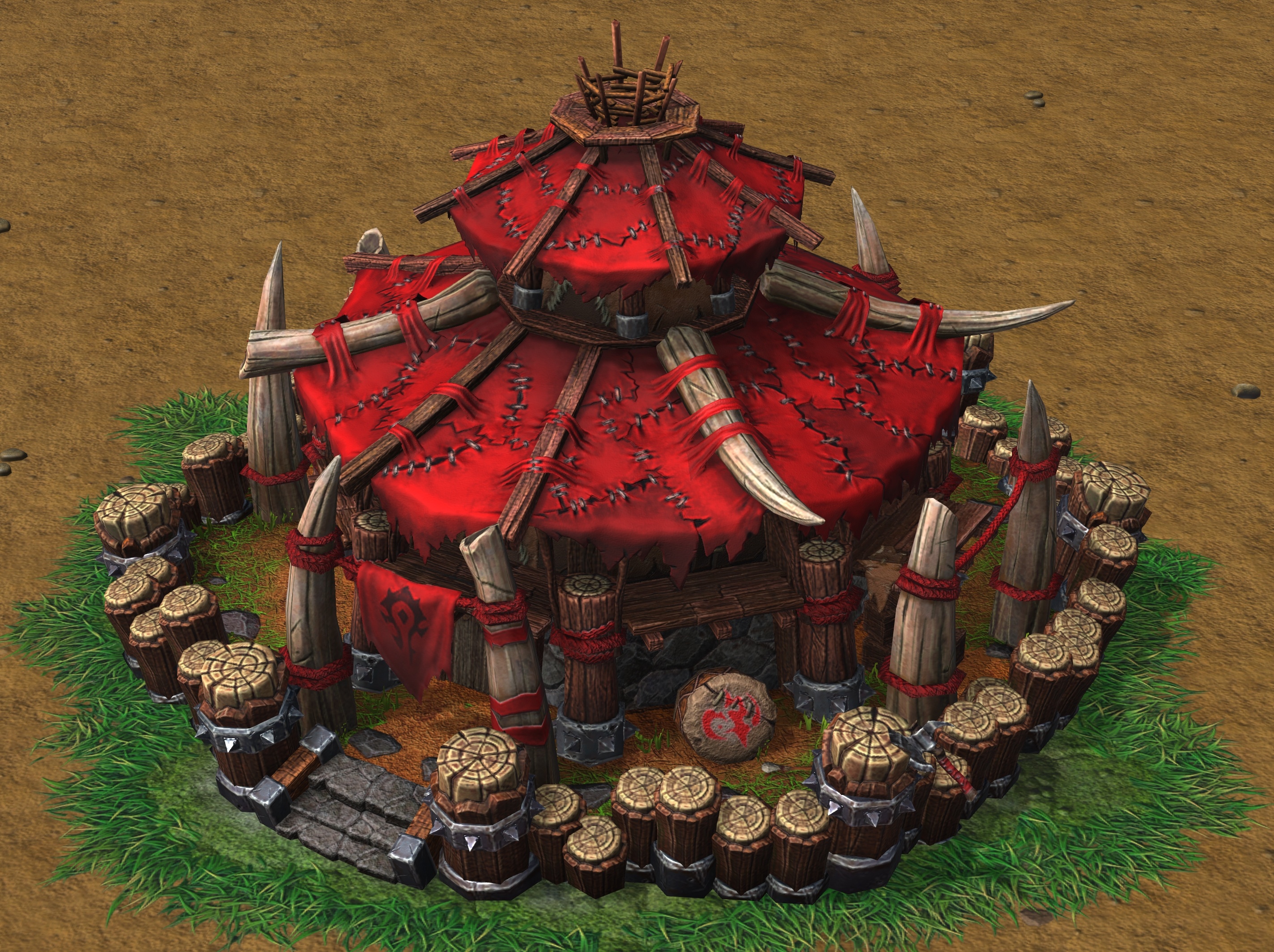
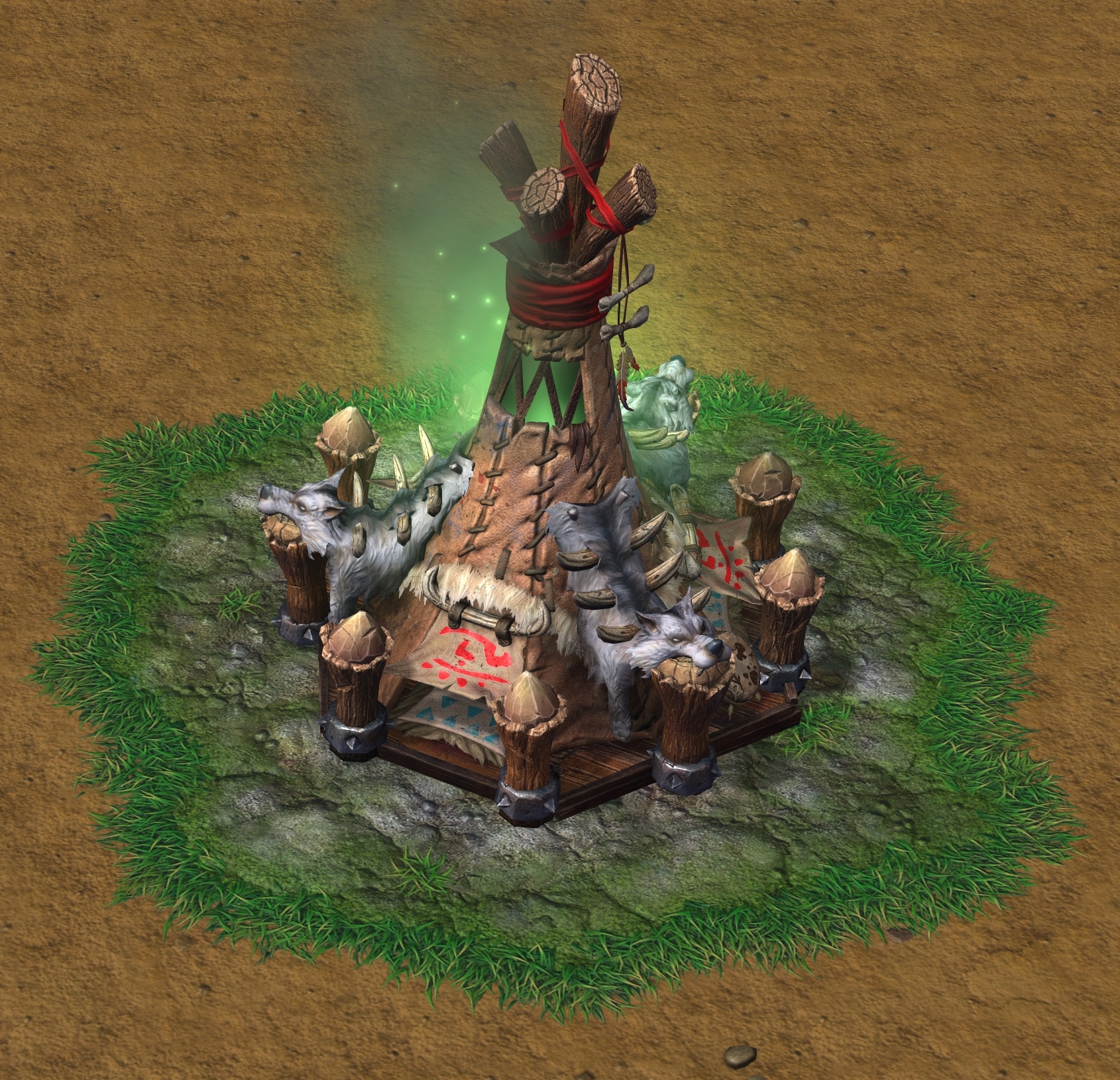
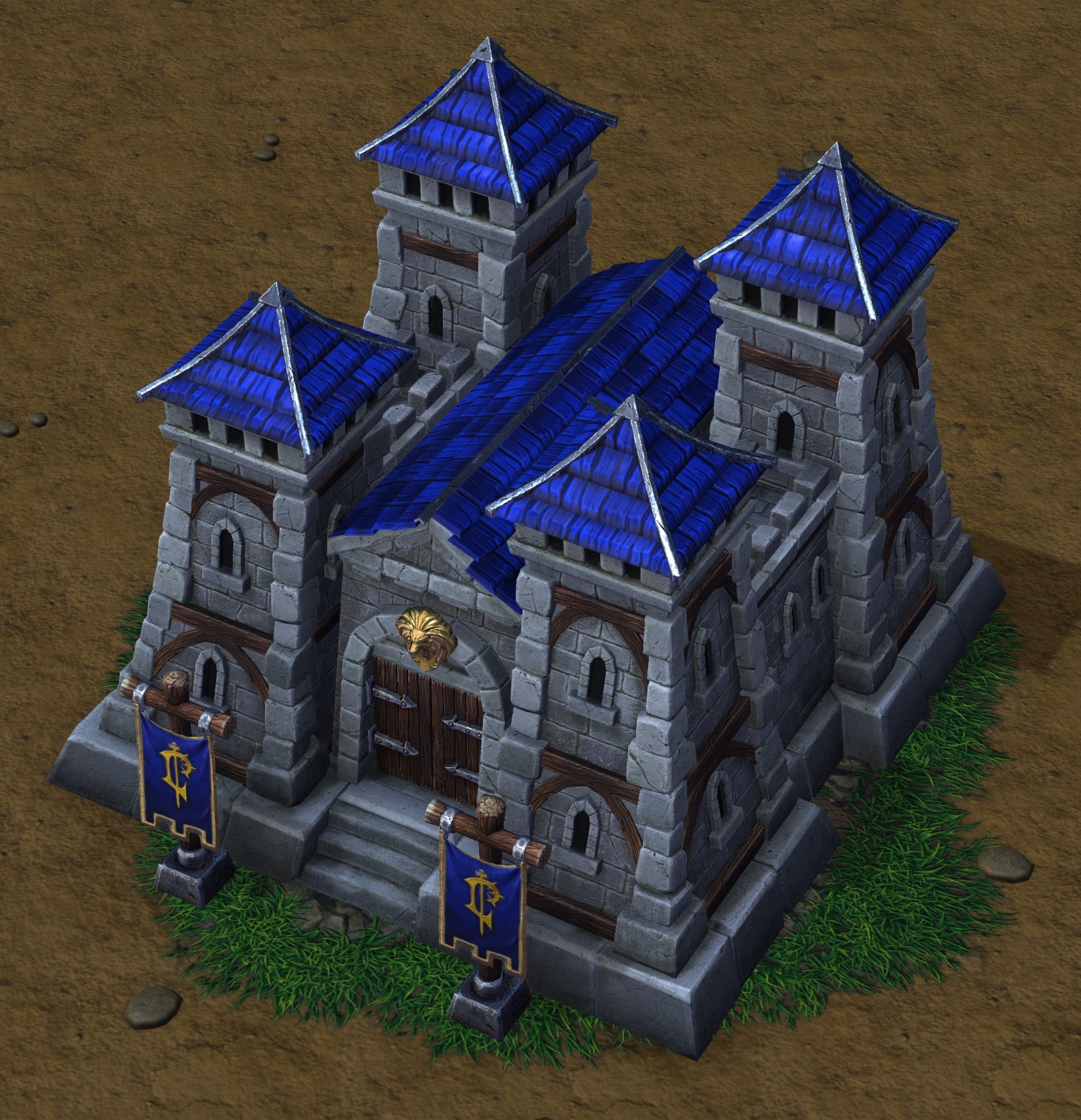
The image of the Orcs supposed savage nature is driven home by their architecture. Their buildings use bones and leather, giving them a more “primitive” look, when placed next to the human versions of the same buildings. The human buildings are mundane town houses and straw roofed hamplets. The orc houses are in comparison made out of stone and spiked poles, clearly made to be defensive structures. Even the seemingly civilian wood cutting structure of the Orcs is known as a War mill, further defining the Orc culture as one with a focus on martial traditions.

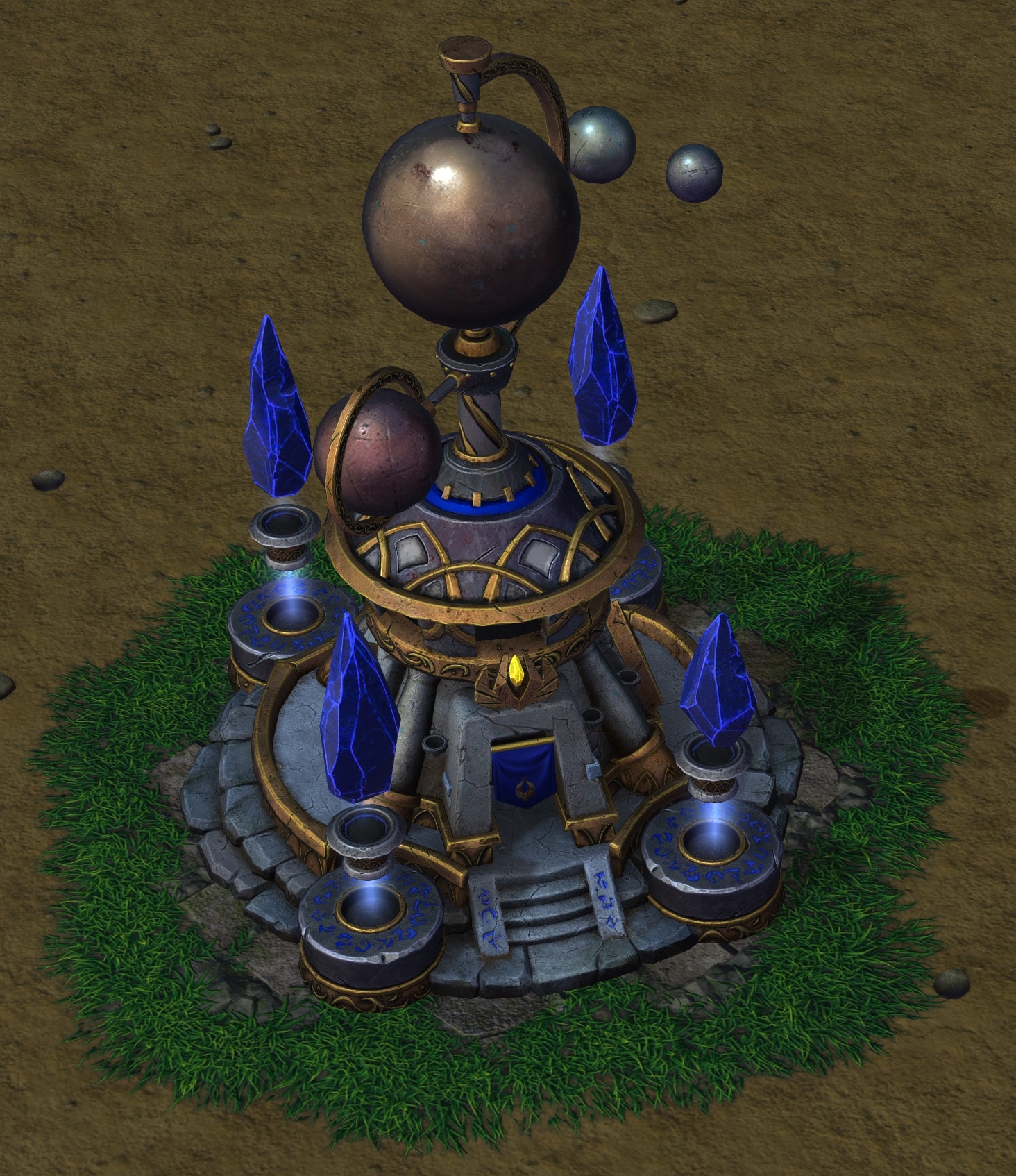
This dichotomy can most clearly be seen in buildings that create spellcasters. The Horde has a tent that brings to the imagination northern native american tribes. The human arcane sanctum that draws the imagination to alchemists and astronomers, with astrological devices and strange glowing runes. This distinction can be found in the units these buildings create as well. Where the humans have sorceresses and priests, the Orcs have shamans and witch doctors. Terms that I have discussed earlier in this series, but that rings of a clear Western and Non-western theme.

Conclusions

Throughout this series, I have used the trilogy of Warcraft to discuss the concepts of otherness when it pertains to race, faith and culture. In this final chapter I have discussed how the use of war and warlike traditions is used to differentiate between the more civilized Humans, and the savage Orcs. This destinction is one that has been used several time in human history to justify slavery and conquests. The example I have chosen in this chapter is the European colonisations of so-called “less civilized people and nations”. I hope to show with this comparison that no piece of media is made in a vacuum, and we are always colored by what came before us. But by becoming aware of this history, can we make more active and informed decisions of what kind of stories we wish to tell, and listen to in the future.

This series was made primarily to show that pop culture can be a great way to explore the people, societies and cultures that created it. It can help us understand ourselves and others, and our place in the bigger context of the societies we find ourselves living within.
Warcraft 3 and the otherness of the Horde: Trolls

Introduction

In the previous chapter of this series, did we get a glimpse on what in Anthropology for many years has been known as the “noble savage”. The so-called others that the European explorers encountered, individuals and communities though seen as other, and in many cases lesser, they were still seen as “good”, and in some cases even better then the corrupt western mind, due to their supposed simplicity and purity. In this chapter we will take a look at the other side of the image of the supposed savage, the one that did not get the western approval, and we will do this via the lenses of the modern troll in contemporary fantasy literature.

Voodoo, Vodou and the western narrative

The concept of Voodoo as it most commonly known in western popular culture is more often than not framed as something evil and or foreboding, strange and othering. Famous examples are the evil powers used by James Bond villains in Live and Let Die (1973) as well as the villains of Indiana Jones and the Temple of doom (1984). Similar negative and villainous portrayals can be found in many contemporary and later mainstream and pulp representations of Voodoo in western media. Common tropes of these representations are its focus on the otherness, exoticism and danger of the practice, as well as the fact that the practice is rarely, if ever described at its own terms. The first known example of horror films is the first Zombie movie, White zombie. Many examples of the negative stereotypes of Voodoo can be found in this movie, from exostisism, human sacrifice as well as snakes and skulls.

Just like with the chapter on the Tauren must I here reiterate that I am far from knowledgeable about the actual Just like with the chapter on the Tauren must I here reiterate that I am far from knowledgeable about the actual practices of Voodoo, or more specifically Vodou, or any adjacent faith structures, and I in no way claim to be. Keep this in mind however I discuss these practices in this and following texts. As a result will I in this text purely focus on how the depiction of the Trolls can be tied to tropes and stereotypes found in other western media regarding the views and stereotypes about Voodoo amongst its creators and audience.

Voodoo dolls, spirits and witch doctors are all terms that are common in the descriptions of Voodoo in popular western fiction, though rarely, if ever are they used in their indented contexts or meaning. Note that there are indeed exceptions to this rule, particularly in later years, but at the time of the release of warcraft 3 was Voodoo firmly in the realm of “strange otherness” for the vast majority of western audiences. Commuting with spirits, and the use of dolls to hurt and control victims are similarly very popular themes that seem to return several times in western media depicting the practice of Voodoo.

The savage, cannibal and the rebel

In the last chapter did we use the text of Ellingson (2001) to describe the more “benign” aspect of what has come to be known as the noble savage. This chapter will discuss the other side of that trope. Namely the people that the travailing anthropologists did not look at as favourably. Chief amongst these persevere traits were the concept of cannibalism, be it real or imagined by the western observer.

What is important for this chapter is that Haitian cultures and societies, during various points in history, have been tied, by western observers, to the practice of cannibalism as a way of lessening their worth as human beings. Ellingson (2001) further explains that in areas where cannibalism seems to be lacking, other atrocities such as mutilation or sacrifice of war prisoners could be used in its place, that way practically any “savage” could be tied to cannibalism by proxy.

The concept of alienation and savagery can easily be found in the direct connection to Voodoo, or Vodou as it is officially recognized, both in the Haitian and New Orleans incarnations. To truly understand the depth and importance of Voodoo for these areas, we must first discuss the Haitian revolution, and so many in the white western world (including me), have not thought about it. (Reinhardt, 2020)

Between the years of 1791 and 1804 did the former colony known today Haiti, carried out a successful revolt against their French colonial rulers, though many readers, just as myself, were probably not aware of this fact until now. The historian Reinhardt argues in his text, that the concept of a black revolt would be unthinkable for the contemporary white mind, slaves could run away, yes, they could kill their masters surely, but the concept of a black lead revolt was impossible to imagine, even less so a successful one. (Reinhardt, 2020)

This revolution is tightly linked to the Haitian Vodou faith and practices. A Vodou ceremony was in fact the place of the beginning of this rebellion. Furthermore is the practice of Voodoo, both in Haiti, and later the New Orleans branch, both clear examples of rebellion against colonial and racist powers imposed on their predominantly black practitioners. (Tussaint-strauss, 2020, Fandrich 2007)

Trolls in modern fantasy

The troll in modern fantasy, has as many other concepts, much of its roots to be found in J.R.R Tolkien’s massive works, as well as Germanic myths and legends. The modern troll is often described as strong, dumb, cruel and with a love for eating other sentient creatures, mainly human beings. A popular trope is furthermore that trolls are infamously difficult to damage with anything other then fire, due to their abnormal power of healing.

The modern Trolls serve descriptions and narrative uses within the fictions that they are depicted in. What matters for this text is that the troll, just as Orcs, Goblins and other monstrous creatures is almost always, if not exclusively presented as the other, the evil and the monstrous. Rarely, if ever, are these creatures pictured in a sympathetic or positive light.

Note that these creatures are physically humanoid, though always different, in often strange and grotesque ways. The most common version of the troll that we find in modern fantasy mirrors the versions found in Scandinavian folklore, as well as their reimagining in Tolkien’s mythos.

Trolls in warcraft 3

The version of the trolls we find in warcraft 3 follows many of the popular tropes discussed above. They are often the version of the trolls we find in warcraft 3 follows many of the popular tropes discussed above. They are often described as a cruel and sadistic race, taking pleasure in the pain they cause, they are furthermore very dangerous to kill off due to their ability to regenerate from what should be mortal wounds. Lastly have they been shown to have no problem in consuming other sentient races, as well as other trolls, this feature is so integral that they were given an ability to do so in the MMORPG World of warcraft, enabling the player to eat the corpses of defeated foes.

Voodoo | WoWWiki | Fandom
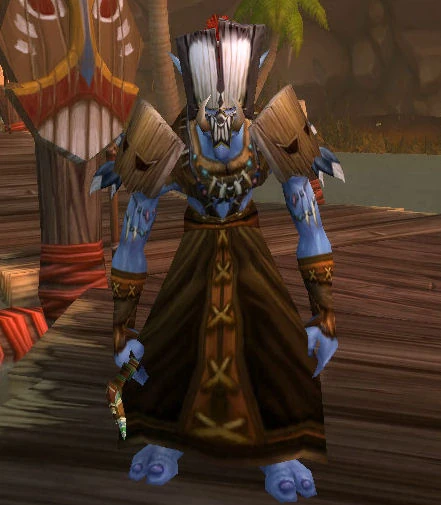
Troll witch doctor.

Many of the same terms and concepts that permeate contemporary western pop culture regarding Vodou can be found amongst the descriptions of the Warcraft 3 trolls. The most prominent and easily recognisable features being that one of their main military units, pictured above is known as the Witch Doctor. Furthermore are upgrades for Troll units found in a building known as the Voodoo lounge.

Many of the voice-lines of the troll characters make further references to stereotypical Voodoo related practices such as communing with spirits as well as mentioning good and bad mojo. Furthermore, do the two primary Troll units within the game, the witch doctor and the headhunter both use abilities that refer to the practices described above. The term headhunter hints at the soteriological Voodoo practice of gathering and shrinking enemies heads, while the term witch doctor is tightly tied to Voodoo and Vodou in the western imagination.

World of Warcraft: Cataclysm Vol'jin Sylvanas Windrunner Troll, world of  warcraft, fictional Character, mythology, warlord png | PNGWing
Source: https://www.pngwing.com/en/free-png-zordk

Like many other versions of the Troll in fantasy, are they depicted as more monstrous versions of the humanoid form, being tall, with enormous ears and noses. The troll is furthermore given a more bestial visage with the addition of two large tusks protruding from their face. Their alienation is made further with their blue skin tones, a trend that will continue with the Orcs. This visual can once again be prepared to the much more traditionally attractive human forms in the shapes of Humans, Elves and Dwarves respectively.

Conclusions

Once again have we seen that the creative design of Warcraft 3 shows their inspirations on its sleeves, for better or worse. the use of Vodou practices is in and of itself not the problem, but the combination of Vodou, and other Once again have we seen that the creative design of Warcraft 3 shows their inspirations on its sleeves, for better or worse. the use of Vodou practices is in and of itself not the problem, but the combination of Vodou, and other stereotypically negative “savage” tropes such as cannibalism does point at negative underlying stereotypes. This image of otherness amongst the trolls, is furthered the tropes of Vodou as well as negative “savage” tropes is given to a stereotypically monstrous race, the troll. The sensation of otherness is made quite clear when put in contrast with the human faction, that is not only predominantly shown to be white, but is also heavily coded as western and Christian in their presentation.

Just as the Tauren depiction seen in the last chapter, is the Trolls part of a wider system of tying Vodou and similar non white practices to cannibalism and other forms of brutal and savage traditions. As I have shown in this chapter is it not uncommon a trend can be found in the depictions of Vodou as evil or savage magic. The practice of condemning a foreign practice of religious philosophy, is one way of legitimizing your own as True faith. A practice that is, even though made subconsciously, continued in the text of Warcraft 3.

The choice to give the traits of traditionally coded Haitian Vodou practices to a monstrous races can not be understated, as well as the depiction of the Horde in general as a more bestial and primitive race, something that we will discuss further in the upcoming chapter on orcs can not be understated. Regardless of what the intention of this division was at the creation of the text, is it not possible to ignore the fact that it exists a stark contrast between the two major forces of the Horde and the Alliance, one having a distinctly western and “progressive” coding, while the other having a similarly distinct foreign and “savage coding. Note that foreign is here used to denote otherness, in this case, individuals other than the western culture and traditions.

The goal of this series is not to try and condemn and shame. My goal is to show how unchallenged tropes and subconscious biases can help produce hateful and derogatory depictions in the media we create. It is difficult to become aware of once biases and underlying narrative tropes without having them pointed out to you. It is my goal in this series to provide some examples of such biases and tropes to the reader, in the hopes of helping them discover their own biases, and if they choose, overcome them. While becoming aware of, and being able to reflect critically about these biases, will we be able to more inclusive, imaginative and engaging narratives in the future.

Sources

llingson, T. (2001). The myth of the noble savage. Berkeley, Calif.: University of California Press.

Reinhardt, T. (2005). 200 Years of Forgetting: Hushing up the Haitian Revolution. Journal of Black Studies, 35(4), 246-261. Retrieved September 13, 2021, from http://www.jstor.org/stable/40027220

Toussaint-strauss, Josh (2020) How ‘voodoo’ became a metaphor for evil, YouTube series

Zarka, E. (2020) The Origins of the Zombie, from Haiti to the U.S. | Monstrum YouTube series

Ramsey, K. (2012). From ‘Voodooism’ to ‘Vodou’: Changing a US Library of Congress Subject Heading. Journal of Haitian Studies, 18(2), 14-25. Retrieved September 13, 2021, from http://www.jstor.org/stable/41949200

Fandrich, I. (2007). Yorùbá Influences on Haitian Vodou and New Orleans Voodoo. Journal of Black Studies, 37(5), 775-791. Retrieved September 13, 2021, from http://www.jstor.org/stable/40034365

Warcraft 3 and the otherness of the Horde: The Tauren

Introduction

The image of the Native American “noble savage” has persisted for decades in the public continuousness of the Western world. The image that mostly comes to mind seems to be the red skinned man, dressed in a large feather headdress and speaking “old truths of nature and the spirits”. In this text I aim to compare this stereotypical presentation of a northern Native American, to a faction of warcraft 3 known the Tauren.

The noble savage

The concept of the noble savage is often used in Western enlightenment philosophy as a tool to distance the so called logical westerner from the native, so called savages of the other nations of the world. Mostly this tactic us used as a way to justify the colonisation and exploitation of what the Europeans saw as lesser nations. It was the duty of the so called educated man to spread logic, enlightenment and Christian values to these people. (Ellingson, T. 2001).

This image is also used as a way to show that the supposed simple and pure lives of what the European settlers and travellers saw as as the savage cultures and people. The idea of the noble savage in this sense, is used as a way to argue against cultural and political movements that the author saw as corrupting and damning for humanity. Industrialization, high art and libertarianism was a common target for these critiques. (Ellingson, T. 2001).

The idea of the noble savage was also often used in early anthropology. Mostly it was used to describe a culture that they saw as free from the corrupting influences of civilization. The myth of the noble savage dictates that every human culture originated in a state of instinctual coexistence with nature. (Ellingson, T. 2001).

A critical definition between a savage and a noble savage, presented by some authors stem mainly from perceived moral and ethical characteristics, one of these characteristics being the consumption of human flesh. Note that this definition is solely the construction of the European observer, and observers drive to categorize and put individuals in to easily understood terms. The native North American of northern America and Canada, happening to have certain characteristics that the European observer valued, such as hunting abilities, caring for the commune and humility elevated them from mere savage to the title of the noble savage. (Ellingson, T. 2001).

Depiction in popular culture

The stereotyping of Washington Redskins marketing, naming and icons is a common example of exotification of the native American culture and traditions is one of the more famous example, both nationally and internationally.

Ponca Tribe reacts to Washington Redskins' name change | KPTM
Source: https://fox42kptm.com/news/local/uno-intnl-students

The American football team has only recently, (mid 2020), changed their names, after facing decades of ire and anger. The image of the feather head dress wearing chieftain who resides in tikis and builds colourful totems is one that can be found in everything form children’s cartoons, to the aforementioned national sports teams.

The history of exotification of the the Native American individual is not a tradition that is exclusive to American, as evident but the Swedish hockey team called the “Förlunda Vikings”, that uses a very stereotypical image of a native American mas as a mascot.

Frölunda HC - Wikipedia
Source: https://en.wikipedia.org/wiki/Fr%C3%B6lunda_HC

Note the mere act of using this iconography is not in itself an act of using topes, but tying it directly to the specific group of native American, or” Indian”, is. The instance of the feather head-dress and facial painting being one telling serotype of the native American depicted in popular culture.

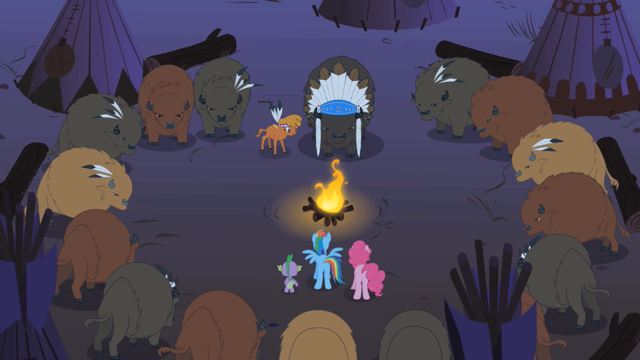
https://buffy.mlpforums.com/monthly_08_2014/post-26550-0-91715500-1409177145.png
Source: Mlp fim season 1 episode 21 Over a Barrel

Besides a focus on the visual similarities depicted in many types of western media, does the idea of the noble savage seem to persist throughout much of them. Depicting the native Americans as sensitive, but uneducated individual living with and off the land, and deeply in tune with nature. This is often set in contrast to the more “civilized” western coded society, that is often depicted as more cultured, but at the same time more corrupt and decadent. Above is an example where the buffalo is used as a more naturalist Other, to the more industrialist and “western” pony settlers.

This is far from even beginning to be able to list al the instances of Northern native American culture being using in this way, but simply meant to give a simple overview of some varying depiction trough different media forms.

The Tauren

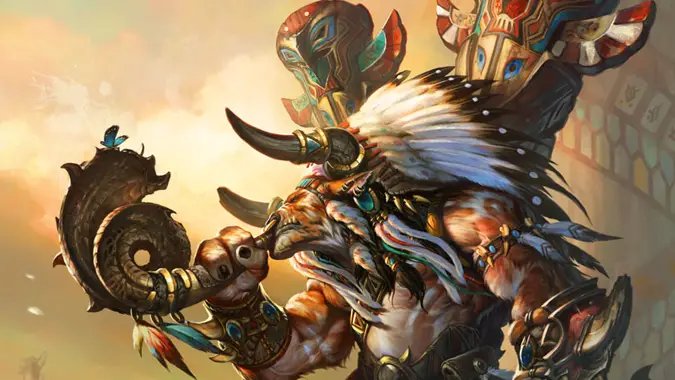
The noble and peaceful Tauren lives in great tents in the wild open plains. By praying to large totem poles they pay their respects to the spirits of nature and the wild. It is not difficult to find connections between the depiction of the Tauren of Warcraft and stereotypes associated with the northern Native American. More specifically the the stereotype regarding idea that, the Native American is a wild savage that lives at one with the nature. The Tauren fits well in to in the same narrative as the Native American has often been used in, as an exoitified other to the industrial and scientistic minded West, or in the case of Warcraft the human lead factions of the Alliance. (Blizzard 2012)

Source: https://blizzardwatch.com/wp-content/uploads/2016/01/baine_bloodhoof_glowei_header.jpg

Visually the Tauren has the closest ties to the mythical figure of the Minotaur, the half man half bull creature of great strength and anger. It is interesting to note that the depiction of the Tauren in Warcraft differ greatly from the normal tropes that are usually associated with the creature. Taking it origins as one of the most aggressive monsters of Greek myth, it is interesting that this creature of al available visual designs was chosen to represent the noble and peace loving Taurean.

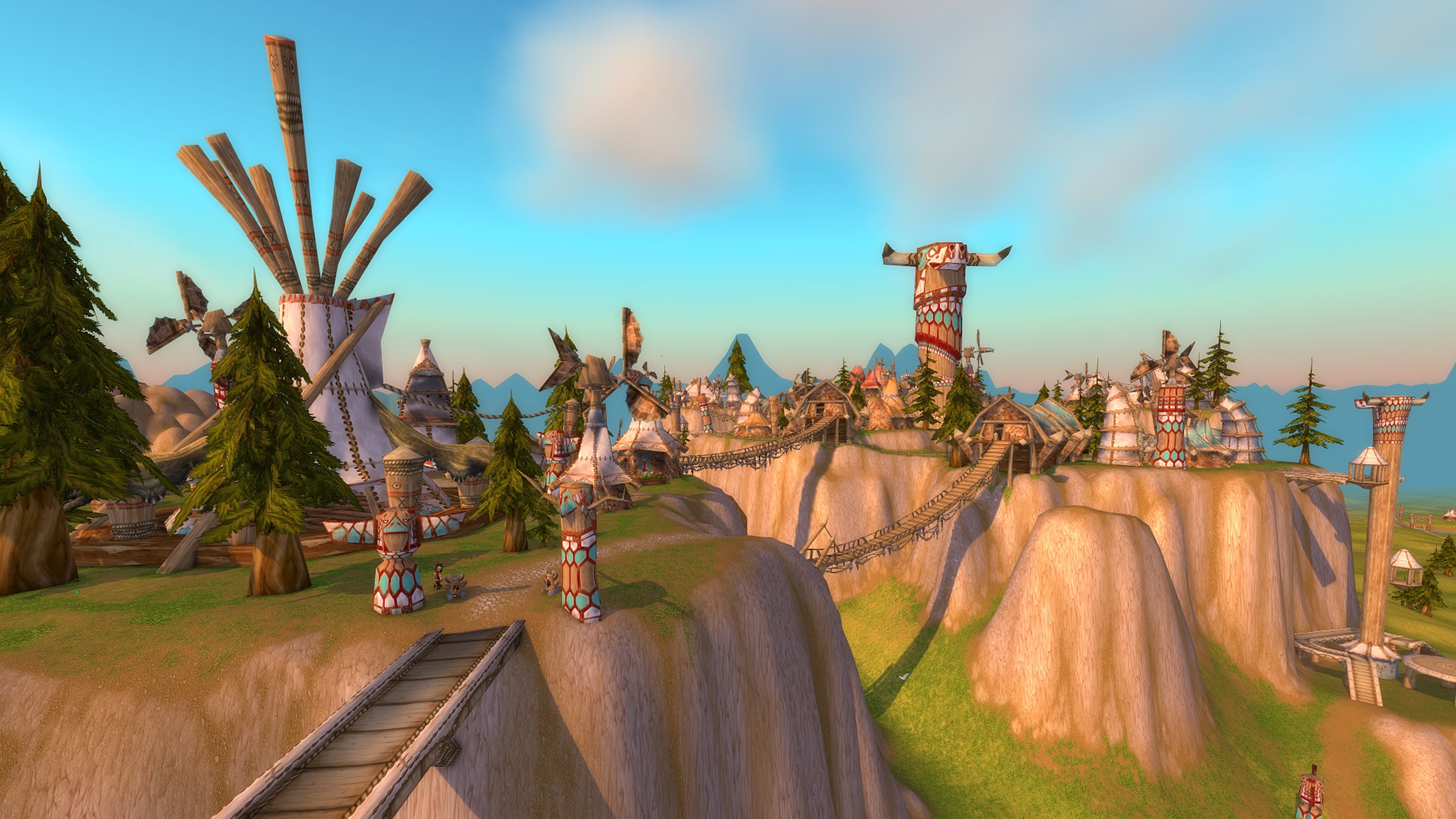
The lands of the Tauren, and later the rest of the Horde, consists of large savannas and deep red deserts, bringing to mind the iconography of an African savanna, as well as the American west respectively. The lands of the Horde is set in stark contrast to the lush fields and deep woods of the Alliance lands.

The naturalist faith of the Tauren is shown by their prayers and ceremonies to the Earth mother. Their in-game building is represented by a grand totem pole, from which they are created. The Tauren is in the Horde campaign represented primarily by a wise old Tauren, a shaman who lives close to the forces of nature. He knows where spirits for healing, as well as harming can be found. The Taurens weapon of choose is a totem pole, further driving home the theme of tying them to stereotypical native Americans.

Source: https://worldofwarcraft.fandom.com/et/wiki/Kalimdor

The visual iconography of the Tauren as a facility for the northern native American stereotype is greatly expanded upon in the massive multiplayer online game, World of warcraft. The player characters in World of Warcraft get further ties to their “living with nature” themes, by making them more capable herbalists, and gathering ingredients much faster then most other races.

Real life comparisons

The varied, complex and vivid cultures of the numerous tribes living in and around the Northern Americas and Canada, is far to complex and nuanced for me to even begin to analyse and discuss here, even if I felt even remotely confident in my ability to do so. I will as a result keep my discussion to a few topics relating to the depiction of the Tauren in warcraft 3, the totem pole, the teepee, and the feathers and paints.

Please note that I only have cursory knowlage of these very complex and nuanced themes and topics, and will as a result only cover them in my limited understanding, as a way of tying them to the stereotypical depictions of the Tauren.

Totem Pole

The totem pole has come to represent much of northern native America cultures, mainly due to their prominence in pop culture and various tourism advertisements and souvenirs. The totem pole we know is indeed only originally, historicity linked to certain tribes originating in the south of Canada´s cost. (Wright)

The creation and use of these, often mislabelled totem poles were not used for religious purposes, but was rather used as narrative devices, to tell anything from historically inportant events, to grudges and trade deals. As more white settlers colonized Canada, more and more native villages disappeared, and with it their cultures were slowly lost with them. Many totem poles were later “found” or “salvaged” from supposedly abandoned native villages. These totem poles, and poles created in their image was later made in to large tourist attraction for towns like Seattle or various museums and private collections. (King 2017)

War bonnet

To begin this discussion I would like to reiterate that I am approaching this topic from a layperson, and has as result only limited knowlage, as well as the few documentarians I was able to find to build my arguments upon.

The appearance of the feather headdress, or the war bonnet is one of the more recognizable visuals that have been capitalized upon by much of western cultures to represent the stereotypical Native American. The most common used image is of the so called plains feather headdress, worn by the numerous plains nations. These feather headdresses sometimes called war bonnets, were rarely used by the chosen few that had shown themselves worthy in the fields of war (Waldman, C 2014). These types of headdresses are far from the only kinds that can be found within the rich history of the native nations of America and Canada. The styling, aesthetics and use of the various headdresses used amongst the many tribes of the First nation and beyond. is way to complex and numerous for me to begin to try and note down in such a small text. (Guardian 2014, Monkman 2016)

A War bonnet headdress is still to this day an inportant symbol of office and responsibility, one that should not be taken lightly. It is often used as a symbol of office, and is gifted as a sign of responsibility an duty. (Monkman 2016)

Conclusions

In this chapter I have attempted to show how the Tauren represents a stereotypical image of the Northern native American tribe. The Taurens description and representation, is a part of a long tradition of exotifying and othering the Native American, but western society. The lands of the Tauren, as well as their culture is inescapably tied to a specific stereotype of the North American native. I have attempted to show that this sort of storytelling and use of Native American iconography to show otherness is a part of a long tradition of, mainly western media. Furthermore have this depiction of the Tauren, as well as similar depictions like them further the unjust and harmful trend of lumping large numbers of nations and tropes with diverse histories and traditions under the term of “native savage”.

The chose to present the Tauren in this light, a part of a wider trend of depicting the horde as non western”and none white others. This is a strategy that will become more apparent once we carry on to discuss the supposedly warlike and savage Orcs or flesh eating spirit worshipping Trolls.

I would lastly once again admit that I have learned a great deal of things during the creation of this text, and I humbly apologize if I got anything wrong in my descriptions of this complex and sensitive topic. This blog is a way for me to educate myself, as much as the readers. I encourage and welcome indigenous American and Canadian voices to share their thoughts and discussions on this topic.

References

Ellingson, T. (2001). The myth of the noble savage. Berkeley, Calif.: University of California Press.

Robin K. Wright Totem Poles: Heraldic Columns of the Northwest Coast,
https://content.lib.washington.edu/aipnw/wright.html

V. T. King (2017) Identity, material culture and tourism: Of ritual cloths and totem poles
South East Asia Research

Monkman, L (2016) Behind First Nations headdresses: What you should know
https://www.cbc.ca/news/aboriginal/behind-first-nations-headdresses-1.3506224

“This means war: why the fashion headdress must be stopped”. The Guardian. July 30, 2014.

Waldman, C (2014). Encyclopedia of Native American Tribes. Infobase Publishing. ISBN9781438110103.

Warcraft 3 and the otherness of the Horde: An introduction

Introduction

The concept of othering an individual, or more often a group, is a way of building one’s own identity. By defining what the other is, the individual defines what they are not.

In this chapter we will take a look at how the otherness of the Horde faction in Warcraft 3 is used to define the normalcy of the Alliance. In this chapter we will also discuss that exotifying sometimes, but not always, comes with the act of othering.

Tropes and exoticism

Before we start this analysis is it important to describe the terminology we will be using in this text. The main three analytical terms we are going to use in this text are:

  • othering
  • the concept of tropes
  • the concept of stereotypes

These three terms will form the basis of our analysis, and will be useful the discussion of other texts as well.

Othering

The concept of othering is the act of defining what you are by measuring yourself against a real or imagined other. These others are often framed in an antagonistic light, and compared negatively to the self. The other is often the representation of everything that the individual is not. If the person is to present themselves as enlightened, the other will be presented as stupid or barbaric. In post-colonial theory, the other is used to describe the colonized, and the “self” as the colonizer. In other words, it is a way for one group to assert themselves as a position of normalcy in a narrative, while the colonized is painted as unnatural. (Mushtaq 2011, Spiecker 2012)

The idea of the other in form of the Orc or Goblin can be seen in many fantasy texts predating the Warcraft series, non arguably being as influential as Tolkien’s Lord of the rings series, where the enemy orcs were presented as pure evil and completely irredeemable. Note that action oriented series like the Lord of the rings requires some sort of grand enemy, one that can be cut down by the heroes in droves, without diminishing the goodness of the heroes, or conjuring images of mass murder, a point Tolkien himself takes up in many of his personal letters. (Tally 2012)

Stereotypes and tropes

The term trope will in this text refer to a set of qualities and or signifiers that are tied to a certain group or individual. This stereotype is applied to this group as a blanket statement, regardless of accuracy or truthfulness. A stereotype in this concept is referring to broad and shallow concepts regarding communities, groups or individuals. (Spiecker 2012)

The concept of a stereotype is similarly based on a series of previous assumptions pertaining to a specific set of individuals or entities. I will in this text specificity discuss stereotypes pertaining to individuals ethnic and religious backgrounds, and how they pertain to the text of Warcraft 3, and the factions within it. I am basing these assumptions on the theory that no work of fiction is created in a vacuum, but rather built on a long series of fictional and non fictional inspirational sources, and by examining these links, can we come to understand the text itself more thoroughly.

Stereotypes are often the basis for many storytelling tropes. Tropes are in a way inevitable in storytelling, as they are often used as shorthand. Meaning that they are used as a way to convey more complex and complicated concepts in a quick and effective way to a specific target audience. Due to the fact that many tropes are based in stereotypes it is vital to critically analyse these tropes to come to terms with underlying prejudices and beliefs. Note that tropes can be used to describe far more then simply characters in a narrative, but for the sake of this series, this is how the term will be used.

The Horde

The very name horde conjure up images of something wild and untamed, something large and dangerous, an entity without number. The horde al consists of creatures that are in traditional contemporary fantasy seen as evil or villainous, be it trolls, minotaurs or Orcs. Their aesthetics and architecture conjure images of huts, bone jewellery and large ceremonial masks. They are set as the other and alien, in the case of Orcs in a rather literal sense, since they are later described as literal aliens. (Blizzard entertainment, 2002)

Source: https://www.wowhead.com/news/warcraft-iii-reforged-models-dark-portal-alliance-horde-campaign-buildings-295705

The description of the Horde cultures are often described as warlike or savage, in contrast to the more civilized and organized alliance organisations. The lands of the Horde is presented as wild mountain chains and far reaching savannas. The magical and spiritual practices in particular rely heavily on largely of shamans, totems and spirits. In particular when it comes to the Troll faction, that is explicitly “practising voodoo”. (Blizzard entertainment, 2002)

Source: https://www.wowhead.com/news/warcraft-iii-reforged-models-dark-portal-alliance-horde-campaign-buildings-295705

The horde is inescapable tied to the traditions and tropes of modern fantasy, many that has its roots in the era of Lord of the rings and other Tolkien works. While i would do a disservice by labelling the Horde as explicitly evil, it is still inportant to what the imagery of the faction tells us about them, and the work as a whole. (Blizzard entertainment, 2002)

The Alliance

The alliance are made up of Elves, Gnomes and Humans, al races that closely resembles humans. More specificity does the alliance of warcraft 3 consists of, humans, dwarves and elves. Note that these races are often portrayed as the forces of good and order, following the traditions once again of J,R,R Tolkien. (Blizzard entertainment, 2002) The visuals of the Alliance are almost uniformly a romanticised version of renaissance and medical Europe, with grand forts, temples and factories. (Blizzard entertainment, 2002)

https://wow.zamimg.com/uploads/screenshots/normal/877429.jpg
Source: https://www.wowhead.com/news/warcraft-iii-reforged-models-dark-portal-alliance-horde-campaign-buildings-295705

The imagery of the Alliance is uniform and ordered, even tough the trademark cartoonish and busy visual language of Blizzard entertainment shines trough. The alliance is made out of cultures of high art, order, faith and wisdom. their magical practices comes in form of learned individuals and scholars, practising their craft in grand academies. (Blizzard entertainment, 2002)

https://wow.zamimg.com/uploads/screenshots/normal/877427.jpg
Source: https://www.wowhead.com/news/warcraft-iii-reforged-models-dark-portal-alliance-horde-campaign-buildings-295705

Their religious orders are made out of pious monks and devout paladins, their armies made out of knights and heavily armoured footmen, supported by archers and black powdered artillery. This is in stark contrast to the savage and direct tactics of the Horde. (Blizzard entertainment, 2002)

https://wow.zamimg.com/uploads/screenshots/normal/877430.jpg
Source: https://www.wowhead.com/news/warcraft-iii-reforged-models-dark-portal-alliance-horde-campaign-buildings-295705

I must once again reiterate that the status of the status of the Alliance as the heroes of the narrative in Warcraft 3 is far from clear-cut, and a lot of the narrative works to subvert this expectation. None the less is it important to evaluate what the visual language tells us about these faction, and what they tell us about the narrative as a whole. By evaluation what the visual language of the coded heroes in warcraft 3, can we find trends that runs trough much of its contemporary fantasy tropes and narratives.

Conclusions

I have in this text presented a series of basic concept that I will use to further discuss the idea of othering in the Warcraft 3 narrative. I have furthermore presented some basic differentiations and touchpoints that we will return to again and again in this series. One could argue that al these differences are made explicitly to show how different the two factions are from each other, and to explain the many wars in the narrative. I would argue that it is inportant to show what these differences are, and how they are presented, and more importantly, to shine light on the real life prejudices and assumptions that created these differences in the first place.

References

Mushtaq, Hammad (2011), Othering, Stereotyping and Hybridity in Fiction: A Post-Colonial Analysis of Conrad’s Heart of Darkness and Coetzee’s Waiting for the Barbarians. Journal of Language and Literature, No. 3, Available at SSRN: https://ssrn.com/abstract=1679116

Spiecker, Tara (2011) Beat Those Sleepy Slackers!: Color-Blind Racism in World of Warcraft’s Valley of Trials, Quadrivium: A Journal of Multidisciplinary Scholarship: Vol. 3 : Iss. 1 , Article 4. Available at: https://nsuworks.nova.edu/quadrivium/vol3/iss1/4

Tally, Jr., Robert T. (2010) Let Us Now Praise Famous Orcs: Simple Humanity in Tolkien’s Inhuman Creatures, Mythlore: A Journal of J.R.R. Tolkien, C.S. Lewis, Charles Williams, and Mythopoeic Literature: Vol. 29 : No. 1 , Article 3.
Available at: https://dc.swosu.edu/mythlore/vol29/iss1/3

Warcraft 3. Blizzard entertainment, 2002.