The library of odd things: A home for obsolete media, and rare finds: Part two, quailty and quantity

This is the second part in an essay that I wrote about media curation and the role of public libraries in Sweden, as well as how it can be handled differently. I discuss the concepts of quality and quantity in this chapter, as well as the implications these definitions have on media curation, both in current public libraries, as well as in my imagined Library of things.

Quality and quantity

I will begin my arguments with the most straightforward, but possibly one of the more controversial aspects of the Library of things. The idea that media can have quality, and that someone by default, needs to decide what that quality is. The concept of quality is by its very nature a subjective form of measurement, and one that does change over time and space, culture and public.

The term quality will in this chapter primarily be used in the differentiation between nice and mainstream media. With nice media I am here referring to things that stand out from the rest in its category, be it from awards, professional and academic acclaim or by the uniqueness of its presentation and content. This definition is not to be confused with the term good, but rather as a way to single out certain texts from a broader context. 

This definition is in contrast to mainstream media, that is made to be broad, approachable and in many cases, disposable. Here would find the masses of feel good novels and thrills written to be read and then forgotten. Likewise here is where you will find cookbooks, tv dramas, action and horror films of all kinds. Note that I do not use the term quality here as a direct notation of what is good and what is bad, as that is frankly a topic that is too wide, and too complex for this text to cover in any meaningful way. I am also fully aware that these definitions are strenuous at best, and often blend into each other in complex and fascinating ways.

For the interest of this text will this definition be used to define between texts that the library can count on being borrowed, and texts that, while not being as popular, are more likely to leave a larger impression on the patron that do borrow it.

Besides quality, must the question of quantity be taken into account. The quantity of texts, or the number of items that a library can have at a single moment is ofcourse limited by its physical space. There is only so much room that one library can fill with texts before something needs to be removed in order to make room for something new. It is an unfortunate result that every piece of media that is bought in a modern library does need to take the place of another piece of media, each purchase and removal of a text much as a result be argued for.

The physical space of bookshelves and other storage devices must also be taken into account when planning for what form a library’s collection will take. A current public library tends towards having a small variety of media available, books, audiobooks and movies for example. This approach allows them to maximize the space available for these collections, as well as minimizing the curation time needed, as they all follow the same general workflow. This allows the library to take a quantitative approach to media collection, leading to a  large chance of the patron finding the item they are looking for, as long as it is not too obscure or old.

In this form of library, can the librarian be a bit more lenient with how much the library buys, especially if they are under no obligation to keep the media in question for posterity or future research. This means that texts of both mainstream and more nice material can quite often easily find their place side by side. There are still limitations however, especially considering the libraries limited, and sadly often restrictive budgets. This budget still makes sure hard choices must be made about what to buy and not to. I discuss the librarian’s role in curating a collection in more detail in a future chapter.

In the form of the library that I am describing, will this question become even more important, as the nature of the collections means that different areas will need to be set aside for each collection, and more complex and varied storage forms will need to be put in place. This would sadly mean that the librarians would need to be even more discriminatory in the forms of media that they choose to take in. This, I would argue, will be one of the biggest limiting factors, but also one of the biggest assurances of quality for the library’s services.

When creating a collection it is always important to keep in mind why this collection is created, what form of problems they are meant to solve and for who. The current driving forces behind many purchases that I have been purview to have been based on the concept that we should buy them, because people want to borrow them from our collection. In my experience will these collections gravitate more towards mainstream media, unless there are librarians present with a special interest or dedication to a certain media form or genre.

By Evan-Amos – Own work, Public Domain, https://commons.wikimedia.org/w/index.php?curid=12814264

In comparison would the Library of odd things need to be even more discriminatory with what they buy in, and as a result does the question of nieces versus mainstream become even more important.

In this scenario will the work of curating become even more important, as the space and time is even more limited. This means that the questions of what and why certain media is included or excluded becomes even more important. When for example, a library decides to include a series of Nintendo 64 cartridge games from the popular and groundbreaking gaming console with the same name, what should be included?

Do we include titles that we know were popular, like Super Mario 64, do we only include those titles that were critically acclaimed at the time, like Goldeneye 64. Do we aim to search out more obscure titles that later became cult classics, or that may be remembered fondly by our patrons?

I do not claim to have any easy answers to these questions, as they are complex and deeply rooted in each library’s situation and capabilities. I would argue that a balance is to be strived for, between high and low culture, nice and mainstream, obscure and well known, in this way will the library of odd things best serve its purpose of exposing their patrons to the largest amount of new and novel experiences, as well as old and potentially nostalgic ones.

With the implementation of more Libraries of odd things can this problem be alleviated somewhat by allowing cross library loans, much in the same way that Swedish public libraries are today able to borrow books from other public libraries as well as some university libraries.

While this is not a perfect solution, is it one that can be readily applied with already existing infrastructure. 

This chapter is meant as a beginning to the discussion rather than the be all and end all solution to a series of very complex and somewhat controversial problems within the contemporary library world. Next chapter will discuss the needs and wants of the library patron, as well as how these concepts can be defined and used in everyday library work, especially when it comes to the question of curation.

The library of odd things: A home for obsolete media, and rare finds: Part one, introductions

What you are about to read is the first part of a longer essay that I have decided to split into smaller chapters for ease of reading in a blog setting. In this essay I will discuss several concepts regarding how the Swedish library system works, and the role of the Swedish public library. Later in the text I will introduce an alternative to this model, that I have dubbed the library of odd things. This chapter will contain the introduction to this model, as well as my primary arguments.

Introduction

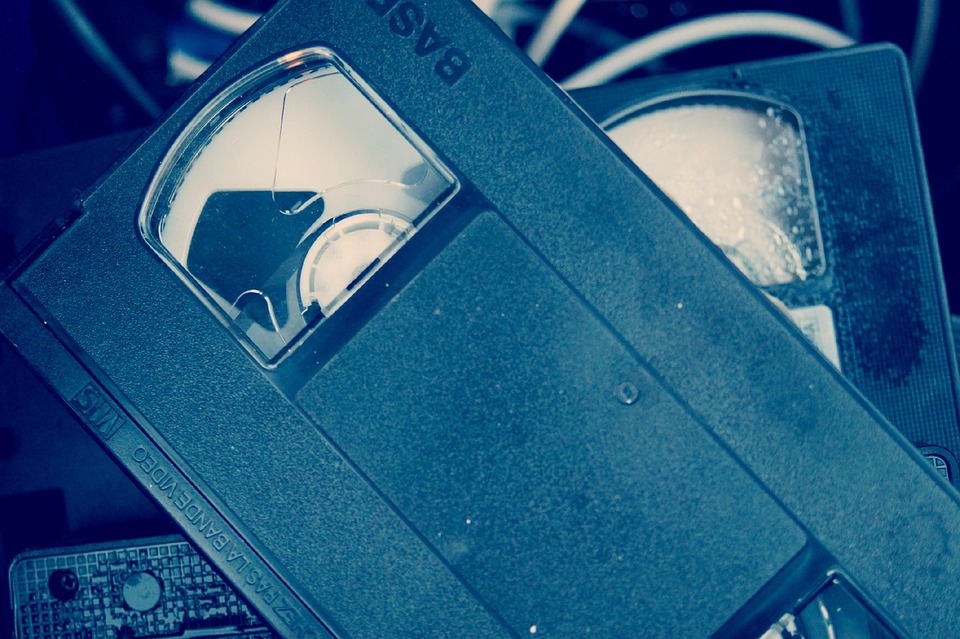
I have for a long time noticed a trend in public library work I can only liken to a form of gentrification of the materials at the public libraries that I work at. The first and most obvious way that the libraries are limited are the kinds of books and movies that are available at the libraries that I have worked at. I have noticed that collections of short stories, comics and poetry have become fewer. While this is a vital discussion as well, is it not the topic that I wish to discuss in this essay. Today I wish to discuss the usefulness and novelty of discounted and obscure media formats. As I start to work, MP3 audiobooks and other older audio formats have already disappeared, along with the fate of VHS and CDs.

It can easily be argued that these forms of media have long served its purpose, and given the limited space of the libraries, it would make sense to remove the older, and seemingly useless forms of media.  In this text I will argue that this does not always have to be the case. We do not always have to buy every åpopulauir feel good novel or detective series to every library. These series do take up lage part of many libraries’ budgets, as well as library space. As publishing of books only seems to increase as they are catching up with lowering costs of books, and companies like Amazon selling books on a loss, is this something that libraries need to look into sooner rather than later.

I would argue that it is impossible to keep up with this form of publishing and release pressure, and it will lead to more and more rare and old collections needing to be moved to give place for these new, and cheap books. Not to mention that the shelf life of these books will inevitably become shorter and shorter as well, as they too will be replaced with new best sellers of the month. With a shifting media landscape and the ability to get your hands on mainstream books becoming cheaper and easier, and in the face of dwindling library numbers, would I argue that it is time for the library to return to its roots, and provide the media that no others can, and most importantly, do it for free.

In light of this development I would like to argue another form of libraries, a somewhat controversial topic in modern librarianship. In this, an older form of the library would once again be put in the center, rather than the services that the library currently struggles to produce. In this kind of library the focus will be on discovery and the exploration of media old and new. Here old VHS and vinyl records would share shelf space with high end vr games and digital multimedia. A library like this would be able to, in theory, encompass all of human expression, and let it be available to the general public, free of charge.

This essay will be separated into several chapters, each which takes up its own aspect of the core question behind the essay, at the end I will present and discuss some of the more common counter arguments to this thesis, and finishing of with some concluding thoughts about how one can continue to work on this project if it seems interesting. The next chapter will discuss the controversial topic of quality and quantity when it relates to handeling media in public libraries.

All images taken, and used with promition from: https://pixabay.com

Warhammer 40k an in depth analysis: Part 5, The Orks: part 3, Futurism and facism

Modern facism is intrinsically linked with futurism in their love for violence and glorification of warfare. Power and the subjugation of the week are also concepts that both movements share. These are ideals that can be found amongst the Orks. 

I will not dive too deeply into either of these movements in this chapter, and I will mainly show enough evidence to present certain similarities between the Orks in Warhammer 40k and the aforementioned movements. 

I want to start with specifying that my arguments here are somewhat of a simplification of the movements and their motivations. There is for example, an anxiety over economic and cultural values being diluted that exists within facism that have little or no direct links to the Orks. Futurists, and fascists alike like to point towards a corruption in the current system and a need for change that is not present in the Orks, as the Ork society itself is already in constant flux and change.

Futurist Orks

Depictions of Orks tend to reflect some elements of Italian futurism. Italian futurism was founded and spearheaded at the beginning of the 1900s by Filippo Tommaso Marinetti and some like minded artists in order to escape the decadence and corruption they saw in their society. They believed that the past had forever entrapped their nation in a state of stagnation and decay. They saw ruins of ages past, and museums dedicated to old masters and they despaired. The Orks do not make history, and have no interest in preserving their own or others. (Games Workshop. 2014, Rye. 1972)

The futurists, as their title entails, praised the future and a forward motion, and despised the past and traditions. A purist futurist would burn all the world’s museums and exhibits, and would expect their followers to do the same. The new world was one of automation, speed and war, of thrills, fast cars and big guns. The future was for the bold, strong and young. The Orks are likewise obsessed with guns, fast machines and loud sounds. (Games Workshop. 2014, Rye. 1972).

Machines and cars

The speed and novelty of the car and motorbike is something that tends to appear in Futurist art. Futurist art tends to display the glorification of these machines, and most specifically for the speed it provides. One needs only to look at the Futurist manifesto to find several examples of the joy of speed and the allure of industry. The power that comes from driving a large, fast or powerful machine, or from the heavy industry that takes part in its manufacture, the Orks are likewise obsessed with speed and machinery. (Rye. 19722)

The thrill of speed and loud engines is something that fascinates the adrenaline hungry Ork. The Speed freaks are the most prevalent example of the Orkish need for speed and the allure of the reave of engines and the smell of gasoline. Like many other of the Ork, and Futurist obsessions does the love of machines steam from the sensation of adrenaline, danger and power that they exude. This is particularly true for large, fast or otherwise dangerous machines. (Games Workshop. 2014)

Guns and war

The Futurists despised pacifism, moralism and what they weakness in any form. Many times this was professed through their love of weaponry and war. It was only through the conquest and killing of the weak that the strong may rule. But more importantly, the act of wanton destruction and violence was in and of itself, an expression of art and freedom. (Rye. 19722)

The links to the war hungry and weapons obsessed orks is not a difficult one to make. Just like the futurists, the Orks also seek war for its own sake, and destruction for the joy of it. The act of shooting a gun, or burning down a building is very much seen as expressions in and of themselves, and acts that are enjoyed not for the outcomes they bring, but rather for the joys of performing them. (Games Workshop. 2014)

Kill the past!

A grand statement of the Futurists was their object hatred of the past. To burn down the libraries and museums of the past, to let the foundations of the old cities were seen as ultimate expressions of freedom, and a way to lead humanity into the future. The Futurists lived for the future, yes, but more importantly they lived in the present, and they embraced the fact that one day they too would be discarded for the future generations. (Rye. 19722)

While the Orks do not have an outspoken hatred for the past, they do not spend much time or energy in preserving it. Besides some storis and legends carried by the Runtherders, an Ork profession dedicated to slavery, are they not described as creating any lasting monuments, cities or works of art. An average Ork is described as being a creature of the present, rarely having a plan further than to his next meal. They live purely for the moment, and for the violent and turbulent experiences of the present. (Games Workshop. 2014)

Orks often end up destroying and burning the past of other races in their conquests, many of who have their own relationship to their past. The Eldar as described earlier are representations of a bygone age, of the glory of the past, a trope depicted by the Elves first in Tolkien’s works, and then in later fantasy novels that followed in his wake. Humanity is depicted as being in fear and reverence of their past in equal measures, and the Necrons are creatures of the past brought into the present. In other words, does the Orks not necessarily follow the Futurists hatred for the past, or their wish for its destruction, but their actions non the less leads to these goals. They are an expression of Futurist goals, if not intentions. (Games Workshop. 2014)

The asexually reproducing warrior

It is impossible to speak of the Futurists without mentioning gender. As the astute reader have already noticed does the interests of the Futurists, and the Orks fall within activities that would in the 1910s, as well as today, fit into a stereotype masculne stereotype. The love of war and guns, the need for speed and industry are all traits that are labeled as masculine. The hatred of the femenine and as a result, the queer is something you once again only need to look at the Futurist manifesto to find. To detest women and feminism is clearly and overtly stated as one of the primarily goals of the Futurists. Womanhood and femininity is seen as weak, nurturing and pathetic. One of the Futurists dreams were to device a way for many to be able to reproduce asexually, without the need of women. Creating an unbroken line of voulent, adrenaline hungry men.  (Rye. 19722)

While the Orks are not openly antagonistic towards women, they are described as despising many of the traits stereotypically related to women. Empathy, emotions and softness are traits that are often given to the Orks enemies, by the Orks. More importantly are the Orks all depicted as masculine, being referred to, and referring to themselves as He. The Orks also reproduce Asexually, once agian expressiong Futurist goals, if not intentions. (Games Workshop. 2014)

Facism and the right of might

Many of the same questions and goals that drove early Italian Futurism also came to drive both German and Italian facism during world war 2, and beyond. The ideas of facism has been discussed in the Imperium of man segment at large, but I will go over some of the points again here, as I relate them to the Orks.

The hierarchy of might

One of the founding tenets of facism in its many forms has always been, the fact that might, gives the right to rule.  While this might be physical in the case of the Orks, this is not always the case. This might come from perceived breeding, intelligence or ideology. The important part is that a group uses a perceived superiority to control another, and that it is the fate of said group to be ruled by their supposed  supperiors. (Nathan Crick. 2022)

The Orks, as I have shown, is a highly hierarchical society that uses violence and intimidation to keep those under them in line. It is quite literally the rule of the strong. Orks do not care for intelligence, carisma or vision in their leaders, only strength, brutality and fearlessness. The Orks are described as being instinctively receptive to follow the biggest, meanest and strongest of their kind. (Games Workshop. 2014)

Us and Them

In order to have a society of might, you must have clear definitions of a we, and a them. In order to have a superior class of rulers, there must always be an inferior one to be ruled. This distinction is the basis of many alt right movements, the Italian fascists included. In order for the ideology of facism to truly work, there must be an eternal enemy, an eternal theme that We can show superiority ovcr. For a facist narrative to work, they must first present an in group of the We. Most often is this we took the shape of a nation state or a specific political organization (Nathan Crick. 2022).

Facism often grows in the wake of discontent and worries. The facist arguments works by taking these negative emotions, and forcing them on a real or projected other. Immigrants, national or religious minorities, social and medical others are all common targets for this other (Nathan Crick. 2022).

When it comes to the orks is this distinction is twofold. Firstly there is the distinction of the Orks and the rest of the universe, then there is the distinction between the Orks of different clans, and even Orks within the same clan. Though not ideologically driven most of the time, the Orks seem to primarily use this us and them mentality as a justification to start fights with everyone around them. (Games Workshop. 2014)

The eternal war

As mentioned before, does facism in its many forms need an enemy to show its superiority over. This always necessitates an eternal war or struggle against this other. In order to unite the we, there must, scoring to facist rhetoric, be a they to unite against. To be superior, there must be an Other than can be inferior. Facism can not last without an enemy to fight. There can, in other worlds never be a peace, as peace would imply that there is no longer an Other to use to put the self in relationship to. If an external enemy can not be found, I would argue that an internal one needs to be created, something that we have examples off in Nazi Germany, but also Stalinist Russia.  

The Orks are quite literal in this sense, as they can not thrive, quite literally, without being at war. The concept of peace is not only undesirable, but utterly outside of the Orks world of understanding. Life is strife and war, and fighting, there exists no peace, only periods where there is currently no fighting happening. (Games Workshop. 2014)

When the Orks can not find an external enemy to fight, they are more than happy to fall upon each other in civil wars, vendettas and enslavements and destruction. Due to the ways that the Orks are described to work, does this lead to a net positive for the Ork society as a whole. The Orks are in other words proof that, at least for them, the Facist doctrine does work, war and strife, where the strong survive, is truly the only way towards success as a civilisation.

Divine destin

A grant part of the facsit mythos is the idea of a divine, or preordained destiny, of the We. A destiny to rule all others. For example did the nazi ideology in based on the concept that the Germans were the rightful inheretor of the Arian race, and are destined to rule al of the Euriasuan continent. Divine destiny is something we have discussed before, and I indeed dedicated an entire chapter to the concept when discussing the Imperium of man. Many movements, be they religious, like the Crusades, or secular like the European colonial projects, have used the justification of a divine or otherwise preordained plan to justify their atrocities. (Nathan Crick. 2022)

The Ork version of this is known as Ragnarork, the myth that one day we’ll all of the galaxy be covered in war and strife, and on this day the Ork gods will materialize into the moral realm and lead their children to ultimate victory. The Orks, as most of the other factions in the franchise, see themselves as the galaxy’s true and justified ruler. (Games Workshop. 2014)

Conclusions

As I have attempted  to show in this chapter, do the Orks follow or live up to many of the Facist and Futurist aspirations, while not always having the same motivations. The Orks live the life of a warrior and destroyer, while existing within a deeply structured and hierarchical society. Many  core concepts liek asexuality and eternal conflic ois something that is fully, and intricate built in to the Ork society, and the Ork as an individual.

My second goal with this chapter was to introduce the reader to a deeper understanding of both Facism and Futurism, as well as to point to how these two movements are linked with each other.  As facism, and its justification is a big part of the Warhammer 40k setting, especially when it comes to the Orks and to the Imperium of man, is it vital to have at least a surface level understanding of these concepts.

References

Games Workshop. (2014) Codex Orks 7th Edition

Nathan Crick (2022). The Rhetoric of Fascism [Elektronisk resurs]. University of Alabama Press.

Rye, J. (1972). Futurism. London: Studio Vista.

Short story: Transmutations: part 1: Notes

This is part one of a short suspense horror novel. Each part will be presented in a different form of medium, from notes to emails and newspaper clippings. These texts are meant to be read as pieces of a large puzzle. And only when you have the entire set will everything make sense. Note that this is also a quite big experiment for me as a writer, so it will be a bit rougher around the edges than my other writings. Comments, tips, and sharing my work around is as always, highly appreciated!

Consider a state

Today we will follow up on our earlier discussion about the state as a concept. Historicity has states, as defined by Hobbes, exist as long as humans have lived in any form of organized tribe.

Today we will focus on defining the “modern nation state”. With this term I refer in this text, specifically to the unified nations that formed as a result of, and with the explicit help of the rise of European nationalism.

This nationalism can in part be attributed to the rise of unified nation states in the west. Germany, the UK, France and many more nations went from decentralized governance to a more centralized form. With this centralization came the need for a notion of a complete and uniform national identity. This identity would unify the nation’s citizens under one banner. This national identity would also legitimize the state’s rule. This act also helped legitimize the state’s interaction with other states. These interactions include everything from trade negotiations, to war and colonization.

This nation state is as much defined as what it is, as what it is not. What I mean by this statement is the following. When defining who are the citizens of a state (us), one must simultaneously define why is not (them). At the rise of European nationalism this often meant exaggerating some perceived virtue of the nation’s citizens while exaggerating negative traits of the “others”.

It is true that nationalism has similar themes, discussions and problems etc has evolved in several areas and time frames around the world. The somewhat unfortunate Eurocentric standpoint of the environment this blog is created in, makes me think that Europe is where our discussion starts. With this said, I believe there are some simulates that can be found in most if not all of these events.

The common element that we are going to focus on here is the following: all national identities are by their design, fabricated. What I mean by this is the following:

All national identities are created by its parent nation, state and most importantly, the people that embody it. Next time we will look closer at what makes up a national identity.

This blog post was spell checked and edited for readability at 2021-06-07

Conider a country part 1

Consider a country, consider it bearing in mind all we have considered before in these texts considering roads, towns, cities, cars and people. From above imagine the network of roads, towns, houses and businesses and lives. These collections are both independent, and completely dependent on each other.  Note that these dependencies do not end at an arbitrary land border, but spread freely, along the globe. But for this experiment, we will contain it within one nation’s imaginary borders. But a country constitutes more than that, more than the land it entitles, more than the people in it. These are in a way, arbitrary and incidental, simply existing in one time and space.

More than that a country also signifies a contract, for better or worse. A contract between the individual and a collective. This contract can be given the label of “citizenship”. These citizens collectively, and often forcibly build clumped together to create the populace of the “state”.

The state is a catch-all term for a ruling organ of some form, for where citizens get the rules of said citizenship contract. It is through these limitations, as well as the imagined borders of said country that the citizens get their shared history. This history, together with culture, traditions, customs and products created within these borders helps to form a citizens “national identity”. In doing this, these identity collectivity and simultaneously creates a country “identity”. Both affecting each other simultaneously.

This identity helps legitimize the state, and with it, its right to rule. The state rules with contracts between citizen and state and as Thomas Hobbes (1651) states “A monopoly of the legitimate use of physical force”. These nations also identify themselves in relation to other nations. Creating groupings of shared history, culture and other bonds, or forced together by one reason or another. A nation’s identity grows when it relates to others, for better or worse.

In this way a nation becomes more than itself, more than its borders, citizens and its culture. It becomes a collection of all these incidental parts, brought forth by time and space and becomes something else. Both as a physical force and as an illusion it becomes a nation, a country.

Thomas Hobbes, Leviathan 1651

This blog post was spell checked and edited for readability at 2021-06-07

Consider a city, part 2

We continue by examining other buildings of our city. The buildings in which we do not live, but yet spend much of our time. These would be the buildings of professions, either of ours, or of those needed for our lives and well being.

Let us begin with the prior category. This is your location of business, note that for some this is also our home, tough for most it is not. Here we perform a service, or produce a product for consumption. Services can range from selling to repairing, and selling can range from physical items such as food and toys to abstract concepts such as stocks and insurance.

You may or may not enjoy this work. Though for the process of these texts, all these facts are secondary. The main point is that you have an occupation, in which you spend a set amount of time. For the time and effort you are compensated a monetary sum, which you can buy goods and services from the second category of buildings.

These transactions will inevitably be handled by another individual, currently at their job. For the time and effort of handling your monetary transaction, they too will be compensated.

After a set number of transactions this individual will be able to make a purchase of their own, and the monetary flow stretches out, flown and intertwined throughout our city. This transactional chain does not stop in our town of course, but rather sprawls out in the world, as said worlds transactions sprawl back in.

In this way our imagination is not only interconnected through the physical lines of traffic, but through the metaphysical means of the exchange of goods and services.

Lastly there is one more group of buildings I would like to take up. These are the buildings of government and services. In some cases funded by public means, in other words the citizens of said city, or  in other cases they are funded privately privately. In this category do I put everything from police, to libraries and garbage collection. These are here due to, the are in their very core to more or less mean to serve the public.

Note that these buildings are also where individuals work, and are part of the previously mentioned monetary web. Even though some of these buildings (in some areas) have a need to stay profitable, this is not their main goal. Their goal is to provide the services needed for others to make a profit. See them as a foundation support for your city, which the rest of the city is built around.

Here is where I will conclude my contemplations of a city for now. My hope is that you will not see your city or town as a collection of blocks and stretches of land. But rather a collection of homes. That you will see the workspaces, where people like yourself work to meet similar ends. Roads full of individuals, as well as people and work of numerous services, making it all possible.

My hope is that you will look out upon your city or town and see, something more.

This blog post was spell checked and edited for readability at 2021-06-07