
Introduction
The concept of othering an individual, or more often a group, is a way of building one’s own identity. By defining what the other is, the individual defines what they are not.
In this chapter we will take a look at how the otherness of the Horde faction in Warcraft 3 is used to define the normalcy of the Alliance. In this chapter we will also discuss that exotifying sometimes, but not always, comes with the act of othering.
Tropes and exoticism
Before we start this analysis is it important to describe the terminology we will be using in this text. The main three analytical terms we are going to use in this text are:
- othering
- the concept of tropes
- the concept of stereotypes
These three terms will form the basis of our analysis, and will be useful the discussion of other texts as well.
Othering
The concept of othering is the act of defining what you are by measuring yourself against a real or imagined other. These others are often framed in an antagonistic light, and compared negatively to the self. The other is often the representation of everything that the individual is not. If the person is to present themselves as enlightened, the other will be presented as stupid or barbaric. In post-colonial theory, the other is used to describe the colonized, and the “self” as the colonizer. In other words, it is a way for one group to assert themselves as a position of normalcy in a narrative, while the colonized is painted as unnatural. (Mushtaq 2011, Spiecker 2012)
The idea of the other in form of the Orc or Goblin can be seen in many fantasy texts predating the Warcraft series, non arguably being as influential as Tolkien’s Lord of the rings series, where the enemy orcs were presented as pure evil and completely irredeemable. Note that action oriented series like the Lord of the rings requires some sort of grand enemy, one that can be cut down by the heroes in droves, without diminishing the goodness of the heroes, or conjuring images of mass murder, a point Tolkien himself takes up in many of his personal letters. (Tally 2012)
Stereotypes and tropes
The term trope will in this text refer to a set of qualities and or signifiers that are tied to a certain group or individual. This stereotype is applied to this group as a blanket statement, regardless of accuracy or truthfulness. A stereotype in this concept is referring to broad and shallow concepts regarding communities, groups or individuals. (Spiecker 2012)
The concept of a stereotype is similarly based on a series of previous assumptions pertaining to a specific set of individuals or entities. I will in this text specificity discuss stereotypes pertaining to individuals ethnic and religious backgrounds, and how they pertain to the text of Warcraft 3, and the factions within it. I am basing these assumptions on the theory that no work of fiction is created in a vacuum, but rather built on a long series of fictional and non fictional inspirational sources, and by examining these links, can we come to understand the text itself more thoroughly.
Stereotypes are often the basis for many storytelling tropes. Tropes are in a way inevitable in storytelling, as they are often used as shorthand. Meaning that they are used as a way to convey more complex and complicated concepts in a quick and effective way to a specific target audience. Due to the fact that many tropes are based in stereotypes it is vital to critically analyse these tropes to come to terms with underlying prejudices and beliefs. Note that tropes can be used to describe far more then simply characters in a narrative, but for the sake of this series, this is how the term will be used.
The Horde
The very name horde conjure up images of something wild and untamed, something large and dangerous, an entity without number. The horde al consists of creatures that are in traditional contemporary fantasy seen as evil or villainous, be it trolls, minotaurs or Orcs. Their aesthetics and architecture conjure images of huts, bone jewellery and large ceremonial masks. They are set as the other and alien, in the case of Orcs in a rather literal sense, since they are later described as literal aliens. (Blizzard entertainment, 2002)
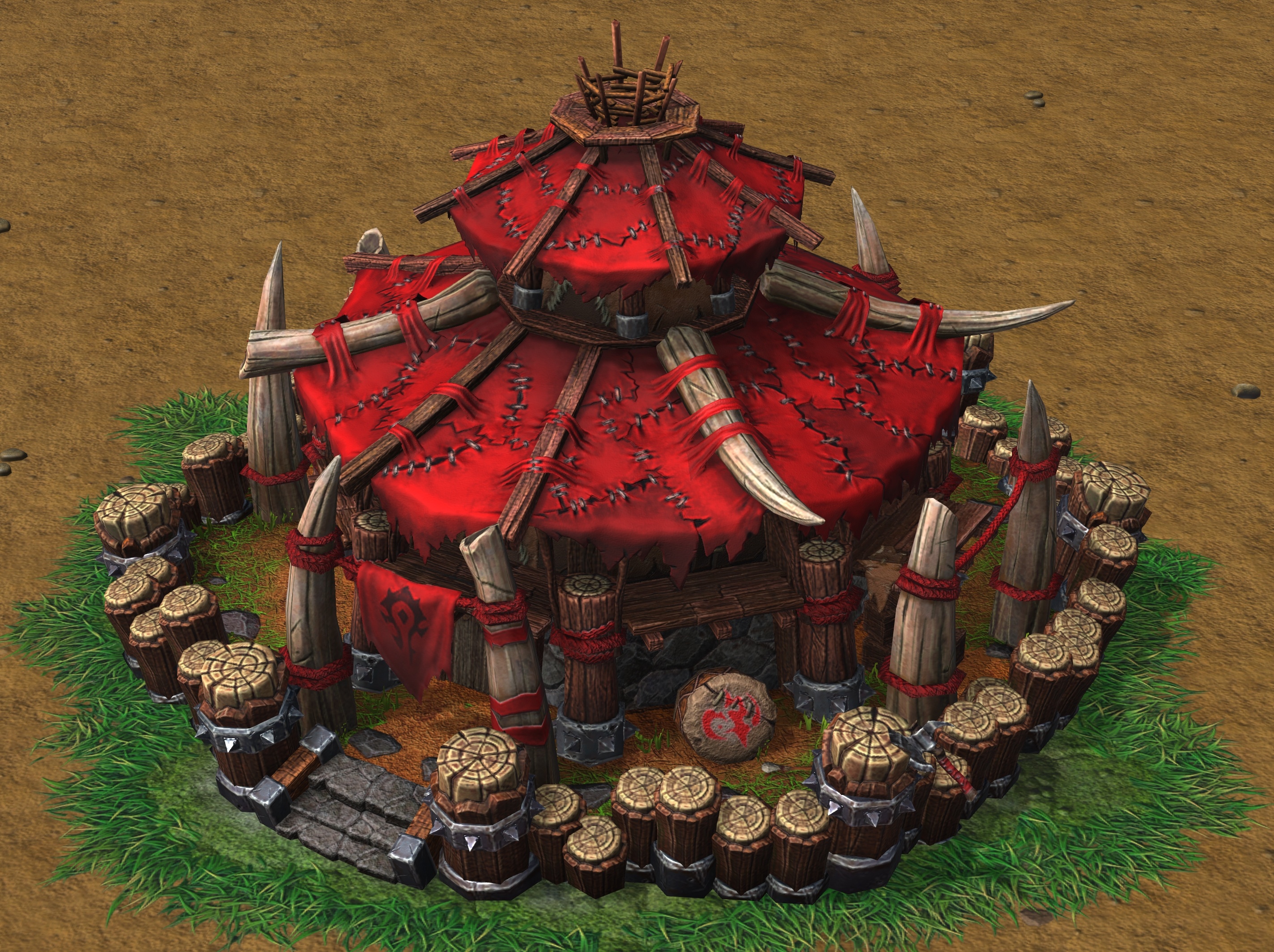
The description of the Horde cultures are often described as warlike or savage, in contrast to the more civilized and organized alliance organisations. The lands of the Horde is presented as wild mountain chains and far reaching savannas. The magical and spiritual practices in particular rely heavily on largely of shamans, totems and spirits. In particular when it comes to the Troll faction, that is explicitly “practising voodoo”. (Blizzard entertainment, 2002)
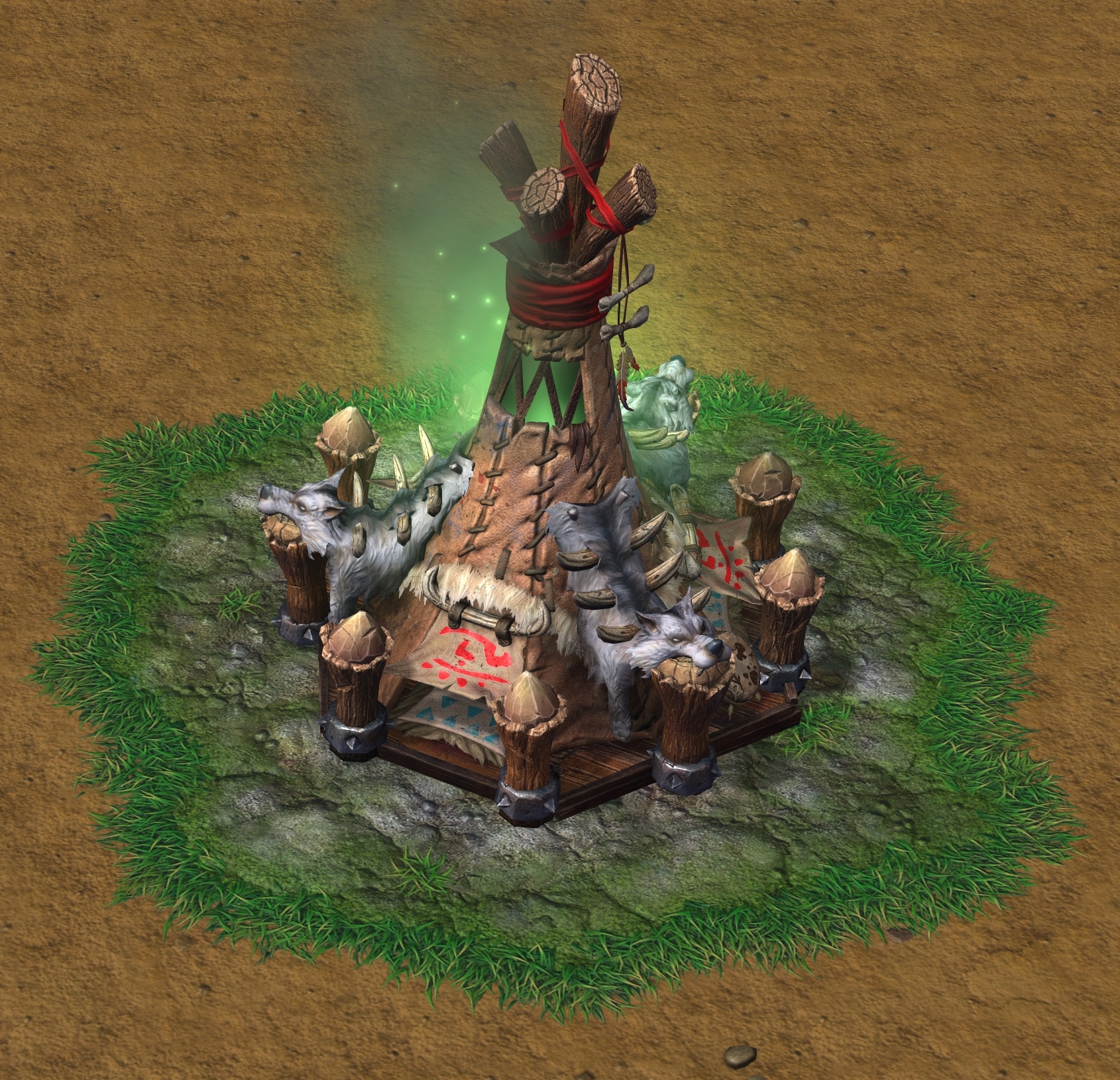
The horde is inescapable tied to the traditions and tropes of modern fantasy, many that has its roots in the era of Lord of the rings and other Tolkien works. While i would do a disservice by labelling the Horde as explicitly evil, it is still inportant to what the imagery of the faction tells us about them, and the work as a whole. (Blizzard entertainment, 2002)
The Alliance
The alliance are made up of Elves, Gnomes and Humans, al races that closely resembles humans. More specificity does the alliance of warcraft 3 consists of, humans, dwarves and elves. Note that these races are often portrayed as the forces of good and order, following the traditions once again of J,R,R Tolkien. (Blizzard entertainment, 2002) The visuals of the Alliance are almost uniformly a romanticised version of renaissance and medical Europe, with grand forts, temples and factories. (Blizzard entertainment, 2002)
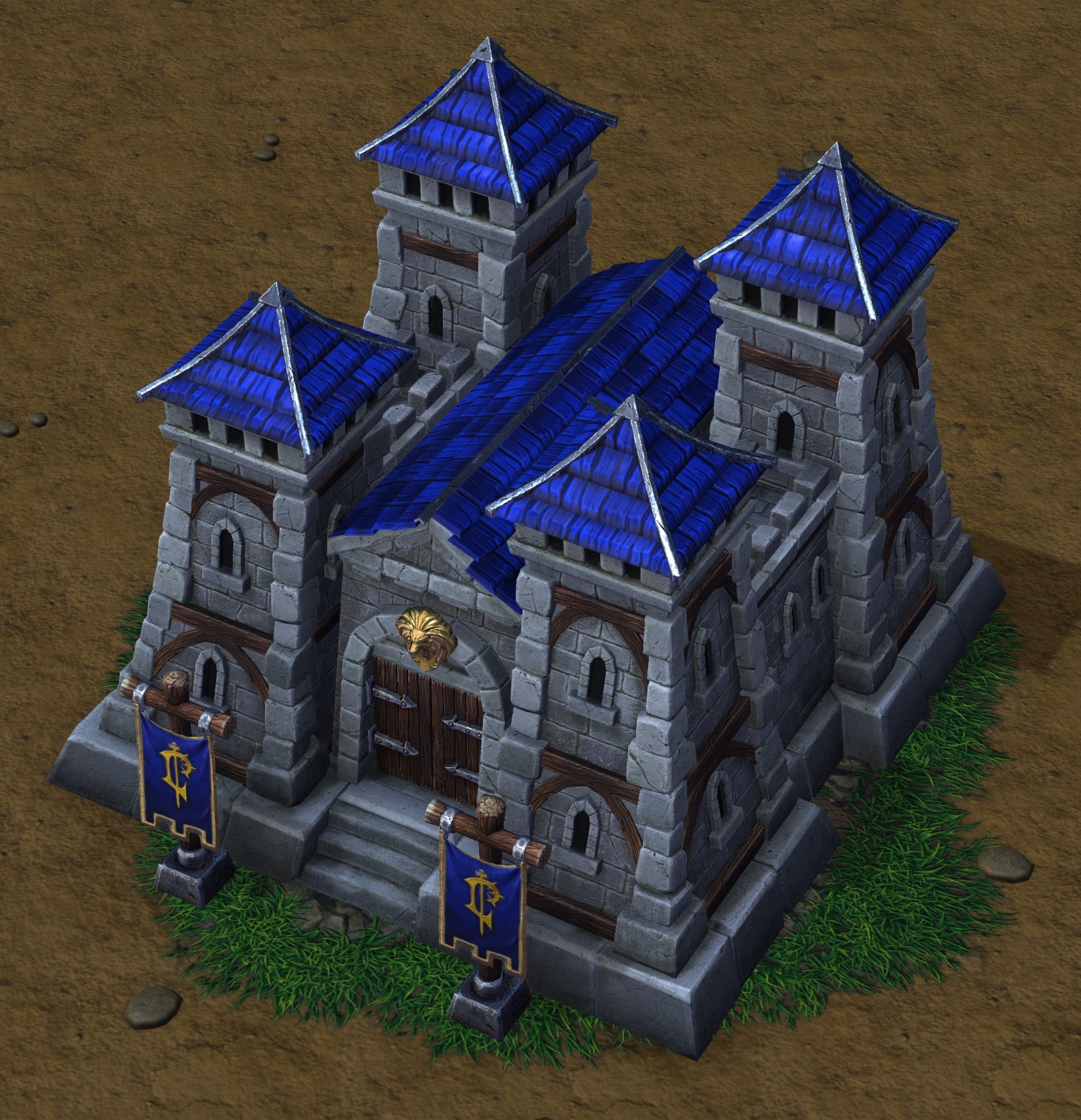
The imagery of the Alliance is uniform and ordered, even tough the trademark cartoonish and busy visual language of Blizzard entertainment shines trough. The alliance is made out of cultures of high art, order, faith and wisdom. their magical practices comes in form of learned individuals and scholars, practising their craft in grand academies. (Blizzard entertainment, 2002)
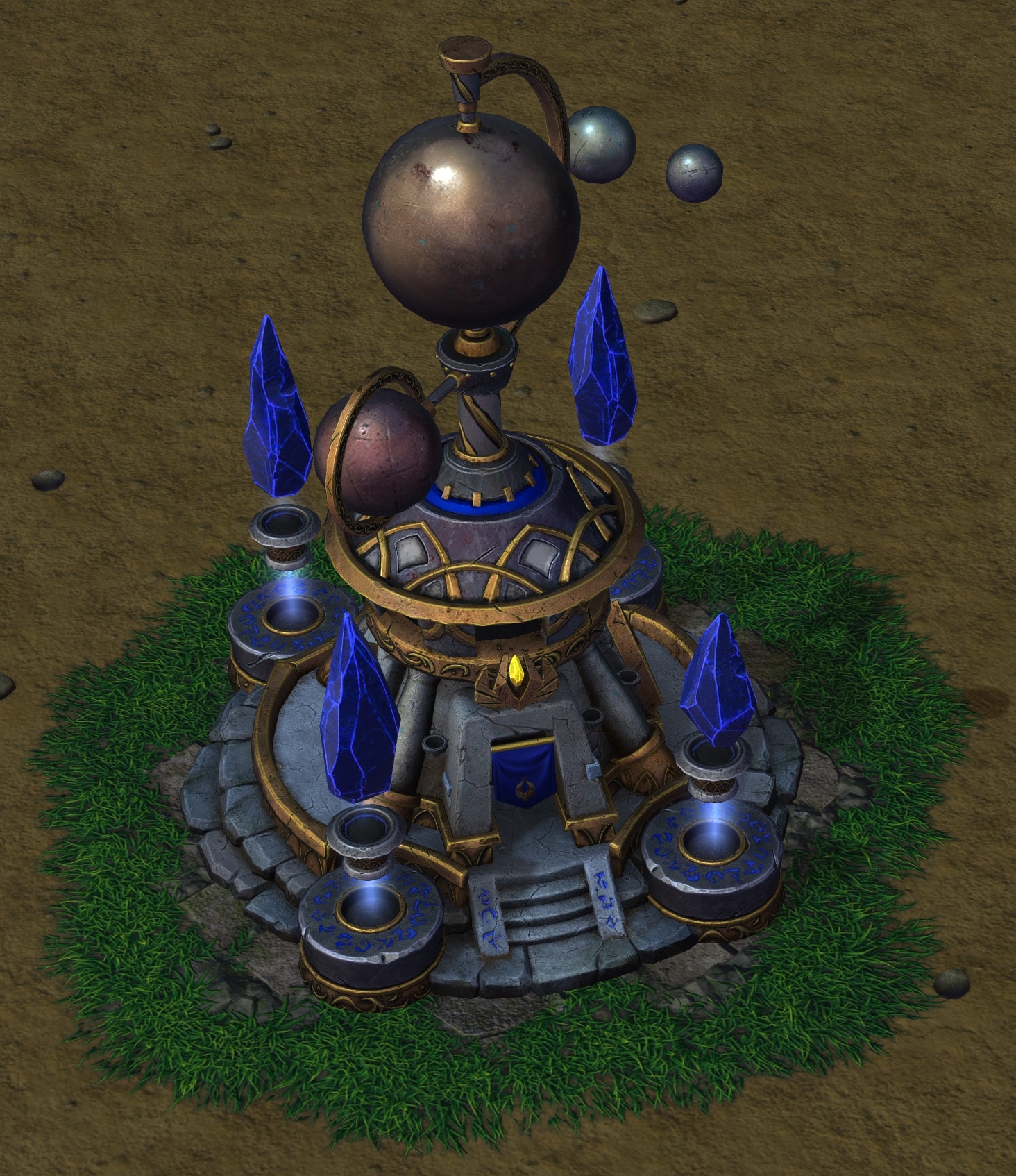
Their religious orders are made out of pious monks and devout paladins, their armies made out of knights and heavily armoured footmen, supported by archers and black powdered artillery. This is in stark contrast to the savage and direct tactics of the Horde. (Blizzard entertainment, 2002)

I must once again reiterate that the status of the status of the Alliance as the heroes of the narrative in Warcraft 3 is far from clear-cut, and a lot of the narrative works to subvert this expectation. None the less is it important to evaluate what the visual language tells us about these faction, and what they tell us about the narrative as a whole. By evaluation what the visual language of the coded heroes in warcraft 3, can we find trends that runs trough much of its contemporary fantasy tropes and narratives.
Conclusions
I have in this text presented a series of basic concept that I will use to further discuss the idea of othering in the Warcraft 3 narrative. I have furthermore presented some basic differentiations and touchpoints that we will return to again and again in this series. One could argue that al these differences are made explicitly to show how different the two factions are from each other, and to explain the many wars in the narrative. I would argue that it is inportant to show what these differences are, and how they are presented, and more importantly, to shine light on the real life prejudices and assumptions that created these differences in the first place.
References
Mushtaq, Hammad (2011), Othering, Stereotyping and Hybridity in Fiction: A Post-Colonial Analysis of Conrad’s Heart of Darkness and Coetzee’s Waiting for the Barbarians. Journal of Language and Literature, No. 3, Available at SSRN: https://ssrn.com/abstract=1679116
Spiecker, Tara (2011) Beat Those Sleepy Slackers!: Color-Blind Racism in World of Warcraft’s Valley of Trials, Quadrivium: A Journal of Multidisciplinary Scholarship: Vol. 3 : Iss. 1 , Article 4. Available at: https://nsuworks.nova.edu/quadrivium/vol3/iss1/4
Tally, Jr., Robert T. (2010) Let Us Now Praise Famous Orcs: Simple Humanity in Tolkien’s Inhuman Creatures, Mythlore: A Journal of J.R.R. Tolkien, C.S. Lewis, Charles Williams, and Mythopoeic Literature: Vol. 29 : No. 1 , Article 3.
Available at: https://dc.swosu.edu/mythlore/vol29/iss1/3
Warcraft 3. Blizzard entertainment, 2002.

 An Unused Frequency